

This user has no status.



7th. Generation of Nexy
It feels as though the time has come to finally summarize the history of Nexy blades. While the entire journey remains vivid in my mind, I realized I have been racing toward the 7th generation without properly documenting the generations that came before. In the following text, I would like to categorize Nexy’s past into generations and outline the goals and characteristics of the blades from each period.
Before we begin, I would like to note that Nexy’s 7th Generation focuses on re-releasing and upgrading meaningful products from previous generations, adapting them to the current era of the modified ball. While these products were already excellent and significant in their own time, we are leading the 7th generation by applying necessary partial upgrades for the new ball and introducing a new concept in the bonding process.



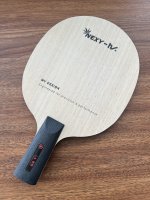
The Batos Classic, which you see in the photos, is the first product of the 7th generation. While based on the original Vatos, it features several upgrades:
This concludes the summary of the first 7th-generation product, Vatos, and the overview of Nexy’s entire history. Thank you.

It feels as though the time has come to finally summarize the history of Nexy blades. While the entire journey remains vivid in my mind, I realized I have been racing toward the 7th generation without properly documenting the generations that came before. In the following text, I would like to categorize Nexy’s past into generations and outline the goals and characteristics of the blades from each period.
Before we begin, I would like to note that Nexy’s 7th Generation focuses on re-releasing and upgrading meaningful products from previous generations, adapting them to the current era of the modified ball. While these products were already excellent and significant in their own time, we are leading the 7th generation by applying necessary partial upgrades for the new ball and introducing a new concept in the bonding process.
1st Generation: Creating Products Unlike Any Other Brand
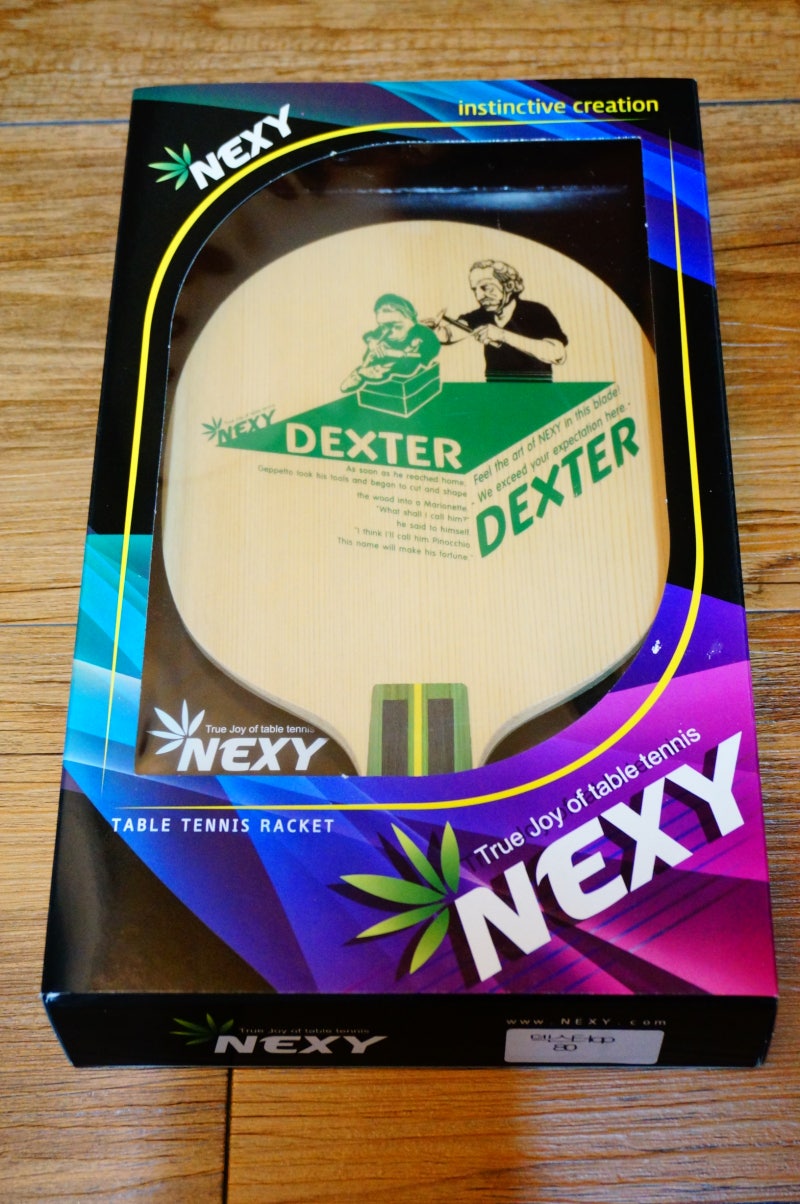
Nexy’s 1st generation began while I was working as an agency for Tibhar, driven by the desire to create something that Tibhar did not already offer. As I was starting a new brand, I was determined to achieve things through Nexy that other brands were not doing. Consequently, the 1st generation challenged many conventional stereotypes regarding blades. For example:- Dexter: Challenged the idea that 5-ply wood blades focus only on spin and are slow, resulting in a very fast 5-ply wood blade.
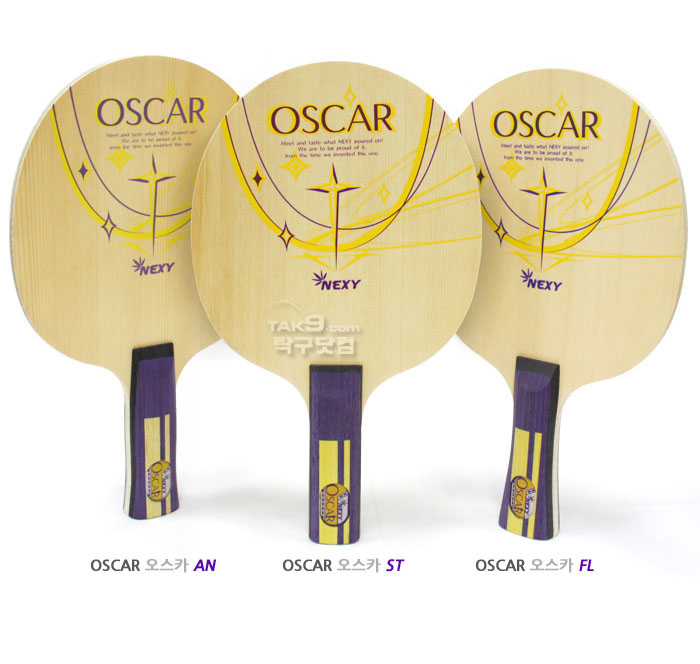
- Oscar: Challenged the notion that ALC blades, while balanced in power and spin, inevitably feel "dull." The result was a crisp, vibrant product without that muffled sensation.
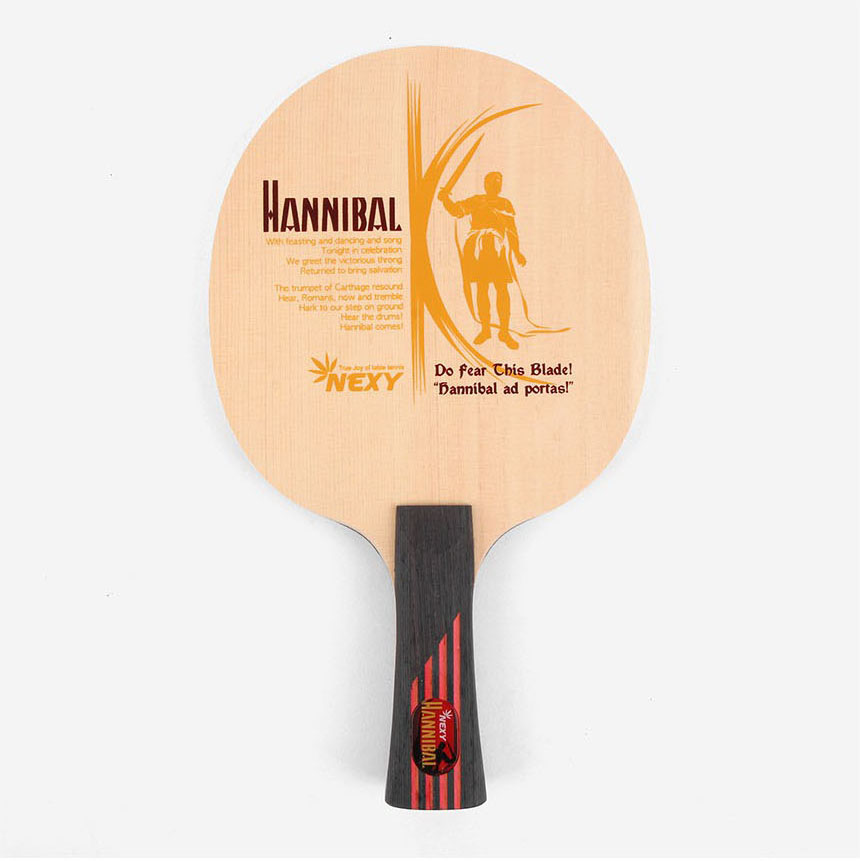
- Hannibal: Challenged the belief that carbon blades are fast but lack the softness of pure wood, creating a Hinoki-carbon blade with a soft touch.
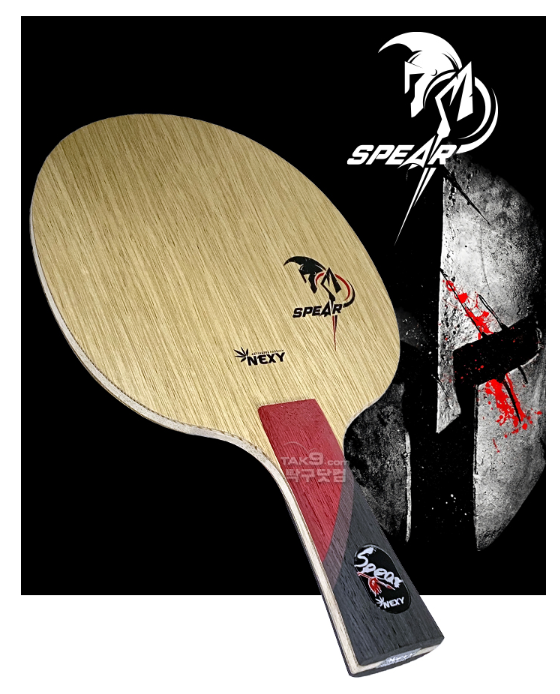
- Spear: Attempted a new Limba-outer 5-ply wood blade, adding speed and power to a balanced, aggressive design.
2nd Generation: Expanding the Range of "Dual Impact"
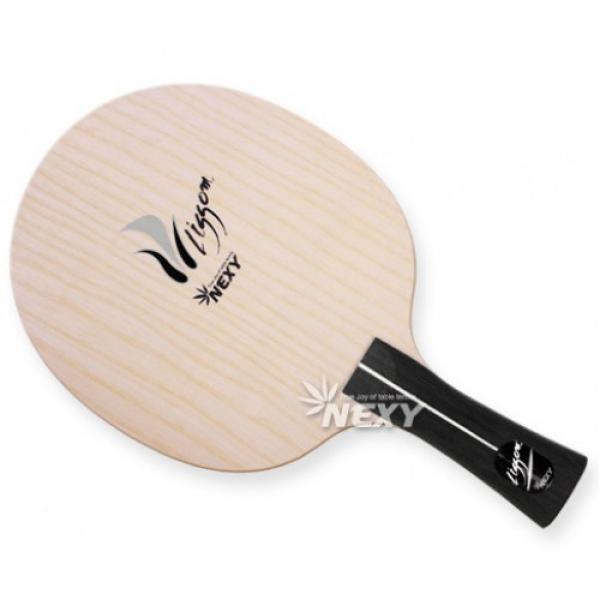
Launched in 2007, the 1st generation was more popular than expected. However, I continued to ponder what "Nexy-ness" truly was and what unique elements would appeal to table tennis players. The result was the concept of implementing "Dual Impact"—clearly distinguishing the ball's trajectory during defensive versus offensive strokes within a single blade. I began researching a blade that slows down further during relaxed play (blocks or short loops) but propels the ball with relative strength during powerful impact. This led to the release of diverse, extreme products: Lissom (7-ply with a focus on stability and spin), Calix (extremely thin but powerful), and Qabod (a faster evolution of Calix). This era also produced Tuvalu and Labyrintos, which remain loved by modern long-pimples OX players for their different-sided materials.3rd Generation: Pursuing the Point of Balance
While the 2nd generation had a wide spectrum of variable repulsion and impact depths, the 3rd generation sought to create one ideal format. Blade sizes began to be unified, and the target impact feel was set at a "70% depth"—slightly deeper than the surface. These products were aggressive yet balanced and moderate. This era saw the birth of Arirang (introducing the "powerful finishing blow" concept), Peter Pan (the standard 5-ply wood), and Kanaph, as well as the defensive blade Actium, released under the Tibhar brand name.4th Generation: Introducing the Concepts of "Point, Line, and Plane"
In the 4th generation, we experimented with various surface materials and categorized blade characteristics into Point, Line, and Plane.- Point: Gripping the ball at a single spot on the surface with solid support.
- Line: The characteristic of dragging the ball longer.
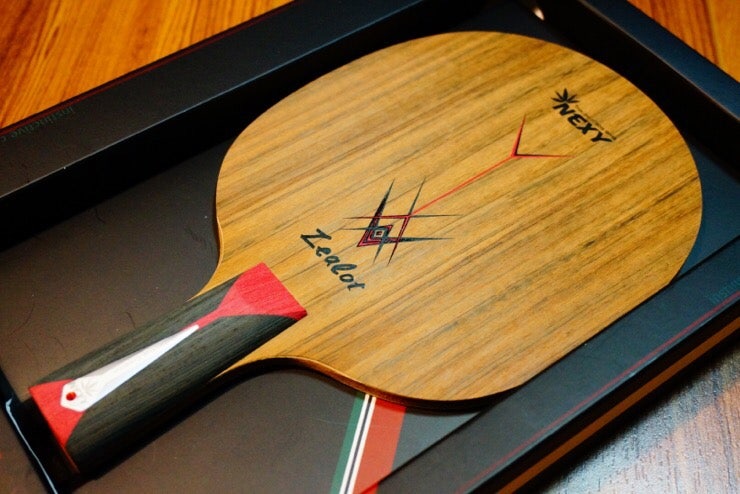
- Plane: The sensation of the entire blade face wrapping around the ball. This led us to discover new materials, such as those used in Zealot, Olam, and Chedech, as well as Cakra for defensive players.
5th Generation: Integrating All Previous Generations
As the 4th generation concluded, I felt the product groups I originally envisioned were complete. Rather than starting a completely new category, I attempted to integrate the strengths of all past generations into "Combination Blades." One side might feature a 3rd-generation concept while the other used a 1st-generation concept. A representative 5th-generation product is Arche, a combination of the 3rd-generation Kim Jung-hoon blade and the 4th-generation Rubicon.
6th Generation: A New Era for Professional Players
Nexy underwent significant changes, including sponsoring the Samsung Life Insurance team and legends like Joo Sae-hyuk, Yoo Nam-kyu, and Yang Ha-eun. This led to a lineup reflecting the specific needs of pro players, such as the Yoo Nam-kyu Shakehand/Penholder series and the Joo Sae-hyuk defensive blade. Other models like Batos and Eucrasia were developed to compete directly with products used by world-class players, focusing on not being pushed back during high-intensity counter-drive rallies.
Nexy’s 7th Generation: The Start of GPC (Glueing Process with Compression)
The 7th generation is characterized by a complete renewal of past lineups using a new bonding method on top of the 6th-generation foundation. To address the demands for more spin and speed brought on by the ABS ball, we realized the entire lineup needed an overhaul. Achieving more speed and spin usually requires thicker blades and more reinforced materials, which can lead to a loss of feel and increased weight. Nexy solved this through GPC, a process of bonding with significantly higher pressure during manufacturing. This allows us to maintain the original weight and feel even when increasing the thickness of individual layers.
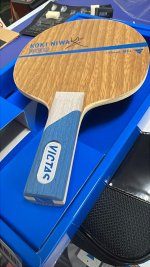
The Batos Classic, which you see in the photos, is the first product of the 7th generation. While based on the original Vatos, it features several upgrades:
- The composite material has been replaced with a higher-speed material.
- The core, surface, and second layers are all thicker.
- However, the final thickness remains similar to the previous version because it is compressed during the GPC process.
This concludes the summary of the first 7th-generation product, Vatos, and the overview of Nexy’s entire history. Thank you.