
Does bat move faster than the spin?

This user has no status.
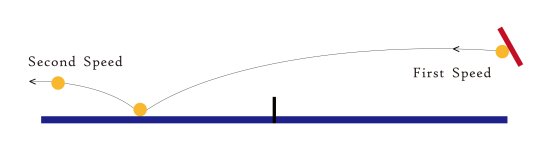
Can I move the bat faster than the spin? If this is true, I do not need to be afraid of spin at all. This is what AI tells me:

"

Ball Spin (Rotational Speed)​

  • A heavily spun ball might rotate at 100–150 revolutions per second (rps).
  • For a 40 mm ball, this translates to a tangential surface speed of about 12–18 m/s.

🏓 Bat Speed (Linear Speed)​

  • During fast strokes like loops or smashes, the bat can reach speeds of 30–40 m/s or more at contact."

Do you agree?

 
This user has no status.
🏆 Top 1% Commenter
Well-Known Member
Sep 2013
13,139
15,420
36,968
Read 3 reviews
Can I move the bat faster than the spin? If this is true, I do not need to be afraid of spin at all. This is what AI tells me:

"

Ball Spin (Rotational Speed)​

  • A heavily spun ball might rotate at 100–150 revolutions per second (rps).
  • For a 40 mm ball, this translates to a tangential surface speed of about 12–18 m/s.

🏓 Bat Speed (Linear Speed)​

  • During fast strokes like loops or smashes, the bat can reach speeds of 30–40 m/s or more at contact."

Do you agree?
it all depends on the user
even if you can move the bat faster than the spin, can you control the incoming spin? will you net the ball, or go long-off the table?
for beginners, speed is a thing, for stronger players, it becomes spin is a thing.

so, it all depends on the user. Do you agree?
 
  • Like
Reactions: yamagata
This user has no status.
it all depends on the user
even if you can move the bat faster than the spin, can you control the incoming spin? will you net the ball, or go long-off the table?
for beginners, speed is a thing, for stronger players, it becomes spin is a thing.

so, it all depends on the user. Do you agree?
I am not sure that I do - but that is only because my own understanding is lacking...
 
This user has no status.
The rotational speed can never exceed the tangential speed of the racket. At best it can be equal (if there is no slippage)...

Cheers
L-zr
This means that there is no such thing as "the backspin was too heavy and your ball hit the net". The backspin cannot be too heavy - it is only your own technique that is lacking. This is an encouraging thought. A pure backspin ball is always possible to return with a topspin.
 
This user has no status.
🏆 Top 1% Commenter
Active Member
Dec 2018
925
1,370
3,479
Read 1 reviews
It's possible for the ball to spin faster than the racket speed because the snap-back of the topsheet/sponge can make the local surface move faster than the blade. This is especially true if the ball arrives with spin/tangential motion opposite the racket’s brush (such as with counter-looping), in which case you can harvest some of the incoming spin energy by storing it as elastic energy in the rubber and then returning part of it to the ball when the rubber snaps back.
 
This user has no status.
Active Member
Jun 2022
859
788
2,323
spin is faster because tensor
for this to be true the rubber would need to have some tangential catapult builtin, which is not true.

The same as a ball shot with a slingshot can never fly faster than what the elastic bands you "loaded"/pulled generate. After leaving the slingshot the speed only decreases.
It is the same with the bat: the spin of the ball only decreases after leaving the racket.
This means that there is no such thing as "the backspin was too heavy and your ball hit the net". The backspin cannot be too heavy - it is only your own technique that is lacking. This is an encouraging thought. A pure backspin ball is always possible to return with a topspin.
These things are totally unrelated. Of course when you move the racket in the direction of the incoming spin (so topspin movement for an incoming backspin ball) then your racket speed has to at least match the incoming spin to not be affected by it negatively. Of course if you are slower than the incoming backspin your return will probably end up in the net.

In the end this question and also plunders reply shows so much lack of understanding of basic physics of table tennis that an easy explanation would be putting it to short for you to understand. There are more variables in the equation than you indicated with your first question and then with your new question suddenly you introduce a variable (ball already having spin) to the equation out of the blue.
 
Last edited:
  • Like
Reactions: Scarfed Garchomp
This user has no status.
Active Member
Oct 2018
585
587
2,518
what about a block of a heavy top-spin (like the one you do in from a heavy underspin opponent's push ) with a tensor-type rubber when the player holds the racket without moving it. The spin is "inverted"** and there is spin on the ball that bounces back from the block.

** the spin will not be inverted if that ball hits a glass (zero friction) instead of a blade with tensor-type rubber
 
This user has no status.
for this to be true the rubber would need to have some tangential catapult builtin, which is not true.

The same as a ball shot with a slingshot can never fly faster than what the elastic bands you "loaded"/pulled generate. After leaving the slingshot the speed only decreases.
It is the same with the bat: the spin of the ball only decreases after leaving the racket.

These things are totally unrelated. Of course when you move the racket in the direction of the incoming spin (so topspin movement for an incoming backspin ball) then your racket speed has to at least match the incoming spin to not be affected by it negatively. Of course if you are slower than the incoming backspin your return will probably end up in the net.

In the end this question and also plunders reply shows so much lack of understanding of basic physics of table tennis that an easy explanation would be putting it to short for you to understand. There are more variables in the equation than you indicated with your first question and then with your new question suddenly you introduce a variable (ball already having spin) to the equation out of the blue.
This reply highlights the essence of table tennis. You need to develop feeling and intuition. Because too many variables are at play.

Aside from that, some of these variables have a bigger impact and should be possible to explain even to someone with lacking ability to comprehend.

No worries though, we have a machine at my club that can tell the amount of spin. I believe I might get a chance in the coming months to test it for myself.
 
Last edited:
Top