


This user has no status.
Member



Hello,
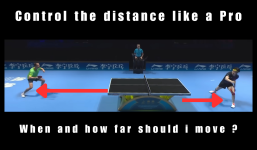
As the title suggests, I have a question about when to move away from the table.
As a beginner, I rarely step back more than an arm's length from the table. When my opponents repeatedly attack from their forehand to my forehand side, I often feel more successful by staying close to the table, crouching slightly in the forehand corner, anticipating where the ball will go, and blocking it back. This seems to work better for me than backing off and trying to counter-loop.
However, I suspect this may be a bad habit that provides short-term success but won't be effective in the long run as I face stronger players.
Could you give me some guidelines on how to handle this type of situation? In particular, when should I stay close to the table and block, and when should I step back and counter-loop? What are the advantages and disadvantages of each approach?
Thanks!
As the title suggests, I have a question about when to move away from the table.
As a beginner, I rarely step back more than an arm's length from the table. When my opponents repeatedly attack from their forehand to my forehand side, I often feel more successful by staying close to the table, crouching slightly in the forehand corner, anticipating where the ball will go, and blocking it back. This seems to work better for me than backing off and trying to counter-loop.
However, I suspect this may be a bad habit that provides short-term success but won't be effective in the long run as I face stronger players.
Could you give me some guidelines on how to handle this type of situation? In particular, when should I stay close to the table and block, and when should I step back and counter-loop? What are the advantages and disadvantages of each approach?
Thanks!