Cheap Chinese Gear

says Table tennis clown
🏆 Top 1% Commenter
Well-Known Member
Apr 2020
4,692
2,998
10,922
Haven’t used Loki yet but interested to try.
The thing that attracts me to these cheaper rubbers is there seems to be more control based rubbers.
Regarding hand feel, the Sanwei blades are just sublime.
I can’t see any rubbers on the modern market for a blocker/touch player who likes to chop and flat hit a bit like me. It’s all 100 mph loop rubbers.
This Friendhip focus 3 snipe I have is a marvel in that area and great spin potential too. I’d never have searched it out if I could find something similar in the regular market. Any rubbers you think would fit my style in the major brands? I might try next time round
I use the good old fashioned DHS H3 OS hard and unboosted and found it great for blocking, slow "hot potato play" but also BH wrist flicks against incoming back-spin serves. Another rubber is very similar and also sticky is the Loki Rxton 9 provincial special. The problem with it is, Loki makes about 5 different Rxton 9s 🤣
 
  • Like
Reactions: J-fed
says I am a die-hard table tennis gear collector, and I’ve...
Member
Jul 2026
9
22
0
26
This conversation really resonates with me.
When I first started playing table tennis, I didn't have a huge budget, so I often experimented with affordable, high-value-for-money products.
There is fierce competition among entry-level products from brands like Sanwei, 729, and—more recently—Loki.
Loki, in particular, has seen massive improvements in its product lineup over the last two years; I know they built standardized manufacturing facilities in Dongguan (a city in China) equipped with machinery that ensures consistent product quality.
As for the gear itself, they offer excellent products in the 300 RMB (approx. $40) range within China—gear that I believe delivers at least 70% of the performance of the famous "VIS" (Butterfly Viscaria) blade.
Let me mention a few popular products I’ve personally used.
There’s Sanwei’s "Nordic 7 Speed." It’s a 7-ply all-wood blade; compared to the standard "Nordic 7," it offers a significant boost in raw power and speed. It has a fantastic feel and great "crispness" (feedback), making it ideal for beginners. (In China, it costs around $12.)
Then there’s Loki—currently one of my favorite brands. You might not realize it, but they are absolutely dominating the entry-level market in China right now.
Take the W81 series, for example; it comes in various versions. The "Zhou Yu Special" edition is on par with top-tier blades like the VIS or Fan Zhendong ALC, yet it costs around 700 RMB.
Even the standard versions are highly recommended—they play beautifully and come in different models tailored to players of various skill levels.
As for rubbers, Loki’s "RXTON9" is a domestic alternative to the DHS Hurricane 3 that performs exceptionally well.

Feel free to ask me anything; I can quickly gather information from Chinese forums and share it with everyone here.
 
says Table tennis clown
🏆 Top 1% Commenter
Well-Known Member
Apr 2020
4,692
2,998
10,922
This conversation really resonates with me.
When I first started playing table tennis, I didn't have a huge budget, so I often experimented with affordable, high-value-for-money products.
There is fierce competition among entry-level products from brands like Sanwei, 729, and—more recently—Loki.
Loki, in particular, has seen massive improvements in its product lineup over the last two years; I know they built standardized manufacturing facilities in Dongguan (a city in China) equipped with machinery that ensures consistent product quality.
As for the gear itself, they offer excellent products in the 300 RMB (approx. $40) range within China—gear that I believe delivers at least 70% of the performance of the famous "VIS" (Butterfly Viscaria) blade.
Let me mention a few popular products I’ve personally used.
There’s Sanwei’s "Nordic 7 Speed." It’s a 7-ply all-wood blade; compared to the standard "Nordic 7," it offers a significant boost in raw power and speed. It has a fantastic feel and great "crispness" (feedback), making it ideal for beginners. (In China, it costs around $12.)
Then there’s Loki—currently one of my favorite brands. You might not realize it, but they are absolutely dominating the entry-level market in China right now.
Take the W81 series, for example; it comes in various versions. The "Zhou Yu Special" edition is on par with top-tier blades like the VIS or Fan Zhendong ALC, yet it costs around 700 RMB.
Even the standard versions are highly recommended—they play beautifully and come in different models tailored to players of various skill levels.
As for rubbers, Loki’s "RXTON9" is a domestic alternative to the DHS Hurricane 3 that performs exceptionally well.

Feel free to ask me anything; I can quickly gather information from Chinese forums and share it with everyone here.
Are you an AI ??
 
This user has no status.
Member
Jun 2026
52
25
94
I use the good old fashioned DHS H3 OS hard and unboosted and found it great for blocking, slow "hot potato play" but also BH wrist flicks against incoming back-spin serves. Another rubber is very similar and also sticky is the Loki Rxton 9 provincial special. The problem with it is, Loki makes about 5 different Rxton 9s 🤣
The labelling is incredibly difficult to follow FS
 
says I am a die-hard table tennis gear collector, and I’ve...
Member
Jul 2026
9
22
0
26
The labelling is incredibly difficult to follow FS
Actually, no—it might be because I'm using a translation tool,
so it looks like AI??
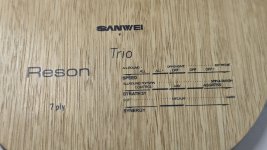
Let me show you some of my gear.
15295fded4b6e31efce4f655e5979925.jpg
 
This user has no status.
Active Member
Sep 2022
605
461
1,871
Read 2 reviews
Haven’t used Loki yet but interested to try.
The thing that attracts me to these cheaper rubbers is there seems to be more control based rubbers.
Regarding hand feel, the Sanwei blades are just sublime.
I can’t see any rubbers on the modern market for a blocker/touch player who likes to chop and flat hit a bit like me. It’s all 100 mph loop rubbers.
This Friendhip focus 3 snipe I have is a marvel in that area and great spin potential too. I’d never have searched it out if I could find something similar in the regular market. Any rubbers you think would fit my style in the major brands? I might try next time round
I think sanwei and Yinhe produce good blades, the quality of craftmanship is accually very good.

A recomendation isn't for me, usually I lend my stuff out if someone wants an idea but in the end it is all personal.
 
  • Like
Reactions: J-fed
says I am a die-hard table tennis gear collector, and I’ve...
Member
Jul 2026
9
22
0
26
Wow!
You play TT so well for a bot 😝
What set up are you using now?
My current primary blade is the Q968 (specifically the "Number" version).
This is the same blade Wang Chuqin uses—and even though I’m not particularly fond of him (and most Chinese players aren't either), this blade feels amazing to play with. Compared to the W968, the backhand feels silkier and the transitions are smoother. It allows for rapid shifts in the center of gravity, yet the forehand retains that signature DHS sensation of explosive, coiled power.

It is the "Pro" version of the Lind.

My previous blade was the Lind.

Before that, I used the VIS and the Lin Gaoyuan ALC, haha.

For the forehand, I use the National version of Hurricane 3 (Blue Sponge), and for the backhand, I use the ELP.
 
This user has no status.
I only had good experiences with yinhe blades, the v14 pro, pro 01, pro 05, the quality/price its outstanding and they really perform like if they were from butterfly imo, the same for the big dipper rubber from them

With Loki I have mixed opinions, I still have not used a blade from them, but when I tried rxton 9 holy crap, it was unusable like after one month of using, lost all tackyness and grip even when using plastic sheets on the rubber, but when I used the arthur china and the arthur china pro, they were really good and cheap alternatives to a h3 neo, they still go after one year

From Sanwei never tried blades, but I really love their target neo 3 national rubber, what a great cheap rubber, again a great alternative to h3 neo, I would say its even better than the loki arthur china

If I had to teach someone how to play, my gift would be a yinhe pro 01, forehand target neo 3 national and backhand ak47 yellow
 
This user has no status.
🏆 Top 1% Commenter
Well-Known Member
Jan 2024
2,309
3,024
7,206
Read 2 reviews
Haven’t used Loki yet but interested to try.
The thing that attracts me to these cheaper rubbers is there seems to be more control based rubbers.
Any ESN brand product catalog will show the same trend. The expensive rubbers are attack-oriented and the cheaper ones are more controlled.
They're usually marketed to "beginners/learners" though, which puts a lot of people with a bit of an ego off.

The biggest difference between Euro and Chinese control rubbers in general is tack. A slow, controlled Euro rubber is usually slow throughout the power curve and often lacks spin capacity, too.

It's also a matter of what you're comparing. For example, I pay on average €15-20 for a sheet of AK47. That's the price of a Euro learning rubber. But the learning rubber will last twice as long.
Simply put, if you buy cheap-cheap, 99/100 times you're paying for it in one way or another.


Regarding hand feel, the Sanwei blades are just sublime.
Here's the thing: Sanwei makes good stuff and so does Yinhe. It's the grey market on AliExpress that f*cks it up. They sell anything surplus, duds, models not meant for the international market, you name it. There's no transparency or certainty about whether these items came through the front or back door of the factory.

I've had a Sanwei 75 Inner that was just bad and turned out to have a large break in the core. I'm fairly sure that any quality check would have picked that up and also fairly sure that it WAS picked up yet still ended up on AliExpress.
Similarly, people are raving about the Yinhe Pro 01, and rightfully so in my opinion, but there have been multiple reports of smallish sweet spots and inconsistencies, and all of those have come through Ali. "Ronin Team" has done a comparison with a Pro 01 bought through official channels and found the latter to be much better quality.
I can’t see any rubbers on the modern market for a blocker/touch player who likes to chop and flat hit a bit like me. It’s all 100 mph loop rubbers.
This Friendhip focus 3 snipe I have is a marvel in that area and great spin potential too. I’d never have searched it out if I could find something similar in the regular market. Any rubbers you think would fit my style in the major brands? I might try next time round
The *only* one so far that I have found to be cheap, reliable, controlled, and keeping its properties for longer than 2-3 months, is Yinhe Mercury 2. The downside is they can be inconsistent between sheets, especially in hardness and weight. I'm not all too sensitive in those things.

If I had to pick one single rubber, for FH and BH, for the rest of my TT life, this would definitely make the top 3.


Here's a couple of the rubbers I've tried:

Loki Rxton 3 Pro (the blue sponge H3 clone). Took a lot of breaking in before it started producing any quality. Then it produced decent spin for almost a month before dropping off really fast.
Loki Rxton 1. Might have hit a bad batch or something but this one just didn't have any grip. Loki's topsheets on both feel more like plastic, polyurethane. On the Rxton 1 I could make a dent with a finger that stayed for the better part of a minute.
Yinhe Moon 12 Blue M+. I seriously do not understand why people are raving mad about this rubber. The grip was zero, topsheet was slippery and the only way I could extract any spin out of it at all was changing it to my FH side and slamming the ball full force. It was good enough for pushing, but not with much backspin.
729/Friendship SuperFX. I've had this in the past and wanted to try it again. The club puts it on the budget beginner's rackets that you can borrow and one day I didn't have my gear on me but wanted to play and it worked quite OK. The sponge needs breaking in and the topsheet oxidizes really fast (put a plastic cover on!) but it's a well controlled, medium spin rubber which is just a little less lively than Mercury 2. Would not recommend going below max thickness, even 1.8mm is a serious deterioration in the spin capacity and 1.5mm is downright torture.
DHS PF4. The "training rubber" equivalent of H3. Plays 90% like H3 orange sponge. You lose a little bit on everything, weight, spin capacity, power, but it's great. I don't think I could reliably point it out against H3 in a blind test. I would still buy H3 Provincial simply for the more consistent performance.
Palio AK47. Red sponge is too hard and dries out very quickly removing any sliver of performance. Yellow sponge holds up longer but loses firmness well before the topsheet loses grip. You can feel it bottom out even on BH after a while. Blue sponge, as mentioned before, didn't get enough of a chance because it tore apart when I wanted to change it. I feel as if the Blue and Red sponges are the same material, and Yellow is something else. Yellow doesn't get brittle like the other two. Worth a try IMO but NOT a control rubber. These rubbers are made for catapult action.
Palio HK1997. Yes, I was on the Palio hype train for a little bit. HK1997's yellow sponge feels somewhat resemblant of AK47's. The topsheet feels mighty thin making the "tacky FH" character disappear into the soft, pillowy sponge. I'm still divided on it but have moved on.
Yinhe Mercury 2 (medium). Starts out a little bit on the firm side but after a couple of playing sessions it softens and makes for a controlled rubber with good feeling and decent spin/power capacity. I would advise to get the soft sponge for BH if you play a 5-ply or otherwise thinner/lighter blade. On a 7-ply or anything carbonated the medium sponge is good.


Since these experiments, I will never again buy anything Loki. I hate the plasticky feel of their topsheets, and am no fan of their copying of designs. I do not believe in their ability to produce anything consistent and durable.

I don't think Palio will enter my home again, either, even though I am still curious how AK47 Blue would stack up against something like Xiom Vega Europe. I just personally don't have a use for these rubbers.

Mercury 2 as said I would buy again if I needed a well controlled rubber.

For reference, I play either Hurricane 3, Fastarc G-1 or Tenergy 19 on the FH nowadays (put in order of how much I like playing these) and on my BH I have Fastarc C-1, Mercury 2, Tenergy 05. I am still fairly undecided about my BH rubber.

 
This user has no status.
Member
Jun 2026
52
25
94
I only had good experiences with yinhe blades, the v14 pro, pro 01, pro 05, the quality/price its outstanding and they really perform like if they were from butterfly imo, the same for the big dipper rubber from them

With Loki I have mixed opinions, I still have not used a blade from them, but when I tried rxton 9 holy crap, it was unusable like after one month of using, lost all tackyness and grip even when using plastic sheets on the rubber, but when I used the arthur china and the arthur china pro, they were really good and cheap alternatives to a h3 neo, they still go after one year

From Sanwei never tried blades, but I really love their target neo 3 national rubber, what a great cheap rubber, again a great alternative to h3 neo, I would say its even better than the loki arthur china

If I had to teach someone how to play, my gift would be a yinhe pro 01, forehand target neo 3 national and backhand ak47 yellow
Sanwei blades seem to get nothing but stellar reviews and me as a 5 ply guy, I’ll say this echo is the best feeling handle and most versatile wood I’ve ever had.
Better than stiga/banda etc.
Incidentally, I have had at least 10 butterfly blades and hated every single one apart from the one I screen shotted earlier. That has great feel.
The rest? So dead.
 
This user has no status.
Member
Jun 2026
52
25
94
My current primary blade is the Q968 (specifically the "Number" version).
This is the same blade Wang Chuqin uses—and even though I’m not particularly fond of him (and most Chinese players aren't either), this blade feels amazing to play with. Compared to the W968, the backhand feels silkier and the transitions are smoother. It allows for rapid shifts in the center of gravity, yet the forehand retains that signature DHS sensation of explosive, coiled power.

It is the "Pro" version of the Lind.

My previous blade was the Lind.

Before that, I used the VIS and the Lin Gaoyuan ALC, haha.

For the forehand, I use the National version of Hurricane 3 (Blue Sponge), and for the backhand, I use the ELP.
Funny how he wins so much though eh.
Lin Gaoyuan on the other hand. What a case study. I became so fascinated by his case that I did a presentation about him at university.
Both he and the Chinese system sure have some issues.
I’m fascinated to hear your thoughts on table tennis in China.
 
This user has no status.
Member
Jun 2026
52
25
94
Any ESN brand product catalog will show the same trend. The expensive rubbers are attack-oriented and the cheaper ones are more controlled.
They're usually marketed to "beginners/learners" though, which puts a lot of people with a bit of an ego off.

The biggest difference between Euro and Chinese control rubbers in general is tack. A slow, controlled Euro rubber is usually slow throughout the power curve and often lacks spin capacity, too.

It's also a matter of what you're comparing. For example, I pay on average €15-20 for a sheet of AK47. That's the price of a Euro learning rubber. But the learning rubber will last twice as long.
Simply put, if you buy cheap-cheap, 99/100 times you're paying for it in one way or another.


Here's the thing: Sanwei makes good stuff and so does Yinhe. It's the grey market on AliExpress that f*cks it up. They sell anything surplus, duds, models not meant for the international market, you name it. There's no transparency or certainty about whether these items came through the front or back door of the factory.

I've had a Sanwei 75 Inner that was just bad and turned out to have a large break in the core. I'm fairly sure that any quality check would have picked that up and also fairly sure that it WAS picked up yet still ended up on AliExpress.
Similarly, people are raving about the Yinhe Pro 01, and rightfully so in my opinion, but there have been multiple reports of smallish sweet spots and inconsistencies, and all of those have come through Ali. "Ronin Team" has done a comparison with a Pro 01 bought through official channels and found the latter to be much better quality.

The *only* one so far that I have found to be cheap, reliable, controlled, and keeping its properties for longer than 2-3 months, is Yinhe Mercury 2. The downside is they can be inconsistent between sheets, especially in hardness and weight. I'm not all too sensitive in those things.

If I had to pick one single rubber, for FH and BH, for the rest of my TT life, this would definitely make the top 3.


Here's a couple of the rubbers I've tried:

Loki Rxton 3 Pro (the blue sponge H3 clone). Took a lot of breaking in before it started producing any quality. Then it produced decent spin for almost a month before dropping off really fast.
Loki Rxton 1. Might have hit a bad batch or something but this one just didn't have any grip. Loki's topsheets on both feel more like plastic, polyurethane. On the Rxton 1 I could make a dent with a finger that stayed for the better part of a minute.
Yinhe Moon 12 Blue M+. I seriously do not understand why people are raving mad about this rubber. The grip was zero, topsheet was slippery and the only way I could extract any spin out of it at all was changing it to my FH side and slamming the ball full force. It was good enough for pushing, but not with much backspin.
729/Friendship SuperFX. I've had this in the past and wanted to try it again. The club puts it on the budget beginner's rackets that you can borrow and one day I didn't have my gear on me but wanted to play and it worked quite OK. The sponge needs breaking in and the topsheet oxidizes really fast (put a plastic cover on!) but it's a well controlled, medium spin rubber which is just a little less lively than Mercury 2. Would not recommend going below max thickness, even 1.8mm is a serious deterioration in the spin capacity and 1.5mm is downright torture.
DHS PF4. The "training rubber" equivalent of H3. Plays 90% like H3 orange sponge. You lose a little bit on everything, weight, spin capacity, power, but it's great. I don't think I could reliably point it out against H3 in a blind test. I would still buy H3 Provincial simply for the more consistent performance.
Palio AK47. Red sponge is too hard and dries out very quickly removing any sliver of performance. Yellow sponge holds up longer but loses firmness well before the topsheet loses grip. You can feel it bottom out even on BH after a while. Blue sponge, as mentioned before, didn't get enough of a chance because it tore apart when I wanted to change it. I feel as if the Blue and Red sponges are the same material, and Yellow is something else. Yellow doesn't get brittle like the other two. Worth a try IMO but NOT a control rubber. These rubbers are made for catapult action.
Palio HK1997. Yes, I was on the Palio hype train for a little bit. HK1997's yellow sponge feels somewhat resemblant of AK47's. The topsheet feels mighty thin making the "tacky FH" character disappear into the soft, pillowy sponge. I'm still divided on it but have moved on.
Yinhe Mercury 2 (medium). Starts out a little bit on the firm side but after a couple of playing sessions it softens and makes for a controlled rubber with good feeling and decent spin/power capacity. I would advise to get the soft sponge for BH if you play a 5-ply or otherwise thinner/lighter blade. On a 7-ply or anything carbonated the medium sponge is good.


Since these experiments, I will never again buy anything Loki. I hate the plasticky feel of their topsheets, and am no fan of their copying of designs. I do not believe in their ability to produce anything consistent and durable.

I don't think Palio will enter my home again, either, even though I am still curious how AK47 Blue would stack up against something like Xiom Vega Europe. I just personally don't have a use for these rubbers.

Mercury 2 as said I would buy again if I needed a well controlled rubber.

For reference, I play either Hurricane 3, Fastarc G-1 or Tenergy 19 on the FH nowadays (put in order of how much I like playing these) and on my BH I have Fastarc C-1, Mercury 2, Tenergy 05. I am still fairly undecided about my BH rubber.
Thank you for the in depth reply. Very interesting POV. I ride MTB and Ali is a nightmare with MTB equipment too. I try to avoid. It does have its place though and I got some awesome tires by reading up and being selective.
When I asked for your recs by major brands though I was asking about Euro or J brands. If there is something light with control and spin for the blocks and chops but also good for flat hitting I'm all ears.
So far, this Friendship focus 3 snipe is just so good in all those areas.
 
says I am a die-hard table tennis gear collector, and I’ve...
Member
Jul 2026
9
22
0
26
Funny how he wins so much though eh.
Lin Gaoyuan on the other hand. What a case study. I became so fascinated by his case that I did a presentation about him at university.
Both he and the Chinese system sure have some issues.
I’m fascinated to hear your thoughts on table tennis in China.
I’m delighted to hear your perspective. As a fan of Lin Gaoyuan—whom I’ve actually met in person during the Chinese Table Tennis Super League—I can say he was largely the one who introduced me to the world of table tennis.

We hold a pessimistic view regarding the future international standing of Chinese table tennis.
China’s past dominance relied heavily on the "sports school" system—a structure that emerged from China's unique national circumstances in pursuit of becoming a sports powerhouse. Data shows that at the system's peak, 1.8% of children aged 6 to 17 attended these schools—an incredibly high proportion given that China had a youth population of 200 million at the time (you can look up the specific figures yourself; I won't go into further detail here).
Consequently, the Chinese champions you recognize—Ma Long, Zhang Jike, Xu Xin, Ma Lin, Wang Liqin, Wang Hao, Kong Linghui, Ding Ning, Li Xiaoxia, and Liu Shiwen—
almost all rose through the ranks from local sports schools to the national team. The competition they faced was likely fiercer than that faced by athletes anywhere else in the world.
The last famous athlete to emerge from this sports school system was Fan Zhendong.

After the year 2000, China's sports school system gradually collapsed. Parents preferred sending their children to regular primary and junior high schools, hoping they could improve their lives by eventually attending university.
As a result, the collapse of the sports school system shrank the talent pool for table tennis to just one-tenth of its original size.
Turning to the national team: factional infighting exists everywhere, and the national team is no exception. This was particularly true after the "81 Team" (PLA team) was disbanded, when influence within the national team shifted to the Beijing Team. Key figures from the Beijing Team—such as Liu Guoliang, Ma Long, and Wang Chuqin—held sway. To ensure a successor for Ma Long, Wang Chuqin received superior resources; despite frequently being eliminated in qualifiers, he was still paired with Ma Long to win the World Championship doubles title. He progressed through men's doubles and mixed doubles—even being assigned Xiao Zhan as a coach (Xiao Zhan had previously coached Wang Manyu, but the Beijing Team secured Beijing *hukou*—residency status—for his child)—and eventually qualified for singles events through his mixed doubles success. While he certainly worked hard, his early achievements relied heavily on illegal, obscured serves. All true Chinese fans criticized him for this. On another note, while table tennis commands huge attention in China, the actual level of professionalization remains very low. As a developing nation, most adults are preoccupied with making a living and simply lack the spare time to actively support the sport. Since 2017, the national team has effectively operated independently of the Sports Commission regarding direct oversight and funding; the "National Team" label is now largely nominal. They must cover all expenses for training, competitions, and medical care themselves. Liu Guoliang recognized the potential of the "fan economy" in Zhang Jike and exploited him to the limit. Zhang Jike’s athletic career should not have been cut so short; he is of the same generation as Ma Long and Xu Xin.
Later, Liu Guoliang employed the same strategy to market Sun Yingsha and Wang Chu钦 (Wang Chuqin) as a "shippable" duo. In China, "fans" (in the celebrity-culture sense) far outnumber genuine sports enthusiasts. When it comes to WTT tickets, these "shippers" are far more fanatical than true table tennis fans. It is frustrating for us; they don't care about the sport itself—they only care about when the two players might get married.
The Beijing team couldn't allow the title of "greatest of all time" to go to the Shanghai team, so Fan Zhendong was prevented from becoming the undisputed number one.
Looking at the landscape today, aside from Lin Shidong—who has a shot thanks to his own talent—other Chinese players (on the men's side) have fallen completely behind their Japanese counterparts.
In short, the current situation in China is defined by contradictions: the economic constraints of a developing nation that cannot fully sustain professional sports, and factional infighting that leads to unequal resource allocation.
There is little we can do about it, though on reflection, it is not a bad thing that players from other countries now have the ability to compete for world titles.
"Each generation produces its own talents; each holds the spotlight for an era."
 
  • Like
Reactions: J-fed
This user has no status.
Member
Jun 2026
52
25
94
I’m delighted to hear your perspective. As a fan of Lin Gaoyuan—whom I’ve actually met in person during the Chinese Table Tennis Super League—I can say he was largely the one who introduced me to the world of table tennis.

We hold a pessimistic view regarding the future international standing of Chinese table tennis.
China’s past dominance relied heavily on the "sports school" system—a structure that emerged from China's unique national circumstances in pursuit of becoming a sports powerhouse. Data shows that at the system's peak, 1.8% of children aged 6 to 17 attended these schools—an incredibly high proportion given that China had a youth population of 200 million at the time (you can look up the specific figures yourself; I won't go into further detail here).
Consequently, the Chinese champions you recognize—Ma Long, Zhang Jike, Xu Xin, Ma Lin, Wang Liqin, Wang Hao, Kong Linghui, Ding Ning, Li Xiaoxia, and Liu Shiwen—
almost all rose through the ranks from local sports schools to the national team. The competition they faced was likely fiercer than that faced by athletes anywhere else in the world.
The last famous athlete to emerge from this sports school system was Fan Zhendong.

After the year 2000, China's sports school system gradually collapsed. Parents preferred sending their children to regular primary and junior high schools, hoping they could improve their lives by eventually attending university.
As a result, the collapse of the sports school system shrank the talent pool for table tennis to just one-tenth of its original size.
Turning to the national team: factional infighting exists everywhere, and the national team is no exception. This was particularly true after the "81 Team" (PLA team) was disbanded, when influence within the national team shifted to the Beijing Team. Key figures from the Beijing Team—such as Liu Guoliang, Ma Long, and Wang Chuqin—held sway. To ensure a successor for Ma Long, Wang Chuqin received superior resources; despite frequently being eliminated in qualifiers, he was still paired with Ma Long to win the World Championship doubles title. He progressed through men's doubles and mixed doubles—even being assigned Xiao Zhan as a coach (Xiao Zhan had previously coached Wang Manyu, but the Beijing Team secured Beijing *hukou*—residency status—for his child)—and eventually qualified for singles events through his mixed doubles success. While he certainly worked hard, his early achievements relied heavily on illegal, obscured serves. All true Chinese fans criticized him for this. On another note, while table tennis commands huge attention in China, the actual level of professionalization remains very low. As a developing nation, most adults are preoccupied with making a living and simply lack the spare time to actively support the sport. Since 2017, the national team has effectively operated independently of the Sports Commission regarding direct oversight and funding; the "National Team" label is now largely nominal. They must cover all expenses for training, competitions, and medical care themselves. Liu Guoliang recognized the potential of the "fan economy" in Zhang Jike and exploited him to the limit. Zhang Jike’s athletic career should not have been cut so short; he is of the same generation as Ma Long and Xu Xin.
Later, Liu Guoliang employed the same strategy to market Sun Yingsha and Wang Chu钦 (Wang Chuqin) as a "shippable" duo. In China, "fans" (in the celebrity-culture sense) far outnumber genuine sports enthusiasts. When it comes to WTT tickets, these "shippers" are far more fanatical than true table tennis fans. It is frustrating for us; they don't care about the sport itself—they only care about when the two players might get married.
The Beijing team couldn't allow the title of "greatest of all time" to go to the Shanghai team, so Fan Zhendong was prevented from becoming the undisputed number one.
Looking at the landscape today, aside from Lin Shidong—who has a shot thanks to his own talent—other Chinese players (on the men's side) have fallen completely behind their Japanese counterparts.
In short, the current situation in China is defined by contradictions: the economic constraints of a developing nation that cannot fully sustain professional sports, and factional infighting that leads to unequal resource allocation.
There is little we can do about it, though on reflection, it is not a bad thing that players from other countries now have the ability to compete for world titles.
"Each generation produces its own talents; each holds the spotlight for an era."
Great write up. There are so many contradictions in Chinese table tennis that it's tough to make definitive statements about it. In general they have always over competed for national team spots and lacked any kind of consistency. Players got dropped for losing close matches one or two times. This has lead to many players being ruined imo. Yet the case of Wang Chuqin shows that they can completely target one player for stardom when they want to. And look at the results. He truly intimidates European players when he is in the right state to dominate.
On the whole though I believe China will do better in the long run due to the systemic collapse you speak of. The old system was flawed and about to be overtaken by innovation from Europe and grass roots enthusiasm in Japan anyway.
 
  • Like
Reactions: Layne
This user has no status.
🏆 Top 1% Commenter
Well-Known Member
Jan 2024
2,309
3,024
7,206
Read 2 reviews
Thank you for the in depth reply. Very interesting POV. I ride MTB and Ali is a nightmare with MTB equipment too. I try to avoid. It does have its place though and I got some awesome tires by reading up and being selective.
When I asked for your recs by major brands though I was asking about Euro or J brands. If there is something light with control and spin for the blocks and chops but also good for flat hitting I'm all ears.
So far, this Friendship focus 3 snipe is just so good in all those areas.
I would go towards stuff like
- S&T Secret Flow Chop
- Pimplepark Epos
- Gewo Mega Flex Control (I knew and played with someone who used it religiously as a double inverted chop-and-counter player)
- Tibhar Super Defense 40

Some of these are in the €20 range, others more like €50

Perhaps Vega Europe works here, too but I've never used it in a more defensive/allround way.
 
  • Like
Reactions: J-fed
This user has no status.
Member
Jun 2026
52
25
94
I would go towards stuff like
- S&T Secret Flow Chop
- Pimplepark Epos
- Gewo Mega Flex Control (I knew and played with someone who used it religiously as a double inverted chop-and-counter player)
- Tibhar Super Defense 40

Some of these are in the €20 range, others more like €50

Perhaps Vega Europe works here, too but I've never used it in a more defensive/allround way.
Vega Europe was indeed considered when I bought this Focus snipe 3. I am extremely doubtful it will be as good. Both objectively and subjectively.
No idea about those others. Fascinating. Thanks for putting them on my radar
 
Top