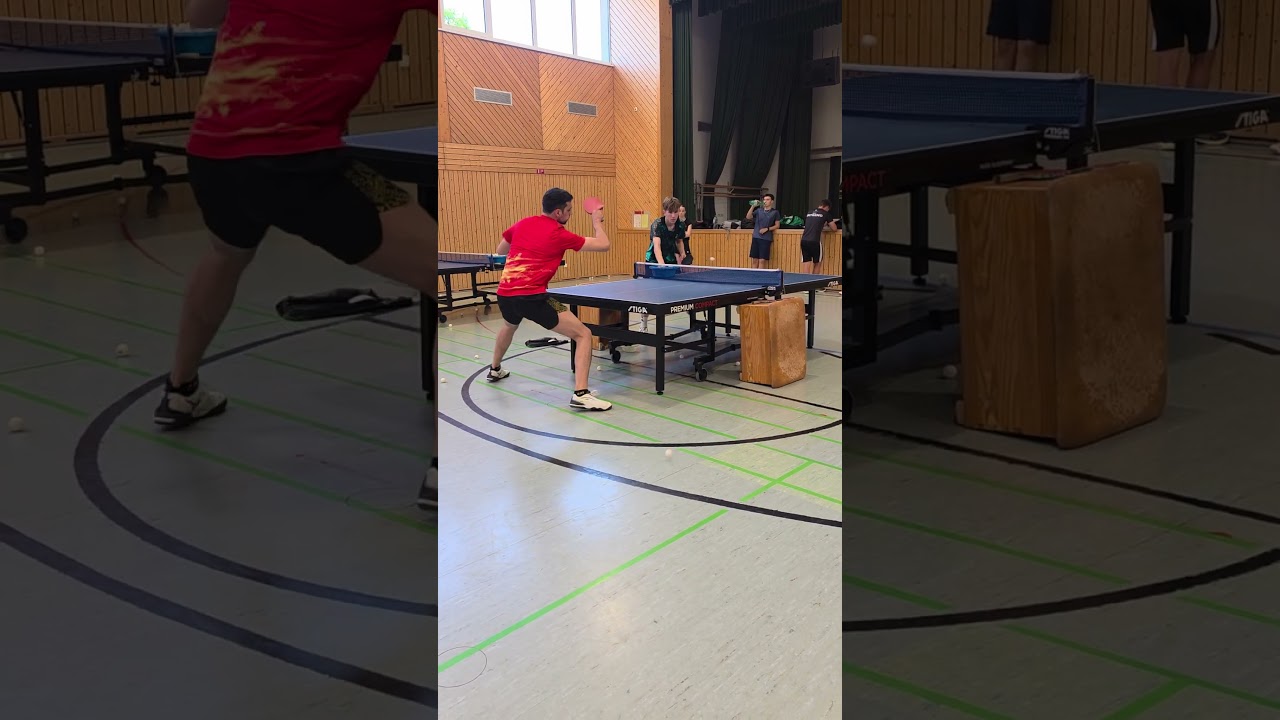
yep, this topic speaks to me personally lol... I was always a forehand slapper from when I was young up until adulthood (as a social hobby player who only played once in a while). When I started competitive tournaments in my 30s, this "technique" got me to an intermediate level... but as soon as I got to the point where I was playing against well-coached players that train a few times a week, my technique got completely found out.
So pride kicked in, and I decided to learn the game "properly", by doing a deep dive into the technical elements of the game. This helped me to start beating players that don't give much height to hit (e.g. short pips, well drilled attackers). In saying that, you should still slap the crap out of lobbers that play 5 metres away from the table lol
This is what I did:
- Went back to square one, and learnt all the fundamentals (forehand / backhand drive, push, topspin, loop), following Youtube videos
- Changed my mental approach to technique: it took me a while to understand that acceleration is more important than speed and power in table tennis, as this helps to better generate spin while still allowing for fast speed
- Lots of shadow practice: If you've had a slapping technique for a long time, it's more difficult to change that technique, especially if you have lots of bad habits and no fundamentals. So shadow practice will help to lock in a better technique
- Record training / matches: Watching yourself play can be one of the most glaring things that you can do in this game, your strokes can look way different to what you're expecting
And this is what I should have done as the first thing (if I had enough time amongst work and a young family):
- Got a good coach
- Join a training group
- More table time
While coaching and training more would have fast-tracked my improvement, if you're the problem-solving type, then it's still possible to improve following a more "hobbyist" approach like I did... it's an enjoyable process to understand the intricacies of table tennis technique, there's so much depth and details to learn.
Also bear in mind that changing technique can make your results worse in the short-term, as your brain needs time to adjust between the old technique and new technique, but that will be less of a problem the more you practice. In the long-term, it's definitely a worthwhile venture. Good luck!