

This user has no status.

This user has no status.
Member




I’ve been interested in trying out Sanwei’s Su Style Penhold blade line for several years now, so I was pretty happy when they reached out to ask whether I would like to review it – Yes! Absolutely, yes! ⭐
Their Su Style line of blades are designed and developed specifically for penholders to have greatly improved comfort and enhanced flexibility for RPB (reverse penhold backhand) shots.
Technical Information:
I made some further measurements myself:
I asked Sanwei's team for some information and learnt this was designed internally with a focus on ergonomics, comfort and optimising for RPB in the modern game. The Su Style line is a design with over 10 years of iteration behind it, and this latest version took nearly two years to develop before it was ready for launch. It's worth noting at this point, that Sanwei's founder's name is Su Zhimin
The blade
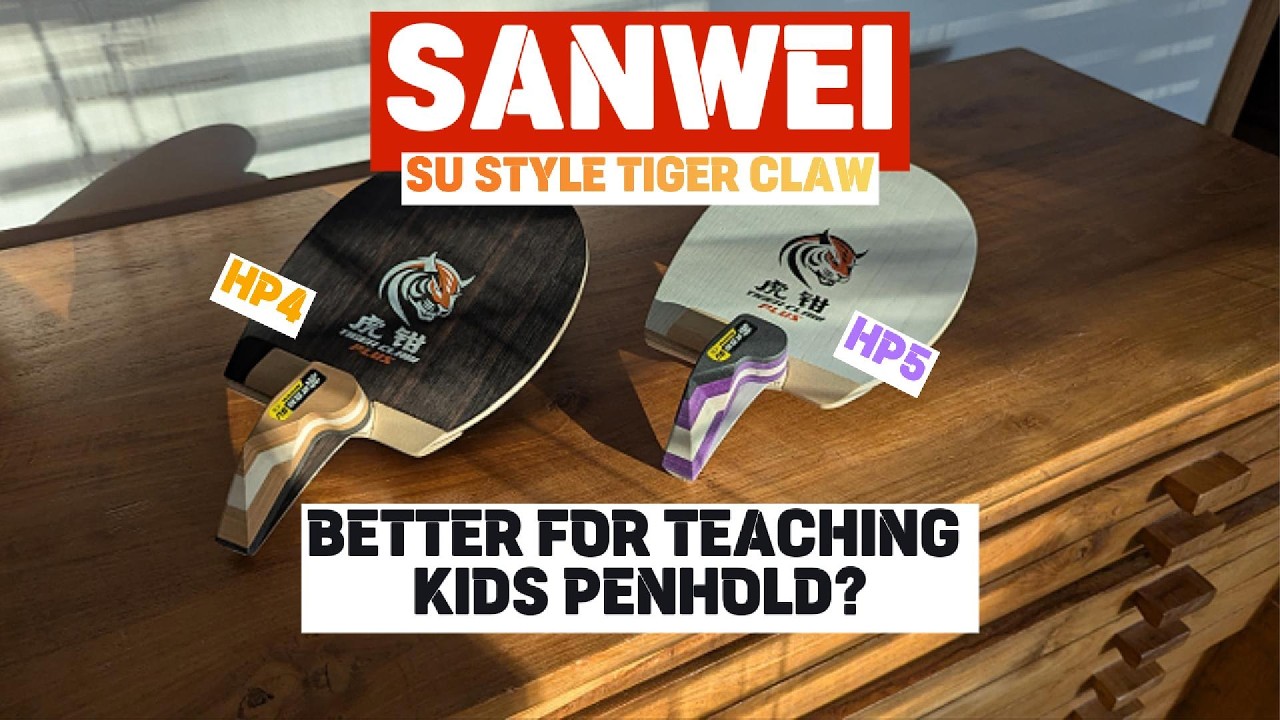
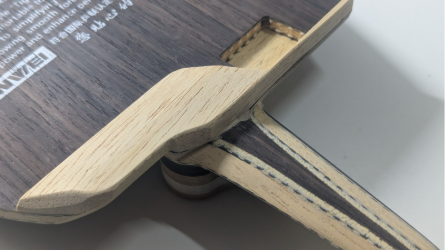
 A large part of the review will be dedicated to the unique shape of the blade and how it feels when playing. First off – the quality of the sanding throughout the blade is fantastic, especially for the uniquely-shaped handle. All the edges are smoothened out – except, with one caveat – there's a rectangle-shaped space carved into the blade on the backhand side. I reached out to Sanwei to enquire about this space and learned it was designed to make it more comfortable to grip the blade.
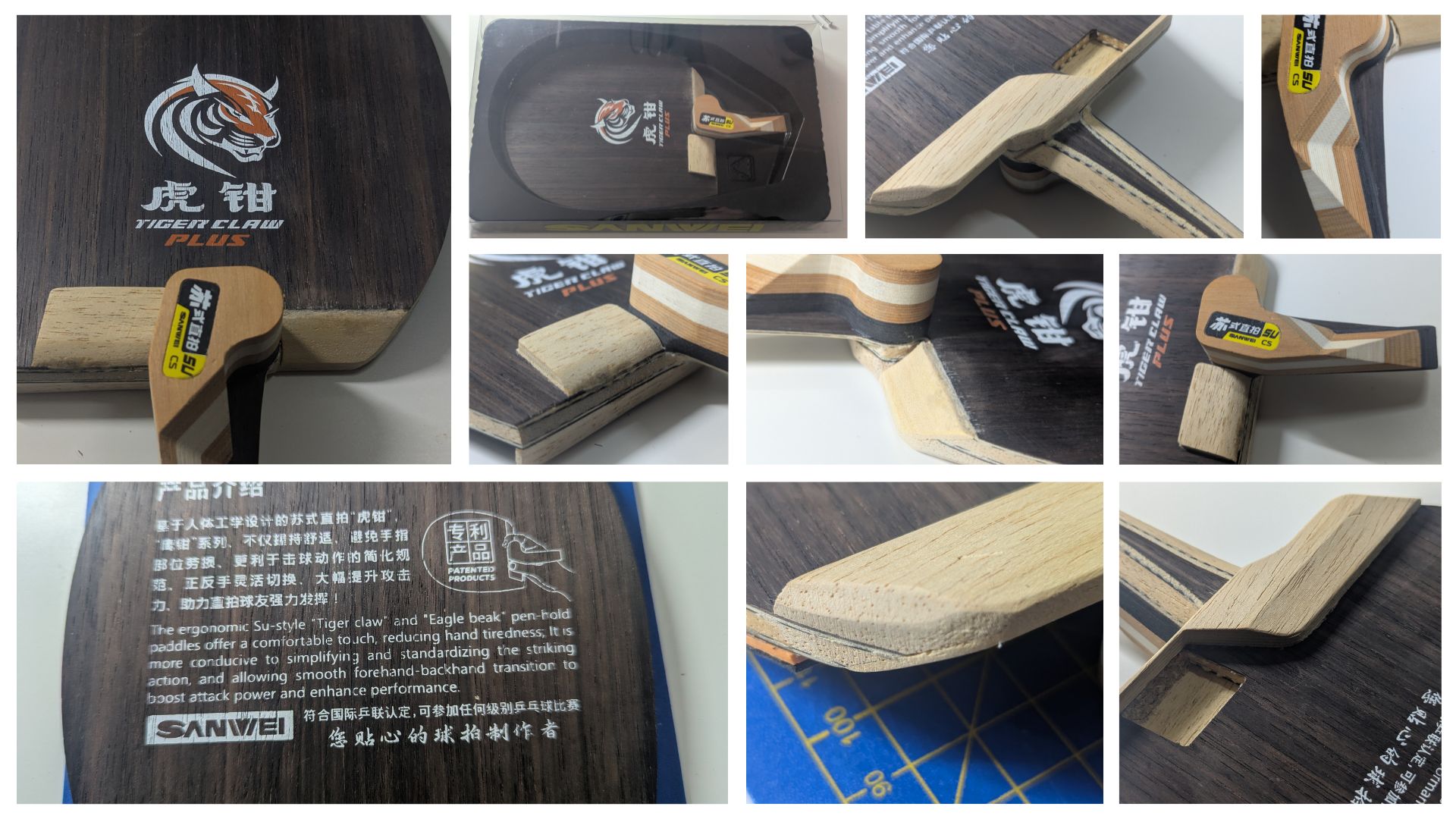
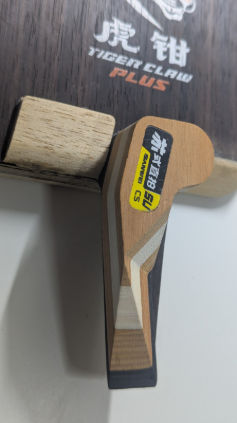
The finely sanded construction shines on both the forehand and backhand sides of the blade. Notably, each side is crafted to better fit the needs of penhold players. The forehand side has a uniquely shaped handle with a striking sharp-angled design that’s finely sanded down. There are no sharp edges on the forehand side, and you don’t have to do any further sanding to get a better fit for your grip. It just fits and boy does it fit well.
Sanwei also designed a wooden attachment for “better thenar support” (it’s been a while since I finished studying Biology in school so I had to do a quick Google) – and ‘thenar’ refers to the thumb muscles. So, in plain English terms, Sanwei’s Su Style Tiger Claw blade has additional support for your thumb area while gripping the blade. It’s really comfy too!
Flipping over to the backhand side, there’s also a unique design. The handle is also lovingly sanded to have a more curved shape, which makes the Tiger Claw feel great to hold in hand.
 Despite my extremely positive reactions to the design and the sanding quality throughout, I do have two concerns though:
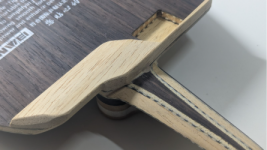
1. There’s a rectangular shaped gap that Sanwei explains was done to reduce the overall weight and to put the thumb support part on the blade. The edges of the gap weren’t sanded down though – which is in contrast to the sanding work on the rest of the blade so it felt a bit out of place to me.
2. The wooden piece running through bottom of the blade doesn’t feel particularly sturdy and I have concerns about it snapping off if enough pressure is applied. My blade already has a crack there under normal play while reviewing the blade. Having said that, the bottom piece does have a functional purpose of making it more comfortable to rest my fingers there for Reverse Penhold Backhand strokes (or RPB for short).
Speaking of RPB, one of the big selling points of the Su Style line is the increased ease of performing RPB strokes compared with standard Chinese-penhold (Cpen) blades. I compared the two grips since I also play Cpen and found it easier to be more flexible for the backhand strokes due to the greater freedom for wrist movement. There’s also more surface area on the backhand rubber side for the ball to contact – primarily because of the larger area plus the fact that your fingers are laid out closer to the handle. Please don't ask me to measure that increase in surface area!
Pleasingly, you still retain the forehand power that’s traditionally one of the strengths of the grip.
So, the blade looks great and feels great – but how does it play in practice?
The nicest looking and smoothest feeling blade would be pretty and only useful as a display item if it didn’t also play well. Pleasingly, there’s a good touch and feeling throughout the blade. Offensive shots were played easily with a great amount of control.
To some extent, ‘Control’ sometimes feels like a nebulous, formless, thing. I wonder about how much of the ‘control’ aspect is due to player ability. Is it perhaps the aspect of not needing to hold back when making the same stroke? I wonder if others have wondered similar things or whether I’m the only one wondering this.... Anyway....
For the purposes of a comparison, I compared the Su Style Tiger Claw against my cpen DHS Fang Bo B2X. The setup on the Tiger Claw felt really light compared to my B2x setup (Which was a Sanwei Target Europe Soft paired with a Xiom Omega VIII China – both set up without a traditional penhold gap). When measured, the difference was surprisingly small. The B2X was only 4g heavier!
On a bounce test, the Tiger Claw Su Style HP4 had a higher bounce compared to the DHS Fang Bo B2X – which was pretty surprising as the B2X is already a pretty fast inner carbon blade. The B2X was faster on higher impact shots so I did have to remember to adjust on them so I don’t overshoot the table. As I play more table tennis, I value control and placement over power and speed so the Su Style fits me very well.
How does RPB play in practice?
RPB strokes were easier and quicker to execute properly and the increased wrist flexibility was very useful in making micro-adjustments in my shot aiming. On long play sessions, the grip comfort was VERY valuable – in cpen grips, there’s often pressure on the middle and fourth fingers and I can feel finger fatigue (yes it’s a thing) after a while. On the Su Style, the finger fatigue was pretty much eliminated – I'd be happy using it for long sessions. Actually, I think I'd prefer it for long sessions.
RPB and Sanwei’s new Target Europe Soft
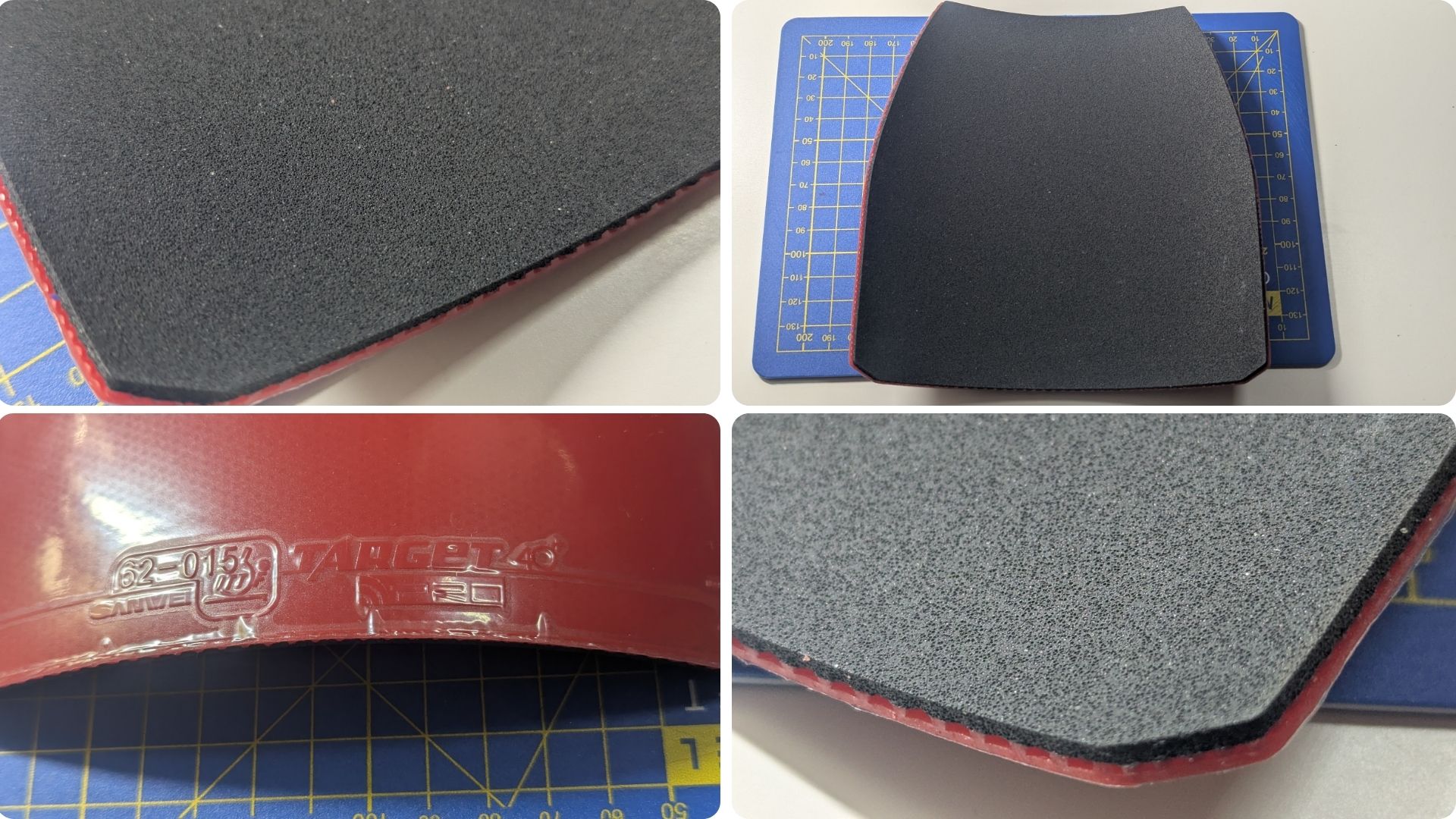 Standard strokes were all fine to play and the new Target Europe Soft also played VERY safely on the backhand for RPB. The more responsive nature of the rubber helped make backhand strokes more consistent for me and it retains the potential for very high amounts of spin. You won’t break speed records with the backhand shots but you have a higher safety margin with them. Previously, I would have recommended a DHS 8-80 on the backhand for many players for consistency and potential for counters – I'm happy recommending the Target Europe Soft as well. Both options are great for those who play with more spin on RPB as opposed to smacking the ball with speed.
Closing thoughts
I deliberately spent a great deal of time on this review elaborating more about the blade itself as I feel the design is the biggest and best feature. The blade composition for the HP4 Inner Layer ALC also fits probably the widest range of playing styles and abilities since you have a wonderful balance of control and power along with retaining the ease of generating spin (which becomes more difficult to generate consistently on stiffer, harder, faster blades).
 Overall, the comfort and ease of making certain strokes are very very very good. My main caveat still relates to the durability of that one part of the blade and the location of the rectangular cut-out mentioned in the earlier section of the review. I’m excited to continue playing with the Su Style myself, so it’s now part of my main rotation of blades.
Maybe I should try the HP6 version next 😊 – it's a PBO ZLC inner layer blade with a classic 5 + 2 composition.
Their Su Style line of blades are designed and developed specifically for penholders to have greatly improved comfort and enhanced flexibility for RPB (reverse penhold backhand) shots.
Technical Information:
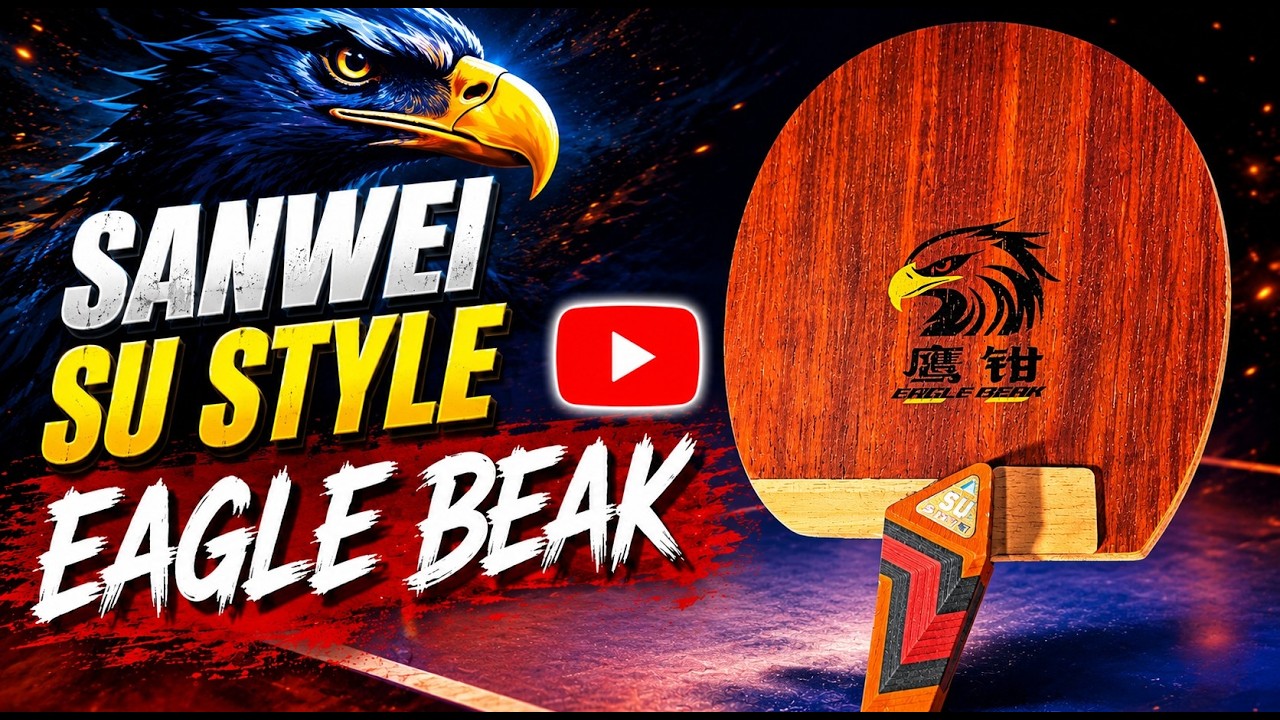
Composition: There at 6 options, each with a different structure – I chose HP4 (5 + 2 Inner ALC structure). The HP4 has an ebony outer layer, followed by a layer of Ayous, then yellow ALC, and has a Kiri core.
Variations: Comes in 2 models – one for right-handed players and one for left-handed players. On Sanwei’s site, you can specify which version you want. The Tiger Claw measures 240 mm in length and 150 mm in width. (Width at lowest point = 49mm)
Review setup: 180g – Sanwei Target National FH + Sanwei Target Europe Soft BH. (Sanwei also sent me this Target Europe Soft new release to see what I thought about it)
I made some further measurements myself:
- Forehand height (by rubber space): 5.9 inches / 151mm
- Backhand height (by rubber space): 5.8 inches / 149mm
- Measured weight: 87g
I asked Sanwei's team for some information and learnt this was designed internally with a focus on ergonomics, comfort and optimising for RPB in the modern game. The Su Style line is a design with over 10 years of iteration behind it, and this latest version took nearly two years to develop before it was ready for launch. It's worth noting at this point, that Sanwei's founder's name is Su Zhimin
The blade
The finely sanded construction shines on both the forehand and backhand sides of the blade. Notably, each side is crafted to better fit the needs of penhold players. The forehand side has a uniquely shaped handle with a striking sharp-angled design that’s finely sanded down. There are no sharp edges on the forehand side, and you don’t have to do any further sanding to get a better fit for your grip. It just fits and boy does it fit well.
Sanwei also designed a wooden attachment for “better thenar support” (it’s been a while since I finished studying Biology in school so I had to do a quick Google) – and ‘thenar’ refers to the thumb muscles. So, in plain English terms, Sanwei’s Su Style Tiger Claw blade has additional support for your thumb area while gripping the blade. It’s really comfy too!
Flipping over to the backhand side, there’s also a unique design. The handle is also lovingly sanded to have a more curved shape, which makes the Tiger Claw feel great to hold in hand.
1. There’s a rectangular shaped gap that Sanwei explains was done to reduce the overall weight and to put the thumb support part on the blade. The edges of the gap weren’t sanded down though – which is in contrast to the sanding work on the rest of the blade so it felt a bit out of place to me.
2. The wooden piece running through bottom of the blade doesn’t feel particularly sturdy and I have concerns about it snapping off if enough pressure is applied. My blade already has a crack there under normal play while reviewing the blade. Having said that, the bottom piece does have a functional purpose of making it more comfortable to rest my fingers there for Reverse Penhold Backhand strokes (or RPB for short).
Speaking of RPB, one of the big selling points of the Su Style line is the increased ease of performing RPB strokes compared with standard Chinese-penhold (Cpen) blades. I compared the two grips since I also play Cpen and found it easier to be more flexible for the backhand strokes due to the greater freedom for wrist movement. There’s also more surface area on the backhand rubber side for the ball to contact – primarily because of the larger area plus the fact that your fingers are laid out closer to the handle. Please don't ask me to measure that increase in surface area!
Pleasingly, you still retain the forehand power that’s traditionally one of the strengths of the grip.
So, the blade looks great and feels great – but how does it play in practice?
The nicest looking and smoothest feeling blade would be pretty and only useful as a display item if it didn’t also play well. Pleasingly, there’s a good touch and feeling throughout the blade. Offensive shots were played easily with a great amount of control.
To some extent, ‘Control’ sometimes feels like a nebulous, formless, thing. I wonder about how much of the ‘control’ aspect is due to player ability. Is it perhaps the aspect of not needing to hold back when making the same stroke? I wonder if others have wondered similar things or whether I’m the only one wondering this.... Anyway....
For the purposes of a comparison, I compared the Su Style Tiger Claw against my cpen DHS Fang Bo B2X. The setup on the Tiger Claw felt really light compared to my B2x setup (Which was a Sanwei Target Europe Soft paired with a Xiom Omega VIII China – both set up without a traditional penhold gap). When measured, the difference was surprisingly small. The B2X was only 4g heavier!
On a bounce test, the Tiger Claw Su Style HP4 had a higher bounce compared to the DHS Fang Bo B2X – which was pretty surprising as the B2X is already a pretty fast inner carbon blade. The B2X was faster on higher impact shots so I did have to remember to adjust on them so I don’t overshoot the table. As I play more table tennis, I value control and placement over power and speed so the Su Style fits me very well.
How does RPB play in practice?
RPB strokes were easier and quicker to execute properly and the increased wrist flexibility was very useful in making micro-adjustments in my shot aiming. On long play sessions, the grip comfort was VERY valuable – in cpen grips, there’s often pressure on the middle and fourth fingers and I can feel finger fatigue (yes it’s a thing) after a while. On the Su Style, the finger fatigue was pretty much eliminated – I'd be happy using it for long sessions. Actually, I think I'd prefer it for long sessions.
RPB and Sanwei’s new Target Europe Soft
Closing thoughts
I deliberately spent a great deal of time on this review elaborating more about the blade itself as I feel the design is the biggest and best feature. The blade composition for the HP4 Inner Layer ALC also fits probably the widest range of playing styles and abilities since you have a wonderful balance of control and power along with retaining the ease of generating spin (which becomes more difficult to generate consistently on stiffer, harder, faster blades).
Overall, the comfort and ease of making certain strokes are very very very good. My main caveat still relates to the durability of that one part of the blade and the location of the rectangular cut-out mentioned in the earlier section of the review. I’m excited to continue playing with the Su Style myself, so it’s now part of my main rotation of blades. Maybe I should try the HP6 version next 😊 – it's a PBO ZLC inner layer blade with a classic 5 + 2 composition.