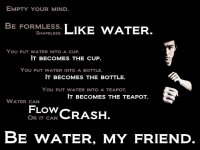
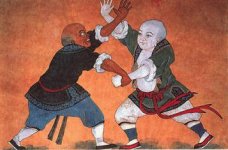
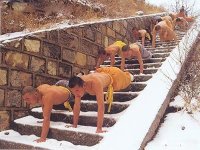
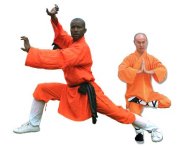
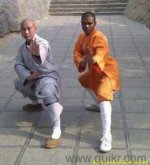
Something that might be worth understanding. In the east, things like martial arts are practices. But that comes from a long tradition personal practices of self development. In India religious practice is framed in that model of personal practice to achieve, slowly, step by step, higher and higher levels of enlightenment and liberation from suffering. Buddhist practice that was brought from India to China had this exact framework.
Martial arts, in India, were actually an outgrowth of yoga practice adapted for self defense and mercenary attack. Both Buddhism and Martial Arts which originated from India were exported to China where they evolved and, with the case of martial arts, there is no question that China improved on the original product significantly.
Anyway, that idea of a personal process and the repetition of actions over and over to develop and improve that are very much a part of eastern philosophical and religious thought, apply perfectly to Table Tennis where it becomes obvious that this is a slow, dedicated practice where there are times when it can seem that you are making no progress and then you look at a period of months and the progress is more evident.
So statements like:
abhyasavairagyatan nirodhah:
"Practice without attachment to the results, gets you the results!"
That is Sutra 1.12 from the Yoga Sutras.
Sutra 3.6: tasya bhumishu viniyoghah:
"The practice should be continually adapted to the current and changing needs of each separate individual."
Have obvious applications to and personal process of self development.
In eastern philosophy, the emphasis on the focusing on the process rather than the idea of goals is a cornerstone of these kinds of practices. And that concept would definitely be useful to anyone training in any sport. But, because there ends up being so much repetition in table tennis the usefulness of focusing on the process as an end in itself becomes particularly evident.
Sent from Deep Space by Abacus