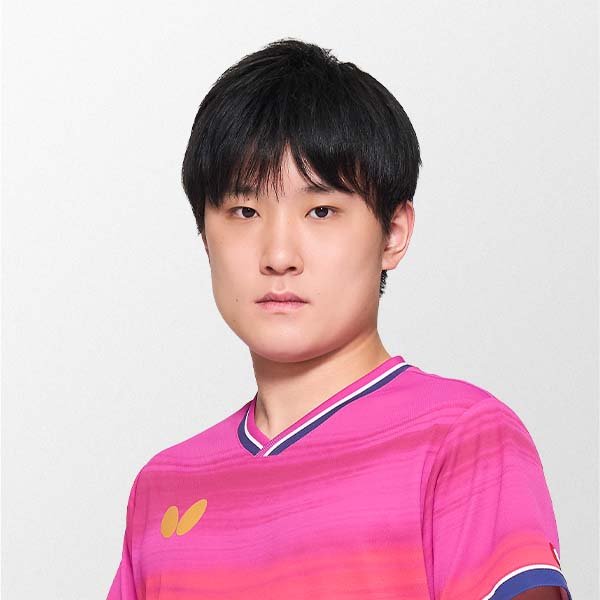
Pretty impressed by HT’s game today. He adopted a lot of ZYL style, spin, short stroke, good placement, variations of strike power . Well prepared. Breaking bad HT= Winning HT
What I respect about Tomo, Felix, Truls and even to a lesser degree the other younger greats like Alexis, Darko, LYJ, AJH is the refusal to believe that everything is set in stone and their willingness to try things that will manifest over a long time to improve their game. Which is partly what disgusts me when people who have never invested significant time in improving past a plateau in TT continually feel the need to denigrate what they are doing without understanding the difficulty of the task even a relatively young age. You will never hear Fan Zhendong have anything but incredible respect for the amount of effort that Harimoto is putting into his game to improve. Same with Wang. It is always the amateurs that say obvious things that betray their ignorance of how hard it is to improve at table tennis. It's okay to point out the obvious issues. Pretending the solutioks are obvious is another story. But anyone who saw Wang play against Felix, Gauzy, Darko etc. could see there was a path, whether one could take it was up to them and their ability.One thing surprised me the most about Tomo's play today is he endured so will against WCQ's loop attack and so many shots with pace and placement. Usually one, two or three loop will win WCQ the point against any other opponent, but not to Tomo today. Frankly, that surprised WCQ caused him broken form and awkward position,, and lots of missed shots.
Sustaining relentless attacks from players like WCQ itself is inhuman like. You have to be in the zoom to react that fast with precision.
This is my opinion as well, but everyone is allowed their own opinion.Nittaku balls feel harder and heavier and harder to spin than anything else and seem to disadvantage spinny loopers, imo.
The main question is, was a coach nominated for Hayata’s corner (this we will never know)I was curious about coaching during medical timeout. I could not find anywhere in either the ITTF handbook or the WTT handbook where it says this is not allowed. Perhaps it used to be prohibited and got removed when they changed it to allow coaching except during rallies? Can anyone cite in a *recent* ITTF/WTT text that says coaching not allowed during medical timeout?
ITTF handbook3.5.1 Advice...3.5.1.3 Players may receive advice at any time except during rallies provided play is not thereby delayed (3.4.4.1); if any authorised person gives advice illegally the umpire shall hold up a yellow card to warn him or her that any further such offence will result in his or her dismissal from the playing area.WTT handbook4.2.1.3.1 Advice...b) Players may receive advice at any time except during rallies provided play is not thereby delayed. Playshall be continuous throughout an individual match except that any player is entitled to an interval of up toone (1) minute between successive games of an individual match and brief intervals for towelling after every six (6) points from the start of each game and at the change of ends in the last possible game of an individual match. If any authorised person gives advice illegally the umpire shall hold up a yellow card to warn him or her that any further such offence will result in their dismissal from the playing area

I understand the controversy surrounding the no coaching custom in Japan vs. Japan matches. My question is that there's a prevailing belief in general that no coaching is allowed during a medical timeout. It was not the case in Tomo's match because Wang Hao was standing next to WCQ, and Seiya Keishikawa was standing over Tomo. So maybe there is some text hidden somewhere that I'm just not aware of. [Edit] Or maybe it's just an artifact that remains in our minds.The main question is, was a coach nominated for Hayata’s corner (this we will never know)
Or did a “spectator” just walked in and did the treatment
Note that the score is presented properly in my post. Aside from the coach and trainer being one and the same, Harimoto had problems with the MTO itself, saying he didn't want to use one if possible and was determined not to take one in the match againstNot exactly the same.
Tomokazu was up 4-2 in game 6 when calling that medical timeout.
Hayata was down 4-2 in the deciding game. And even worse, she had her coach help her while Miwa was waiting there completely alone.
In Tomokazu’s case Wang Hao was waiting with Wang Chuqin together and could talk to him in the meantime.
this has nothing to do with no coaching culture or not.I understand the controversy surrounding the no coaching custom in Japan vs. Japan matches. My question is that there's a prevailing belief in general that no coaching is allowed during a medical timeout. It was not the case in Tomo's match because Wang Hao was standing next to WCQ, and Seiya Keishikawa was standing over Tomo. So maybe there is some text hidden somewhere that I'm just not aware of.
When Harimoto wrote his posts on instagram regarding the deficiencies of the T-League, the first thing he called out was the balls used, which are Nittaku.Any idea if the Nittaku balls and tables have helped with Harimoto win against WCQ. How do the Nittaku balls and tables compared to DHS, Double Fish, Joola and Tibhar?
I hear the Nittaku balls are more spinier that DHS and Double Fish but what about the tables. Is Nittaku tables grippy like DHS and Double Fish or are they slippery like Joola and Tibhar?
That's fine.. But my question isn't about Hina's situation specifically. It's a general question: Are you allowed to be coached during a medical timeout?this has nothing to do with no coaching culture or not.
during the on call area, players need to fill in who will be sitting by the coaches area.
if no coach was filled in, then it was a spectator that walked to the bench.
but if the Japanese girls knew no coaches (due to culture), and still nominated the coaches that will sit, then it was fine for the coach to "appear" in the corner afterwards. In this example, this is the coach, and not spectator.
In the first example, if no coach was nominated, then it was a spectator. In other words, the spectator has no right and no business to be by the players bench and this actually is a breach of rules under the watchful eyes of officials
Even if so, this method of exploiting the loophole even if technically correct/legal is still the issue worth discussing. People make it sound as if it was all about timeout not about the ability of Hayata to talk to her cosch during the timeout even if accidentally.The main question is, was a coach nominated for Hayata’s corner (this we will never know)
Or did a “spectator” just walked in and did the treatment
Oh I have never heard no coaching during medical timeout, the one thing I remember being questioned was why were coaches always allowed to follow the players to change shirts. I don't think it is a big issue as long as everyone has access to coaches fairly.I understand the controversy surrounding the no coaching custom in Japan vs. Japan matches. My question is that there's a prevailing belief in general that no coaching is allowed during a medical timeout. It was not the case in Tomo's match because Wang Hao was standing next to WCQ, and Seiya Keishikawa was standing over Tomo. So maybe there is some text hidden somewhere that I'm just not aware of. [Edit] Or maybe it's just an artifact that remains in our minds.
He went back to dignics 05 on his FH FWIW.I've brought you the thoroughest analysis of today's final.
View attachment 37352
Absolutely, 100%.This is my opinion as well, but everyone is allowed their own opinion.
Indeed.Probably why i like them then. My game is power over spin. I guess these things are all subjective.
FWIW, this is what I get when I type "is coaching allowed during a medical timeout in table tennis" in my browser:Oh I have never heard no coaching during medical timeout, the one thing I remember being questioned was why were coaches always allowed to follow the players to change shirts. I don't think it is a big issue as long as everyone has access to coaches fairly.
Many in mainland China believe Harimoto started turning to the Dark Side after getting wronged by Aruna and Matsushima at US Smash 2025 and completely lost it after losing to Sone and no longer held back his emotions.I guess this is a lesson to coaches all around the world: do not upset Harimoto or show disrespect either purposefully or inadvertently. He played out of his mind in the finals.
probably like those 4 year old kids, the coach need to helpOh I have never heard no coaching during medical timeout, the one thing I remember being questioned was why were coaches always allowed to follow the players to change shirts.
future, we should just have a limit of 1 toilet break per matches, for both players to exploitI don't think it is a big issue as long as everyone has access to coaches fairly.