
This user has no status.
use outer carbon.... DO IT NOW !!!
- Thread starter the-don
- Start date



You are using an out of date browser. It may not display this or other websites correctly.
You should upgrade or use an alternative browser.
You should upgrade or use an alternative browser.





says
I’ve gotten so much better

says
I’ve gotten so much better
Member
(this is coming from a person who plays at the club level) In my experience I have had no problems with the durability of inner carbon
This user has no status.


No. I'm a beginner, who just started playing in the club for 6 months, i got a Loki W81 Outer as a gift. I paired with Sanwei t88 iii (cheap rubber yes, but should be ok for a newbie like me).
I cannot control it. I feel very minimal feedback from the blade, so i don't know where the ball is hitting or how strong did i hit he ball. Either this answer the question that outer is bad for beginners, or my blade is from a bad batch.
I do not have this problem while playing with Donic Anders Lind Inner nor any pure wood blades.
I cannot control it. I feel very minimal feedback from the blade, so i don't know where the ball is hitting or how strong did i hit he ball. Either this answer the question that outer is bad for beginners, or my blade is from a bad batch.
I do not have this problem while playing with Donic Anders Lind Inner nor any pure wood blades.
This user has no status.
🏆 Top 1% Commenter
Active Member
Active Member
He said his advice is for higher level players, and if you don't mind frequent changes (i.e., because you train 6 hours per day, re-glue new rubber every week, and so wear out blades fast) inner carbon is fine.
This user has no status.

This user has no status.
🏆 Top 1% Commenter
Well-Known Member
Well-Known Member

You can’t compare 99.9% of the players on this forum with guys like this. So from my point of view … ha ha…
Cheers
L-zr
Cheers
L-zr
This user has no status.
Whoops hahaha. Definitely not for me then.He said his advice is for higher level players, and if you don't mind frequent changes (i.e., because you train 6 hours per day, re-glue new rubber every week, and so wear out blades fast) inner carbon is fine.
Btw, why can changing rubber frequently wear out inner blade faster than outter?
This user has no status.

This user has no status.
🏆 Top 1% Commenter
Well-Known Member
Well-Known Member

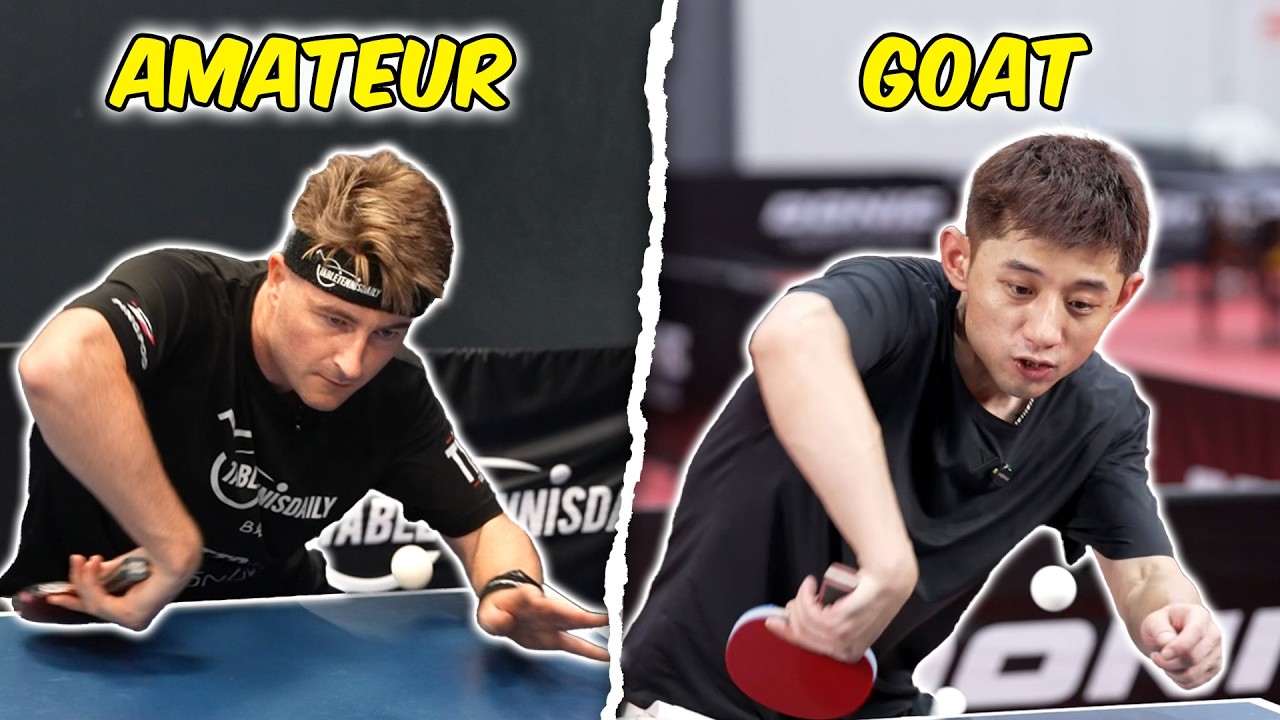
ZJK says outer carbon, yet the rest of the top Chinese play some variation of W968.
I get the point about durability, and that no two blades are the same, but he's being overly sensitive to this.
I get the point about durability, and that no two blades are the same, but he's being overly sensitive to this.
This user has no status.
🏆 Top 1% Commenter
Active Member
Active Member
Changing the rubber (using water-based glue) will likely have similar effects on both inner and outer carbon. It's just that more flexible blades (as inner carbon blades usually are) tend to wear out more quickly because they bend more, which imposes greater micro-strain on the wood structure and glue lines. Application of water-based glue simply accelerates the process via repeated expansion-contraction cycles that also stress the wood and glue joints.Whoops hahaha. Definitely not for me then.
Btw, why can changing rubber frequently wear out inner blade faster than outter?
This user has no status.
🏆 Top 1% Commenter
Well-Known Member
Well-Known Member
Moderator

They get their blades from sponsors who replicate and quality control. If you are gluing a lot, moisture is a problem for wood and that affects the consistency of inner force more than outer force.ZJK says outer carbon, yet the rest of the top Chinese play some variation of W968.
I get the point about durability, and that no two blades are the same, but he's being overly sensitive to this.
says
Fair Play First


says
I'm still learning Table Tennis (and regret 😭)

says
I'm still learning Table Tennis (and regret 😭)
Member

Depends on your play style, allwood blades still work great for me 😅
says
twiddle!

says
twiddle!
Active Member
If you play with a hardwood blade like YEO or Rosewood, this is even more resistant to moisture than the koto outer layer of a Viscaria. My YEO is 10 years old with no sign of moisture damage. Therefore everyone should switch to hardwood.
This user has no status.


everyone?If you play with a hardwood blade like YEO or Rosewood, this is even more resistant to moisture than the koto outer layer of a Viscaria. My YEO is 10 years old with no sign of moisture damage. Therefore everyone should switch to hardwood.
Ma Long uses inner limba - should he switch now or is it too late?
This user has no status.
🏆 Top 1% Commenter
Well-Known Member
Well-Known Member

everyone?
Ma Long uses inner limba - should he switch now or is it too late?
He didn't retire?
says
I’ve gotten so much better
says
I’ve gotten so much better
Member
Not in our heartsHe didn't retire?
This user has no status.
Member

Not sure if this is what ZJK was talking about, but it's certainly better than the no explanation he gave.Changing the rubber (using water-based glue) will likely have similar effects on both inner and outer carbon. It's just that more flexible blades (as inner carbon blades usually are) tend to wear out more quickly because they bend more, which imposes greater micro-strain on the wood structure and glue lines. Application of water-based glue simply accelerates the process via repeated expansion-contraction cycles that also stress the wood and glue joints.
Still, why would an inner carbon flex more than outer ones? (This is a question, not a disagreement).
My rudimentary understanding is that the location of the composite material affects the 'feel' of hitting the ball, but not the flexibility (the bendiness of the whole blade). Both versions form a sandwich of layers glued together, so why would the location of the composite material make one more flexible than the other.
This user has no status.
🏆 Top 1% Commenter
Active Member
Active Member
Because when a blade bends, the outermost layers experience the most strain (tension/compression), so the closer to the surface you place the stiff carbon layer the more it resists bending. Bending stiffness of a material increases rapidly with distance from the center, so all else equal (same materials, ply thickness, etc.), an outer carbon blade can be considerably stiffer than an otherwise identical inner carbon....why would an inner carbon flex more than outer ones?
says
Making a beautiful shot is most important; winning is...

says
Making a beautiful shot is most important; winning is...
🏆 Top 1% Commenter
Well-Known Member
Well-Known Member

says
Table tennis clown
🏆 Top 1% Commenter
Well-Known Member
Well-Known Member

while the interpretation is technically correct a blade does not really bends itself around our plastic-balls that much that it would have a great destructive effect.Because when a blade bends, the outermost layers experience the most strain (tension/compression), so the closer to the surface you place the stiff carbon layer the more it resists bending. Bending stiffness of a material increases rapidly with distance from the center, so all else equal (same materials, ply thickness, etc.), an outer carbon blade can be considerably stiffer than an otherwise identical inner carbon.
says
Table tennis clown
🏆 Top 1% Commenter
Well-Known Member
Well-Known Member
😂Heh, outer carbon? What a folly it is, sheer folly by a dumbass. The Racket rule 2.4.2 does forbid plastics as outer layer of blades.
__________
Be erudite of everything
😂 😂 😂 😂 I think this time it is YOU who might be the dumbass. Everybody except you understands that when talking about "outer" we know that the carbon is directly UNDER the most outer wood veneer.
Having said that, blades that have carbon as the outer layer do exist and can be purchased, they also sell 500gr heavy steel blades. aluminum blades and stainless steel blades
Similar threads

- Replies
- 10
- Views
- 1K


- Replies
- 14
- Views
- 1K



