



This user has no status.

This user has no status.
🏆 Top 1% Commenter
Well-Known Member
Well-Known Member


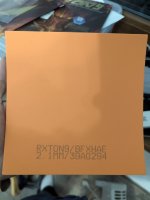
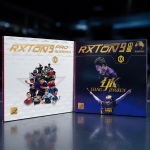
Loki Rxton 9 39 — orange sponge, black topsheet
I will add photos when I get back home.
Setup and testing
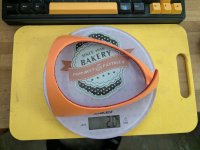
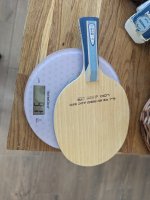
I've played with the 2.1 mm (max) version from 14 September to 26 October: six weeks, averaging about 12 hours a week, so roughly 70 hours in total. I've used it exclusively on forehand, on my W81 ADC, the normal version, which weighs 91 g. On the backhand I have the red Rxton 9 37.5. Despite the name, this is not the same rubber as the red one: the sponge feels completely different. The sheet weighed 74 g before cutting, with glue and the first two layers of Kailin, with 32 g cut off, putting the cut sheet at roughly 42 g. I still need to reweigh it, because one corner might have touched the table during the pre-cut weighing.
It cost me about 30€ with all the import taxes. With promotions it can drop to about 22€, and it's listed for 35€ on AliExpress.
Out of the package
Out of the package, it can lift the ball. It loses that after a few sessions. It doesn't smell of booster out of the factory, and it doesn't come with the protective glue layer that H3 Neo comes with.
Two layers versus six layers of Kailin
When the sheet was new, I boosted it with two layers of Kailin. That wasn't enough: the sheet barely curled. About a month later, I boosted it again, this time with six layers of Kailin, and it curled properly.
On two layers, it played fairly dead. The short game was easier, but driving was harder, and I couldn't hit through the sponge on the majority of my strokes. It felt like the opposite of catapult. On six layers, it has a similar bounce to Loki Arthur China, and it hasn't changed since that reboost.
For me, six layers of Kailin is the sweet spot for this rubber. If you use National booster, I'd guess that's about two, maybe three layers, but I haven't tested that. This wasn't a controlled comparison either: it's the same sheet boosted twice, a month apart, so the second boost went on top of the first and the sheet had a month of use behind it.
Opening and countering
Opening against backspin was super easy with both boosts. With six layers, the spin was stupid. The stroke changes, though: with six layers you play more forward, while with two layers you need to go more up.
Countering was easy with both boosts too. The incoming ball usually has enough speed to sink deep into the sponge, even without much booster. Where it falls short is when I try to put more of my own power into the counter or the follow-up topspin. That's where it lacks support, and I have to limit my power.
Smashing
Smashes are good. They're not effortless, but I don't have to limit my power on smashes either.
Blocking
Blocking is more predictable with a lot of booster. With only two layers, I had trouble putting high topspin balls on the table.
Serving and receive
Serves didn't change between the two boosts. I had trouble producing obscene amounts of spin, but it's easy to keep the ball short and place it on the table. With the Rasanter C53, which comes boosted from the factory, I had trouble placing the ball well. That was on a separate blade of the same weight, which I think was from the same batch.
Attacking long serves is quite easy, and it gets easier the more it's boosted.
Engaging the sponge
With my technique, I can hit through it too easily. It's perfect when I make a technical mistake and don't engage my body. When I do engage my body, it lacks support, mainly on those counters and follow-ups I mentioned. If you only use your hands, that's not enough to fully engage it, but once you develop the skill, it's super easy to go through the sponge. That's why I'd like to try a harder version.
Compared with Rasanter C53
Boosted, it feels pretty similar to the C53 when the C53 is new. I can switch between them without adjustment. The difference is that this one keeps its playing properties longer than the C53. My match play also improved a fair bit after switching from the C53, although I can't pinpoint exactly why.
Compared with Arthur China
Arthur China is easier to hit through and faster at the lower speeds. I think it's also easier to generate more spin with Arthur China, but I think its spin limit is lower.
Cleaning and wear
I have to clean it very regularly, sometimes even mid-session. It accumulates gunk and gets slippery, and you need to dry it regularly. I ran an experiment: after cleaning it with Revolution Rejuvenator, how many trainings could I play cleaning it only with water? One or two trainings were okay; in the third, it deteriorated. Soap or Revolution Rejuvenator brought the topsheet back to a fresh, new state.
After roughly 70 hours, the topsheet doesn't show any major wear, and I don't perceive any degradation in it. The sponge keeps its bounce and doesn't seem to be losing much.
Other competitors
The other competitors, for me, would be H3 and Battle 2. When I played with Battle 2, the centre of the topsheet quickly developed a mark. I didn't own a suitable H3, but I played on a number of blades with a similar H3 Orange, and it felt way more dead and made it harder to generate spin on all shots. Those weren't my setups, so I treat that as an impression rather than a direct comparison.
Who is it for?
If you want to avoid booster, avoid this rubber. I'd recommend this particular combo to players who want to develop using their body in the stroke, because it rewards that, but it's usable without it. If you only use your hands, you won't fully engage it. If you already fully use your body, you need something harder to play at 100%.
Verdict
Properly boosted, this is an easy rubber to open with, the spin is stupid, counters are easy, long serves are easy to attack, and placing serves short is easy. It feels close enough to a new C53 that I can switch without adjustment, it holds its playing properties longer, and my match play improved after the switch. It's also forgiving when I'm lazy and don't use my body. The compromise is that when I do put my own power into counters and follow-ups, I go through the sponge too easily and have to hold back, and it needs a lot of cleaning to keep its grip. Of the two preparations, I'd pick six layers of Kailin without hesitation. Next, I want to try a harder version or the blue version.
Last edited: