Nexy Designer's Diary

This user has no status.
Member
Aug 2025
60
148
211
Nice to meet you.
My name is Oscar, and I lead the Nexy brand in Korea.
I have occasionally written posts on the Mytabletennis website for quite a long time, but now I am making my debut here as well.


Nexy has been producing products for 18 years since we first launched in 2007.
During that time, we have worked tirelessly to create the best products with our utmost effort, but I often wonder how many people are truly aware of Nexy in today’s global competitive environment.


From now on, I’d like to take this opportunity to organize and share many of the articles I’ve written over the years, so that more people can get to know Nexy.


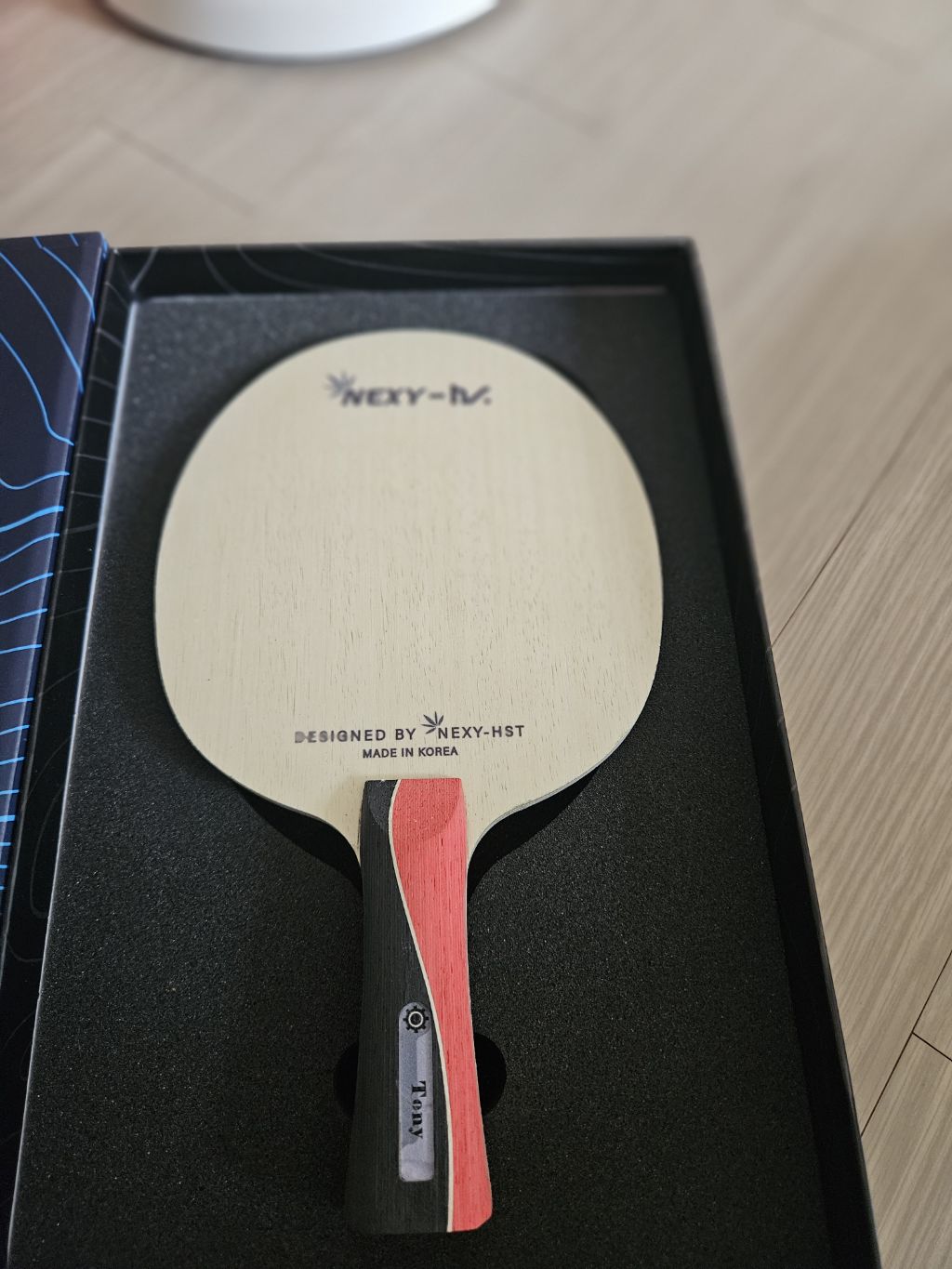
Today, I’d like to start by introducing one of the projects that Nexy is currently focusing on — the Fitting Racket Service.


1d97bbf074d8b191225b00ecd5aadd3cc6b786d9.jpg


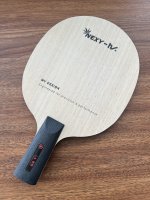
The Fitting Racket is a service developed by Nexy based on the extensive data we have accumulated from producing countless products over the years, combined with each customer’s specific requirements, to create a racket that perfectly matches what they want.
For a fee of USD 250, we can produce and ship it to any country in the world.
During the process, two rackets are made — a first sample and a second sample — and the customer receives both.


Nexy’s Fitting Racket has two unique features that set it apart from anything else in the world:

1.jpg
3.jpg


2.jpg


1. A new manufacturing method
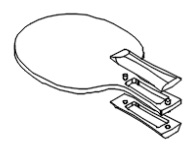
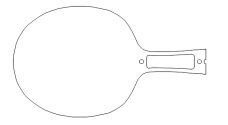
Nexy’s Fitting Racket has two holes drilled in the handle.
These two holes provide important reference points during the manufacturing process.
They allow the racket to be positioned precisely for sanding, and all subsequent processes, including printing, are carried out using these holes as the reference.
In addition, wooden pins are inserted into these holes to secure the handle.
This method ensures the handle is fitted very firmly and securely.


2. A new bonding method
Nexy’s Fitting Racket features a newly developed glue layer.
Until now, most brands around the world have used two bonding methods, one of which is using water-based glue to bond the wooden layers.
This method is easy to work with and provides a natural ball feel, but it has the drawback of relatively lower durability.


The other common method is using epoxy for bonding.
While this creates a very strong bond and is widely used by most brands today, it can result in a loss of the natural wooden feel and also adds extra weight, which is another drawback.


At Nexy, we have continued our research on glue to overcome these shortcomings while still achieving a strong bond between wood and carbon composite materials.
Recently, we began using polyurethane glue for bonding, which allows us to adjust the racket’s elasticity through the glue layer itself.

Both of these technologies are fully patented.

I will be opening a dedicated page for ordering the Fitting Racket.
Please place your order through that page when it becomes available.


That’s all I’ll share for today.
 
Last edited:
This user has no status.
Member
Aug 2025
60
148
211
WHAT MAKES A BLADE FAST?

The blade in the photo is the Nexy Pro ALC Plus, a product released by Nexy.

1756270858001.png


Recently, it has become very common for blades to include special composite materials inside, and as a result, it is also common practice for manufacturers to highlight the special material in the product name.


When a blade contains special materials, people generally accept that it justifies a higher price range, and they also tend to assume that such a blade will deliver faster speed and a better ball trajectory.


However, many players do not clearly understand what actual role these special materials play in increasing speed.


KakaoTalk_20230321_163107576h.jpg

Tibhar’s Fortino blade states that it uses Dyneema, known as the world’s strongest fiber.
Naturally, this leads people to expect that the speed must be extremely high.
However, Tibhar does not claim that this is the fastest blade in the world.


Why is it that even though Tibhar uses Dyneema—one of the strongest fibers—it does not market this blade as the fastest?


That is the question we will explore today.


1. What does it mean when we say a carbon layer is “hard”?​


We often describe carbon blades as having a “hard carbon layer,” and indeed, rackets with carbon layers usually rebound the ball faster.
So we tend to believe that the carbon itself must be hard. But is the carbon layer really hard?


Carbon is a fiber, an extremely thin fiber.
For example, the common 3K carbon we see in table tennis blades means that 3,000 filaments of carbon fiber are woven together.

9590739e3b70d951046c064405a9fffa8e66ef11.jpg


In the photo, the left side shows 3K carbon in a plain weave, with about five square patterns per centimeter. Each small square is formed by 3,000 carbon filaments interwoven horizontally and vertically.
The right side shows a twill weave, where the fibers cross over two or more threads. Compared to the plain weave, the twill weave packs more fibers into the same area, making it thicker.


In other words, carbon fiber itself is not hard at all—it is just an extremely fine thread.
Therefore, saying that the “carbon layer is hard” is not technically correct.


2. Does hardness guarantee faster rebound speed?​


The next question is: if the carbon is hard, does that make the ball fly faster?


To understand this, let’s think about similar racket sports like badminton or tennis.
These rackets use elastic strings. If we removed the strings and replaced them with a hard steel plate, would the shuttlecock or tennis ball rebound faster?


cd9fc6b3d5f36c22876c7527df735b799d21e794.gif


The answer is clearly no.
What gives speed is not hardness but the elasticity of the strings.


So when we discuss table tennis blades, we need to think carefully.


3. Strength vs. Hardness​


When we say a blade is hard, we are really talking about strength and hardness.


  • Strength means how much force a material can withstand before breaking—tension, compression, shear, or impact.
  • Hardness is the resistance of the surface to indentation or scratching. Diamonds, for example, are extremely hard.
2f819d29e3a36ee0c6d06a63344d72c712fc024e.png


However, neither strength nor hardness is directly related to a table tennis blade’s speed.


So what property is really important?


387f90520170fca434c7b7f2f566594d70174a3d.jpg

4. Other properties of materials​


Beyond strength and hardness, materials have other properties:


  • Elasticity: the ability to return to original shape after deformation. (Think of a sponge.)
  • Ductility: the ability to be stretched in length. (Think of a rubber band.)
  • Toughness: the ability to deform without breaking. Steel is tougher than aluminum.
  • Brittleness: the tendency to break with little deformation.

These concepts exist, but their direct relation to table tennis speed is limited.


5. What about “repulsion”?​


Some players speak of a blade’s “repulsive power.”
But in physics, repulsion means repelling forces, like the poles of magnets. That concept doesn’t really apply to table tennis blades.

4338387ed1398bcedad28dc801095d2b8c2588ae.png


6. So what forces actually act when hitting the ball?​


When hitting a ball, the blade and rubber undergo deformation.
The ball itself compresses and then restores its shape, while the rubber also deforms and recovers.
Additionally, friction between the rubber surface and the ball imparts spin and directional control.


Thus, the forces in play are:


  • The kinetic energy of the swing,
  • The elasticity of the ball,
  • The elasticity of the rubber.


d03ebb747e373a90d3122e8da38ce131446d51f2.png

7. Statics vs. Dynamics in table tennis​


All of the above material properties (hardness, strength, elasticity) belong to statics, i.e., properties of non-moving materials.
But hitting a table tennis ball is a dynamic process involving movement, impact, and reaction forces.


So while we often use static terminology, in reality, the ball–blade interaction is mainly dynamic.
Still, some static concepts (like elasticity of rubber, deformation of the ball) inevitably apply.


8. Composite materials in blades​


Now let’s return to composites like carbon, arylate, or Dyneema.


Experience shows that thicker or denser carbon layers increase the sense of power.
However, carbon is not inherently hard in the way people imagine—it is the combination of resin + fiber that determines how it behaves.

7a45b8fe84af448783d768d980dc7bab8b8cbfa6.jpg

Why then do carbon blades generally feel faster?
Because the carbon layer + resin structure can store and release elastic energy differently compared to wood.


Yet, this does not mean carbon simply adds “hardness.”
In fact, sometimes very thick, stiff blades feel slower and less lively.


So it seems the role of composites is not about absolute hardness, but about how they change the elastic and vibrational behavior of the blade during ball contact.


79175ffee462cb618c34752966b2364788242d7a.gif

9. Final thoughts​


  • Carbon is not “hard”—it is a fiber.
  • Carbon is produced as fibers, woven together like fabric, and then impregnated with resin and cured through heating.
    This process makes the material rigid, but it is not the intrinsic property of the fibers themselves that is hard.
    Rather, the overall rigidity results from the combination of the fibers, the resin, and the curing process.
  • Hardness and strength are not what make a blade fast.
  • The speed of the ball comes from a combination of swing energy, ball deformation, rubber elasticity, and the blade’s dynamic response.
  • Composite layers alter this dynamic response—sometimes enhancing speed and stability, sometimes reducing dwell and feel.

Therefore, when we talk about composite materials in table tennis blades, we must be careful not to use oversimplified expressions like “hard carbon makes it faster.”
The truth is more subtle: composites change how the blade bends, vibrates, and recovers in the split second of ball contact.
 
Last edited:
This user has no status.

Member
Aug 2025
60
148
211
  1. The expression “hard carbon layer” is not accurate.

Carbon, as a material, is a fiber, and even when woven it is still similar to fabric.
During the manufacturing process, woven carbon layers are impregnated with resin and then cured with heat to become rigid, but even then the material behaves more like a type of plastic.


  1. “Hardness” usually refers to strength and hardness in engineering terms.

  • Strength is resistance against breaking under external force.
  • Hardness refers to surface resistance against scratching or indentation.

But the carbon layers used in table tennis blades do not directly correspond to either of these.


  1. Depending on design, a carbon layer can provide resistance to continuous or strong impact in certain directions, but it is not correct to say carbon itself is “harder than metal.”
    When in powder or fiber form, carbon has no such strength at all.

Only after it is combined with resin and cured under heat does it become rigid—and that rigidity must be understood differently depending on context.


For example, a carbon road bike frame has excellent strength along the riding direction, but can crack or tear easily under lateral impact.
So to say “carbon is harder than metal” is only half true.


On the other hand, unlike aluminum frames, carbon frames do not tend to fail from accumulated fatigue. This is because carbon’s properties allow it to absorb shocks elastically, rather than storing damage over time.


  1. Beyond strength and hardness, we also talk about elasticity and toughness.

  • Elasticity is the ability to return to original shape after being pressed or deformed.
  • Toughness (ductility/tenacity) refers to the ability to resist and recover under tensile force.

When special materials are inserted into a blade, these two properties—elasticity and toughness—are most likely what play a role.


Up to here was the conclusion of my previous discussion. Now let me expand the content further.

13d2a7b9c07de8f4c5e1d849a7870a08bd819800.gif

I would first like to talk about elasticity and toughness (both often expressed as elasticity in English).


A carbon layer can be thought of as similar to a thin plastic sheet.
But like rebar in concrete, the carbon fibers inside give it strength against pulling forces.


In fact, if you weave carbon thinly and cure it with heat, it feels like a flexible plastic sheet.
If plastic is made stiff, it becomes brittle; if made flexible, it becomes weak and flimsy.


Carbon, however, when it breaks under impact, does not shatter like plastic—it tears along the fiber weave. And once cured, it holds significant elasticity.


So what happens when a carbon layer is inserted into a blade?


Elasticity is fundamentally about restoring force.
Like a boat in the waves that returns to its original position, carbon layers, when bent, want to return to their original form.


I believe “elasticity” is more correct than “toughness” here, because what happens during ball impact is not tensile stretching but a local deformation from collision.


Compared to pure wood blades, carbon blades have greater restoring force when they deform.
Thus, as a first conclusion, because of the elasticity of the carbon layer, blades with carbon can make the ball travel faster than blades made only of wood.


But that explanation alone is not enough.
The second point I want to discuss is vibration.


Does a carbon layer increase or decrease vibration?
Generally, carbon blades are understood to reduce vibration. Measurements also tend to show less vibration.


But we should distinguish between overall vibration (long wave) and local vibration (short wave).


Allow me to explain using an analogy from audio.


73e8c9dd83db764ca0abe648d5c8e7fa5d6e693c.jpg


This is a photo of a JBL 4343B speaker.
At the bottom is the woofer for low frequencies, above it is the midrange, then the tweeter for highs, and finally the super tweeter. This is called a 4-way speaker system.


Many home speakers, however, are just 2-way, with only woofer and tweeter.


Why are the woofer and tweeter separate? Because low and high frequencies move in completely different ways.

8509cdb1e37d63d75936929da0c9d44559752a29.jpg


137eb2cca9a81ad865ae059e0752c186e2d936f8.jpg


Low frequencies vibrate the diaphragm back and forth significantly, moving large amounts of air.
High frequencies, however, cannot move that way—they vibrate in extremely fast, very small motions.


So a 2-way system splits the frequency range accordingly.

9f4f1128ce1f548c31e2d2034f0c04f7161bb326.jpg

There are also full-range speakers, like the classic Western Electric 755A, where a single unit covers all frequencies.
In these, the cone as a whole moves for bass, while the same diaphragm also produces tiny fast vibrations for treble.

Here is a illustration of full-range speakers.

d1e59679fc354587cf2e2d5d627413043c4e2550.jpg

(Normal woofer)​
d9829eb938a919b2a6333412e413d06d7a033d0a.jpg

(Full-range speaker's woofer)​


Now let’s return to the blade analogy.


If we think of blade elasticity as the whole blade bending and recovering, that corresponds to the “long wave” vibration.


But during ball impact, there must also be shorter wavelength, high-frequency vibrations around the impact point.


I believe the carbon layer plays a significant role here.


The woven carbon structure itself can vibrate microscopically.
Its tendency to suppress those micro vibrations and return quickly to rest is likely stronger than wood.


That is why carbon blades tend to have:


  • wider sweet spots,
  • less unwanted vibration,
  • and a sharper, more solid feel.
f830698f-45a7-440c-a252-3642e3669c1f.png


There are other factors too:


  1. The epoxy resin used when laminating carbon adds a plastic-like layer to the wood.
  2. This process also increases overall weight.

But these are secondary.
The main point is: carbon layers provide higher elasticity and stronger suppression of micro-vibrations.


Other composites behave similarly.


Carbon is known as one of the hardest materials on earth (though that is not relevant directly to blade dynamics).
But there are many fibers—arylate, aramid, vectran, zylon—that add different characteristics.


Each has its own grade, and depending on how it is woven and cured with resin, the final properties differ.
In general, they soften the feel compared to carbon alone while preserving or adding other qualities.


Conclusion​


So, carbon itself is not “hard” in the way people often say.
Its role in blades is less about static hardness, and more about elasticity and vibration control.
This explains why carbon blades feel faster, have larger sweet spots, and give a more solid hitting sensation than pure wood blades.
 
says Fighting the EJ bug again...
Member
Mar 2025
340
456
2,117
Read 1 reviews
Finally, a thorough, easy-to-understand explanation of the role of composites in tt blades. Love it!

I'd be very interested to know the grittier details like this about the different composite materials; there's a lot of generalizations out there about ALC vs ZLC but they tend to be just that...generalizations made by people based on playing 'feel'--an important factor in tt, but I'm more interested in the science behind it. I believe a better understanding of the materials (and to a lesser extent what happens when they're placed at layers 2+6 vs 3+5) would help people like me make more educated predictions about a blade's performance when making purchasing decisions, rather than soliciting a bunch of subjective opinions. (Plus I just like to nerd out about this stuff.)
 
  • Like
Reactions: NextLevel

SDC

This user has no status.

SDC

This user has no status.
🏆 Top 1% Commenter
Well-Known Member
Dec 2011
1,789
3,532
5,922
I truly respect Oscar as a builder. Out of the big brands, Nexy has always been one of the most innovative and out of the box. However, I do disagree with some of the things said here.

The first being that hardness does not play a role in the speed of a blade, that is simply not true. A very simple exercise is just to take out the composite layer from the equation, build two blades with the same structure but one with a harder medial (transverse) layer. It's very easy to tell which one will be faster.

The metal plate analogy was not very good, the strings on a tennis racket hold tension (a lot of it in fact), and that tension is what determines the elasticity. For tennis players it's easy to understand, there's usually a sweetspot for the tension on a tennis racket, too little and you loose all control, too much and it becomes hard and with a flat trajectory. What's not being discussed here is spin, a lower tension increases the ability for the strings to grab the ball, so you can apply more force while brushing it instead of hitting it directly. This creates more arc and the ball will stay inside the lines due to the Magnus effect. More tension decreases the dwell time and creates a longer, flatter arc. This is why players who like to hit more, play with more tension, and players who like to spin more, play with less tension. Very close to what happens in TT.

There is a big emphasis being made on "elasticity", but I would say that elasticity is almost irrelevant on a TT blade. A TT ball hasn't nearly as much mass as a tennis ball, sometimes it's not even able to compress the rubber, let alone the wood on the blade. Furthermore, wood is not an elastic material and does not hold tension like the strings on a tennis racket. When wood holds tension it's a really bad sign and it will make the blade warp. What's really important and has not been discussed is the Elastic Modulus (aka Stiffness). Stiffness is basically the resistance to bending of a given material, more stiffness means less deformation, which means less energy dissipation. This is the most important factor for the rebound speed of a blade. Here's where my previous Tennis analogy comes in, more Stiffness means that the blade bends less so there's less energy dissipation and the ball shoots of with a longer, flatter arc. It's harder to generate spin and create the magnus effect, so the ball rebounds more quickly but also slows down faster due to air resistance. This is why stiff blades are usually good for someone who plays close to the table and likes to hit more, rather than spin. Conversely, more flexible blades facilitate spin production and a bigger Magnus effect. This is why I like to differentiate pure speed from power (speed+spin).

Mass and mass distribution are very important for this equation too. Speaking purely of wood, the mechanical properties are usually dependent and proportional to its density. More density means better mechanical properties, which means a more solid and faster blade. Mass distribution matters because it increases the moment of inertia if you have a more head heavy blade. If you are able to accelerate more mass at the same rate, you generate more power.

Composite layers have vastly greater mechanical properties (stiffness, hardness, etc...) than wood. This means you can achieve a better weight/performance ratio if other variables like "feeling" are disregarded. Furthermore, wood is a orthotropic material which means that the mechanical properties are unique and independent in three mutually perpendicular directions. Usually, wood has most of its strength along the main grain direction, and it's very poor (comparatively) in the other directions. This is why we use a cross grain pattern in TT blades, for example for a typical 5 ply blade we have a vertical core and outer layers, and transverse medial layers. Composite layers, on the other hand, are Isotropic materials, meaning they have identical mechanical properties along every direction. This allows us to manipulate the Stiffness and Hardness of the blade to a much greater extent. As I've said earlier, wood properties are proportional to its stiffness, and this is usually also true for different species. So, when you are trying to achieve more stiffness, you also get more hardness and weight, and that is not always desirable. With composite materials it's different, because we can have different fibers along each main direction, and they will affect the blade's performance differently. So, we can achieve more stiffness with a softer touch, or vice versa, depending on the fibers we use.
 
This user has no status.
Member
Aug 2025
60
148
211
I truly respect Oscar as a builder. Out of the big brands, Nexy has always been one of the most innovative and out of the box. However, I do disagree with some of the things said here.

The first being that hardness does not play a role in the speed of a blade, that is simply not true. A very simple exercise is just to take out the composite layer from the equation, build two blades with the same structure but one with a harder medial (transverse) layer. It's very easy to tell which one will be faster.

The metal plate analogy was not very good, the strings on a tennis racket hold tension (a lot of it in fact), and that tension is what determines the elasticity. For tennis players it's easy to understand, there's usually a sweetspot for the tension on a tennis racket, too little and you loose all control, too much and it becomes hard and with a flat trajectory. What's not being discussed here is spin, a lower tension increases the ability for the strings to grab the ball, so you can apply more force while brushing it instead of hitting it directly. This creates more arc and the ball will stay inside the lines due to the Magnus effect. More tension decreases the dwell time and creates a longer, flatter arc. This is why players who like to hit more, play with more tension, and players who like to spin more, play with less tension. Very close to what happens in TT.

There is a big emphasis being made on "elasticity", but I would say that elasticity is almost irrelevant on a TT blade. A TT ball hasn't nearly as much mass as a tennis ball, sometimes it's not even able to compress the rubber, let alone the wood on the blade. Furthermore, wood is not an elastic material and does not hold tension like the strings on a tennis racket. When wood holds tension it's a really bad sign and it will make the blade warp. What's really important and has not been discussed is the Elastic Modulus (aka Stiffness). Stiffness is basically the resistance to bending of a given material, more stiffness means less deformation, which means less energy dissipation. This is the most important factor for the rebound speed of a blade. Here's where my previous Tennis analogy comes in, more Stiffness means that the blade bends less so there's less energy dissipation and the ball shoots of with a longer, flatter arc. It's harder to generate spin and create the magnus effect, so the ball rebounds more quickly but also slows down faster due to air resistance. This is why stiff blades are usually good for someone who plays close to the table and likes to hit more, rather than spin. Conversely, more flexible blades facilitate spin production and a bigger Magnus effect. This is why I like to differentiate pure speed from power (speed+spin).

Mass and mass distribution are very important for this equation too. Speaking purely of wood, the mechanical properties are usually dependent and proportional to its density. More density means better mechanical properties, which means a more solid and faster blade. Mass distribution matters because it increases the moment of inertia if you have a more head heavy blade. If you are able to accelerate more mass at the same rate, you generate more power.

Composite layers have vastly greater mechanical properties (stiffness, hardness, etc...) than wood. This means you can achieve a better weight/performance ratio if other variables like "feeling" are disregarded. Furthermore, wood is a orthotropic material which means that the mechanical properties are unique and independent in three mutually perpendicular directions. Usually, wood has most of its strength along the main grain direction, and it's very poor (comparatively) in the other directions. This is why we use a cross grain pattern in TT blades, for example for a typical 5 ply blade we have a vertical core and outer layers, and transverse medial layers. Composite layers, on the other hand, are Isotropic materials, meaning they have identical mechanical properties along every direction. This allows us to manipulate the Stiffness and Hardness of the blade to a much greater extent. As I've said earlier, wood properties are proportional to its stiffness, and this is usually also true for different species. So, when you are trying to achieve more stiffness, you also get more hardness and weight, and that is not always desirable. With composite materials it's different, because we can have different fibers along each main direction, and they will affect the blade's performance differently. So, we can achieve more stiffness with a softer touch, or vice versa, depending on the fibers we use.
Thank you very much for your detailed reply. From my perspective as a blade maker, I am only sharing what I have learned through my own experience, and it is difficult to prove these things with scientific theory. Therefore, I hope you will not place too much expectation on my answers. In fact, in the original Korean text that I wrote, there were points similar to the ones you mentioned above, but during the translation process, many of those details were lost or abbreviated. Let me briefly explain my experience.

When making a racket, it should be understood more from the perspective of dynamics rather than statics. From a dynamics viewpoint, the weight of a racket, beyond a certain point, does not necessarily contribute to the speed of the ball. So, weight should not be treated as an absolute factor. The same applies to thickness. Once the blade passes a certain thickness, making it thicker does not make the ball faster. The same also goes for size: while increasing the size may improve stability, beyond a certain point it does not contribute positively to play.

Therefore, when producing a racket, one must decide on weight, overall size, and thickness within a certain range of compromise. After repeating this process countless times, modern blades have converged to approximately the following: head size around 150×157mm, overall weight between 80–95g, and overall thickness between 5.5–6.5mm. In other words, most of the blades we encounter are manufactured within a certain category. Racket makers sometimes experiment with products outside this category, but most of those attempts end in failure.


Blade making is essentially the process of finding the optimal setting within that range. Thus, thinking does not broaden, but rather narrows, because the optimal setting lies in a very delicate zone. This process is similar to a Belle curve: at first, performance improves exponentially, then gradually levels off, and beyond a certain point, it actually starts to decline.

unnamed.png


Among the points you mentioned, let me share where I agree and where my experience differs.

Hardness: It is difficult to agree with the claim that higher hardness necessarily produces better performance. If wood does not have a certain level of hardness, it cannot be used as a surface material. That is why, for durability, most surface plies are made with harder woods. While there are exceptions such as Kiso Hinoki, most modern products use harder materials for the outer layers. However, extremely high hardness does not make the ball faster. Ebony, Yaya, Obanncole, Rosewood, and many other outer plies play a greater role in defining a blade’s character because of their sensory qualities, particularly their significant influence on spin.

The concept of elasticity applied in tennis or badminton rackets can also be applied to table tennis blades. Our company holds a patent related to the glue layers used to adjust the elasticity of the blade’s wood. By using the same wood material and adjusting only the amount of glue, we can actually control the elasticity felt on the ball. The question, however, is what property gives rise to this elasticity. That is the core point of my writing.

As you may have seen in my second article, I believe that much of this elasticity is determined by vibration. When the ball hits the blade, vibration occurs, and how that vibration occurs and is maintained varies depending on the material. It is also influenced by the amount and type of glue used. In the case of composites, although the layers are bonded with resin and baked, the specific fibers inserted between the resin layers make a difference in vibration. Moreover, the way these materials are woven and combined also affects it.

Stiffness is a different indicator from elasticity. Stiffness means resistance to physical impact, but a table tennis blade does not break from a single impact — rather, the real concern is how it endures countless impacts over time. In that sense, I agree with your point that elasticity is a more appropriate expression than stiffness.

As for the description of wood, I think there may have been a slight misunderstanding. While there can be differences in stiffness depending on the grain direction, those differences are very minor. When making plywood, the central ply is usually vertical grain, and then cross grain is layered on top. The reason is not so much to control stiffness, but to prevent the blade from warping over time if it were not made this way.

I will share more detailed content in another article later. Thank you.
 
This user has no status.
Member
Aug 2025
60
148
211
Finally, a thorough, easy-to-understand explanation of the role of composites in tt blades. Love it!

I'd be very interested to know the grittier details like this about the different composite materials; there's a lot of generalizations out there about ALC vs ZLC but they tend to be just that...generalizations made by people based on playing 'feel'--an important factor in tt, but I'm more interested in the science behind it. I believe a better understanding of the materials (and to a lesser extent what happens when they're placed at layers 2+6 vs 3+5) would help people like me make more educated predictions about a blade's performance when making purchasing decisions, rather than soliciting a bunch of subjective opinions. (Plus I just like to nerd out about this stuff.)
I would like to correct some common misunderstandings regarding the differences among materials.

There is no standardized form of ALC or ZLC in the market.
In the case of ALC, it should originally be produced by weaving Arylate and Carbon fibers together, since that was how Butterfly, the first company to introduce ALC to the market, manufactured it.

However, Butterfly made its rackets using Japan’s carbon material industry, and Japanese carbon materials have historically been tied to Japan’s military policy. As a result, such domestic composite materials are not easily sold abroad.

Following that, many racket manufacturers sourced materials according to the conditions of their own countries and produced rackets with them. Therefore, what is called “ALC” also reflects the context of each nation’s carbon industry.

In Korea, for example, exhibitions introducing these composite materials are held annually. When you visit such events, you can see countless composites manufactured and displayed by factories from various countries.

Racket-making companies select materials with similar properties among those available and use them for production. For this reason, there are many kinds of ALC in the market whose properties differ from what Butterfly describes. In fact, it is quite common to find ALC made by mixing non-Arylate fibers such as Vectran, fiberglass, or aramid. Nevertheless, the basic direction is the same: most companies use these materials to reduce vibration and, while weaker than pure carbon, to increase the elasticity of the blade.

ZLC has the same background as described above, but with even stronger military applications. Personally, I do not like ZLC, as it is excessively fast for use in rackets. In Japan, ZLC is used for military purposes, which is why they seem not to export the highest-grade versions overseas.

One more point I would like to add is that these materials should not be understood only by their names, but also by other indicators. For example, in the case of Toray carbon materials, Toray 700 is the highest grade available to the public, but there are also Toray 800, 900, and 1000. In other words, even under the same name, manufacturers produce and sell lighter yet stronger versions of the material.

Therefore, considering all the characteristics of the composite material market, it is very difficult to explain the properties of a racket simply by using the name “ALC.” More precisely, one needs to know which factory produces the material and where it is located in order to speak accurately about that material.

Thank you.
 

SDC

This user has no status.

SDC

This user has no status.
🏆 Top 1% Commenter
Well-Known Member
Dec 2011
1,789
3,532
5,922
Thank you very much for your detailed reply. From my perspective as a blade maker, I am only sharing what I have learned through my own experience, and it is difficult to prove these things with scientific theory. Therefore, I hope you will not place too much expectation on my answers. In fact, in the original Korean text that I wrote, there were points similar to the ones you mentioned above, but during the translation process, many of those details were lost or abbreviated. Let me briefly explain my experience.

I believe many things are being lost in translation Oscar, I still have an opposing view to many things you've said. I also come from a blade maker perspective, I've tried many many things over the years, there has been a lot of testing, experimenting and failure, in order to understand the behavior of different materials. However, my fundamental knowledge does come from a scientific background, as I am an Engineer. These concepts are not rocket science and any Engineer already understands them, even if they are not applied to TT blades. In my case, I was a seismic engineer, specialized in the seismic reinforcement of old typical houses (many made of wood), so my grasp on wood's mechanical properties was already pretty good.

When making a racket, it should be understood more from the perspective of dynamics rather than statics. From a dynamics viewpoint, the weight of a racket, beyond a certain point, does not necessarily contribute to the speed of the ball. So, weight should not be treated as an absolute factor. The same applies to thickness. Once the blade passes a certain thickness, making it thicker does not make the ball faster. The same also goes for size: while increasing the size may improve stability, beyond a certain point it does not contribute positively to play.

Therefore, when producing a racket, one must decide on weight, overall size, and thickness within a certain range of compromise. After repeating this process countless times, modern blades have converged to approximately the following: head size around 150×157mm, overall weight between 80–95g, and overall thickness between 5.5–6.5mm. In other words, most of the blades we encounter are manufactured within a certain category. Racket makers sometimes experiment with products outside this category, but most of those attempts end in failure.


Blade making is essentially the process of finding the optimal setting within that range. Thus, thinking does not broaden, but rather narrows, because the optimal setting lies in a very delicate zone.

I don't believe this is true. Certainly there has to be a compromise, that's not what I'm saying, but this convergence didn't happen because of the blade's performance, but rather comfort in play. Thinking outside the box is what I do on a daily basis, I mostly work with custom orders and every blade I make must respect the customer's wishes. Sometimes these requests are very specific, and I have no option but to step out of that range you mentioned. From my experience the most decisive factor is weight, and for a given weight, you must adapt the blade structure to meet the performance requirements. The problem is that, as I also said previously, wood's mechanical properties are proportional to the density, so in order to have more stiffness or hardness or whatever other property we want, the weight also increases. More thickness means more weight, bigger head size means more weight, more hardness means more weight. This is where different woods come into play, and why I have so many different woods in my stock.

Hardness: It is difficult to agree with the claim that higher hardness necessarily produces better performance. If wood does not have a certain level of hardness, it cannot be used as a surface material. That is why, for durability, most surface plies are made with harder woods. While there are exceptions such as Kiso Hinoki, most modern products use harder materials for the outer layers. However, extremely high hardness does not make the ball faster. Ebony, Yaya, Obanncole, Rosewood, and many other outer plies play a greater role in defining a blade’s character because of their sensory qualities, particularly their significant influence on spin.

I didn't say better, more speed doesn't mean better performance, it just means more speed. But this is in fact true and widely proven. The problem with this comparison is that you are saying that these very dense woods are just harder, but they are also stiffer. There is no separating these two concepts when speaking of wood, they increase the hardness of the blade, but also the stiffness. And sure, I agree that harder woods are generally more durable, but softer woods can be used on an outer layer as well (I say generally because some of these woods are very prone to splintering). Just take the example of the new outerforce series from Butterfly, they are using Ayous as the outer layer to control the speed of the blade. They are thicker than their outer fiber counterparts, but still slower, another proof that hardness does impact the speed of a blade.

Stiffness is a different indicator from elasticity. Stiffness means resistance to physical impact, but a table tennis blade does not break from a single impact — rather, the real concern is how it endures countless impacts over time. In that sense, I agree with your point that elasticity is a more appropriate expression than stiffness.

As for the description of wood, I think there may have been a slight misunderstanding. While there can be differences in stiffness depending on the grain direction, those differences are very minor. When making plywood, the central ply is usually vertical grain, and then cross grain is layered on top. The reason is not so much to control stiffness, but to prevent the blade from warping over time if it were not made this way.

This is the definition of stiffness: "Stiffness is the extent to which an object resists deformation in response to an applied force."

The differences aren't very minor at all, a simple google search will tell you that: "Wood's Young's Modulus, a measure of its stiffness, varies significantly by species and density, generally ranging from 8 to 13 GPa (Gigapascals) for many common woods, with denser hardwoods like oak having higher values (e.g., 12,300 MPa or 12.3 GPa) and softer woods like northern white cedar having lower values (e.g., 5,500 MPa or 5.5 GPa). This property is directionally dependent, with the longitudinal modulus (along the grain) being higher than the transverse modulus (across the grain)."

On a TT blade, when we speak about stiffness, we are mainly talking about the flexibility along the vertical axis. This is the main deformation mode of the blade, which means there is less energy required to excite it. But stiffness also concerns the other directions, and we also have stiffness in the transverse direction. Warping only occurs when there isn't enough lateral stiffness to resist the internal forces created by external factors. For example when the moisture content in the environment changes, which causes expansion/contraction in the wood. If the wood expands/contracts at different rates in each side (very common with asymmetric blades), then it warps.

Having more lateral stiffness also means that the mechanical properties of the blade become more homogeneous along every direction, what we know by sweetspot. This is why 7 ply blades usually have a bigger sweetspot than 5 ply blades, because they have more transverse layers.

I've used this image many times to show the two fundamental movements of a TT blades, in plan vertical bendind and out-of-plane deformation:

Flex_hardness (1).gif


These movements happen simultaneously, the degree depends on the force being applied, but more energy is required to excite the out-of-plane deformation of the blade, as this corresponds to the 6th vibration mode. It says hardness in the picture because it is what we, as players, perceive has hardness, but it depends on both the lateral and longitudinal stiffness, as well as the hardness of the blade.

The concept of elasticity applied in tennis or badminton rackets can also be applied to table tennis blades. Our company holds a patent related to the glue layers used to adjust the elasticity of the blade’s wood. By using the same wood material and adjusting only the amount of glue, we can actually control the elasticity felt on the ball. The question, however, is what property gives rise to this elasticity. That is the core point of my writing.

As you may have seen in my second article, I believe that much of this elasticity is determined by vibration. When the ball hits the blade, vibration occurs, and how that vibration occurs and is maintained varies depending on the material. It is also influenced by the amount and type of glue used. In the case of composites, although the layers are bonded with resin and baked, the specific fibers inserted between the resin layers make a difference in vibration. Moreover, the way these materials are woven and combined also affects it.

Wood's elasticity is not comparable to tennis strings. Wood has elasticity of course, but it is very poor and it also depends on the direction of the grain. A diving board would be a much closer comparison, but even then, not totally correct because the mass of a person jumping on a board is much higher than the mass of a ball bouncing on a blade. A TT ball simply does not have the mass to bend the blade back and make it snap into position. This effect does happen, as I've shown in the previous picture, but it happens do to the player's own movement. The racket is brought back, and the quickly accelerated forward, this is what makes it snap.

However, this is not elasticity, this is flexibility. Yes, I also use different glues and lamination processes to manipulate the blade's performance and feeling, but you are changing the flexibility, not the elasticity. Or, in other words, you may change the elasticity but it doesn't matter because the blade is never compressed but bent, so it's flexibility at play, not elasticity. How much a blade bends depends on the initial stiffness, stiffer blades bend less so you have less "kick" and smaller Magnus effect. However, it also depends on the mass and mass distribution. It surprises me you say that Mass doesn't matter when this is a very well known equation: F =mxa . So, it means that if you accelerate more mass at the same rate, you get more force. Mass distribution matters because if you have more mass towards the head of the blade you increase the moment of inertia. This is very simple to understand and I think many players have experienced it: just take two specimens of the same model, one lighter and one heavier. The second one is heavier because it was made with denser layers of the same woods, so it's more head heavy as well. It's very easy to understand that this blade will be faster than the other.
 

SDC

This user has no status.

SDC

This user has no status.
🏆 Top 1% Commenter
Well-Known Member
Dec 2011
1,789
3,532
5,922
Thank you.
I believe you could produce good blades.
And I will do so.
Good luck to you.
My apologies for hijacking your thread, I didn't mean to make you look bad in any way, it's only about conveying the correct scientific information to the public as this is a very important part for me and what I do. I stand by my words, I believe Nexy is one of the best brands when it comes to innovation, may it be in terms of compositions or even different designs, and this very good for players who like to step out of the typical blades. That's basically what I try to do, and you are able to reach a much broader audience than what I ever would. This new service is one more stepping stone in that trajectory and I wish you all the best.
 
This user has no status.
Member
Aug 2025
60
148
211
I don't believe this is true. Certainly there has to be a compromise, that's not what I'm saying, but this convergence didn't happen because of the blade's performance, but rather comfort in play. Thinking outside the box is what I do on a daily basis, I mostly work with custom orders and every blade I make must respect the customer's wishes. Sometimes these requests are very specific, and I have no option but to step out of that range you mentioned. From my experience the most decisive factor is weight, and for a given weight, you must adapt the blade structure to meet the performance requirements. The problem is that, as I also said previously, wood's mechanical properties are proportional to the density, so in order to have more stiffness or hardness or whatever other property we want, the weight also increases. More thickness means more weight, bigger head size means more weight, more hardness means more weight. This is where different woods come into play, and why I have so many different woods in my stock.
Do you think that simply increasing the weight makes the ball go faster?
This actually follows a curve similar to the graph I posted. Up to a certain point, increasing the weight will indeed increase the speed. However, there is a limit to the user’s physical strength, and in dynamics what matters is whether the player can swing at an appropriate speed and whether the racket can be used over a long period of time.

Therefore, an increase in weight does not necessarily mean an increase in ball speed. In fact, as the weight increases, the arm speed slows down, and in the end it becomes harder to play effectively.

unnamed.png


In my case, by using a new glue layer I can increase elasticity without increasing the weight. I assume you may be using an epoxy-based glue layer. Epoxy always increases the weight, which means you are constantly fighting against it. Of course, good racket design always involves important choices in structure, but by changing the glue layer I do not have to deal with that particular problem.

At Nexy, we are currently working on a new project aiming to produce the fastest racket in the world. This product will be both highly innovative and extremely fast, but it will not be excessively heavy.

I will also share answers to some of the other issues you raised.
 
  • Like
Reactions: NextLevel and Egon
This user has no status.
Member
Aug 2025
60
148
211
I didn't say better, more speed doesn't mean better performance, it just means more speed. But this is in fact true and widely proven. The problem with this comparison is that you are saying that these very dense woods are just harder, but they are also stiffer. There is no separating these two concepts when speaking of wood, they increase the hardness of the blade, but also the stiffness. And sure, I agree that harder woods are generally more durable, but softer woods can be used on an outer layer as well (I say generally because some of these woods are very prone to splintering). Just take the example of the new outerforce series from Butterfly, they are using Ayous as the outer layer to control the speed of the blade. They are thicker than their outer fiber counterparts, but still slower, another proof that hardness does impact the speed of a blade.
The hardness of the outer ply can affect the speed of the ball, but I believe this is only a subtle difference in feel.
In my case, I have made many different types of blades with Hinoki outer plies, and although Hinoki is a soft wood, the majority of those blades were very fast.
The same goes for Ayous. I don’t know if you have tried Tibhar products, but Tibhar has been producing very powerful blades with Ayous outer plies since a very early stage.
Therefore, I don’t believe the outer ply material has an absolute influence on speed.

The same applies to outer-structure blades. Most companies use outer plies made from woods that are easier to handle and can be sliced thinner, and as a result there seems to be a misconception that harder outer plies necessarily mean faster blades.
However, there are blades like the Batos, which uses Limba, and Butterfly’s Maze as well. These show that having a softer outer ply does not mean the blade will be slower.

That being said, it has recently become difficult to use softer outer plies because of the use of water-based glues. Even when Limba is used, manufacturers tend to sand it as finely as possible to eliminate surface blemishes. In the end, the durability of a blade is affected not only by the hardness of the outer ply but also by how smoothly it is finished.
 
  • Like
Reactions: NextLevel
This user has no status.
Member
Aug 2025
60
148
211
These movements happen simultaneously, the degree depends on the force being applied, but more energy is required to excite the out-of-plane deformation of the blade, as this corresponds to the 6th vibration mode. It says hardness in the picture because it is what we, as players, perceive has hardness, but it depends on both the lateral and longitudinal stiffness, as well as the hardness of the blade.
Could it be that the idea that the grain direction of racket wood greatly changes the blade’s character only applies to certain materials? Are you perhaps referring to spruce wood? Among the woods used in table tennis blades, there are indeed some that split more easily along the vertical grain. But I think we must distinguish between physically breaking a piece of wood by force and using it in a finished blade to hit the ball.

In general, the main reason blades are manufactured with alternating vertical and horizontal plies is to prevent warping and deformation of the wood. Making plywood with all plies running in the same direction would be foolish.

As for the sweet spot, of course it will increase as more plies of wood are added. But I don’t think that has much to do with transverse layers. Some woods don’t even have a clearly defined vertical and horizontal grain, and many blades are made by combining multiple layers of different woods, so I personally cannot agree strongly with that theory.

Perhaps because you focus on small-batch production, you pay more attention to those aspects. If you were working with large-scale production in mind, you would have to structure the plies so that a standardized response is produced when the layers are stacked.

That said, using grain direction in small-batch production to influence blade quality is not necessarily a bad idea. After all, not everything in the world happens strictly according to the “right” answer.
 
  • Like
Reactions: NextLevel
This user has no status.
Member
Aug 2025
60
148
211
Wood's elasticity is not comparable to tennis strings. Wood has elasticity of course, but it is very poor and it also depends on the direction of the grain. A diving board would be a much closer comparison, but even then, not totally correct because the mass of a person jumping on a board is much higher than the mass of a ball bouncing on a blade. A TT ball simply does not have the mass to bend the blade back and make it snap into position. This effect does happen, as I've shown in the previous picture, but it happens do to the player's own movement. The racket is brought back, and the quickly accelerated forward, this is what makes it snap.

However, this is not elasticity, this is flexibility. Yes, I also use different glues and lamination processes to manipulate the blade's performance and feeling, but you are changing the flexibility, not the elasticity. Or, in other words, you may change the elasticity but it doesn't matter because the blade is never compressed but bent, so it's flexibility at play, not elasticity. How much a blade bends depends on the initial stiffness, stiffer blades bend less so you have less "kick" and smaller Magnus effect. However, it also depends on the mass and mass distribution. It surprises me you say that Mass doesn't matter when this is a very well known equation: F =mxa . So, it means that if you accelerate more mass at the same rate, you get more force. Mass distribution matters because if you have more mass towards the head of the blade you increase the moment of inertia. This is very simple to understand and I think many players have experienced it: just take two specimens of the same model, one lighter and one heavier. The second one is heavier because it was made with denser layers of the same woods, so it's more head heavy as well. It's very easy to understand that this blade will be faster than the other.
The last part seems to have been written more on the basis of common sense. And perhaps it may just be a different way of expressing the same idea.

In my own experiments making blades, I have tried producing them with different gluing processes. Even when the composition of materials was the same, when I applied gluing twice, or even three times, the rebound of the blade increased. The ball would come off faster. However, the increase in weight was minimal. It was not zero, but the increase in speed was far greater than the actual increase in weight.

For this reason, I even included the term “rebound” in my patent documents.

That being said, even if you had two blades of the same mass, same shape, and same balance point, if their compositions were different, players would still feel a difference in speed between them. This is why there are good blades and bad blades.

What I wanted to write about was precisely this: what is it that creates those differences? From my perspective, I believe vibration may be the key factor. I am not saying that less vibration always makes a good blade, or that more vibration always does. But if a blade becomes faster when glued twice than once, and even faster when glued three times, then I think the difference comes not simply from strength or hardness, but from vibration.

Unfortunately, I do not have scientific evidence to support my view. And as far as I know, our company is the only one in the world that produces blades by stacking multiple glue layers. So I doubt many others have even thought about these issues.
 
  • Like
Reactions: NextLevel and Egon
This user has no status.
Member
Aug 2025
60
148
211
My apologies for hijacking your thread, I didn't mean to make you look bad in any way, it's only about conveying the correct scientific information to the public as this is a very important part for me and what I do. I stand by my words, I believe Nexy is one of the best brands when it comes to innovation, may it be in terms of compositions or even different designs, and this very good for players who like to step out of the typical blades. That's basically what I try to do, and you are able to reach a much broader audience than what I ever would. This new service is one more stepping stone in that trajectory and I wish you all the best.
I was very surprised and also pleased to see someone respond to my writing with such professional insight.
The reason is that I myself only vaguely understand the contents of my own writing and do not know everything for certain.
So of course, if there is someone who truly knows the correct answer to the question of how to make a blade faster, I should listen carefully.

In any case, I believe every company is doing its best to produce faster blades and blades with more spin.
We at Nexy are also working hard so that we do not fall behind in that regard.

And I sincerely wish great success for your company as well.
Thank you.
 

SDC

This user has no status.

SDC

This user has no status.
🏆 Top 1% Commenter
Well-Known Member
Dec 2011
1,789
3,532
5,922
Do you think that simply increasing the weight makes the ball go faster?
This actually follows a curve similar to the graph I posted. Up to a certain point, increasing the weight will indeed increase the speed. However, there is a limit to the user’s physical strength, and in dynamics what matters is whether the player can swing at an appropriate speed and whether the racket can be used over a long period of time.

Therefore, an increase in weight does not necessarily mean an increase in ball speed. In fact, as the weight increases, the arm speed slows down, and in the end it becomes harder to play effectively.

View attachment 37704


In my case, by using a new glue layer I can increase elasticity without increasing the weight. I assume you may be using an epoxy-based glue layer. Epoxy always increases the weight, which means you are constantly fighting against it. Of course, good racket design always involves important choices in structure, but by changing the glue layer I do not have to deal with that particular problem.

At Nexy, we are currently working on a new project aiming to produce the fastest racket in the world. This product will be both highly innovative and extremely fast, but it will not be excessively heavy.

I will also share answers to some of the other issues you raised.
I'm not saying it, physics is 🙂: F=mxa. The problem is that you are introducing a new variable into the equation which is the player. We are merely discussing the blade and its properties, by introducing the player you turn an objective situation into a subjective one. The speed potential is there, if the player is able to extract it or not, that's an entirely different thing. Of course there is a threshold, and a "reasonable" range for weight, but that's exactly why I said in all of my posts that, in order for it to be true, the acceleration must be at least the same.

I rarely use Epoxy as a bonding agent, I mostly use PU and have been using it for years. In fact I use several types of PU, they are not all created equally. I also use several types of PVA, Hide, Polymer, whatever the blade in question requires.

Producing the fastest racket in the world is a never ending endeavor... There has to be certain parameters, otherwise it's always possible to make it slightly thicker, or slightly harder, and the task never finishes. It has to be the fastest playable racket, under a certain weight limit and under a certain thickness. For example, the fastest possible racket under 8mm thick and 90g, that's a realist goal. I had such a request recently, curious to know what you will come up with and share results.

The hardness of the outer ply can affect the speed of the ball, but I believe this is only a subtle difference in feel.
In my case, I have made many different types of blades with Hinoki outer plies, and although Hinoki is a soft wood, the majority of those blades were very fast.
The same goes for Ayous. I don’t know if you have tried Tibhar products, but Tibhar has been producing very powerful blades with Ayous outer plies since a very early stage.
Therefore, I don’t believe the outer ply material has an absolute influence on speed.

The same applies to outer-structure blades. Most companies use outer plies made from woods that are easier to handle and can be sliced thinner, and as a result there seems to be a misconception that harder outer plies necessarily mean faster blades.
However, there are blades like the Batos, which uses Limba, and Butterfly’s Maze as well. These show that having a softer outer ply does not mean the blade will be slower.

That being said, it has recently become difficult to use softer outer plies because of the use of water-based glues. Even when Limba is used, manufacturers tend to sand it as finely as possible to eliminate surface blemishes. In the end, the durability of a blade is affected not only by the hardness of the outer ply but also by how smoothly it is finished.

The outer ply is not the main responsible for the feel of the blade, that is true. In fact, the main responsible is the medial ply (transverse layer) and the core to some extent. That's why many blades with hard outer plies still feel soft. Hinoki has a special place in the TT world, because the stiffness/hardness ratio is unlike any other wood that we use, meaning that it has a high stiffness while still being soft and light. Yes, Tibhar has been using Ayous for a very long time, but those blades are usually very thick and heavy too.

Ok, your comparison here is not very fair. I didn't say that a soft outer ply makes the blade slow, it makes the blade slower than if we use a harder outer ply, all else being equal. A more fair comparison would be the Freitas and Viscaria, while the Freitas is indeed a fast blade, the Viscaria is even faster because it uses Koto which is stiffer and harder than Limba. Other than that their compositions are pretty much the same.

Could it be that the idea that the grain direction of racket wood greatly changes the blade’s character only applies to certain materials? Are you perhaps referring to spruce wood? Among the woods used in table tennis blades, there are indeed some that split more easily along the vertical grain. But I think we must distinguish between physically breaking a piece of wood by force and using it in a finished blade to hit the ball.

In general, the main reason blades are manufactured with alternating vertical and horizontal plies is to prevent warping and deformation of the wood. Making plywood with all plies running in the same direction would be foolish.

As for the sweet spot, of course it will increase as more plies of wood are added. But I don’t think that has much to do with transverse layers. Some woods don’t even have a clearly defined vertical and horizontal grain, and many blades are made by combining multiple layers of different woods, so I personally cannot agree strongly with that theory.

Perhaps because you focus on small-batch production, you pay more attention to those aspects. If you were working with large-scale production in mind, you would have to structure the plies so that a standardized response is produced when the layers are stacked.

That said, using grain direction in small-batch production to influence blade quality is not necessarily a bad idea. After all, not everything in the world happens strictly according to the “right” answer.
Absolutely not, it applies to all woods. Depending on the species the difference in mechanical properties along the main directions will be different too, some woods like Spruce do exhibit this due to the very pronounced grain structure, but it applies to all woods. Just try to build a blade with only vertical layers and see what happens 🙂. Or try to build a 5 ply with a transverse core and vertical outer layers and see how the performance changes. Or even a 5 ply with a transverse outer layer and vertical medial and core, this would be the slowest of them all due to the lack of vertical stiffness provided by the outer layer.

All woods have a defined grain, you just need to know how to spot it. This is basic wood working knowledge, it's not my theory, I'm surprised I'm even having this discussion with you. I understand that mass production poses entirely different challenges than small batch production, but this is not about scale, it's about understanding the fundamental behavior of wood and be able to design blades for different purposes.

The last part seems to have been written more on the basis of common sense. And perhaps it may just be a different way of expressing the same idea.

In my own experiments making blades, I have tried producing them with different gluing processes. Even when the composition of materials was the same, when I applied gluing twice, or even three times, the rebound of the blade increased. The ball would come off faster. However, the increase in weight was minimal. It was not zero, but the increase in speed was far greater than the actual increase in weight.

For this reason, I even included the term “rebound” in my patent documents.

That being said, even if you had two blades of the same mass, same shape, and same balance point, if their compositions were different, players would still feel a difference in speed between them. This is why there are good blades and bad blades.

What I wanted to write about was precisely this: what is it that creates those differences? From my perspective, I believe vibration may be the key factor. I am not saying that less vibration always makes a good blade, or that more vibration always does. But if a blade becomes faster when glued twice than once, and even faster when glued three times, then I think the difference comes not simply from strength or hardness, but from vibration.

Unfortunately, I do not have scientific evidence to support my view. And as far as I know, our company is the only one in the world that produces blades by stacking multiple glue layers. So I doubt many others have even thought about these issues.

Of course that everything matters in the production process, and when we use composite fibers even more variables exist. Personally, I also manipulate the feeling and performance of a blade by using different gluing techniques and also different lamination process for the fiber.

My experience with very flexible glues was not the best, I did try it and the results were not good. To be honest, I have never tried to glue a blade twice or three times, that does seem like a good and innovative idea. I guess that you can indeed talk about elasticity in that situation. This is the definition of elasticity: "the ability of an object or material to resume its normal shape after being stretched or compressed; stretchiness." The TT blade is not sufficiently compressed or stretched when we hit the ball, because the ball does not have enough mass for this. Many players aren't even capable of bottoming out the rubber! However, there is an interface between the wood layers, the glue. Normally this layer is very thin, microns thick even, so the influence in elasticity is almost irrelevant. If you increase this layer by making it thicker, then it starts to gain importance, and there is some elasticity involved when the blade bends. The bending happens not because of the ball, but to the kick effect I mentioned earlier, and it may make the elastic glue layer stretch and return to position more rapidly. However, all elastic materials tend to lose elasticity over time a continuous use, so I think the blade wouldn't be able to hold the same characteristics after a while. Have you done any tests regarding durability?
 
Top