
Proper penhold grip

says penhold dreamer
I just tried playing penhold today and really enjoyed it. I think I am pretty knowledgeable in the area of shakehand grip, which fingers to put pressure on, when to relax, when to stiffen the grip, etc.
I've found several videos on YouTube explaining different Chinese penhold variations and now want to ask experts (you guys!).

The most 'trustable' videos I've found:

and

 
says nothing
says nothing
🏆 Top 1% Commenter
Well-Known Member
Apr 2021
1,105
1,277
3,973
Read 1 reviews
yeah it's me in the 2nd video, if you wish to know anything more pls ask
I also found this video about Dang Qiu's grip. Unfortunately it didn't work for me

But all the principles are the same: to give stability to your strokes, with some freedom in your wrist, but not too much
 
This user has no status.
🏆 Top 1% Commenter
Well-Known Member
Apr 2023
1,977
1,940
8,461
I just tried playing penhold today and really enjoyed it. I think I am pretty knowledgeable in the area of shakehand grip, which fingers to put pressure on, when to relax, when to stiffen the grip, etc.
I've found several videos on YouTube explaining different Chinese penhold variations and now want to ask experts (you guys!).

The most 'trustable' videos I've found:

and


The first video is correct and straight to the point.
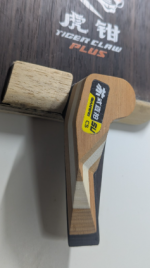
When you are doing the grip properly, on your forehand side, your thumb and your middle finger, curled up properly, stabilize the racket and you adjust the angle using your thumb. The index finger is just there, for show.

On your backhand side, when doing the grip properly, your index finger can press down on the racket and change the angle. When you literally press the racket's face down against the table, meaning the racket's face is literally facing the top of the table as though you are blocking a very very spinny top spin ball, your thumb is really there, doing nothing, again just for show.

When your three fingers are spread out on the backside of the racket, I think we call it the Japanese penhold grip. I never played that once in my life. For the life of me, I don't see how you can block properly with three fingers spread open like that.

When I learned reverse penhold strokes, my coach just told me to turn my racket around and throw it like you are "throwing a frisbee." It was pretty intuitive.

So once you have the right grip, doing reverse pendhold strokes is pretty simple and intuitive.

Side topic. I am a shakehander now. One time at the club, I was seeing a penhold player doing multiball training with a young coach. The penhold player clearly was gripping the paddle too shallow. I basically told him to move his fingers down the handle more and that fixed his problem. I guess people don't really know how to teach penhold grip nowadays.
 
says former JPEN, now CPEN
first video is p good

just a disclaimer, some people say that the index finger is not used at all when you're doing forehand strokes but as a matter of fact you do need to put some little pressure onto your blade with the index finger

the major forces on the blade when ur doing forehand strokes is no doubt still the thumb, middle and (optionally) ring finger but without the index finger to provide counterforce, you will feel like the blade is unstable and would fly out of your hand at any moment

that is why JPEN has a cork and more powerful forehand compared to CPEN (well as of modern times not so powerful anymore lol)

i find it really hard to do a quality stroke that lands on the table with a loose index finger
 
This user has no status.
Modern penhold grip:

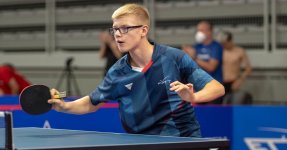
9cd9d55ef09f4adf8535cee2c3234e3c.jpeg felix-lebrun-fb.jpg
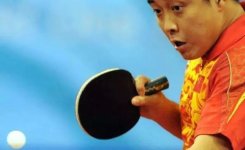
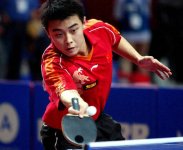
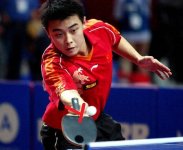
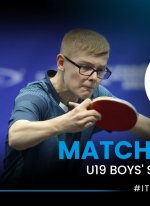
Majority of modern penholders who emphasize on backhand speed, wrist flexibility and power usually have a shallower / looser grip as compared to traditional penholders. The most studied modern penhold grip (Wang Hao), has his index finger resting on the slope of the handle.

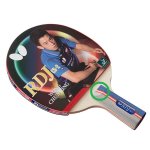
RDJCS2.media.01 (1).jpg
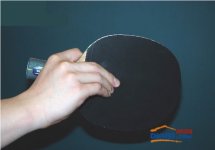
The thumb is almost crossing the index at an angle as compared to pointing straight

Img209449809.jpg Img209449809.jpg
Wang Hao's backhand, rest the middle and ring fingers on the middle of the paddle and extending them not straight up but rather straight
20141226091550388.jpg

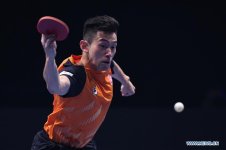
Other successful modern penholders like Wong Chun Ting, Felix and Dang Qiu all have different grip on the backhand side

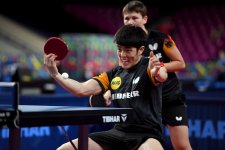
Dang and Felix curly fingers but resting the two fingers more on the middle

198506704_4853997821296849_3769451124861478891_n.jpg maxresdefault.jpg

Wong's more on the bottom of the racket
138243120_15636087050191n.jpg

I am pretty sure Wang Hao used a C-pen paddle with a modified J-pen handle to practice RPB when he was young, that allowed his index to rest comfortably and uses it as a leverage for more power. Dang Qiu was a J-pen player with RPB then turned C-pen, it seems like having a J-pen handle is a good place to start if you indeed want to learn the RPB technique seriously.

Last_Import_-_1.jpg
Most modern penholders including Xu Fei (Chinese National Team, who emulated Wang Hao's technique and learning from the master of RPB) all lack power on their forehand stroke because of this type of modern grip.
The beauty of PH grip is there isn't a single formula for all, it comes down to your hand size, finger length, forehand or backhand oriented, comfortability, habit and really just perfecting your own form.
 
Last edited:
This user has no status.
🏆 Top 1% Commenter
Well-Known Member
Sep 2013
13,139
15,419
36,968
Read 3 reviews
I am pretty sure Wang Hao used a C-pen paddle with a modified J-pen handle to practice RPB when he was young, that allowed his index to rest comfortably and uses it as a leverage for more power. Dang Qiu was a J-pen player with RPB then turned C-pen, it seems like having a J-pen handle is a good place to start if you indeed want to learn the RPB technique seriously.

View attachment 26682
I have never heard that about Wang Hao....
why are you so sure about it?

I have seen these in "amateur" circuits.
Semi pro/pros, all use cpen and RPB is pretty fine to me.

You are right about hand size, finger length etc.
 
says nothing
says nothing
🏆 Top 1% Commenter
Well-Known Member
Apr 2021
1,105
1,277
3,973
Read 1 reviews
Modern penhold grip:

View attachment 26670 View attachment 26683
Majority of modern penholders who emphasize on backhand speed, wrist flexibility and power usually have a swallower / looser grip as compared to traditional penholders. The most studied modern penhold grip (Wang Hao), has his index finger resting on the slope of the handle.

View attachment 26673
The thumb is almost crossing the index at an angle as compared to pointing straight

View attachment 26674 View attachment 26675
Wang Hao's backhand, rest the middle and ring fingers on the middle of the paddle and extending them not straight up but rather straight
View attachment 26671

Other successful modern penholders like Wong Chun Ting, Felix and Dang Qiu all have different grip on the backhand side

Dang and Felix curly fingers but resting the two fingers more on the middle

View attachment 26677 View attachment 26678

Wong's more on the bottom of the racket
View attachment 26679

I am pretty sure Wang Hao used a C-pen paddle with a modified J-pen handle to practice RPB when he was young, that allowed his index to rest comfortably and uses it as a leverage for more power. Dang Qiu was a J-pen player with RPB then turned C-pen, it seems like having a J-pen handle is a good place to start if you indeed want to learn the RPB technique seriously.

View attachment 26682
Most modern penholders including Xu Fei (Chinese National Team, who emulated Wang Hao's technique and learning from the master of RPB) all lack power on their forehand stroke because of this type of modern grip.
The beauty of PH grip is there isn't a single formula for all, it comes down to your hand size, finger length, forehand or backhand oriented, comfortability, habit and really just perfecting your own form.

You have a sharp eye, indeed the penhold grip is complicated, a little change in 1 finger may change your strokes completely. I am still struggling to find a suit-it-all grip but always failed. You have to sacrifice FH/BH stroke to exchange for the other. Now I am using Xu Xin's style, it is more emphasis on FH, but somewhat limits the wrists movement for the RPB
 
This user has no status.
I have never heard that about Wang Hao....
why are you so sure about it?

I have seen these in "amateur" circuits.
Semi pro/pros, all use cpen and RPB is pretty fine to me.

You are right about hand size, finger length etc.

Translation" My hands were tiny back then, my dad had to modify my racket to let me hold it more comfortably. It helped stabilized my racket and improved my form."
 
  • Like
Reactions: longle
This user has no status.
🏆 Top 1% Commenter
Well-Known Member
Jan 2021
3,918
2,871
8,092
Read 1 reviews
If you are interested in penhold, I suggest that you start with a jpen racket and learn to play one-sided. Once you are comfortable with that, you can switch to cpen and try to add rpb.

But rpb should be an afterthought. Find a way to play 1-sided, and then add the other side.
There is no real reason you can not play rpb with a J-pen. I removed the cork and put a long pips rubber on the backside, works like a champ. I selected long pips because I could keep the racket light. Maybe I could find a short pips rubber with a thin sponge but that wasn’t important. I had to meticulously remove a lot of cork though but it was worth it.
It was a blast to play…

Cheers
L-zr
 
There is no real reason you can not play rpb with a J-pen. I removed the cork and put a long pips rubber on the backside, works like a champ. I selected long pips because I could keep the racket light. Maybe I could find a short pips rubber with a thin sponge but that wasn’t important. I had to meticulously remove a lot of cork though but it was worth it.
It was a blast to play…

Cheers
L-zr


I thought that the jpen racket feels very unbalanced with rubber on the rpb. I suppose if you use pips with a thin sponge this could be a remedy. I'll have to try that, actually...
 
If you are interested in penhold, I suggest that you start with a jpen racket and learn to play one-sided. Once you are comfortable with that, you can switch to cpen and try to add rpb.

But rpb should be an afterthought. Find a way to play 1-sided, and then add the other side.
Agree. That was my setup too, but reversible jpen. So I actually twiddle to use the LP, and don't use RPB much.

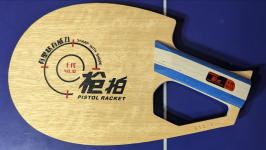
Recently I just found this very interesting blade from Sanwei called SU.
It's like the combination of jpen and cpen. Very weird looking blade. I quite like it so far. I still use LP on the BH side as I prefer light setup.
How do you normally do RPB LP?
 
I thought that the jpen racket feels very unbalanced with rubber on the rpb. I suppose if you use pips with a thin sponge this could be a remedy. I'll have to try that, actually...
I use two sided jpen. I think it's alright, judt have to get over initial curve, compared to cpen.
 
  • Like
Reactions: PenHoldSandro
This user has no status.
🏆 Top 1% Commenter
Well-Known Member
Aug 2016
3,172
2,521
6,086
Read 3 reviews
I've played both Jpen and Cpen with two rubbers for Rpb. I only use inverted rubbers

JpenCpen
Head heavyVery head heavyMedium
RPB lifting backspinDifficult due to little flexEasier
BlockingA bit easier and more direct
ServiceMore rigid due to less wrist rotationEasier due to more flexibility

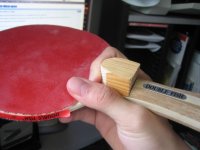
Some people combine the best of both by buying a Cpen and glue a Jpen cork. https://www.ping-pong.tw/ can do it for you
 
  • Like
Reactions: greenbeanmachine
Top