What materials or compositions give the feeling of holding the ball?

This user has no status.
Active Member
Apr 2013
710
603
1,587
Read 1 reviews
Hi folks,

This is a question that has been running in my head lately.

Last season, I used a Sanwei V5 Pro. I really liked that I could hold the ball on my racket with that blade. However, I didn't like how inconsistent it was in active blocks.

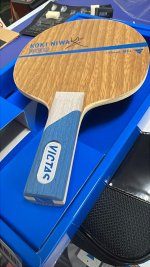
So I tried a different blade: Koki Niwa wood. Also a 7 ply, allwood composition, cant go wrong, right? Well, I was wrong... Even though it had limba outer layers, which are usually (at least for everyone that I know) considered to be good for holding the ball because of it being a soft outer layer. But to my surprise the Koki Niwa Wood wouldn't hold the ball at all compared to the V5 Pro.

Right now I am playing with a Ma lin Carbon, which is alright. But it still doesnt hold the ball as well as the V5 Pro. And of course there is carbon in it, but it does hold the ball better then the Koki Niwa Wood while they both have limba outer layers, and the Niwa doesn't have carbon.

So this made me wonder: what materials and/or compositions gives the blade the feeling of holding the ball? Because it doesnt seem to be as easy as "limba is soft, so it holds the ball better" or "white ash is hard, so it doesnt hold the ball well".

Also for anyone curious, I tested all blades with the same rubbers: Fastarc G-1 on both sides.
 

K.K

This user has no status.

K.K

This user has no status.
Member
Aug 2024
368
379
1,012
for me personally it matters more the overall composition of the blade. you can have outer carbon blades (mostly hard) that ‘hold the ball’ and innerforce blades (mostly soft) that don’t and are more responsive.

i don’t know how they do it, maybe it is more about how stiff the blade is, maybe some woodmaker can tell us more, but for me the older blades are more in the ‘hold’ area like old viscaria, old innerforce. and the newer models are mostly more responsive. the most feeling of ‘hold’ i got from stiga blades, no matter what composition, so maybe you can try that out. (with an exception of stiga clipper, but i noticed most 7ply all wood blades are rather responsive)
 

SDC

This user has no status.

SDC

This user has no status.
🏆 Top 1% Commenter
Well-Known Member
Dec 2011
1,789
3,532
5,922
What's underneath the top ply has a much bigger impact on feeling, than the top ply itself, namely the medial ply and core. Kiri is softer than Ayous, that's why your V5 holds the ball well despite having an Ash top player. Since wood has such a big variation, even two blades with Ayous cores may feel different, and Ayous has one of the biggest variations I've seen. I had cores with a density as low as Kiri, and some cores almost as dense as Limba. That's almost a 200 Kg/m2 variation, it is a lot.

If we talk about composite blades, then it gets even more complex. It matters not only the composite itself, but how it is laminated. I'm not gonna talk about the specific process that Stiga uses, but from what I know (there is also a degree of assumption here) it does have an impact on feeling. However, it is also why you see so many cases of Stiga blades de-laminating.
 
This user has no status.
Active Member
Apr 2013
710
603
1,587
Read 1 reviews
What's underneath the top ply has a much bigger impact on feeling, than the top ply itself, namely the medial ply and core. Kiri is softer than Ayous, that's why your V5 holds the ball well despite having an Ash top player. Since wood has such a big variation, even two blades with Ayous cores may feel different, and Ayous has one of the biggest variations I've seen. I had cores with a density as low as Kiri, and some cores almost as dense as Limba. That's almost a 200 Kg/m2 variation, it is a lot.

If we talk about composite blades, then it gets even more complex. It matters not only the composite itself, but how it is laminated. I'm not gonna talk about the specific process that Stiga uses, but from what I know (there is also a degree of assumption here) it does have an impact on feeling. However, it is also why you see so many cases of Stiga blades de-laminating.
Thanks for the insight!

So the dwell time has more to do with the core material and thickness then the outer layers?

And if I understand it correctly, a flexible hard blade would have more dwell then a soft and stiff blade?

And which of these properties contributes to a higher arc?

Sorry for the many questions, Im just really eager to know what material does what. Because my previous beliefs have been debunked now haha…
 
says Table tennis clown
🏆 Top 1% Commenter
Well-Known Member
Apr 2020
4,667
2,963
10,853
I'm not gonna talk about the specific process that Stiga uses, but from what I know (there is also a degree of assumption here) it does have an impact on feeling. However, it is also why you see so many cases of Stiga blades de-laminating.
🤣🤣🤣🤣🤣 'nough said
 
says Table tennis clown
🏆 Top 1% Commenter
Well-Known Member
Apr 2020
4,667
2,963
10,853
So I tried a different blade: Koki Niwa wood. Also a 7 ply, allwood composition, cant go wrong, right? Well, I was wrong.
was not just recently stated here on the forum that Koki Niwa has been using a specially sticky rubber, a version of Victas 15 ???
 
says who?
says who?
Member
Aug 2019
328
249
758
What's underneath the top ply has a much bigger impact on feeling, than the top ply itself, namely the medial ply and core. Kiri is softer than Ayous, that's why your V5 holds the ball well despite having an Ash top player. Since wood has such a big variation, even two blades with Ayous cores may feel different, and Ayous has one of the biggest variations I've seen. I had cores with a density as low as Kiri, and some cores almost as dense as Limba. That's almost a 200 Kg/m2 variation, it is a lot.
Quick question, is tung similar or related to any other wood? It seems to be only used in Nittaku’s Acoustic and Im curious why it isn’t more popular.
 

SDC

This user has no status.

SDC

This user has no status.
🏆 Top 1% Commenter
Well-Known Member
Dec 2011
1,789
3,532
5,922
Quick question, is tung similar or related to any other wood? It seems to be only used in Nittaku’s Acoustic and Im curious why it isn’t more popular.
Tung is not used in TT blades at all, that was a translation error that propagated and taken as true. The core on the Acoustic is Kiri.
 

SDC

This user has no status.

SDC

This user has no status.
🏆 Top 1% Commenter
Well-Known Member
Dec 2011
1,789
3,532
5,922
Thanks for the insight!

So the dwell time has more to do with the core material and thickness then the outer layers?

And if I understand it correctly, a flexible hard blade would have more dwell then a soft and stiff blade?

And which of these properties contributes to a higher arc?

Sorry for the many questions, Im just really eager to know what material does what. Because my previous beliefs have been debunked now haha…
"Dwell" time has to do with the whole composition, but the core plays a big part, especially on medium-hard shots.

It may or may not, again, it depends on the whole composition.

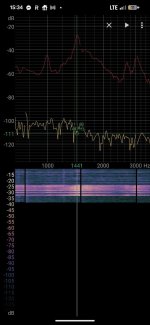
Stiffness is the biggest responsible for the arc of the blade, higher stiffness = lower arc. But this can be compensated by the softness of the blade, if it's soft enough then you still have sufficient out of plane deformation to give you a sense of "holding" the ball. The blade I've made with the biggest holding sensation was 8mm thick and with a frequency of 1873Hz.
 
This user has no status.
🏆 Top 1% Commenter
Well-Known Member
Oct 2022
5,612
2,821
8,888
My favorite blade is the Sanwei 75 inner. I thought it was be faster and less hold because of the Koto surface. But what I learned is that the surface material actually doesn't have much to do with the feeling of holing the ball.

The 75 inner is one of the best holding blades out there. It has more to do with the core stiffness, the surface layer thickness, the overall composition.
 

SDC

This user has no status.

SDC

This user has no status.
🏆 Top 1% Commenter
Well-Known Member
Dec 2011
1,789
3,532
5,922
There are also two different concepts here that are important to distinguish, as they can cause some confusion. They are similar but not the same: crispness and hardness. For crispness, I would say that it's almost exclusively related to the top ply, yes, but it's not the same as hardness. You can have crisp but soft blades, your most notable example: Viscaria. Heavier specimens will feel more solid, obviously, but lighter ones sometimes feel annoyingly soft. Koto is very good in this department, and it's not by chance that it became so popular. It's a medium heavy wood that has this particularity. Out of the top of my mind, I cannot think of another crisp feeling wood in te same weight class. There are others, even crisper, but they are heavier.

The opposite of crisp would be mushy I guess, which is used many times to describe the feeling of limba, but you can also have mushy, hard blades. The thickness of the outer layer is also important, and a thinner limba outer will feel crisper, in that case the medial or core (or composite if it exists) will overpower the feeling of the outer.
 
Top