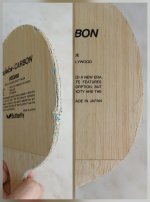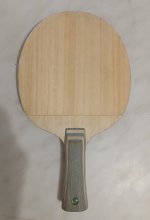


The inside view, design, and construction of factory blades that come to us for repair

This user has no status.
🏆 Top 1% Commenter
Well-Known Member
Mar 2023
1,090
1,060
7,515
Hello everyone! Since we receive many blades of various designs for repair, I'd like to share with you their photos and factual technical specifications. We also sometimes have questions about why the manufacturer designed something the way it did. Perhaps you guys have some insights. Well, let's go!
This is what ALC looks like
1000010955.jpg
 

Attachments

  • 20251125_214134.jpg
    20251125_214134.jpg
    1.1 MB · Views: 233
Last edited:
This user has no status.
🏆 Top 1% Commenter
Well-Known Member
Mar 2023
1,090
1,060
7,515
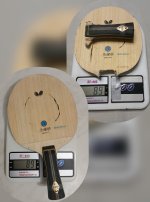
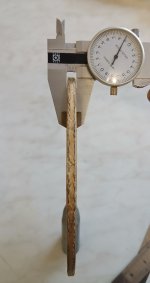
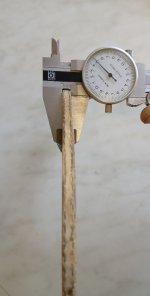
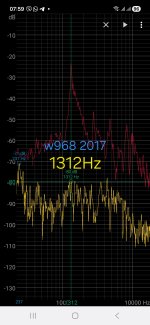
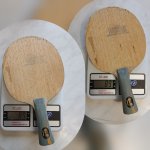
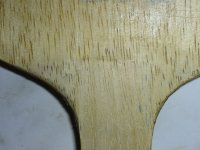
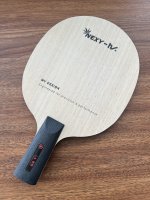
We received a W968 blade for repair with a crack in the handle. We repaired it, but during the repair process, we discovered a 0.4 mm misalignment in the blade thickness! That's a lot. Near the handle, the blade is 5.5 mm thick (measured outside the repair area), and near the edge, it's 5.9 mm. We reported this discovery to the owner of the blade, and he suggested that this was intentional by the manufacturer to increase flexibility and improve striking power.
What do you think?
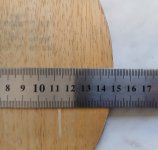
Blade Parameters:.
Head Size - 149х159 mm
Weight - 89 grams
Thickness - 5.5/5.9 mm
Chord - 86 mm
Handle - Fl 101 mm in length, there are no cavities in the handle
Frequency - 1312 Hz
1000010548.jpg
 

Attachments

  • 20260128_080337.jpg
    20260128_080337.jpg
    776.3 KB · Views: 152
  • 20260128_080610.jpg
    20260128_080610.jpg
    1.4 MB · Views: 147
  • 20260128_080318.jpg
    20260128_080318.jpg
    747.6 KB · Views: 145
  • Screenshot_20260128_075908_Spectroid.jpg
    Screenshot_20260128_075908_Spectroid.jpg
    493.7 KB · Views: 154
  • 20260128_102357.jpg
    20260128_102357.jpg
    992.8 KB · Views: 159
  • 20260116_163348.jpg
    20260116_163348.jpg
    2.1 MB · Views: 162
Last edited:
This user has no status.
Member
Mar 2022
420
677
2,038
We received a W968 blade for repair with a crack in the handle. We repaired it, but during the repair process, we discovered a 0.4 mm misalignment in the blade thickness! That's a lot. Near the handle, the blade is 5.5 mm thick (measured outside the repair area), and near the edge, it's 5.9 mm. We reported this discovery to the owner of the blade, and he suggested that this was intentional by the manufacturer to increase flexibility and improve striking power.
What do you think?
Blade Parameters:.
Head Size - 149х159 mm
Weight - 89 grams
Thickness - 5.5/5.9 mm
Chord - 86 mm
Handle - Fl 101 mm in length, there are no cavities in the handle
Frequency - 1312 Hz
View attachment 40290
Very much doubt it's a deliberate feature of the blade, as that would put it in breach of ITTF regulations. Under regs, blade panels have to be of one even thickness all the way through. 🤨

A deliberate 0.4mm variance repeated through every mass produced blade would make it both an illegal design and ineligible for international competition. It might however explain the stupid amounts of flex they have.
 
Last edited:
This user has no status.
Member
Mar 2022
420
677
2,038
It just has to be flat and rigid. Both are given
I know where you're coming from with that, but I'm sorry to inform you... that's actually a common misconception. :confused:
The whole "level and flat" thing comes from Rule 2.4.1 and a lot of folks just stop reading there.

When describing the make-up and construction of a blade at Rule 2.4.4 however, the ITTF expands on their definition statement, stating:

"The blade, any layer within the blade and any layer of covering material or adhesive on a side used for striking the ball shall be continuous and of even thickness"

In order to enforce this rule, a few months back the ITTF changed the rules to allow racket inspection officials to disassemble a player's blade immediately after a match if necessary. Apparently a few players were partially sanding the outer layers of their blade near the handle, to ensure their illegally boosted rubbers still passed bat inspection procedures.

Rule 2.4.4 is also part of the reason why Butterfly had to stop making the original Defense Alpha. That blade has a standard symmetrical 5-ply handle, but most of the playing surface itself was three ply with an extra thick willow core.
 
says Hitting Mach Speeds
Member
Oct 2022
301
215
1,074
I know where you're coming from with that, but I'm sorry to inform you... that's actually a common misconception. :confused:
The whole "level and flat" thing comes from Rule 2.4.1 and a lot of folks just stop reading there.

When describing the make-up and construction of a blade at Rule 2.4.4 however, the ITTF expands on their definition statement, stating:

"The blade, any layer within the blade and any layer of covering material or adhesive on a side used for striking the ball shall be continuous and of even thickness"

In order to enforce this rule, a few months back the ITTF changed the rules to allow racket inspection officials to disassemble a player's blade immediately after a match if necessary. Apparently a few players were partially sanding the outer layers of their blade near the handle, to ensure their illegally boosted rubbers still passed bat inspection procedures.

Rule 2.4.4 is also part of the reason why Butterfly had to stop making the original Defense Alpha. That blade has a standard symmetrical 5-ply handle, but most of the playing surface itself was three ply with an extra thick willow core.
Yes you are right I stopped after 2.4.1 once they started talking about rubbers :D
Thanks for clearing things up
 
This user has no status.
🏆 Top 1% Commenter
Well-Known Member
Mar 2023
1,090
1,060
7,515
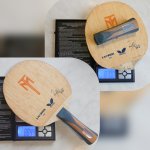
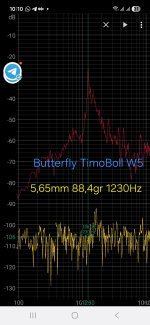
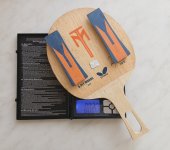
This time, the Butterfly Timo Boll W5 blade with a broken handle came in for repair. Most Butterfly blades I've seen don't have cavities in the handles, but not this time. The cavity is very large and takes up most of the blade, leaving almost no body. The fracture occurred in this weak spot. During the repair, to ensure that everything worked reliably, we had to reinforce this area, so the total weight increased by 1.5 grams.

Blade Parameters:
5-ply - koto/limba/ayous/limba/koto
Head Size - 150х157 mm
Weight - 87 grams
Thickness - 5.65 mm
Chord - 86 mm
Handle - Fl 100 mm, there is huge cavitie in the handle
Frequency - 1230 Hz

1000011137.jpg
 

Attachments

  • 20260212_123712.jpg
    20260212_123712.jpg
    1 MB · Views: 112
  • Screenshot_20260212_101046_Spectroid.jpg
    Screenshot_20260212_101046_Spectroid.jpg
    557.6 KB · Views: 136
  • 20260211_083238.jpg
    20260211_083238.jpg
    1.6 MB · Views: 132
Last edited:
This user has no status.
🏆 Top 1% Commenter
Well-Known Member
Mar 2023
1,090
1,060
7,515
I've been struggling with a question for a long time. Maybe you guys can help me with it.
We often receive the popular Viscaria blades for repair. I always thought they should all be made to the same standard and have the same geometric dimensions. But that's not actually the case. All the blades we've received for repair have different blade thicknesses!
For example, 5.6mm, 5.74mm, 5.8mm, and so on. Honestly, I've never encountered blades with identical thicknesses.
Blade thickness directly impacts the speed, flexibility, and feel of the blade in play. All these blades are similar, but they perform differently. Moreover, we recently received a Viscaria with a 90 mm chord instead of the standard 86 mm. Can anyone tell me why this is happening?
1000006494.jpg
 

Attachments

  • 20260301_172031.jpg
    20260301_172031.jpg
    1 MB · Views: 117
  • 20250826_215414.jpg
    20250826_215414.jpg
    1.8 MB · Views: 126
  • 20250911_104747.jpg
    20250911_104747.jpg
    1,006.1 KB · Views: 141
  • 20251124_212020.jpg
    20251124_212020.jpg
    995.9 KB · Views: 105
Last edited:
This user has no status.
🏆 Top 1% Commenter
Well-Known Member
Mar 2023
1,090
1,060
7,515
This is the best thread!

Sorry, no idea why the Viscarias differ but perhaps slight changes in production over the years? Been around a long time after all.
Whats the chord of the blade?
The chord is the width of the blade at the end of the handle. The smaller the chord, the more the blade bends, and conversely, the larger the chord, the less the blade can bend. Changing this parameter by a few millimeters can greatly affect the playing properties of the blade.
20251220_123554.jpg
 
This user has no status.
🏆 Top 1% Commenter
Well-Known Member
Mar 2023
1,090
1,060
7,515
This is the best thread!

Sorry, no idea why the Viscarias differ but perhaps slight changes in production over the years? Been around a long time after all.
Whats the chord of the blade?
By the way, I once got my hands on a Mishima Viscaria clone. That blade was incredibly stiff and extremely difficult to spin, but the blocks were like reinforced concrete :). So we reduced the chord from 92 to 89 mm, and it became much more enjoyable to spin.
 
This user has no status.
🏆 Top 1% Commenter
Well-Known Member
Jan 2021
3,918
2,872
8,092
Read 1 reviews
By the way, I once got my hands on a Mishima Viscaria clone. That blade was incredibly stiff and extremely difficult to spin, but the blocks were like reinforced concrete :). So we reduced the chord from 92 to 89 mm, and it became much more enjoyable to spin.
Interesting, hmm, it makes sense maybe something to try on super stiff blades…

Cheers
L-zr
 
  • Like
Reactions: lodro and Egon
This user has no status.
Member
Jan 2021
330
269
731
The chord is the width of the blade at the end of the handle. The smaller the chord, the more the blade bends, and conversely, the larger the chord, the less the blade can bend. Changing this parameter by a few millimeters can greatly affect the playing properties of the blade.
View attachment 40602
Thanks!
I suppose this can be changed by cutting a piece of the handles as well as sanding a bit on the blade?
 
says Table tennis clown
🏆 Top 1% Commenter
Well-Known Member
Apr 2020
4,666
2,963
10,850
Interesting, hmm, it makes sense maybe something to try on super stiff blades…

Cheers
L-zr
Exactly my thought . I played a brand new 9 layer hinoki blade from Kokutaku last week and if feels like it has been cast from concrete. Out commet the Dremel tool :ROFLMAO:
 
This user has no status.
Member
Jun 2025
196
203
583
By the way, I once got my hands on a Mishima Viscaria clone. That blade was incredibly stiff and extremely difficult to spin, but the blocks were like reinforced concrete :). So we reduced the chord from 92 to 89 mm, and it became much more enjoyable to spin.
From my experience, just removing the edges below the chord makes the blade 20Hz slower and a little more flexible. Other solutions are change of the handle, like Victas Award Offensive or cutting channels above the handle, like Yasaka Gatien Extra 3D. Award Offensive handle change one of my blades from 1200Hz to 1050Hz, was too much flex, but fun to play.
 
Top