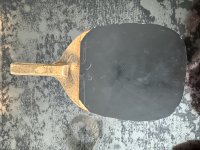
The weakness in Hinoki is inherently built into its structure, so there's only so much you can do to protect it.
It's latewood (i.e.:winter growth) is extremely dense compared to its earlywood (summer growth). This creates geometrically regular large density shifts in the wood, each of which then becomes a mechanical points of weakness once you've quarter-sawn the board to make your one-ply.
This growth pattern is partially due to the very cold climates hinoki grows in -- a lot of other cold-climate softwood species are the same: western red cedar, douglas fir and western hemlock being just a few examples. It's extremely slow growth rate is also a factor (eg: look at the very dense grain of Huon pine for an equivalent).
Mostly though, this growth pattern (and the snapping problem) is due to genetics more than anything else, so trying to stop the splitting is a losing battle.
-- Like
@haggisv said, the epoxy would really only prevents chipping, which lessens the risk of localised impact related splitting. Hinoki is a very resinous species so the epoxy isn't going to penetrate the wood at all - it's just a surface band-aid measure.A quick edge burnish should also help, but given there's a lot of exposed end grain on a blade, I doubt any improvement from the burnishing is going to be massive).
Only thing that's really guaranteed to extend the life of a Hinoki one-ply is to avoid ox rubbers entirely -- you really want the cushioning effect of that sponge layer to help minimise the impact stresses, especially if you're a hard hitter.
But if you absolutely positively *must* use ox rubbers on a Hinoki one ply, then maybe consider burnishing the playing surface as well. Again, it won't do much (apart from harden the playing feel a little and speed the blade up a bit) but it's definitely better than nothing.