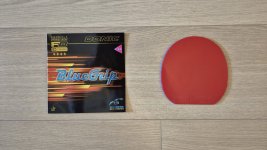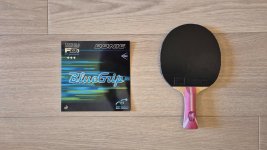



says
[IMG]

says
[IMG]
Member




Growing up with Joola Rossi Fire, 2x Samba, speedglue and 38mm ball, I'll always have a weak spot for Joola. Looking for a slightly faster Donic True Carbon Inner (TCI), I wanted to give Joola Proline IAC a try. (Yes I know, I could also go for a heavier TCI, but just wanted to try something else.) Usually, I do a bit more investigation before buying a new blade, but this time it was more of an impulse purchase. I had 2 sessions of 2hr with IAC.
IAC comes in a regular box with parts of plastic and foam, which doesn't add any value compared to a full cardboard package and is less environmental friendly.
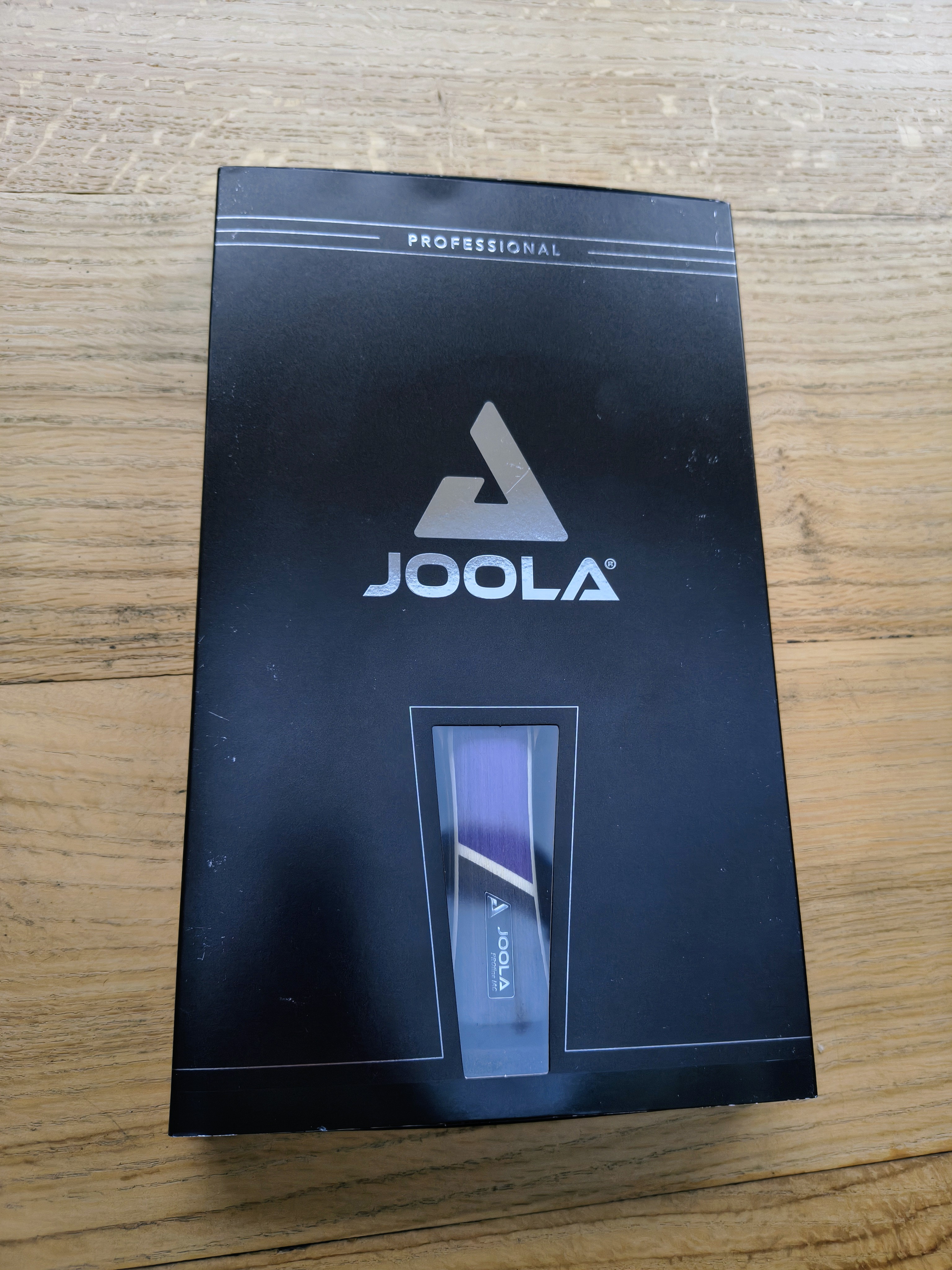
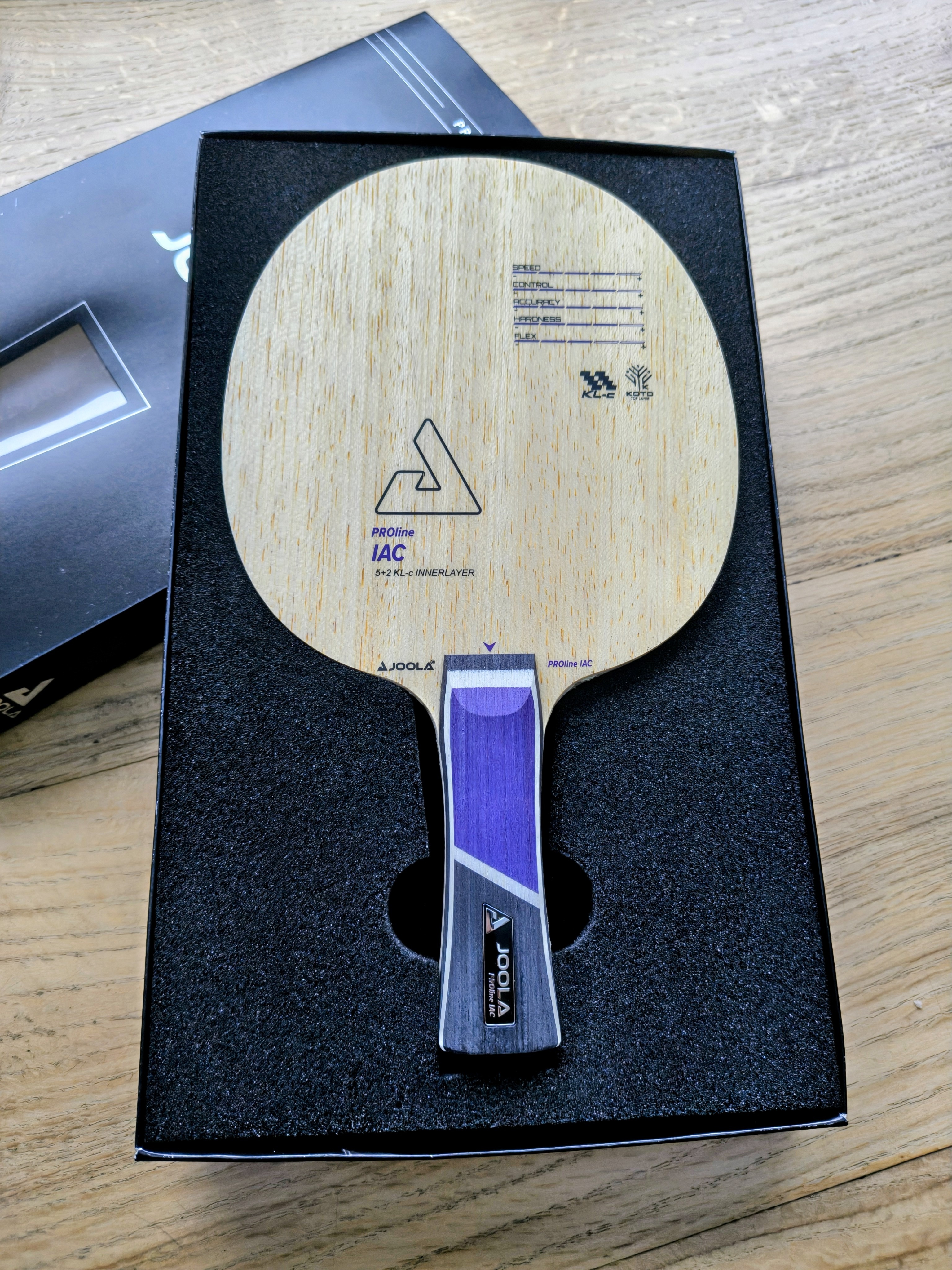
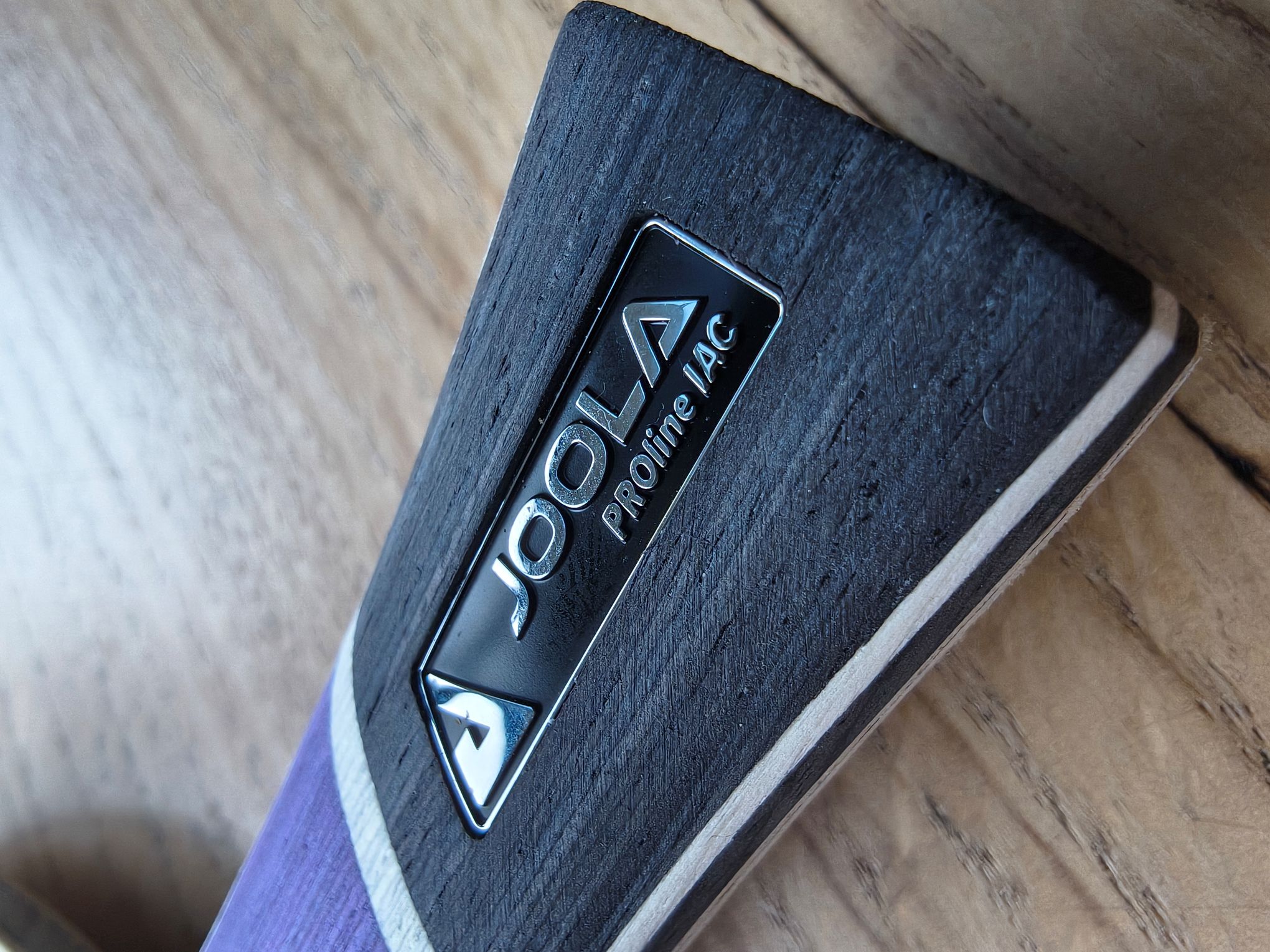
The IAC has a metal shield for the logo in the handle, which feels a bit weird at the fingertips. It's not as big and annoying as Stiga uses, but still, I prefer a smooth shield.
Recently Joola removed the details of the layers of their blades from their website. Below information was visible on their website when they introduced the Proline lineup.
3mm kiri
Hybrid Aramid Carbon KL-C (aka Kevlar)
0.6mm ayous
0.6mm koto

Tested the blade with Nuzn 45, Nuzn 50 and Hybrid MK. Although Joola doesn't categorize their blades with a DEF-OFF+ rating, I consider this blade as AR+ to OFF-.
The Nuzn 45 is a soft rubber with moderate speed and catapult and on the IAC it's a nice rubber for a consistent controlled playing style. But it is too harmless for "Power allrounders" or offensive players. The MK is a good choice for BH, but just like Nuzn 45, too slow for FH. Nuzn 50 is of course a faster and harder rubber compared to the other 2 and delivers enough power to use on the FH with IAC. Not sure if it's the combination of Kevlar and koto, but the throw with IAC is rather low. (I noticed the same using the TCI with many different rubbers) When playing topspin, I needed to open my bat a bit more in order to clear the net.
I made the decision to compare the Joola IAC to the Donic TCI after the first 30 minutes of gameplay. Reason: I noticed totally no difference in both blades.
Dimensions of the IAC versus TCI: (used a precision scale for weight and a digital caliper for dimensions)
Weight:
TCI: 85.4gr
IAC: 83.7gr
Thickness blade:
TCI: 5.5mm
IAC: 5.6mm
Blade: 150x157 (same for both)
Blade thickness:
TCI:5.5mm
IAC: 5.6mm
Handle length: 100mm (same for both)
Width handle in the middle:
TCI: 26.1mm
IAC: 25.6mm
Width handle at the end:
TCI: 32.2mm
IAC: 31.4mm
Thickness handle:
TCI: 23.5mm
IAC:23.4mm
In my opinion, these minor differences occur in the production process using wood as natural product.
Below a few pictures comparing IAC and TCI. Keep in mind, the TCI is older and often used and therefor might have different colors.
The handle of IAC looks a big bulkier (which I hoped for) but it doesn't feel that way while holding it.
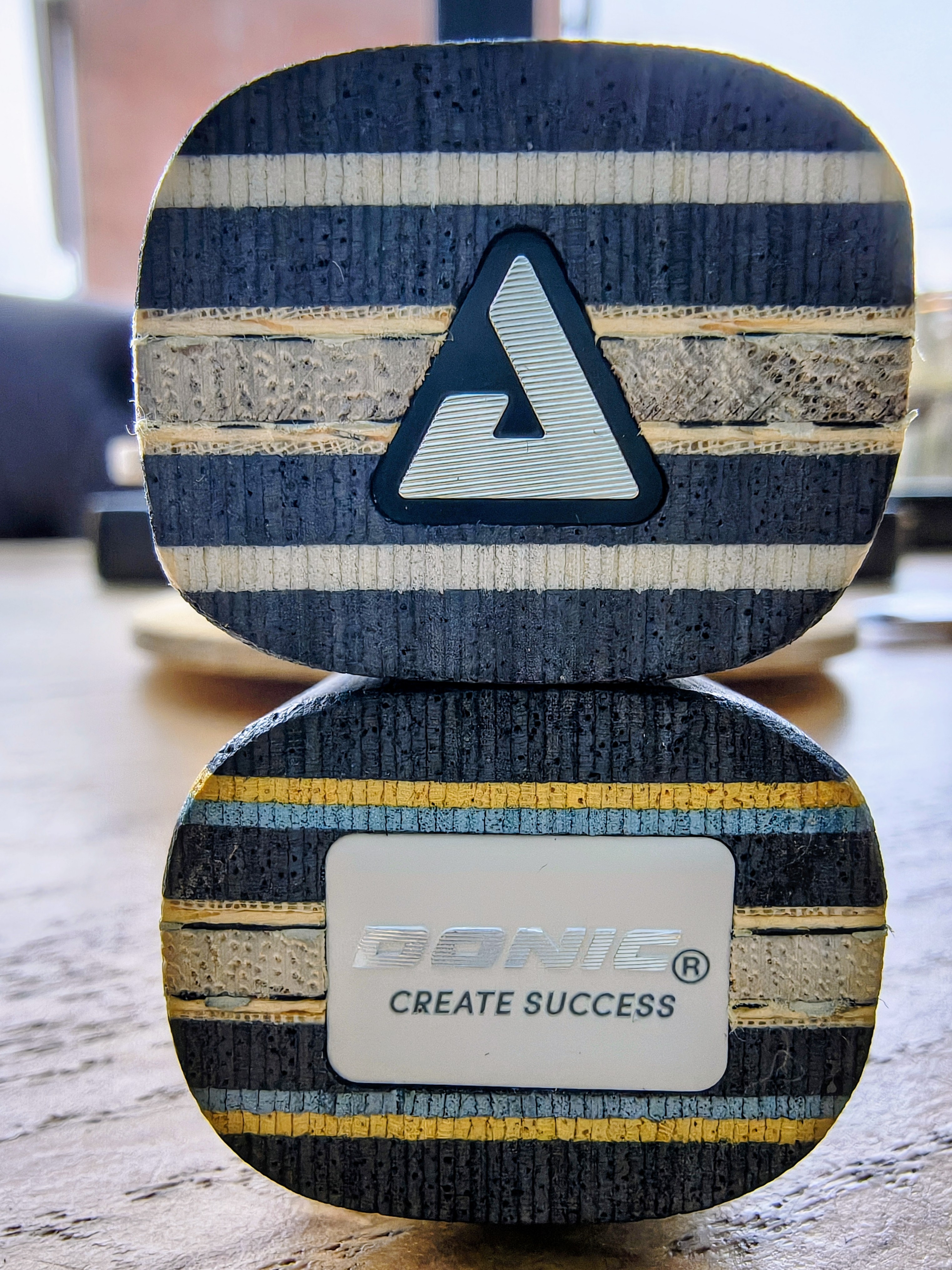
Left IAC and TCI on the right:

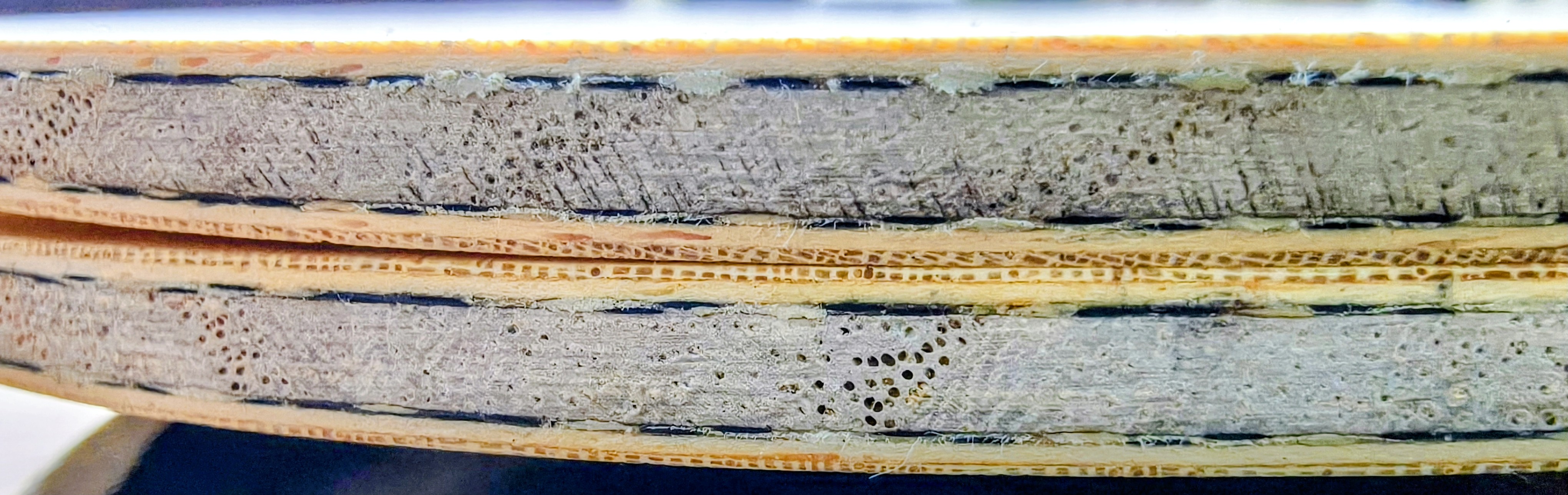
IAC on top, TCI on the bottom. TCI has a cleaner cut of the kevlar layer.
Conclusion:
IAC is a very decent blade for allrounders and power-allrounders, but there is NO WAY I can recommend this blade to anyone..
Donic introduced TCI mid 2021 and Joola introduced 4 years later an EXACT copy of the TCI. There are only a few OEM vendors for blades and it is not uncommon that similar blades are used by different companies. However, these often come at a similar price point and this is not the case this time. Not taking any promotions into account and just looking at the MSRP on the brand websites: Donic TCI 72,90 EUR vs Joola IAC 139,95 EUR. As these blades are exactly the same, there is no reason why you would pay 2x the price of a TCI. Joola's pricing strategy is their own but I am disappointed in Joola and even feel ripped off.
Well, lesson learned: don't do impulse purchases and EJ wisely.
IAC comes in a regular box with parts of plastic and foam, which doesn't add any value compared to a full cardboard package and is less environmental friendly.
The IAC has a metal shield for the logo in the handle, which feels a bit weird at the fingertips. It's not as big and annoying as Stiga uses, but still, I prefer a smooth shield.
Recently Joola removed the details of the layers of their blades from their website. Below information was visible on their website when they introduced the Proline lineup.
3mm kiri
Hybrid Aramid Carbon KL-C (aka Kevlar)
0.6mm ayous
0.6mm koto
Tested the blade with Nuzn 45, Nuzn 50 and Hybrid MK. Although Joola doesn't categorize their blades with a DEF-OFF+ rating, I consider this blade as AR+ to OFF-.
The Nuzn 45 is a soft rubber with moderate speed and catapult and on the IAC it's a nice rubber for a consistent controlled playing style. But it is too harmless for "Power allrounders" or offensive players. The MK is a good choice for BH, but just like Nuzn 45, too slow for FH. Nuzn 50 is of course a faster and harder rubber compared to the other 2 and delivers enough power to use on the FH with IAC. Not sure if it's the combination of Kevlar and koto, but the throw with IAC is rather low. (I noticed the same using the TCI with many different rubbers) When playing topspin, I needed to open my bat a bit more in order to clear the net.
I made the decision to compare the Joola IAC to the Donic TCI after the first 30 minutes of gameplay. Reason: I noticed totally no difference in both blades.
Dimensions of the IAC versus TCI: (used a precision scale for weight and a digital caliper for dimensions)
Weight:
TCI: 85.4gr
IAC: 83.7gr
Thickness blade:
TCI: 5.5mm
IAC: 5.6mm
Blade: 150x157 (same for both)
Blade thickness:
TCI:5.5mm
IAC: 5.6mm
Handle length: 100mm (same for both)
Width handle in the middle:
TCI: 26.1mm
IAC: 25.6mm
Width handle at the end:
TCI: 32.2mm
IAC: 31.4mm
Thickness handle:
TCI: 23.5mm
IAC:23.4mm
In my opinion, these minor differences occur in the production process using wood as natural product.
Below a few pictures comparing IAC and TCI. Keep in mind, the TCI is older and often used and therefor might have different colors.
The handle of IAC looks a big bulkier (which I hoped for) but it doesn't feel that way while holding it.
Left IAC and TCI on the right:
IAC on top, TCI on the bottom. TCI has a cleaner cut of the kevlar layer.
Conclusion:
IAC is a very decent blade for allrounders and power-allrounders, but there is NO WAY I can recommend this blade to anyone..
Donic introduced TCI mid 2021 and Joola introduced 4 years later an EXACT copy of the TCI. There are only a few OEM vendors for blades and it is not uncommon that similar blades are used by different companies. However, these often come at a similar price point and this is not the case this time. Not taking any promotions into account and just looking at the MSRP on the brand websites: Donic TCI 72,90 EUR vs Joola IAC 139,95 EUR. As these blades are exactly the same, there is no reason why you would pay 2x the price of a TCI. Joola's pricing strategy is their own but I am disappointed in Joola and even feel ripped off.
Well, lesson learned: don't do impulse purchases and EJ wisely.