
SANWEI Target National CP-Tuned — Compact Sponge × Factory Tuning

This user has no status.
Hello everyone, this is Andrea from SANWEI. 🙋‍♂️ Today I'd like to talk about something quite special in the Target family:

SANWEI Target National CP-Tunedpexels-artempodrez-7233351.jpg
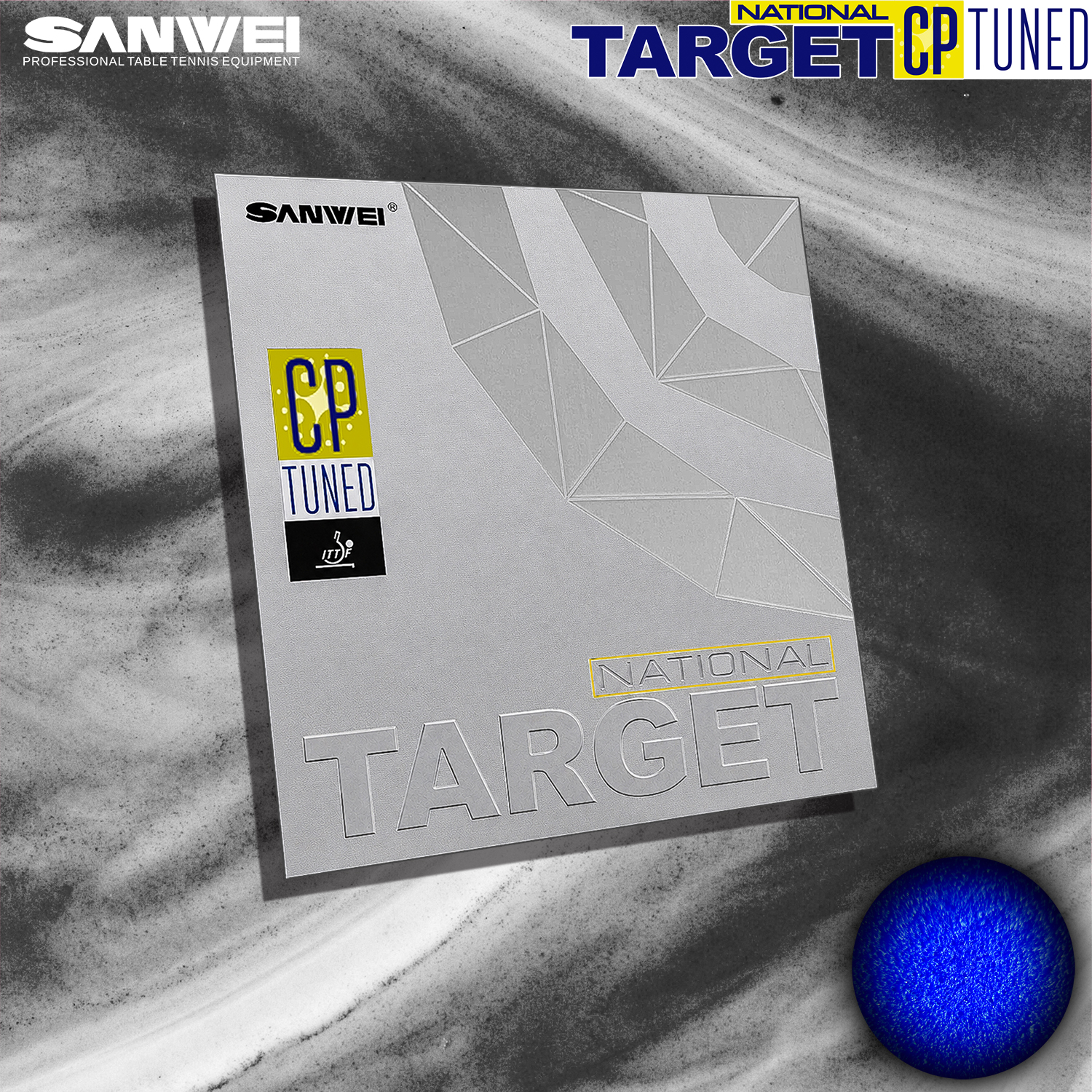
This time, we didn't simply take a traditional Chinese-style rubber and add factory tuning.

We started from the sponge structure itself.

And one of the most important parts of this development is what we call:

Compact SpongeIMG_61708.jpg
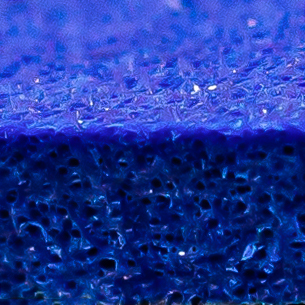
I want to explain this term a little bit, because Compact Sponge does not simply mean a traditional high-density sponge.

If we imagine traditional cake sponge and high-density sponge as two ends of a spectrum, the CP-Tuned sponge sits somewhere in between:

Cake Sponge ←—— CP-Tuned Compact Sponge ——→ High-Density Sponge

The idea was to maintain the deformation characteristics of a cake sponge, while adding more internal support and a stronger sense of compression.

So when you engage the rubber, the feeling is not simply:

Hit → Bounce

Instead, it is more like:

Compression → Energy Storage → Release

The sponge compresses under impact, stores energy, and then releases that energy back into the ball.

That is one of the most important ideas behind CP-Tuned.

What does “compression” actually mean?​

For an active player, I think this can be more important than simply talking about speed.

When you play a powerful forehand loop, especially when you actively brush, accelerate or counter-loop, you are putting a significant amount of force into the sponge.

A conventional sponge may deform and rebound relatively quickly.

With the more compact structure of CP-Tuned, you can feel the sponge engaging more deeply under stronger impact.

The basic process is:

Compression → Energy Storage → Release

The harder you engage the rubber, the deeper the sponge can be compressed, and the more energy can be released afterwards.

So CP-Tuned is not simply designed to create speed from surface elasticity.

The idea is:

Let your power enter the sponge — and then let the sponge give that power back.


Why not simply use a high-density sponge?​

This was actually an important part of the development.

A very high-density sponge can provide excellent support and a very solid feeling.

But if the structure becomes too dense, you can also lose some of the deformation and dwell characteristics that many Chinese-style rubber players appreciate.

We didn't want CP-Tuned to feel like a solid piece of wood.

We wanted a balance:

Dense enough → stronger support and compression

But not too dense → enough deformation and dwell


That's why we chose a structure between traditional cake sponge and high-density sponge.

And that's also why I prefer the term:

Compact Sponge

rather than simply calling it a High-Density Sponge.


What does this mean on the table?​

For me, there are three particularly noticeable characteristics.

1. Stronger compression feeling​

When you actively engage the rubber, you can feel the sponge really loading up under the ball.

This becomes particularly noticeable when using a harder sponge and applying more power.

2. Better energy storage​

The sponge doesn't simply deform and immediately bounce back.

During compression, it stores energy.

Then, when you accelerate through the ball, you get a more noticeable release of that stored energy.

3. More progressive power feedback​

At lower impact, the rubber doesn't feel unnecessarily explosive.

As you increase your input, the sponge enters a deeper compression zone, and the rebound and power increase accordingly.

So instead of simply:

Low power = fast

High power = faster


I would describe the response more like:

Low impact → Control

Medium impact → Compression

High impact → Energy storage + Explosive release


This is probably the most interesting characteristic of CP-Tuned for me.


Chinese-style rubber, but with a different sponge experience​

We didn't want to turn Target National into another European-style high-tension rubber.

It still follows the philosophy of Chinese-style rubbers:

Grip, spin, active engagement and a controlled trajectory.

But by combining the Compact Sponge with factory tuning, we wanted to add:

More compression + stronger energy release + a more elastic response.

So if you enjoy traditional Chinese-style rubbers but sometimes feel:

“The spin is great, but I have to provide almost all of the power myself.”
Then CP-Tuned may be an interesting direction to explore.


Factory Tuning​

Of course, the sponge structure is only one part of the story.

CP-Tuned also receives a dedicated factory tuning process.

The complete process takes 4 working days, with two stages:

Stage 1: 24 hours

Stage 2: 48 hours


The result is different from a traditional untuned version.

The Compact Sponge provides the compression and energy-storage foundation, while the factory tuning adds additional activity and elasticity to the sponge.

So the idea is:

Compact Sponge + Factory Tuning

rather than simply:

Regular Sponge + Booster


My personal take​

If I had to explain CP-Tuned in one sentence:

It's not designed simply to make the sponge more bouncy — it's designed to make the sponge better at loading your power.

When you actively engage the rubber:

Compression → Energy Storage → Release

That is the core idea behind the sponge design.

CP-Tuned is currently available in:

38° / 39° / 40° / 41°

For forehand use, I personally lean toward 40° or 41°, although this obviously depends on your technique and how much power you generate.

If anyone gets a chance to test CP-Tuned, I'd genuinely love to hear your feedback.

Especially if you've previously used other hard Chinese-style rubbers, I'm very curious to hear what you think about this sponge structure sitting between traditional cake sponge and high-density sponge.

What do you think?

Finally, welcome everyone to follow our official

🔵Facebook 🔴Instagram 🔷Twitter 💠Website 🔺Youtube
 
This user has no status.
🏆 Top 1% Commenter
Well-Known Member
Jan 2021
3,982
2,922
8,245
Read 1 reviews
Hello everyone, this is Andrea from SANWEI. 🙋‍♂️ Today I'd like to talk about something quite special in the Target family:

SANWEI Target National CP-TunedView attachment 43055

This time, we didn't simply take a traditional Chinese-style rubber and add factory tuning.

We started from the sponge structure itself.

And one of the most important parts of this development is what we call:

Compact SpongeView attachment 43056

I want to explain this term a little bit, because Compact Sponge does not simply mean a traditional high-density sponge.

If we imagine traditional cake sponge and high-density sponge as two ends of a spectrum, the CP-Tuned sponge sits somewhere in between:

Cake Sponge ←—— CP-Tuned Compact Sponge ——→ High-Density Sponge

The idea was to maintain the deformation characteristics of a cake sponge, while adding more internal support and a stronger sense of compression.

So when you engage the rubber, the feeling is not simply:

Hit → Bounce

Instead, it is more like:

Compression → Energy Storage → Release

The sponge compresses under impact, stores energy, and then releases that energy back into the ball.

That is one of the most important ideas behind CP-Tuned.

What does “compression” actually mean?​

For an active player, I think this can be more important than simply talking about speed.

When you play a powerful forehand loop, especially when you actively brush, accelerate or counter-loop, you are putting a significant amount of force into the sponge.

A conventional sponge may deform and rebound relatively quickly.

With the more compact structure of CP-Tuned, you can feel the sponge engaging more deeply under stronger impact.

The basic process is:

Compression → Energy Storage → Release

The harder you engage the rubber, the deeper the sponge can be compressed, and the more energy can be released afterwards.

So CP-Tuned is not simply designed to create speed from surface elasticity.

The idea is:

Let your power enter the sponge — and then let the sponge give that power back.


Why not simply use a high-density sponge?​

This was actually an important part of the development.

A very high-density sponge can provide excellent support and a very solid feeling.

But if the structure becomes too dense, you can also lose some of the deformation and dwell characteristics that many Chinese-style rubber players appreciate.

We didn't want CP-Tuned to feel like a solid piece of wood.

We wanted a balance:

Dense enough → stronger support and compression

But not too dense → enough deformation and dwell


That's why we chose a structure between traditional cake sponge and high-density sponge.

And that's also why I prefer the term:

Compact Sponge

rather than simply calling it a High-Density Sponge.


What does this mean on the table?​

For me, there are three particularly noticeable characteristics.

1. Stronger compression feeling​

When you actively engage the rubber, you can feel the sponge really loading up under the ball.

This becomes particularly noticeable when using a harder sponge and applying more power.

2. Better energy storage​

The sponge doesn't simply deform and immediately bounce back.

During compression, it stores energy.

Then, when you accelerate through the ball, you get a more noticeable release of that stored energy.

3. More progressive power feedback​

At lower impact, the rubber doesn't feel unnecessarily explosive.

As you increase your input, the sponge enters a deeper compression zone, and the rebound and power increase accordingly.

So instead of simply:

Low power = fast

High power = faster


I would describe the response more like:

Low impact → Control

Medium impact → Compression

High impact → Energy storage + Explosive release


This is probably the most interesting characteristic of CP-Tuned for me.


Chinese-style rubber, but with a different sponge experience​

We didn't want to turn Target National into another European-style high-tension rubber.

It still follows the philosophy of Chinese-style rubbers:

Grip, spin, active engagement and a controlled trajectory.

But by combining the Compact Sponge with factory tuning, we wanted to add:

More compression + stronger energy release + a more elastic response.

So if you enjoy traditional Chinese-style rubbers but sometimes feel:


Then CP-Tuned may be an interesting direction to explore.


Factory Tuning​

Of course, the sponge structure is only one part of the story.

CP-Tuned also receives a dedicated factory tuning process.

The complete process takes 4 working days, with two stages:

Stage 1: 24 hours

Stage 2: 48 hours


The result is different from a traditional untuned version.

The Compact Sponge provides the compression and energy-storage foundation, while the factory tuning adds additional activity and elasticity to the sponge.

So the idea is:

Compact Sponge + Factory Tuning

rather than simply:

Regular Sponge + Booster


My personal take​

If I had to explain CP-Tuned in one sentence:

It's not designed simply to make the sponge more bouncy — it's designed to make the sponge better at loading your power.

When you actively engage the rubber:

Compression → Energy Storage → Release

That is the core idea behind the sponge design.

CP-Tuned is currently available in:

38° / 39° / 40° / 41°

For forehand use, I personally lean toward 40° or 41°, although this obviously depends on your technique and how much power you generate.

If anyone gets a chance to test CP-Tuned, I'd genuinely love to hear your feedback.

Especially if you've previously used other hard Chinese-style rubbers, I'm very curious to hear what you think about this sponge structure sitting between traditional cake sponge and high-density sponge.

What do you think?

Finally, welcome everyone to follow our official

🔵Facebook 🔴Instagram 🔷Twitter 💠Website 🔺Youtube

One question, Does it need or benefit boosting from the customer side?

Cheers
L-zr
 
This user has no status.
🏆 Top 1% Commenter
Well-Known Member
Jan 2021
3,982
2,922
8,245
Read 1 reviews
Hello sir,
This product was designed for you to play with right out of the box, but if you want to boost it for more bounce, that is perfectly fine too.
Ok, thank you.
Then a follow up question, how long does the factory tuning last?

Cheers
L-zr
 
Hi! I’m interested in developing a custom table-tennis rubber/sponge, and I’d like to understand how closely your current Target National CP-Tuned technology can match this concept I had in mind which is exactly what I'm desiring.


My concept is a hard Chinese-style rubber focused on progressive energy transfer rather than simply maximum catapult.


The ideal response would be:

Low impact → controlled, stable, relatively low catapult
Medium impact → increasing sponge compression, dwell, and grip
High impact → deep compression → strong energy storage → explosive energy release


In other words, I want the sponge to be relatively calm when I am not putting much force into it, but become increasingly powerful as I engage it harder. I specifically want to avoid a sponge that is simply very bouncy at all impact levels.


The intended use is aggressive forehand looping and counterlooping, including from mid-distance. I prefer a hard, stable Chinese-style feeling, but I want the sponge to reward powerful strokes with significantly more energy than a conventional hard Chinese sponge.


I saw your explanation of CP-Tuned Compact Sponge and the idea of:


Compression → Energy Storage → Release


This sounds very close to part of my concept, so I would like to understand the technical differences.


Could you please answer the following?

  1. What is the approximate sponge density (kg/m³) of the 40° and 41° CP-Tuned versions?
  2. What is the approximate cell size and cell-size distribution of the Compact Sponge? Is the structure uniform throughout the sponge, or are there different structures/sizes at different depths?
  3. Is the sponge open-cell, closed-cell, or a mixed structure?
  4. How does the sponge's compression and rebound behaviour change between low, medium, and high impact?
  5. Does CP-Tuned have a strongly progressive response, where high-impact strokes produce disproportionately more rebound than low-impact strokes?
  6. Do you have any compression-force/deformation, rebound, resilience, or energy-return data for the sponge?
  7. What exactly does the two-stage factory tuning process change mechanically? Does it mainly increase elasticity, expansion, reduce stiffness, change hysteresis, or something else?
  8. How different would the same Compact Sponge be without factory tuning?
  9. For the 40° and 41° versions, what hardness scale are you using, and how consistent is the hardness between sheets?
  10. How much does the factory tuning affect the hardness, sponge expansion, weight, and rebound?
  11. After gluing, approximately how long does the factory-tuned sponge retain most of its original characteristics?

I am also interested in creating a custom version based on this general concept, rather than simply modifying a standard sponge.


My ideal sponge would have:


Low impact:
Very controlled response, low passive catapult, high stability.


Medium impact:
Progressive compression, increasing dwell, and strong interaction with the topsheet.


High impact:
Much deeper compression, high energy storage, and very strong rebound when the player accelerates through the ball.


The key is that I want the sponge to respond to player input, rather than simply being highly elastic at every impact level.


Ideally, the sponge would have enough internal support to remain stable during blocking, counterlooping, and fast exchanges, while still being able to compress deeply during powerful looping.


I am particularly interested in whether the cell structure, density, and cell-wall stiffness can be engineered to create this progressive response.


The CP-Tuned Compact Sponge microscope image is particularly interesting to me. Is the image representative of the actual production sponge structure? If so, could you explain which characteristics of that structure are responsible for the progressive compression and energy-storage behavior you describe?


My goal is not simply to make the rubber faster. I am trying to create a sponge with a very controlled low-impact response but extremely high power when fully engaged, while maintaining the hard, stable, spin-oriented characteristics of a Chinese-style rubber. I think you guys have got very close to designing this exact concept, and if so I would be very curious to try it. :))
 
says what [IMG]
says what [IMG]
🏆 Top 1% Commenter
Well-Known Member
Feb 2016
2,561
1,566
5,267
Read 2 reviews
I might not be understanding this fully but when you say "The sponge compresses under impact, stores energy, and then releases that energy back into the ball." Is that not, if broken down to basics how all sponges except dampening ones work?
That's how all TT sponges work, and how all springs work in fact. It's mostly marketing nonsense mumbo jumbo to try to differentiate a product that's not really that different.

The only thing that probably really differentiates this sponge from other Chinese ones is that the pores are larger, the variation between pore sizes is larger and the base density of the material is higher ie: more natural rubber mixed in, compared to something like DHS orange sponge or Battle 2.

729 Battle 3, DHS blue sponge are honestly already like that. I'm sure you can find a lot more examples.

The practical effect will be a more progressive curve without making a sacrifice for the stiffness when really compressed, and good elasticity (low damping and hysteresis probably) even at low compressions. So you get that "sinking and releasing" feeling they're talking about.

Of course I'm sure there's other material science and manufacturing advancements too.
 
That's how all TT sponges work, and how all springs work in fact. It's mostly marketing nonsense mumbo jumbo to try to differentiate a product that's not really that different.

The only thing that probably really differentiates this sponge from other Chinese ones is that the pores are larger, the variation between pore sizes is larger and the base density of the material is higher ie: more natural rubber mixed in, compared to something like DHS orange sponge or Battle 2.

729 Battle 3, DHS blue sponge are honestly already like that. I'm sure you can find a lot more examples.

The practical effect will be a more progressive curve without making a sacrifice for the stiffness when really compressed, and good elasticity (low damping and hysteresis probably) even at low compressions. So you get that "sinking and releasing" feeling they're talking about.

Of course I'm sure there's other material science and manufacturing advancements too.
I kinda figured, im sure it is a good product, but marketing went a bit "creative" there :D
 
says what [IMG]
says what [IMG]
🏆 Top 1% Commenter
Well-Known Member
Feb 2016
2,561
1,566
5,267
Read 2 reviews
I thought about layering sponges, that would be really interesting but i guess it is illegal?
The LARC doesn't actually include sponges apart from the max thickness sample.

"2.4.4 The blade, any layer within the blade and any layer of covering material or
adhesive on a side used for striking the ball shall be continuous and of even
thickness. Material suitable to shape a handle for holding the racket may be
added on."

So it just comes down to what is considered continuous and not. Some manufacturers seem to have found ways to make a solid sponge that has different pore properties on the top and the bottom, but I dunno if it'd pass control.
 
  • Like
Reactions: ejruk
This user has no status.
🏆 Top 1% Commenter
Well-Known Member
Oct 2018
1,724
2,124
4,333
@Andrea Jiang - How does this one differ from the Sanwei Target National with the G40 Sponge? This one is available at AliExpress and also available in 38,39,40 and 41 degrees.
To me it sure looks like the G40's international package:geek:

I tried the G40 at 40deg and it didn't seem that factory boosted to me, I felt like some haifu was missing from the recipe.
 
This user has no status.
Hi! I’m interested in developing a custom table-tennis rubber/sponge, and I’d like to understand how closely your current Target National CP-Tuned technology can match this concept I had in mind which is exactly what I'm desiring.


My concept is a hard Chinese-style rubber focused on progressive energy transfer rather than simply maximum catapult.


The ideal response would be:

Low impact → controlled, stable, relatively low catapult
Medium impact → increasing sponge compression, dwell, and grip
High impact → deep compression → strong energy storage → explosive energy release


In other words, I want the sponge to be relatively calm when I am not putting much force into it, but become increasingly powerful as I engage it harder. I specifically want to avoid a sponge that is simply very bouncy at all impact levels.


The intended use is aggressive forehand looping and counterlooping, including from mid-distance. I prefer a hard, stable Chinese-style feeling, but I want the sponge to reward powerful strokes with significantly more energy than a conventional hard Chinese sponge.


I saw your explanation of CP-Tuned Compact Sponge and the idea of:


Compression → Energy Storage → Release


This sounds very close to part of my concept, so I would like to understand the technical differences.


Could you please answer the following?

  1. What is the approximate sponge density (kg/m³) of the 40° and 41° CP-Tuned versions?
  2. What is the approximate cell size and cell-size distribution of the Compact Sponge? Is the structure uniform throughout the sponge, or are there different structures/sizes at different depths?
  3. Is the sponge open-cell, closed-cell, or a mixed structure?
  4. How does the sponge's compression and rebound behaviour change between low, medium, and high impact?
  5. Does CP-Tuned have a strongly progressive response, where high-impact strokes produce disproportionately more rebound than low-impact strokes?
  6. Do you have any compression-force/deformation, rebound, resilience, or energy-return data for the sponge?
  7. What exactly does the two-stage factory tuning process change mechanically? Does it mainly increase elasticity, expansion, reduce stiffness, change hysteresis, or something else?
  8. How different would the same Compact Sponge be without factory tuning?
  9. For the 40° and 41° versions, what hardness scale are you using, and how consistent is the hardness between sheets?
  10. How much does the factory tuning affect the hardness, sponge expansion, weight, and rebound?
  11. After gluing, approximately how long does the factory-tuned sponge retain most of its original characteristics?

I am also interested in creating a custom version based on this general concept, rather than simply modifying a standard sponge.


My ideal sponge would have:


Low impact:
Very controlled response, low passive catapult, high stability.


Medium impact:
Progressive compression, increasing dwell, and strong interaction with the topsheet.


High impact:
Much deeper compression, high energy storage, and very strong rebound when the player accelerates through the ball.


The key is that I want the sponge to respond to player input, rather than simply being highly elastic at every impact level.


Ideally, the sponge would have enough internal support to remain stable during blocking, counterlooping, and fast exchanges, while still being able to compress deeply during powerful looping.


I am particularly interested in whether the cell structure, density, and cell-wall stiffness can be engineered to create this progressive response.


The CP-Tuned Compact Sponge microscope image is particularly interesting to me. Is the image representative of the actual production sponge structure? If so, could you explain which characteristics of that structure are responsible for the progressive compression and energy-storage behavior you describe?


My goal is not simply to make the rubber faster. I am trying to create a sponge with a very controlled low-impact response but extremely high power when fully engaged, while maintaining the hard, stable, spin-oriented characteristics of a Chinese-style rubber. I think you guys have got very close to designing this exact concept, and if so I would be very curious to try it. :))
Thank you for such a deep and technically detailed explanation of the concept you have in mind. Your questions are very professional, and honestly, they go much deeper than the questions we normally receive from players.

I actually took your questions to our sponge/product designer and discussed them in detail with him. I’ll try to explain as much as I can while also respecting some of the proprietary aspects of our formulation and manufacturing process.

First, regarding density: in China, our current sponge design parameters and testing system are not normally expressed in kg/m³, so unfortunately I cannot give you a meaningful density figure in that format.

Regarding the Compact Sponge structure, as you can see from our microscope image, the cells are very small, dense, and relatively uniform. For a single sponge sheet, we do not intentionally design different depths with different cell sizes, hardnesses, or densities. In other words, there is no simple “layered sponge” structure where the top, middle, and bottom have completely different cell structures.

The cell structure is also not simply classified as either open-cell or closed-cell. It is more accurately described as a mixed-cell structure. This is actually an important part of why the sponge can produce the progressive energy response you described.

And yes — the CP-Tuned sponge does have a progressive response, but there is an important point here:

The progressive character does not come from the sponge alone.

At low, medium, and high impact levels, the rubber+sponge system produces different feedback characteristics. The topsheet and sponge have to work together to create this behavior. If we evaluate the sponge completely separately from the rubber, it is difficult to reproduce the same playing characteristics.

Our topsheet material is also very carefully selected. We use a high-purity, high-elasticity natural rubber based on high-grade white crepe rubber material. The interaction between this topsheet and the Compact Sponge is an important part of the overall energy-transfer behavior.

So the basic feeling is roughly what you described:

Low impact → controlled and stable
Medium impact → increasing compression, grip and dwell
High impact → deeper compression, energy storage and strong release


But it is not simply “more elastic = faster.” The goal is for the rubber to respond differently according to how much energy the player actually puts into the stroke.

Regarding compression-force/deformation curves, rebound data, resilience, and detailed energy-return measurements: we do have internal testing and development data, but unfortunately some of these parameters are part of our proprietary development process, so I’m not able to provide the complete numerical data externally.

In fact, our designers would prefer that players experience this through actual impact feedback rather than trying to understand the entire product through a few laboratory numbers. A table-tennis rubber is ultimately a dynamic system, and the interaction between the blade, rubber, ball, and player's stroke is extremely difficult to describe with one isolated parameter.

Regarding the two-stage factory tuning process, it does change the mechanical and dynamic behavior of the sponge, including its expansion and rebound characteristics. However, it is not simply a matter of “making the sponge softer” or “making it more elastic.” The process is designed to adjust the sponge's overall dynamic response and energy-release characteristics. The exact process parameters are proprietary, so I hope you can understand that I cannot provide the complete manufacturing details.

One interesting point is that the factory-tuned sponge is designed to maintain its high-energy characteristics for a relatively long period. Under normal installation and use, we consider approximately six months to be a reasonable period during which it can maintain most of its high-energy playing characteristics.

After that, players can also choose to refresh or adjust the sponge using booster/oil treatment. Different oils can produce different feedback characteristics, so this becomes somewhat a matter of personal preference and playing style.

For hardness, our 40° and 41° versions use the Shore A hardness system, the same general hardness scale used by DHS. The hardness consistency is controlled during production, although naturally there will always be some degree of production tolerance between individual sheets.

As for your final question — whether we can create the kind of sponge you described from the ground up — I actually think this is where the story of CP-Tuned becomes particularly interesting.

This product was not developed simply by taking a conventional Chinese sponge and making it faster.

The R&D process was quite long. We went through repeated testing, feedback, and adjustments involving many experienced Chinese amateur players, provincial-level players, and national-level players. The formulation, sponge structure, topsheet, tuning process, and overall manufacturing process were repeatedly adjusted according to their feedback.

After a long development cycle, the current formulation and manufacturing process have essentially reached a mature and finalized stage.

So when I read your description of the ideal rubber:

“Very controlled at low impact, progressively engaging at medium impact, and extremely powerful when fully engaged.”

I honestly think you are describing a playing characteristic that is very close to what we were trying to achieve with CP-Tuned.

I would not say that CP-Tuned is theoretically the only way to achieve your concept — there are certainly other ways to engineer a sponge. But if your priority is a hard, stable, Chinese-style rubber with controlled low-impact behavior and significantly higher energy output when fully engaged, I think this is probably one of the closest existing SANWEI products for you to experience.

Rather than giving you a long list of numbers, I would actually be very interested in hearing your feedback after you have played with it.

Because ultimately, the most important test for this kind of sponge is not the microscope image or a laboratory curve — it is what you feel when you accelerate through the ball. :)
 
  • Like
Reactions: golden_son
This user has no status.
@Andrea Jiang - How does this one differ from the Sanwei Target National with the G40 Sponge? This one is available at AliExpress and also available in 38,39,40 and 41 degrees.
Thank you for your love of our rubber.
Sorry that I am not quite familiar with the specific type of products or the store you mentioned. To ensure the best quality assurance and after-sales service, please make sure to purchase from our official AliExpress store and official international product lines.
 
Top