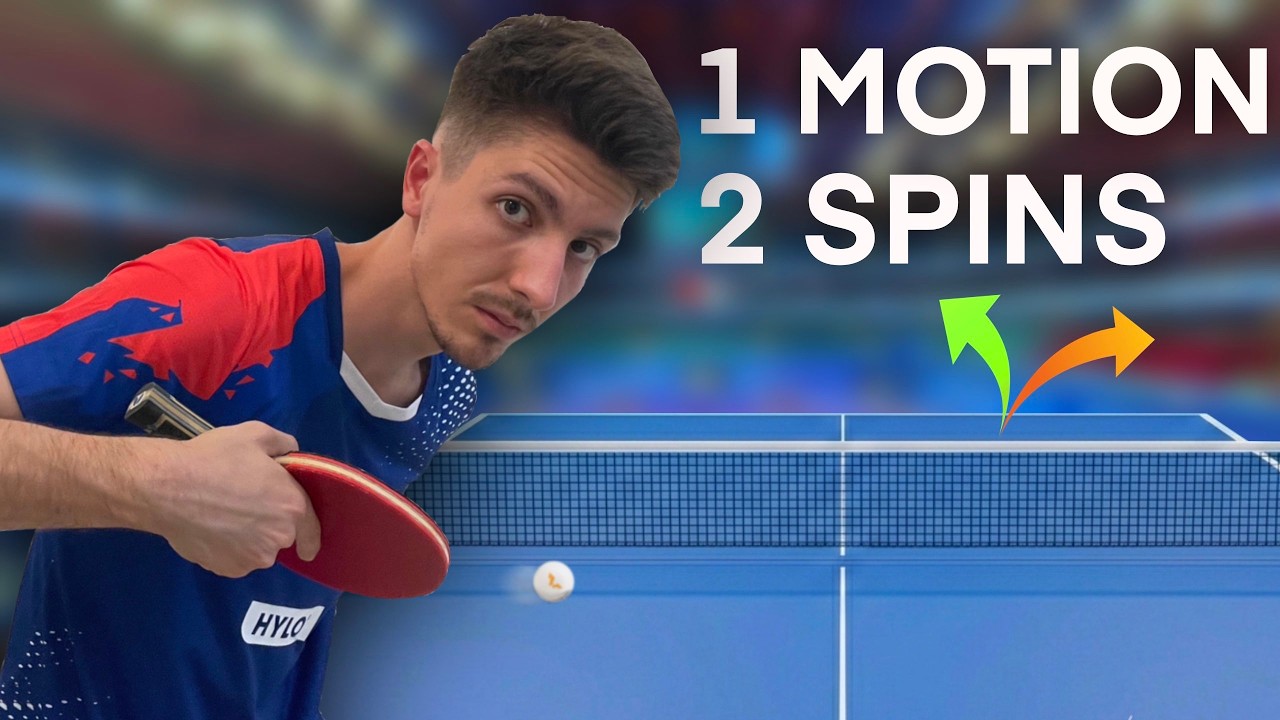
Tbh these serves arent that hard to read because he isnt making increased efforts to disguise the followthrough which gives a lot of information to his opponent.
If he relies on changing the racket angle, this is usually the easiest to see - just focus hard on the contact point - open angle = backspin, more perpendicular = sidespin or topspin.
If the racket angle is the same (advanced serves), you have to rely on detecting the force direction and this is where it gets really tricky because if the serve movement is fast, you dont really know whether they contacted during the downswing or the upswing phase. Most pro serves are like that, which is why they look pretty much identical (sidetop vs sideunder). They also use tricks to make the ball trajectory very similar - serving sideunderspin faster and sidetopspin floatier. Extremely nasty.
For these serves, one thing I found out is the height of contact, this doesnt lie. For backspin serves, it has to be contacted relatively higher in order to brush it downwards. If it is contacted too low then it wont make the net. For topspin serves it has to be contacted relatively lower in order to brush it sideways or even upwards, otherwise the trajectory will be too high.
With this method I can even tell Par Gerell's hook serves from video. But you still need to have eagle eyes, it is only a subtle difference.
For my serves, you pretty much dont see the racket during the serve backswing, and also during the followthrough (I pull my racket back immediately after contact towards my body). You can see the ball the whole way through sure and the racket contact point, but you wont see a lot more than that. Technically still legal but a lot of ppl complain - i point out to them it is not illegal to hide the bat, only hiding the ball is illegal.