This user has no status.
Wood grain orientation impacts on play?
- Thread starter kindof99
- Start date



You are using an out of date browser. It may not display this or other websites correctly.
You should upgrade or use an alternative browser.
You should upgrade or use an alternative browser.




This user has no status.

This user has no status.
🏆 Top 1% Commenter
Well-Known Member
Well-Known Member

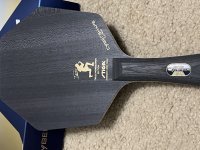
It will not impact play, but it shows poor quality control on Stiga's part and it's a shame it has happened on such an expensive blade.

This user has no status.

This user has no status.
Member

If just one outer layer is all that's misaligned, then no -- it shouldn't affect blade performance too much, in theory. That misaligned layer is enough to render it a factory second, but the rest of the layers should largely help compensate for the misaligned grain to some degree
The blade won't behave perfectly with a badly rotated layer like that, but in most cases it should still be usable.
However, really it depends on:
With alignment errors like this, they usually occur at either the very end of the glue up stage, or just before the cutting stage.
It's also not unheard of for more than one layer to be misaligned in such cases, depending on the cause.
Sometimes misalignment can happen during glue up, where one or more layers drifts out of alignment shortly after the panel has entered the presses.
If they used a cold wet glue up, then sometimes a glue layer can act like a thin layer of lubricant between ply layers while pressure is being added inside the presses.
This is usually a sign of excessive glue doseage in one or more layers -- the excess glue is slippery enough to overcome the friction and adhesion that normally hold the ply layers in place, as you are adding pressure to the ply stack.
The phenomenon works like squeezing a wet watermelon seed between your fingers. If you press on one side of the seed more than the other, the seed gets pushed sideways by the uneven pressure and can fly out from between your fingers at speed). The layers of an over-glued lay-up can work the exact same way.
In such cases, sometimes more than one layer can be dislodged. Depending on the glue doseage between all the other layers, its possible the medials or composite layers underneath the outer might also have been misplaced... granted it's far less likely, but still technically possible.
Thing is, you've only shown us one side... so its kind of hard to tell.
Is the outer layer on the other side also angled across the blade like that? Is it misaligned in the exact same direction, and to the exact same degree?
I ask because if more than one layer is misaligned (eg: if both outer layers are out of whack the same amount and have parallel grain pointing the exact same direction), then its possible the grain orientation problem occurred not during glue up, but at the panel cutting stage.... if so, that's another matter entirely!!
When you're cutting out a blade to shape, you need to ensure the whole panel is oriented properly before starting, and stays that way during the process.
If you're shaping a panel with a cnc machine, you need to ensure the orientation of the physical panel matches the orientation of the blade shape in your cutting software.
If you were to orient the blade shape vertically in your CAM software, but didn't do the same with the panel (ie: you rotated the panel a few degrees on your cnc cutting bed away from vertical), you would get an end result that looks exactly like the blade in your photo.
...thing is, in such a case every single layer would be equally misaligned... in which case the blade is a complete write off. It would never flex properly and would just feel downright odd.
If I were you, I would take careful note of where the end grain is on every layer of your blade. If any other wood ply layers in the blade are misaligned besides that top layer, the location of the the end grain in each layer is a dead give-away. The rest of the end grain (that rotated layer aside) should be at the very top and bottom of the blade, or else on the sides of the blade, exactly perpendicular to the blade's vertical line of symmetry.
If the end grain isn't in those locations on any other layer, then the blade is stuffed IMO, and should be returned to the retailer or manufacturer.
The blade won't behave perfectly with a badly rotated layer like that, but in most cases it should still be usable.
However, really it depends on:
- what caused the misalignment in the first place,
- exactly when it occurred in the building process, and
- If the rest of the ply layers are oriented correctly
With alignment errors like this, they usually occur at either the very end of the glue up stage, or just before the cutting stage.
It's also not unheard of for more than one layer to be misaligned in such cases, depending on the cause.
Sometimes misalignment can happen during glue up, where one or more layers drifts out of alignment shortly after the panel has entered the presses.
If they used a cold wet glue up, then sometimes a glue layer can act like a thin layer of lubricant between ply layers while pressure is being added inside the presses.
This is usually a sign of excessive glue doseage in one or more layers -- the excess glue is slippery enough to overcome the friction and adhesion that normally hold the ply layers in place, as you are adding pressure to the ply stack.
The phenomenon works like squeezing a wet watermelon seed between your fingers. If you press on one side of the seed more than the other, the seed gets pushed sideways by the uneven pressure and can fly out from between your fingers at speed). The layers of an over-glued lay-up can work the exact same way.
In such cases, sometimes more than one layer can be dislodged. Depending on the glue doseage between all the other layers, its possible the medials or composite layers underneath the outer might also have been misplaced... granted it's far less likely, but still technically possible.
Thing is, you've only shown us one side... so its kind of hard to tell.
Is the outer layer on the other side also angled across the blade like that? Is it misaligned in the exact same direction, and to the exact same degree?
I ask because if more than one layer is misaligned (eg: if both outer layers are out of whack the same amount and have parallel grain pointing the exact same direction), then its possible the grain orientation problem occurred not during glue up, but at the panel cutting stage.... if so, that's another matter entirely!!
When you're cutting out a blade to shape, you need to ensure the whole panel is oriented properly before starting, and stays that way during the process.
If you're shaping a panel with a cnc machine, you need to ensure the orientation of the physical panel matches the orientation of the blade shape in your cutting software.
If you were to orient the blade shape vertically in your CAM software, but didn't do the same with the panel (ie: you rotated the panel a few degrees on your cnc cutting bed away from vertical), you would get an end result that looks exactly like the blade in your photo.
...thing is, in such a case every single layer would be equally misaligned... in which case the blade is a complete write off. It would never flex properly and would just feel downright odd.
If I were you, I would take careful note of where the end grain is on every layer of your blade. If any other wood ply layers in the blade are misaligned besides that top layer, the location of the the end grain in each layer is a dead give-away. The rest of the end grain (that rotated layer aside) should be at the very top and bottom of the blade, or else on the sides of the blade, exactly perpendicular to the blade's vertical line of symmetry.
If the end grain isn't in those locations on any other layer, then the blade is stuffed IMO, and should be returned to the retailer or manufacturer.
Last edited:
This user has no status.

This user has no status.
🏆 Top 1% Commenter
Well-Known Member
Well-Known Member

What I really don't get about this, Stiga makes 3 different Cybershape Carbon blades at different price points. In the top pic, that is the Truls edition, which is the most expensive. They have a cheaper CWT edition and an even cheaper "original" Cybershape Carbon.
If the blade comes out a bit ugly or if they screw up, why don't they sell it as a lower-tier blade instead of selling it as top-shelf?
If the blade comes out a bit ugly or if they screw up, why don't they sell it as a lower-tier blade instead of selling it as top-shelf?
says
Fighting the EJ bug again...

says
Fighting the EJ bug again...
Member
This. Regardless of the level of impact on how the blade plays, I would be contacting Stiga for a replacement. That level of (poor) QC in a premium blade is unacceptable....but it shows poor quality control on Stiga's part and it's a shame it has happened on such an expensive blade.
This user has no status.
🏆 Top 1% Commenter
Well-Known Member
Well-Known Member
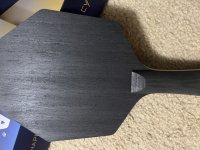
The other side is less mis-aligned. I will include a picture later. Thanks for the info. Learn a lot from your post.If just one outer layer is all that's misaligned, then no -- it shouldn't affect blade performance too much, in theory. That misaligned layer is enough to render it a factory second, but the rest of the layers should largely help compensate for the misaligned grain to some degree
The blade won't behave perfectly with a badly rotated layer like that, but in most cases it should still be usable.
However, really it depends on:
- what caused the misalignment in the first place,
- exactly when it occurred in the building process, and
- If the rest of the ply layers are oriented correctly
With alignment errors like this, they usually occur at either the very end of the glue up stage, or just before the cutting stage.
It's also not unheard of for more than one layer to be misaligned in such cases, depending on the cause.
Sometimes misalignment can happen during glue up, where one or more layers drifts out of alignment shortly after the panel has entered the presses.
If they used a cold wet glue up, then sometimes a glue layer can act like a thin layer of lubricant between ply layers while pressure is being added inside the presses.
This is usually a sign of excessive glue doseage in one or more layers -- the excess glue is slippery enough to overcome the friction and adhesion that normally hold the ply layers in place, as you are adding pressure to the ply stack.
The phenomenon works like squeezing a wet watermelon seed between your fingers. If you press on one side of the seed more than the other, the seed gets pushed sideways by the uneven pressure and can fly out from between your fingers at speed). The layers of an over-glued lay-up can work the exact same way.
In such cases, sometimes more than one layer can be dislodged. Depending on the glue doseage between all the other layers, its possible the medials or composite layers underneath the outer might also have been misplaced... granted it's far less likely, but still technically possible.
Thing is, you've only shown us one side... so its kind of hard to tell.
Is the outer layer on the other side also angled across the grain like that? Is it misaligned in the exact same direction, and to the exact same degree?
I ask because if more than one layer is misaligned (eg: if both outer layers are out of whack the same amount and have parallel grain pointing the exact same direction), then its possible the grain orientation problem occurred not during glue up, but at the panel cutting stage.... if so, that's another matter entirely!!
When you're cutting out a blade to shape, you need to ensure the whole panel is oriented properly before starting, and stays that way during the process.
If you're shaping a panel with a cnc machine, you need to ensure the orientation of the physical panel matches the orientation of the blade shape in your cutting software.
If you were to orient the blade shape vertically in your CAM software, but didn't do the same with the panel (ie: you rotated the panel a few degrees on your cnc cutting bed away from vertical), you would get an end result that looks exactly like the blade in your photo.
...thing is, in such a case every single layer would be equally misaligned... in which case the blade is a complete write off. It would never flex properly and would just feel downright odd.
If I were you, I would take careful note of where the end grain is on every layer of your blade. If any other wood ply layers in the blade are misaligned besides that top layer, the location of the the end grain in each layer is a dead give-away. The rest of the end grain (that rotated layer aside) should be at the very top and bottom of the blade, or else on the sides of the blade, exactly perpendicular to the blade's vertical line of symmetry.
If the end grain isn't in those locations on any other layer, then the blade is stuffed IMO, and should be returned to the retailer or manufacturer.
This user has no status.
🏆 Top 1% Commenter
Well-Known Member
Well-Known Member
It is a myth how Stiga operates.What I really don't get about this, Stiga makes 3 different Cybershape Carbon blades at different price points. In the top pic, that is the Truls edition, which is the most expensive. They have a cheaper CWT edition and an even cheaper "original" Cybershape Carbon.
If the blade comes out a bit ugly or if they screw up, why don't they sell it as a lower-tier blade instead of selling it as top-shelf?
This user has no status.
This user has no status.
Member
Good to know.The other side is less mis-aligned. I will include a picture later. Thanks for the info. Learn a lot from your post.
I'm a bit worried however that you said 'less mis-aligned', and not 'correctly aligned' or 'normally aligned"
If the outer layer on the other side isn't running perfectly vertically up and down the blade as per usual, then it's just not going to play properly.
Golden-son's comment above is correct -- even having just one layer that much out of whack is pretty bloody ordinary. The blade should never have left the factory in that condition.
This user has no status.
Member

The example on their product page does not look aligned either. https://tabletennis11.com/en/stiga-cybershape-carbon-cwt-truls-editionI bought this Truls Cybershape carbon from tt11. The top wood grain orientation isn’t parallel to handle. It looks weird from the first view. Will it impact play at all?
This user has no status.
Member
I had old stiga blades like from the 1990's or before and sometimes they had top ply inclined like this.
so it's not something new.
so it's not something new.
This user has no status.
This user has no status.
Member
I know what youre getting at here, but I suspect what we're seeing in that pic is simply woodgrain lines that aren't parallel. To be fair, this is more unusual with koto compared to other woods but not totally unheard of either.The example on their product page does not look aligned either. https://tabletennis11.com/en/stiga-cybershape-carbon-cwt-truls-edition
Although... having said that, now that I look closer -- the outer wood on that blade pic you shared in your post doesn't look very much like koto to me. 🤔🤔
The OP's pic definitely features dyed koto to my mind -- the medullary ray fish scaling on the outer layers, the dead straight and perfectly parallel early/late wood grain, the fact the wood didnt take the dye too well, the naturally higher lustre of the wood, and the width of the grain lines themselves, are all grain features that scream 'koto' to me
The blade in your linked pic however doesn't tick any of those boxes.... to me, that outer wood looks more like dyed limba or ash than koto. 🤔🤔🤔
I mean -- I know it's technically possible for koto (or almost any hardwood for that matter) to have converging / diverging grain lines like you see in that image.... all you need to do is take the timber from a spot on the tree that is closer to a branch or fork than normal.
That said, I can't ever recall seeing divergent grain lines on a koto blade. The closer I look at it, the more I think that blade wasn't made with koto.
What does everybody else think? Has *anybody* out there ever had a koto blade with grain lines on it that *weren't * perfectly parallel?
While I no longer use the stuff, I still would have bought close to 30 square meters of koto veneer since I first started making blades. But I can't recall ever seeing a single piece of it with converging grain.
If i'm right, most probably its just another example of wood substitution / shifting blade recipes over time, from one of the TT equipment majors -- it's a pretty common blade making practice nowadays... 🤔🤔🤔
Last edited:
This user has no status.
This user has no status.
🏆 Top 1% Commenter
Well-Known Member
Well-Known Member
It can happen. How much of it do you want? 😅What does everybody else think? Has *anybody* out there ever had a koto blade with grain lines on it that *weren't * perfectly parallel?

says
Shoo...nothing to see here. - zeio

says
Shoo...nothing to see here. - zeio
🏆 Top 1% Commenter
Well-Known Member
Well-Known Member
Paying homage to Tenaly in "traditional and authentic" Stiga fashion.
This user has no status.
🏆 Top 1% Commenter
Well-Known Member
Well-Known Member
This user has no status.
Member

I wonder how common it is for manufacturers to hide the bad sheets of veneer below the outmost layer? Maybe that is how the blade prices are determined. Expensive blade uses the best veneers and cheap blades uses the good veneers?
This user has no status.
Active Member

... If the blade comes out a bit ugly or if they screw up, why don't they sell it as a lower-tier blade instead of selling it as top-shelf?
I've yet to see any "cheap" blade with such a manufacturing defect...
(and there are some blades missing that are in use or sold e.g. 2x Loki Telson Speed, Donic Baum Esprit, Yinhe V14 Pro etc.)
says
One pound of practice is worth more than thousand pounds...

says
One pound of practice is worth more than thousand pounds...
Active Member
Wow! that surely looks weird. I am not a wood expert or a blade expert but if you buy such an expensive blade, then I think it is manufacturer's responsibility to provide absolute top notch product.I bought this Truls Cybershape carbon from tt11. The top wood grain orientation isn’t parallel to handle. It looks weird from the first view. Will it impact play at all?

I agree, and it would be a reasonable request from a players point of view. Stiga however, I'm pretty sure about that, will tell you that it has no effect on the playing properties whatsoever. One would have a better chance with, let's say TT11, if the person had bought it there, as they are rather customer friendly.This. Regardless of the level of impact on how the blade plays, I would be contacting Stiga for a replacement. That level of (poor) QC in a premium blade is unacceptable.
In this context - if you will - I'd also like to point out, that when the Rosewood and Ebenholz blades were released years ago, there were quite a few people who were wondering about the way the top plies looked. Turned out that the top plies were some(often?)times jointed together out of two (sometimes three) seperate pieces. This you would find mostly with cheapo blades. And if you would ask Stiga about that, they will also tell you that:
a) it has no effect on the playing properties and
b) if they would only use top plies out of one piece for these blades, it would increase the prices of these already pricey blades (as Rosewood and Ebenholz are somewhat expensive wood types).
Now, that might be true, but in my opinion it reflects way more on Stiga's sloppy approach regarding their own craftsmanship and the disregard of their (potential) customers.
Last edited:
This user has no status.
🏆 Top 1% Commenter
Well-Known Member
Well-Known Member
Follow up: TT11 agreed to refund or send a replacement. Kudo to their top customer service.
One reason for me to return it is that I would not/could not sell it in the future. And as a EJ, it is quite possible that I will sell it one day.
One reason for me to return it is that I would not/could not sell it in the future. And as a EJ, it is quite possible that I will sell it one day.
Similar threads
- Replies
- 3
- Views
- 295

- Replies
- 14
- Views
- 2K