Mental training for Table Tennis

This user has no status.
Nice one! That was 2014 junior nats wasn't it. Haha yea I played the aussie championships when it was in tasmnia a few years ago in 2011, were you playing at this time?
Nah mate, only been playing for 3-4 years. I played in the 2013 junior nats at croydon. The aussie vets were here last year, amazing tournament with some really good players :)
 
This user has no status.
Active Member
Jan 2014
736
185
1,471
Read 6 reviews
It's probably been reviewed and suggested elsewhere, but Tahl Leibovitz's "Ping Pong for Fighters" is excellent as far as tips and mental approach go.

I just finished the book a few minutes ago! Yeah it's a lot about mental strength and mindset. Anybody have any other good books like that?
 
says Spin and more spin.
🏆 Top 1% Commenter
Well-Known Member
Moderator
Dec 2010
16,640
18,535
56,964
Read 11 reviews
Hey, I had not seen this thread till yesterday after I wrote this email to Abe (AGold). But I think it may have some valuable insights for some of you. Just so you know, I have not read any books on sports psychology or the mental game of any sport. So I am just talking from my experience. Based on one of my comments in this email, it is interesting for me to find out that Tahl has a book called "Ping Pong for Fighters". I did not know that when I wrote what I wrote. haha.

Also a side note, I used to be a professional In-Line skater skating vert ramps in competitions and then in the circus. So what I wrote starts with that experience.

"On the mental: Before I worked for the circus I skated in a bunch of pro competitions. The first few I was nervous and concerned about my performance. I wanted to do well and it caused me to do badly. In the third competition I was in, as I was getting ready to skate, I had been thinking about all that and I realized that the reason I skated was really because it was fun. I skated vert ramps because I loved to do it. (Same reason I play Table Tennis). Now there were reasons for me to be stressed or nervous. There was a company giving me free skate equipment to represent them and they were flying me to the events and paying my entry fees. They weren't paying me. But that is the next step, The next level. If I did well in the skate competitions I would probably start getting paid.


So I am at the top of the ramp, I am the next person to go. They will count me in to start my run in 2-3 min and I've had this realization that I skate to have fun. Then the DJ starts playing one of my favorite songs. So I signal to the DJ to crank it up and I start dancing, on my skates, on the top of a 12 foot very ramp and the announcer counts me in and I almost didn't realize he was counting me in. But I wasn't in a rush. So I didn't rush to drop in. But to the beat of the music I skated to the edge of the ramp and jumped in. I had never tried that before. But instead of dropping in the normal, safer way, I just skated up to the edge jumped up into the air and landed on a vertical surface facing away from me to start my first run.


The whole run went really well and all the rest of the tournaments I skated in went really well because I was just allowing myself to have fun and letting my body do what it wanted.


Now the kind of competition in table tennis is different. You are competing directly against an opponent and the opponent has an impact on what you are able to do and what you want to do. And everyone has a different ideal headspace for competition. I know for me being calm, having fun, having my head clear so my body can just respond is what works best and helps me stay focused. But there are players like Tahl who I watch who purposely throw tantrums because they get more focused and play better when the adrenalin is really pumping and they are angry.


A lot of people don't realize that a certain amount of his antics are actually staged because he is trying to psych himself up and get himself to actually be angry ("fight ready"). It works for him. But sometimes, once he is angry, he can take it to far. And when he has gotten to the point where it is not an act and he really is angry, perhaps some of his antics are not okay. But it still works to get him ready.


In the end, whatever gets you focused and capable of getting your mind, your intellect and your cognitive processing out of the way so your body and the muscle memory you have developed through training can simply do the right shots for each ball you are given, then things will go better. And if you start the points with good, sound game strategy but also let your body do the actions once you are in the points, then your level will be in line with your technique."

So, you can think about certain things in between points. I just really think about strategy for the first few balls. Once I am in an open rally I feel confident that my power and ball placement are good enough for me to go toe to toe with someone a level or two higher than me. But once you start the point, you want your mind as clear and open as possible so you can be focused on what is happening right at that moment. A lot of mental work should be about getting the mind out of the way so the body can do what you have trained into muscle memory through practice.

This is also why game simulation drills--where you do not count points but practice certain things that happen in a match over and over, so your body just knows what to do, not just one version of what to do, but multiple versions of what to do to the same serve, the same third ball, etc--are such valuable training. Serve and receive drills are huge in helping your mental game, and in helping you get clear and focused.

It is also why this is such a good post:

Funny, but what works best for me is to try not to think at all. I just get more nervous if I start thinking about tactics and mind games too much.
 
Last edited:
  • Like
Reactions: Suga D and Michal_Z
says Where will table tennis be in the future? And what ideas...
Member
Oct 2010
413
98
644
Read 12 reviews
Nah mate, only been playing for 3-4 years. I played in the 2013 junior nats at croydon. The aussie vets were here last year, amazing tournament with some really good players :)

Ah ok, yeh there are some good vets out there. Who were some of the best vets? I may see you at a tournament some time. ;)
 
This user has no status.
Member
Jul 2014
21
8
29
Mental training is super important. Personally, when i'm in the "zone", my game becomes more consistent. My basic strokes don't cost me unforced errors, which is super important for modern defenders. Mental strength is a real advantage, no doubt about it.
 
This user has no status.
New Member
Jan 2015
1
0
1
attachment.php


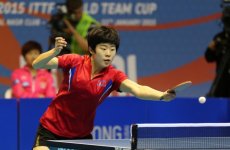
Final, the first competition was key. Played at the start of mwhye two active, score up alternately. Eventually, with key points of a lucky edge, Fang Bo 13:11 winning one more game, then went on and won two games, once again beat the Cui Qinglei 3:0, qualify for the World Cup team competition.


Attachments

  • 730_1418227_921139.jpg
    730_1418227_921139.jpg
    51.3 KB · Views: 278
This user has no status.
🏆 Top 1% Commenter
Well-Known Member
Mar 2014
1,777
489
2,479
Read 12 reviews
attachment.php


Final, the first competition was key. Played at the start of mwhye two active, score up alternately. Eventually, with key points of a lucky edge, Fang Bo 13:11 winning one more game, then went on and won two games, once again beat the Cui Qinglei 3:0, qualify for the World Cup team competition.


I dont think its in the right thread.
 
says Spin and more spin.
🏆 Top 1% Commenter
Well-Known Member
Moderator
Dec 2010
16,640
18,535
56,964
Read 11 reviews
I dont think its in the right thread.

This is actually a complex bit of spam. That one group of letters which isn't a word is a link to a website. Also notice, the photo isn't of anyone mentioned in the text. Also, it is likely that that is a robot and not a human doing the posting and also you can see it is the firsts post for that "member".
 
Last edited:
This user has no status.
🏆 Top 1% Commenter
Well-Known Member
Mar 2014
1,777
489
2,479
Read 12 reviews
This is actually a complex bit of spam. That one group of letters which isn't a word is a link to a website. Also notice, the photo isn't of anyone mentioned in the text. Also, it is likely that that is a robot and not a human doing the posting and also you can see it is the firsts post for that "member".

unfortunately,on the mobile browser,a person cannot see a members post count,and the picture is...a bit small.

But i should have noticed the funny wording and realised it was spam:(
 
says Spin and more spin.
🏆 Top 1% Commenter
Well-Known Member
Moderator
Dec 2010
16,640
18,535
56,964
Read 11 reviews
unfortunately,on the mobile browser,a person cannot see a members post count,and the picture is...a bit small.

But i should have noticed the funny wording and realised it was spam:(

Nah, all good. I was posting that as much so Dan would hopefully see and remove it as anything else. It is okay if you didn't realize it was spam.
 
This user has no status.
I don't know if it's been mentioned already, but basically playing 1 v 1 strategy games can help a lot. The first thing to a strong mentality is having a flexible mind. Having the ability to analyze and adapt to situations is very important in any 1 vs 1 match. Any card game where you can't see your opponents hand is pretty much the situation you face in table tennis. You can only see what's been shown, but you can always deduce what your opponent's plan is from the way he/she plays. This is something that pretty much anyone can do with training.

First thing to learn is watching. Second is learning about the game, how do players prepare points, how do they finish them, what's their overall game plan/strategy. Third is speculating what's going to happen based on what you know.
The third step includes a lot of guessing though. Usually players do these steps automatically since they recognize reacting during a rally is hard and leads to many errors if tried constantly, but few are aware of it and improve it accordingly.

Since I'm more of a thinker than a sports person and to be honest have no talent whatsoever, in table tennis my style of play always revolved around completely strategic play. Main focus is on strong serves to set-up points since those only require practice and no "touch" for placement.
 
says Visited my own profile, woop woop. ;)
Active Member
Nov 2014
508
270
1,145
Read 6 reviews
31
I wanted to share this somwhere without making a new thread so I ended up here. It might not give much help, but it's an interesting read. I presume stress and being nervous is not far from the same. Although the guy is talking about other things, it believe the base factor itself can be linked to situations in table tennis.
http://www.businessinsider.com/100-...oo-much-stress-results-in-poor-performance-34
The interesting part:
"Stress changes your perceptions – Research on stress shows that a little bit of stress (called arousal in psychology terms) can help you perform a task, because it heightens awareness. Too much stress, however, degrades performance. Two psychologists, Robert Yerkes and John Dodson first postulated this arousal/performance relationship, and hence it has been called the “Yerkes-Dodson law” for over a century.

Arousal helps up to a point – The law states that performance increases with physiological or mental arousal, but only up to a point. When levels of arousal become too high, performance decreases. Research on the law shows that the amount of stress/arousal that is optimal depends on how difficult the task is. Difficult tasks require less arousal to reach optimal performance, and will start to break down if the arousal level is too high. Simpler tasks require more arousal and don’t fall off as fast.

Tunnel vision — When arousal first goes up then there is an energizing effect, as the person is paying attention. But as the stress increases there are negative effects. Attention gets unfocused, people have trouble remembering, problem solving degrades and “tunnel vision” sets in. Tunnel vision is where you keep doing the same task over and over even though it isn’t working.

Glucocorticoids — More recent research has shown a similar curve when studying the presence of glucocorticoids. These are the hormones that are released when we experience stress, so the Yerkes-Dodson law appears to have direct physical evidence.

Maximum frustration — As I tried to use the web page to find a doctor I kept getting errors, and typical of someone under stress, I kept doing the same task over and over even though it wasn’t working (tunnel vision). At one point I was crying tears of frustration, cursing over the lack of usability of the web site, and upset that I could not just find the name and address of a clinic we could go to.

Patient care, not computer care – I finally turned away from the computer, got my daughter some Tylenol, gave her warm washcloths to hold against her ear, and got us both calmed down. Then I found a clinic at the website (where we went later that day, only to have them say she was fine. By the way, our insurance didn’t work and we had to pay cash after all — i.e., I didn’t need the web site). My daughter is better, and I didn’t even have to cancel the client meeting."

Now how can we use this and learn from it? Could be several things and I'm no mental expert. But if your game is going bad, you should try to be aware of your stress/arousal level while playing, and then find ways to calm it back down to a suiting level for good performance. Now finding out how to do this is probably the hard part, but should not be impossible. This is when Timeouts can be truly valuable if you know how to, but maybe can't manage it within a few seconds between points.
Maybe close your eyes, think about something calming, blank space, or thinking about the ball I don't know, can be very individual on what works. Try different things until you find out what works for you. But bare in mind, that the stress levels can be different from time to time, if you try one thing on one stress level, it might not work identically if it's a slightly different stress..?Or so I think.

Any input/opinions from others would be nice! It's a tricky matter lol.

Edit: Also
Mental training is super important. Personally, when i'm in the "zone", my game becomes more consistent. My basic strokes don't cost me unforced errors, which is super important for modern defenders. Mental strength is a real advantage, no doubt about it.

You could say, that when you are in the "zone" your mental concentration and arousal/stress level are perfectly balanced and no tunnel vision involved therefore resulting a clear mind giving you good reflexes/reactions when sending the ball back.

But controlling and staying in such a zone can be very difficult if you loose your pace for maybe just a couple points if you don't have a very strong mind. Because these things happends even to the best.

When I watched Xu Xin to day (at the Chinese open final) he kept putting a lot of flicks outside, and he was like "what" putting up his regular expression, sometimes smiling with that "what" expression, not understanding (or just not happy with what he knew he did wrong? which would be a big difference) what he did wrong and then did it wrong for at least a few more times. His perception of the ball was slightly off. and I don't think this was the plastic balls fault.
He might have been trapped by the "Tunnel vision" a few times there. and didn't get properly into his game. but what do I know. Highly speculative content here. :v

 
Last edited:
This user has no status.
🏆 Top 1% Commenter
Well-Known Member
May 2015
3,220
3,924
27,424
Read 5 reviews
Very interesting. Thanks for sharing.

After all I think that a slight "tunnel vision" isn't just destructive, but maybe also a little helpful and is happening on many (if not all) levels of tt players. Some players are so deeply focused on their game, that they totally forget about the score.
(If one would see this as an indication of a tunnel vision)
I've seen this happen to pro players like Boll and others as well as to amateures on lower levels.
I guess on the pro level this is helpful to forget about the crowd and the cameras for a minute and instead concentrate on the game.
Maybe it depends how you deal with it. But I'm no psychologist...
 
says Spin and more spin.
🏆 Top 1% Commenter
Well-Known Member
Moderator
Dec 2010
16,640
18,535
56,964
Read 11 reviews
I think you two are talking about two different mental states for which you are using the term "tunnel vision".

Suga D's version of "tunnel vision" = totally focus on the game and each individual point with no outside distractions. That is generally a good thing. That would not mess a player up. I can't think of any circumstance where that would be a problem for a player.

Kaizoku's version of "tunnel vision" = a mental state where you are stuck and continue to execute strategy that simply isn't working over and over and an inability or unwillingness to think of trying anything else. That would be pretty bad in a match. The term "tunnel vision" here is referring to continuing to focus on a strategy that is not working at all and trying to continue to execute it in spite of the fact that the strategy is causing the player to lose point after point. There is nothing good about being stuck in a failing strategy and unwilling to adjust to a different strategy.


Sent from my iPhone using Tapatalk
 
Last edited:
  • Like
Reactions: Suga D and Kaizoku
Top