Seven Laws of Spin (General things about sidespin and backspin that experienced people know)

This user has no status.
Active Member
Jun 2022
902
849
2,469
as often with these videos there are either some things lost in translation (using english subtitles) or statements are debatable. Sometimes i just dont agree with terminology (i.e. somebody claiming to do a topspin, while it is clearly a above shoulder level smash).
In this instance one thing that stood out to me was the part about underspin.

Strong underspin serves never get pushed high by the opponent.
Suggesting that the tactic to use a strong underspin serve is good, because if the opponent just touches it short you can attack easily because there is less underspin in the ball than before is very bad.

If you put strong underspin in the serve and somebody touches it short (without adding underspin himself by "chopping" down during push) will have a ball with less underspin come back to you, yes. But less than you initiall underspin serve ball might still by pretty much underspin which will just make it harder for you to loop it.

A medium amount of underspin would be wiser here, since it might be enough underspin for the opponent to not be able to flip/flick it, but still not too much underspin for the returned 3rd ball to attack for you. If missread as "more underspin" by the opponent the push will send the ball higher for an even easier attack.

The rest of the video was mostly spot on i think.
 
This user has no status.
🏆 Top 1% Commenter
Well-Known Member
Moderator
Oct 2014
20,298
26,961
71,896
Read 17 reviews
as often with these videos there are either some things lost in translation (using english subtitles) or statements are debatable. Sometimes i just dont agree with terminology (i.e. somebody claiming to do a topspin, while it is clearly a above shoulder level smash).
In this instance one thing that stood out to me was the part about underspin.

Strong underspin serves never get pushed high by the opponent.
Suggesting that the tactic to use a strong underspin serve is good, because if the opponent just touches it short you can attack easily because there is less underspin in the ball than before is very bad.

If you put strong underspin in the serve and somebody touches it short (without adding underspin himself by "chopping" down during push) will have a ball with less underspin come back to you, yes. But less than you initiall underspin serve ball might still by pretty much underspin which will just make it harder for you to loop it.

A medium amount of underspin would be wiser here, since it might be enough underspin for the opponent to not be able to flip/flick it, but still not too much underspin for the returned 3rd ball to attack for you. If missread as "more underspin" by the opponent the push will send the ball higher for an even easier attack.

The rest of the video was mostly spot on i think.
Yea, that law 6 didn't fully resonate with my experience, but bbn I suspect as you point out that there is something missing. I just like the fact that this coach is trying to formalize things that many of us just implicitly think. Even if he isn't quite right as you and I agree, it is easier to discuss that than to start from scratch. And his discussion of the sidespin effects on third and fourth ball will make me more confident when dealing with the situation as I think I should have worked harder to be systemic but I just keep leaving ur to intuition.
 
This user has no status.
🏆 Top 1% Commenter
Well-Known Member
Moderator
Oct 2014
20,298
26,961
71,896
Read 17 reviews
this is good. I need to watch it a few more times. Can you summarize a few of the laws discussed? The first three I still need to wrap my head around
The main point of the first 3 is that the sidespin effect of your serve is still on returns that neutralize it with racket angle adjustments and you need to compensate for it on your third ball and anticipate popups from those who dont compensate it on the fourth ball.
 
  • Like
Reactions: Jslick89

Brs

This user has no status.

Brs

This user has no status.
🏆 Top 1% Commenter
Well-Known Member
Oct 2015
1,342
1,766
3,305
The main point of the first 3 is that the sidespin effect of your serve is still on returns that neutralize it with racket angle adjustments and you need to compensate for it on your third ball and anticipate popups from those who dont compensate it on the fourth ball.
This sidespin retention thing is also true vs short pips even if the receiver doesn't use a racket angle to neutralize the spin. I guess the lower rubber surface area does the neutralizing.
 
This user has no status.
🏆 Top 1% Commenter
Well-Known Member
Oct 2010
2,867
2,812
10,572
It's actually way more complex than that. The opponent can go with the sidespin or against the sidespin, and go up or down with the stroke to create sidetopspin or sideunderspin. These variations creates very different spin effects on the ball, and is made worse if they have disguised fake movements.

Sometimes the push push rallies become way too complex that I lose track of the spin 😭 I tend to try to treat the opponent's stroke as another serve that I have to decipher, that at least keeps my head a bit clearer.
 
This user has no status.
🏆 Top 1% Commenter
Well-Known Member
Moderator
Oct 2014
20,298
26,961
71,896
Read 17 reviews
This sidespin retention thing is also true vs short pips even if the receiver doesn't use a racket angle to neutralize the spin. I guess the lower rubber surface area does the neutralizing.
The racket angle neutralization is more about making the ball go back in a straight line. The straight line effect might lead the naive returner to forget that the ball still retains his sidespin. There are various possibilities, but the video just tries to create a situation where people can see that the sidespin is still clearly on the ball and just be adjusted for.
 
says Table tennis clown
🏆 Top 1% Commenter
Well-Known Member
Apr 2020
4,696
3,002
10,946
You girls must have many more university degrees than i do because i don't have a clue what they are trying to say.
Do you ?????
🥸
IMG20230407110026.jpg
 
This user has no status.
🏆 Top 1% Commenter
Well-Known Member
Moderator
Oct 2014
20,298
26,961
71,896
Read 17 reviews
You girls must have many more university degrees than i do because i don't have a clue what they are trying to say.
Do you ?????
🥸
View attachment 24882
It's really not that complicated. You mean you really haven't popped up the ball when your opponent pushed to you on serve return? Not adjusting for the true axis of rotation from an opponent caused by the sidespin on your prior ball is a common error.
 
says Table tennis clown
🏆 Top 1% Commenter
Well-Known Member
Apr 2020
4,696
3,002
10,946
It's really not that complicated. You mean you really haven't popped up the ball when your opponent pushed to you on serve return? Not adjusting for the true axis of rotation from an opponent caused by the sidespin on your prior ball is a common error.
Where does """missed the net""" come in ????
 
This user has no status.
🏆 Top 1% Commenter
Well-Known Member
Moderator
Oct 2014
20,298
26,961
71,896
Read 17 reviews
Where does """missed the net""" come in ????
You literally missed the net because the push went where you didn't think it would go. You are supposed to push thr ball towards the net but it sometimes doesnt even go there.. He gave the example I think of when you serve and your opponent pushes the ball and you hit the ball off the side of the table. I used to have that experience that I would serve with a lot of sidespin and then fail to hit the table when I didn't compensate for it. Experienced players often compensate without thinking.
 
says Table tennis clown
🏆 Top 1% Commenter
Well-Known Member
Apr 2020
4,696
3,002
10,946
You literally missed the net because the push went where you didn't think it would go. You are supposed to push thr ball towards the net but it sometimes doesnt even go there.. He gave the example I think of when you serve and your opponent pushes the ball and you hit the ball off the side of the table. I used to have that experience that I would serve with a lot of sidespin and then fail to hit the table when I didn't compensate for it. Experienced players often compensate without thinking.
thanking you kindly for the "translation" 😁
Missing the table I can understand, missing the net confused me.
 
This user has no status.
🏆 Top 1% Commenter
Well-Known Member
Mar 2023
1,160
1,106
7,858
Thank you Next Level for this video! Including thanks to him, I added a lot today. We have one player at the club who has 80% of his performance in serves that have very strong lateral rotation with variations of top, side or bottom. After watching this video, it became much easier for me to play with him, I corrected the angle and stopped making mistakes on the 4th ball. How obvious it became, everything ingenious is simple!
 
  • Like
Reactions: NextLevel
This user has no status.
Active Member
Jun 2022
902
849
2,469
You girls must have many more university degrees than i do because i don't have a clue what they are trying to say.
Do you ?????
🥸
View attachment 24882
You are correct. The translation does not make much sense in a match scenario:

If you do a no-spin serve the scenarios are:
a) opponent tries to push it and will push it high (thinking there is backspin in your serve while there is not)
b) opponent sees that it is no spin and counters it or just lays it short (with the correct blade angle), the ball will come back with more or less the same arc as it arrived
c) opponent thinks it is topspin and tries to block it (which will have the ball land in the net due to no topspin generating a high enough arc for it to pass the net)
In scenario a it does not make sense to push the ball, because the opponent pushed the ball high enough for you attack
In scenario b you should also not push it because it's gonna go high and enable the opponent to attack easily
In scenario c there is nothing for you to do, because the no-spin ball is "blocked" into the net

The translation of "miss the net" might also be odd, since that is what you actually should try to do. Miss/clear the net and not hit it :p

And a no-spin serve can not make you miss the net to the side, since there is no sidespin that could make the ball jump unexpectedly to the side.

 
Last edited:
  • Like
Reactions: lodro
This user has no status.
🏆 Top 1% Commenter
Well-Known Member
Moderator
Oct 2014
20,298
26,961
71,896
Read 17 reviews
thanking you kindly for the "translation" 😁
Missing the table I can understand, missing the net confused me.
Me, maybe. because Engiish is not my first language. I dont try to understand someone by looking at every single word and seeing if it makes sense. I try to understand what they are trying to say first by reading multiple sentences and seeing whether I can catch the overall gist. The details come later. Because people can make mistakes top down or bottom up and still be saying something important. So I am usually confused when people get hung up on one detail that may not negate the bigger picture.
 
  • Like
Reactions: UpSideDownCarl
says Table tennis clown
🏆 Top 1% Commenter
Well-Known Member
Apr 2020
4,696
3,002
10,946
You are correct. The translation does not make much sense in a match scenario:

If you do a no-spin serve the scenarios are:
a) opponent tries to push it and will push it high (thinking there is backspin in your serve while there is not)
b) opponent sees that it is no spin and counters it or just lays it short (with the correct blade angle), the ball will come back with more or less the same arc as it arrived
c) opponent thinks it is topspin and tries to block it (which will have the ball land in the net due to no topspin generating a high enough arc for it to pass the net)
In scenario a it does not make sense to push the ball, because the opponent pushed the ball high enough for you attack
In scenario b you should also not push it because it's gonna go high and enable the opponent to attack easily
In scenario c there is nothing for you to do, because the no-spin ball is "blocked" into the net

The translation of "miss the net" might also be odd, since that is what you actually should try to do. Miss/clear the net and not hit
Yep, make all perfect sense to me, thanks for taking time to explain it properly. (y)
 
  • Like
Reactions: Egon
says Table tennis clown
🏆 Top 1% Commenter
Well-Known Member
Apr 2020
4,696
3,002
10,946
Me, maybe. because Engiish is not my first language. I dont try to understand someone by looking at every single word and seeing if it makes sense. I try to understand what they are trying to say first by reading multiple sentences and seeing whether I can catch the overall gist. The details come later. Because people can make mistakes top down or bottom up and still be saying something important. So I am usually confused when people get hung up on one detail that may not negate the bigger picture.
no worries, english is also not my first language but i forgot what it used to be . 😂
 
  • Haha
Reactions: NextLevel
says Fair Play First
🏆 Top 1% Commenter
Well-Known Member
Jan 2012
2,193
730
3,077
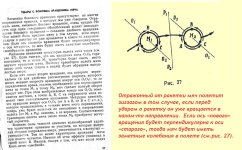
Enclosed below is an academic study on the zig-zag balls, of real practical value. It enables you to generate wobbling balls in a rally, to upset an opponent badly. Russian edition only, sorry.
боковое вращение.jpg
 
This user has no status.
🏆 Top 1% Commenter
Well-Known Member
Jul 2017
1,784
879
2,985
Igor, most of us can't read Russian. If you post a pdf or text file we can use google translate to translate into English.
I have seen other studies that say TT balls don't wobble. The reason is that they don't go at the right speed.
There is a Reynolds number of objects in a fluid flow. The Reynolds number determines if the fluid flow is laminar or turbulent. There are 5 ranges of Reynolds number. One one of them will result in a wobble. This issue I have is it the wobble is significant to be seen. I have yet to see a study that shows what the amplitude of any TT ball wobble is.

Igor, can you translate the document into English or post in in text or pdf format?
 
  • Like
Reactions: lodro and Egon
Top