This user has no status.
Member




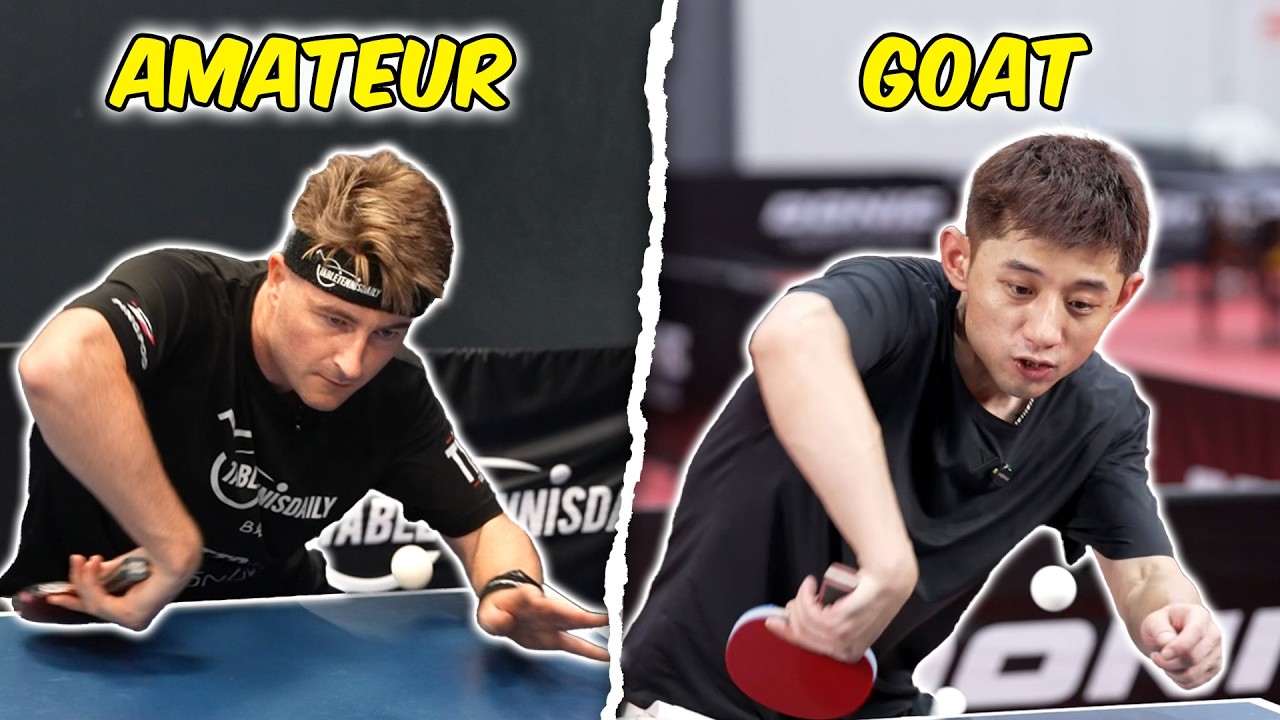
Girliest Of All Time?The G.O.A.T. says no GIRLIE Blade!



Girliest Of All Time?The G.O.A.T. says no GIRLIE Blade!

Ok did a bit of Googling. TIL that "stiffness" in carbon fibres does not mean the sheet of carbon is solid stiff (like a pane of glass, which is what I had in my mental model).Because when a blade bends, the outermost layers experience the most strain (tension/compression), so the closer to the surface you place the stiff carbon layer the more it resists bending. Bending stiffness of a material increases rapidly with distance from the center, so all else equal (same materials, ply thickness, etc.), an outer carbon blade can be considerably stiffer than an otherwise identical inner carbon.

Yeah that's what I understand. I'm just saying that apparently it matters more to ZJK to not switch blades as often, than it does to all the top players who use inner blades.They get their blades from sponsors who replicate and quality control. If you are gluing a lot, moisture is a problem for wood and that affects the consistency of inner force more than outer force.
This is a pretty good explanation.Ok did a bit of Googling. TIL that "stiffness" in carbon fibres does not mean the sheet of carbon is solid stiff (like a pane of glass, which is what I had in my mental model).
Stiffness refers to its resistance to being stretched. So while the carbon fibre itself is flexible and bendy like a cloth when not attached to anything (it is a weave after all), when strongly glued between slices of wood, it works to restrain the wood from being bent, by resisting stretching, and consequently preventing the wood from bending.
Best example I can think of is trying to squat while wearing tight-fitting non-stretch jeans. My legs are the wood, the non-stretch jeans is the carbon fibre.
I could be completely wrong, just relaying here what I came across.

same, my DHS King 3 is 10 years old and still very solid (with blade lacquering)(this is coming from a person who plays at the club level) In my experience I have had no problems with the durability of inner carbon
Yep this is the basics of structural engineering - this is also how reinforced concrete works - the steel rebars are at the ends to resist the tension side because concrete is only strong in compression. Bending results in tension on one side and compression on the other. The further away from the neutral axis you go the more efficient the tension reinforcement becomes.Ok did a bit of Googling. TIL that "stiffness" in carbon fibres does not mean the sheet of carbon is solid stiff (like a pane of glass, which is what I had in my mental model).
Stiffness refers to its resistance to being stretched. So while the carbon fibre itself is flexible and bendy like a cloth when not attached to anything (it is a weave after all), when strongly glued between slices of wood, it works to restrain the wood from being bent, by resisting stretching, and consequently preventing the wood from bending.
Best example I can think of is trying to squat while wearing tight-fitting non-stretch jeans. My legs are the wood, the non-stretch jeans is the carbon fibre.
I could be completely wrong, just relaying here what I came across.
I don't know if it is still being sold but a quite well known chinese brand used to advertise a blade that had 1 layer of carbon ......in the middle of the blade 😂 😂 😂 😂Yep this is the basics of structural engineering - this is also how reinforced concrete works - the steel rebars are at the ends to resist the tension side because concrete is only strong in compression. Bending results in tension on one side and compression on the other. The further away from the neutral axis you go the more efficient the tension reinforcement becomes.
Most wear and tear comes from vibrational stress, not from gross bending. I did some reading and was surprised to find that it's probably not the low frequency bending and torsional modes of vibration -- the ones that correlate with "stiffness" and rebound speed -- that put the most stress on a blade. It seems to be high frequency modes that cause most of the damage, and these might be more stressful in outer carbon blades. Of course many other factors determine blade longevity, but the story isn't as simple as I'd thought.while the interpretation is technically correct a blade does not really bends itself around our plastic-balls that much that it would have a great destructive effect.

I'm genuinely wondering if your iq score is in the 2 digit space, because from that comment, I wouldn't be surprised if it wasn't.Heh, outer carbon? What a folly it is, sheer folly by a dumbass. The Racket rule 2.4.2 does forbid plastics as outer layer of blades.
__________
Be erudite of everything


I disagree with You.I take what Zhang Jike says with a grain of salt, because recently he said something along the lines:
"I have inside knowledge about the Tenergy that you don't know and I am gonna drop it now."
And then he proceeded with saying stuff that is in the rubber promo material XD
I played with few Outer Carbon blades and not only they are not for beginners and intermediate, but they are not great at all. Feeling is the most important to me and they just lack it. The only way I could extort any wood and ball feeling out of them is by using specific rubbers. On top of that they propel ball 2 hard in short game and blocks.
He ofc talks about durability and keeping things the same for pros, but 99% of us don't train that hard.
I have always said that beginners should watch out not to get a too fast blade.Your choice. But when you look at beginner players that play longer time with those blades(sometimes even years) you notice how they play:
-They constantly overshoot the balls, even on block.
-They fear to attack the ball, so they prefer to gently poke the ball on receive.
-They never even attempt to topspin and lift underspin balls.
-If the opponent cuts the ball it just turns to constant underspin rally, until someone drops it.
-They never flick on receive. Nor attempt it.
-Their backhand 90% of the time sucks.
You could say that is not the outer carbon issue, rather the blade is 2 fast and you would be right, but turns out that most of these fast blades are outer carbon. You can mitigate it by using slower rubbers, but most of the people just slap whatever is the newest from Butterfly on top and done.
Example: Have Yinhe Pro01: 0 feeling, 2 fast with any rubber. Slapped Rakza Z FH and Xiom Vega Euro BH - good feeling, can do flicks, can lift underspin, can do topspin and blocks land. Even then still it is way trickier to put ball on the table. You can mitigate it a little, but it really is not easy to play with and invites bad habits - like not hitting through the ball.

Most wear and tear comes from vibrational stress, not from gross bending. I did some reading and was surprised to find that it's probably not the low frequency bending and torsional modes of vibration -- the ones that correlate with "stiffness" and rebound speed -- that put the most stress on a blade. It seems to be high frequency modes that cause most of the damage, and these might be more stressful in outer carbon blades. Of course many other factors determine blade longevity, but the story isn't as simple as I'd thought.
He retired from international events, but he still plays tournaments in chinaHe didn't retire?
No, much less susceptible. A single piece of hinoki has no interlaminar glue lines and no mismatch between layers of different stiffness or damping, so it experiences very little internal shear stress. However, it’s more vulnerable to impact cracking or splitting along the grain.Just curious, do 1 ply blades like hinoki also have this vibrational stress durability problem?

every blade plays differently with aging, you probably won't notice itzjk stated that inner carbon degrades fast