You are using an out of date browser. It may not display this or other websites correctly.
You should upgrade or use an alternative browser.
You should upgrade or use an alternative browser.






This user has no status.

This user has no status.
🏆 Top 1% Commenter
Well-Known Member
Well-Known Member

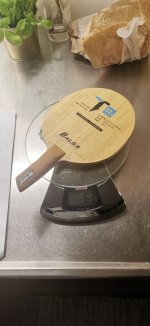
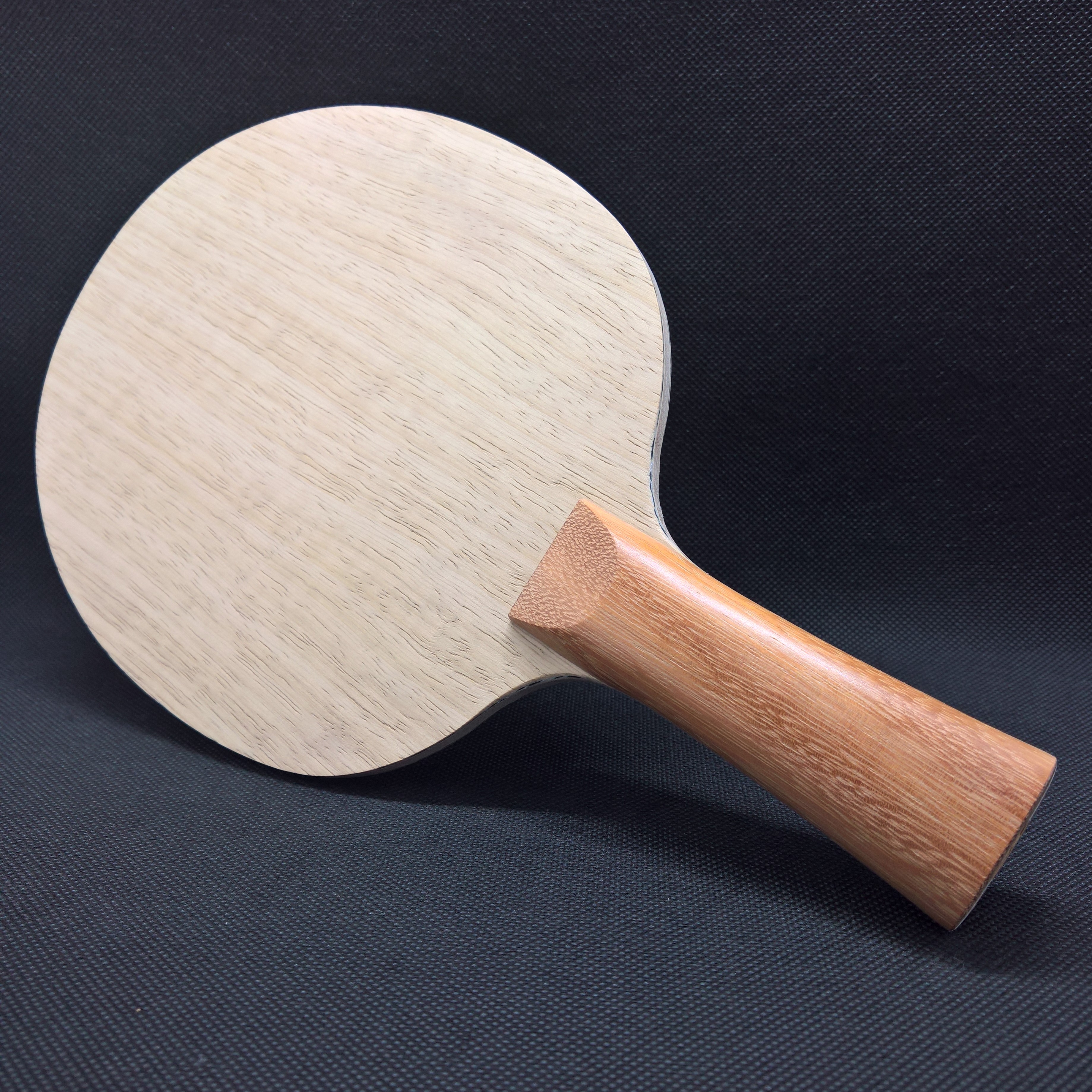
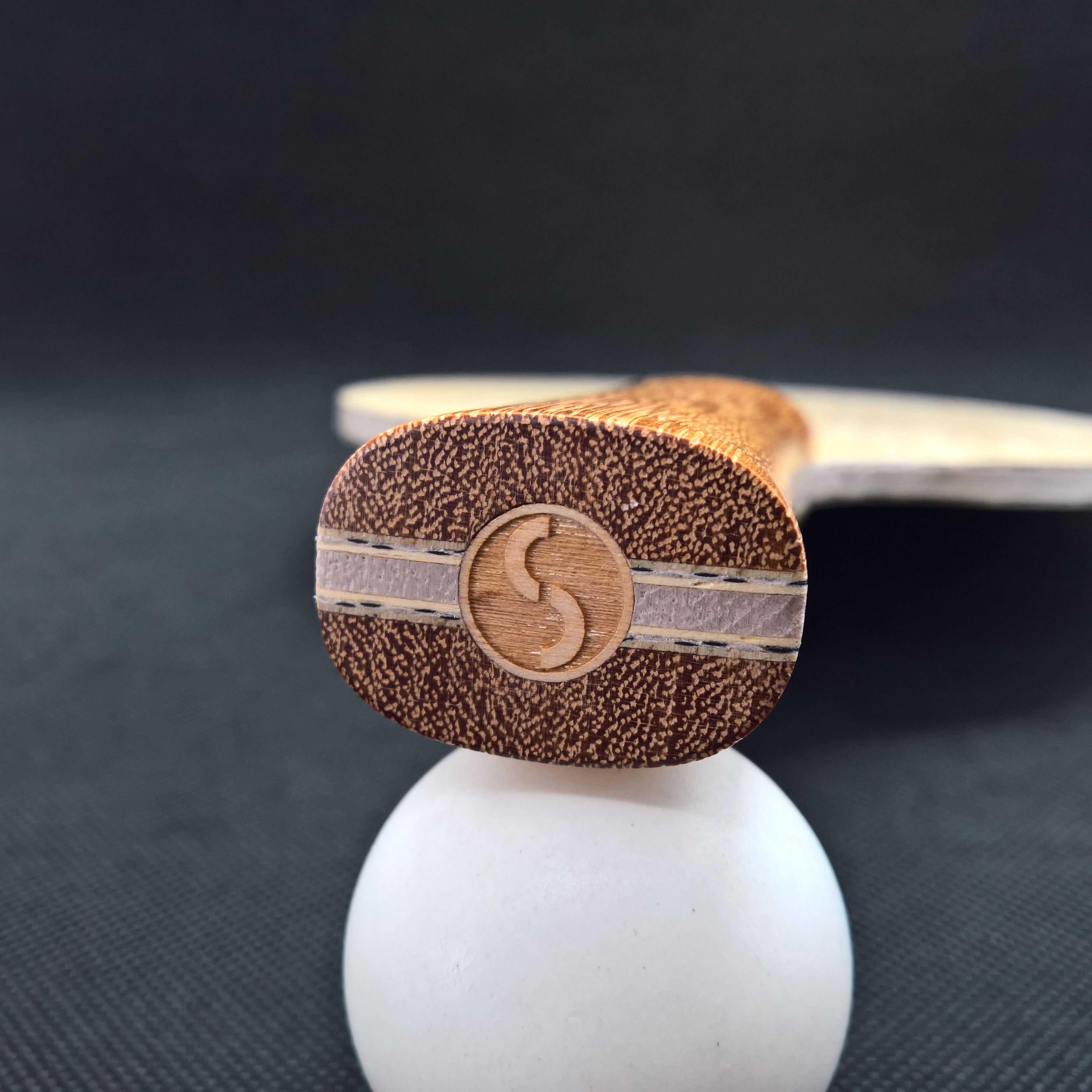
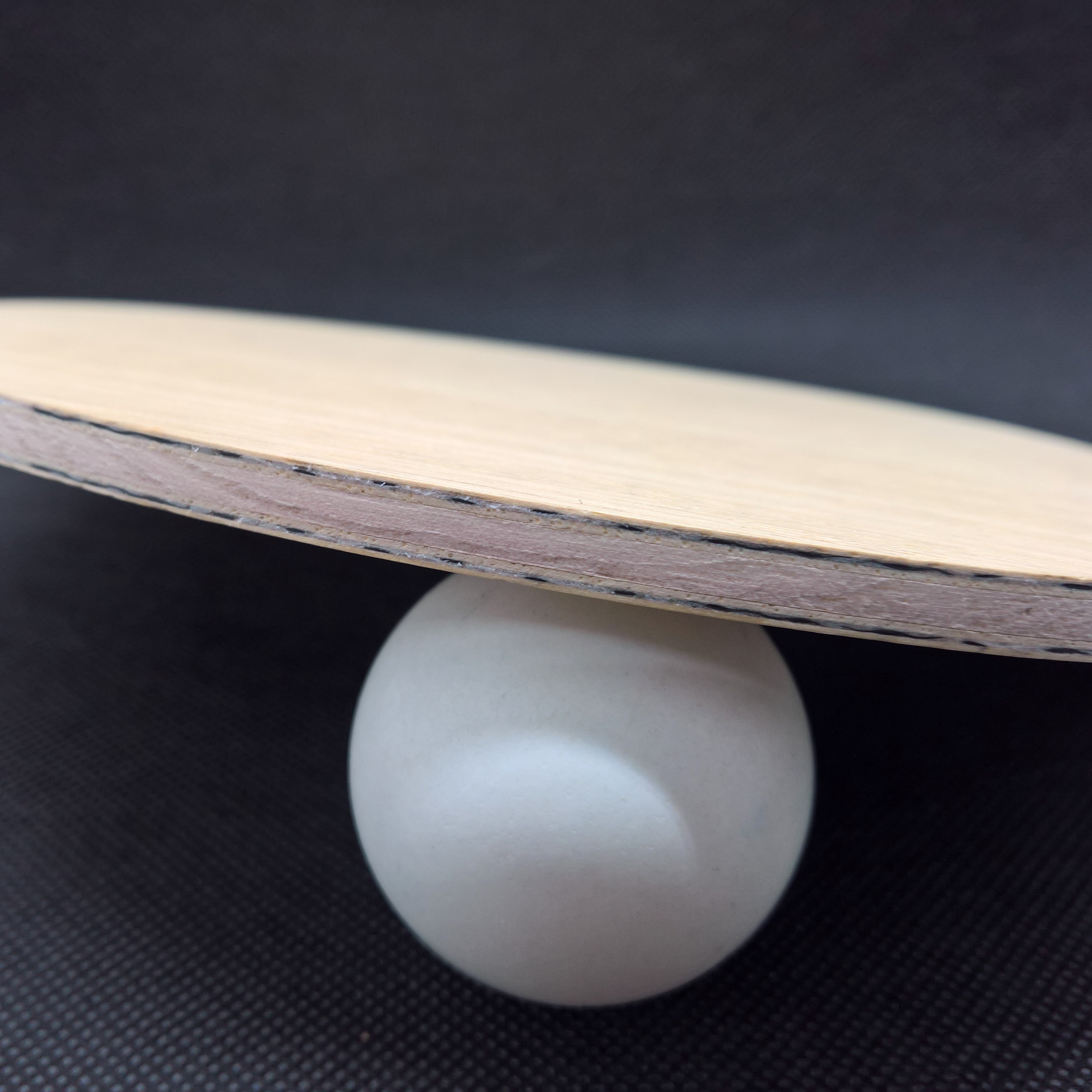
Built the same way as #957, but Limba is softer than Koto and IC is softer than AxC, so overall it will be a little softer and slower. There is still some crispness to the feeling, due to being an outer fiber blade, but again it's very uncatapulty. It's essentially a ALL+ blade, but without the empty feeling or unpleasant vibrations they normally have. It's probably better not to use hard rubbers with this one, or you will have time generating speed, but it should pair well with medium/soft rubber to help control their bounciness. The handle is round and full, especially in the middle finger area, so it feels like a slightly flared straight handle.
Available FS.
- Limba / IC / Ayous / Kiri / Ayous / IC / Limba
- 86.8g
- 6.15mm
- 157x150mm
- FL (100x24.2-23.6mm)
- 1356Hz
- Balance: 2.5cm (Low)
Available FS.
- Limba / IC / Ayous / Kiri / Ayous / IC / Limba
- 86.8g
- 6.15mm
- 157x150mm
- FL (100x24.2-23.6mm)
- 1356Hz
- Balance: 2.5cm (Low)
This user has no status.

This user has no status.
🏆 Top 1% Commenter
Well-Known Member
Well-Known Member

This user has no status.
This user has no status.
🏆 Top 1% Commenter
Well-Known Member
Well-Known Member
I have some of this wood and I don't even remember from where. It's called Lati, or white Wenge. I don't use it a lot because it's heavy and very hard to work with, it's very brittle and will often break when routing the handles. It is indeed beautiful but the photos don't do it justice, it reflects light with nuances that other woods don't have.Now this is what a call a beautiful handle...
Cheers
L-zr
This user has no status.
This user has no status.
🏆 Top 1% Commenter
Well-Known Member
Well-Known Member
Here 😅Hi, where can I see the blades you have for sale? On your website or on the forum? Best regards.
Attachments
This user has no status.
This user has no status.
Member

List them all instead of keeping them in the dishwasher!Here 😅
This user has no status.
This user has no status.
🏆 Top 1% Commenter
Well-Known Member
Well-Known Member
I like my blades properly cleaned before I post them!List them all instead of keeping them in the dishwasher!
But I'm so committed to woodworking that I even have a wooden dishwasher 😂
This user has no status.
Member

Any Chinese Penhold blades in that dishwasher?
Custom penhold blades seem to be few in number.
Custom penhold blades seem to be few in number.
This user has no status.
This user has no status.
🏆 Top 1% Commenter
Well-Known Member
Well-Known Member
Unfortunately no... But penhold is not being overlooked, I'm working on something interesting (at least I think it is), but didn't have an opportunity to test it yet.Any Chinese Penhold blades in that dishwasher?
Custom penhold blades seem to be few in number.
This user has no status.
This user has no status.
🏆 Top 1% Commenter
Well-Known Member
Well-Known Member
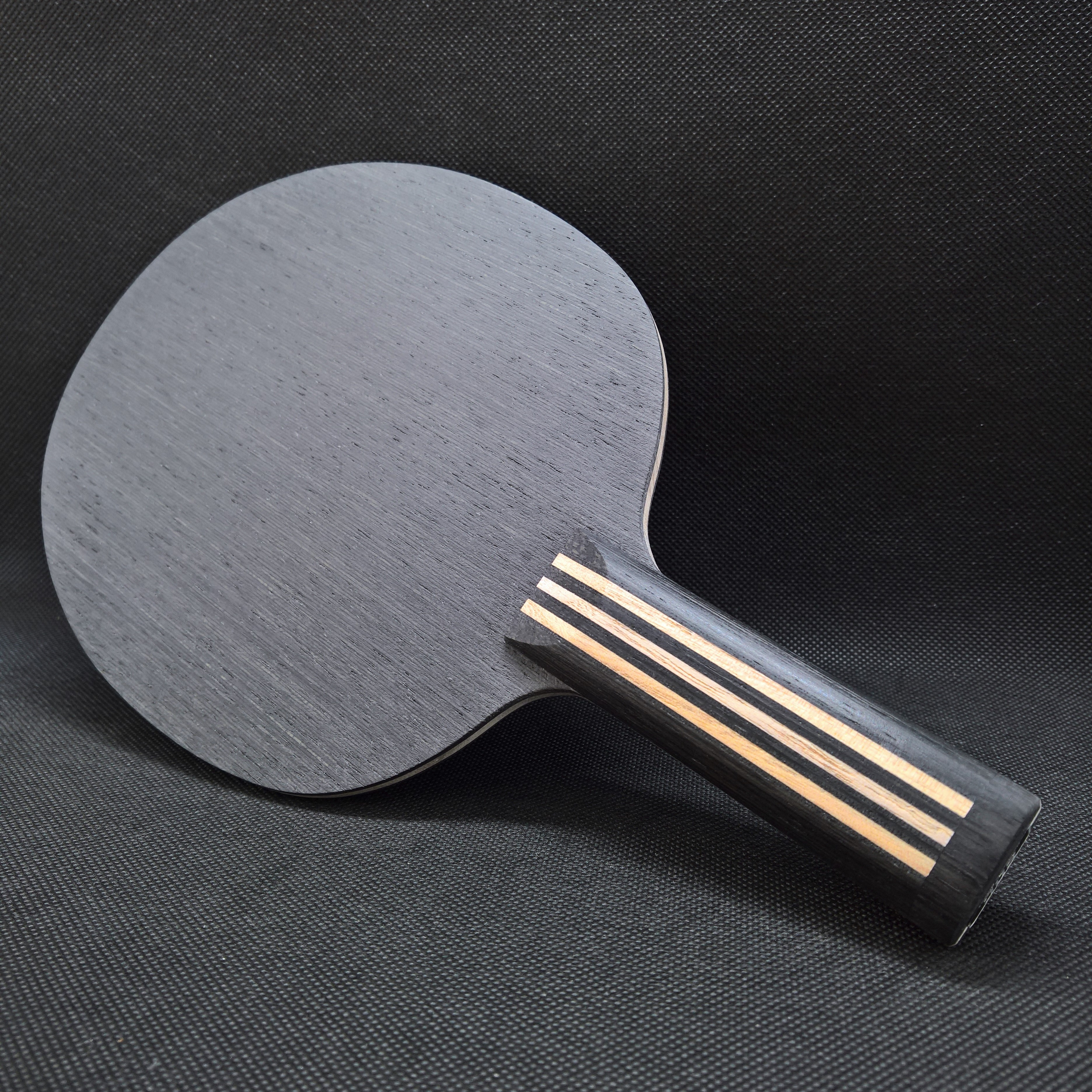
Got to make something for the kids too. Technically it's a 7 ply, but it's built like a 5 ply. Slow and controllable, plenty of feedback, and a slim straight handle.
Available FS.
- Fineline / 2x Fineline / Kiri / 2x Fineline / Fineline
- 80.4g
- 5.70mm
- 157x150mm
- ST (100x29x22mm)
- 1012Hz
- Balance: 3.3cm (Med)


Available FS.
- Fineline / 2x Fineline / Kiri / 2x Fineline / Fineline
- 80.4g
- 5.70mm
- 157x150mm
- ST (100x29x22mm)
- 1012Hz
- Balance: 3.3cm (Med)
This user has no status.
This user has no status.
This user has no status.
🏆 Top 1% Commenter
Well-Known Member
Well-Known Member
Not much, if the orientation of the layers is the same. The only real downside is that you have an extra layer of glue, which means a little more weight.How much difference does it make vs a single thicker layer?
This user has no status.
Member
Hey @hipnotic,
Quick question around handles: I tried hardwood vs fineline wood handle (with both HideGlue and TItebond PVC Glue separately). I was not able to do 2 blades to compare at same time but had to do it to the same blade.
It seems there is measurable softness and extra vibration with using PVC glue to handles and using finewood versus hardwood/hideglue.
Also I was trying normal 5ply limba outer blade vs Victas Swat (7 ply with burnt limba outer) vs viscaria. And it seems the Swat burnt limba outer is more crispy even in brush loops compared to koto viscaria?
Is that your findings too? Just curious to pick your brains.
Quick question around handles: I tried hardwood vs fineline wood handle (with both HideGlue and TItebond PVC Glue separately). I was not able to do 2 blades to compare at same time but had to do it to the same blade.
It seems there is measurable softness and extra vibration with using PVC glue to handles and using finewood versus hardwood/hideglue.
Also I was trying normal 5ply limba outer blade vs Victas Swat (7 ply with burnt limba outer) vs viscaria. And it seems the Swat burnt limba outer is more crispy even in brush loops compared to koto viscaria?
Is that your findings too? Just curious to pick your brains.
Last edited:
This user has no status.
This user has no status.
🏆 Top 1% Commenter
Well-Known Member
Well-Known Member
PVC glue is meant to glue PVC, so maybe that's the reason for extra vibration 😅. Just joking, did you mean PVA glue? Also, maybe "measurable" isn't the appropriate word, it's not exactly easy to accurately measure the vibration on the handle, maybe "perceivable" would be better fitting. Human perception is often flawed, and if you are not able to strictly keep the same conditions of the test then the margin for error is even bigger. Sometimes I try my setup on different days and it feels completely different to me, and surely it didn't change overnight on its own, I'm the variable here, along with different conditions. If you did this all on the same blade then other things might have changed as well in the time it took to do it. However, I didn't understand if you made 4 different tests, or 2 with different glues and one type of handle piece on each side...Hey @hipnotic,
Quick question around handles: I tried hardwood vs fineline wood handle (with both HideGlue and TItebond PVC Glue separately). I was not able to do 2 blades to compare at same time but had to do it to the same blade.
It seems there is measurable softness and extra vibration with using PVC glue to handles and using finewood versus hardwood/hideglue.
Also I was trying normal 5ply limba outer blade vs Victas Swat (7 ply with burnt limba outer) vs viscaria. And it seems the Swat burnt limba outer is more crispy even in brush loops compared to koto viscaria?
Is that your findings too? Just curious to pick your brains.
I answered this on another thread somewhere, but long story short the answer is: it depends. It depends on how the blade is vibrating, some vibrations modes can't be negated by this change, others can. It also depends on the average density of the composition and of the handle material. As Wakkibaty pointed out as well, if you are looking to decrease vibration, then a big difference in density is what you want.
In terms of glue, Hide is very sensitive to moisture so it's generally a bad idea to use it for gluing handles. I never used it for this reason, but it's more flexible than PVA so I would expect more vibration, not less. However I might be totally wrong since I've never tried it.
You can't just assume that the difference you felt in those blades is solely due to the top ply, the blades are just too different in composition to downsize it to a single variable. Two blades of the same model often feel different, let alone two completely different blades. But generally I would assume that no, Limba is not crisper than Koto, even when its heat treated. Unless you have tried Swat Carbon...
This user has no status.
This user has no status.
🏆 Top 1% Commenter
Well-Known Member
Well-Known Member
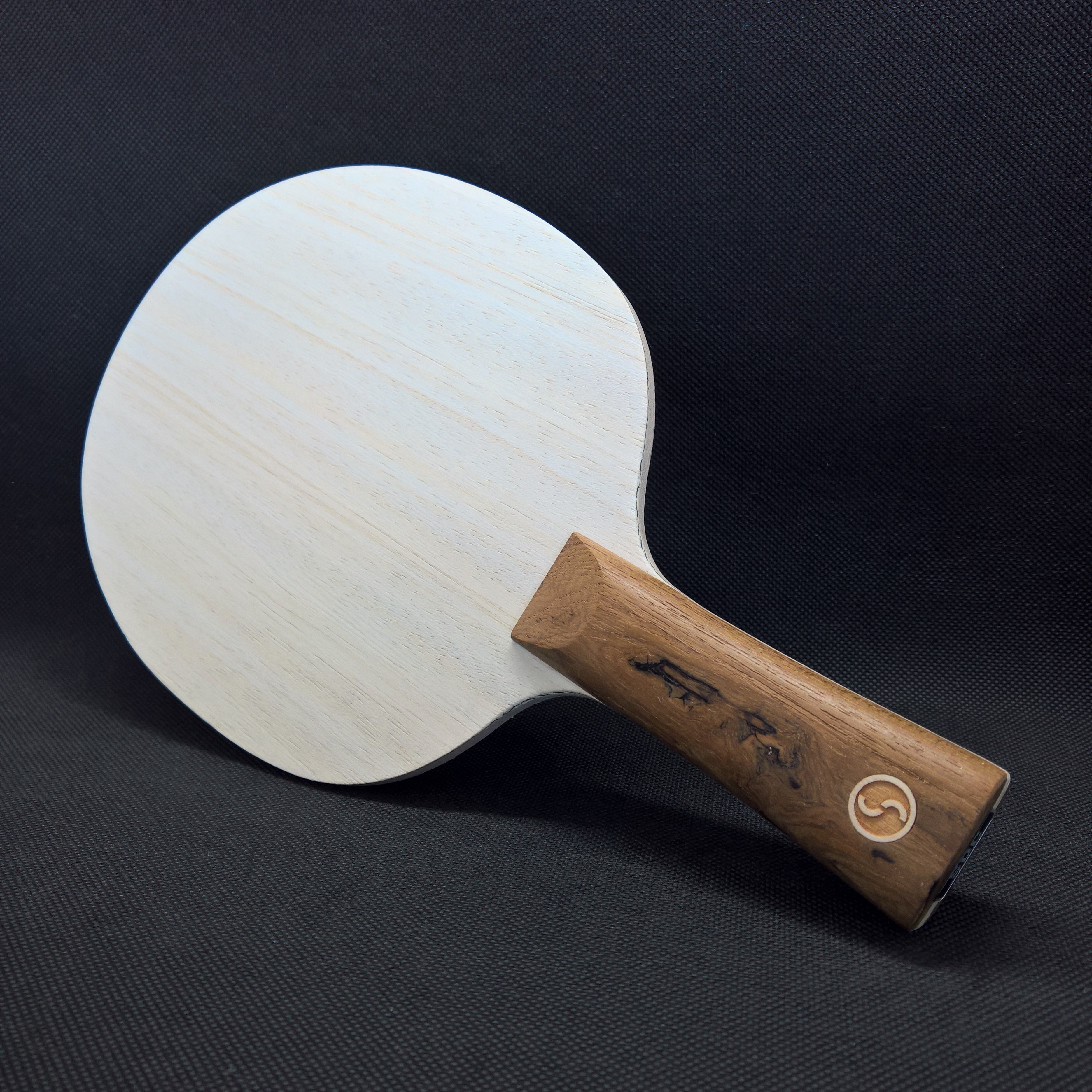
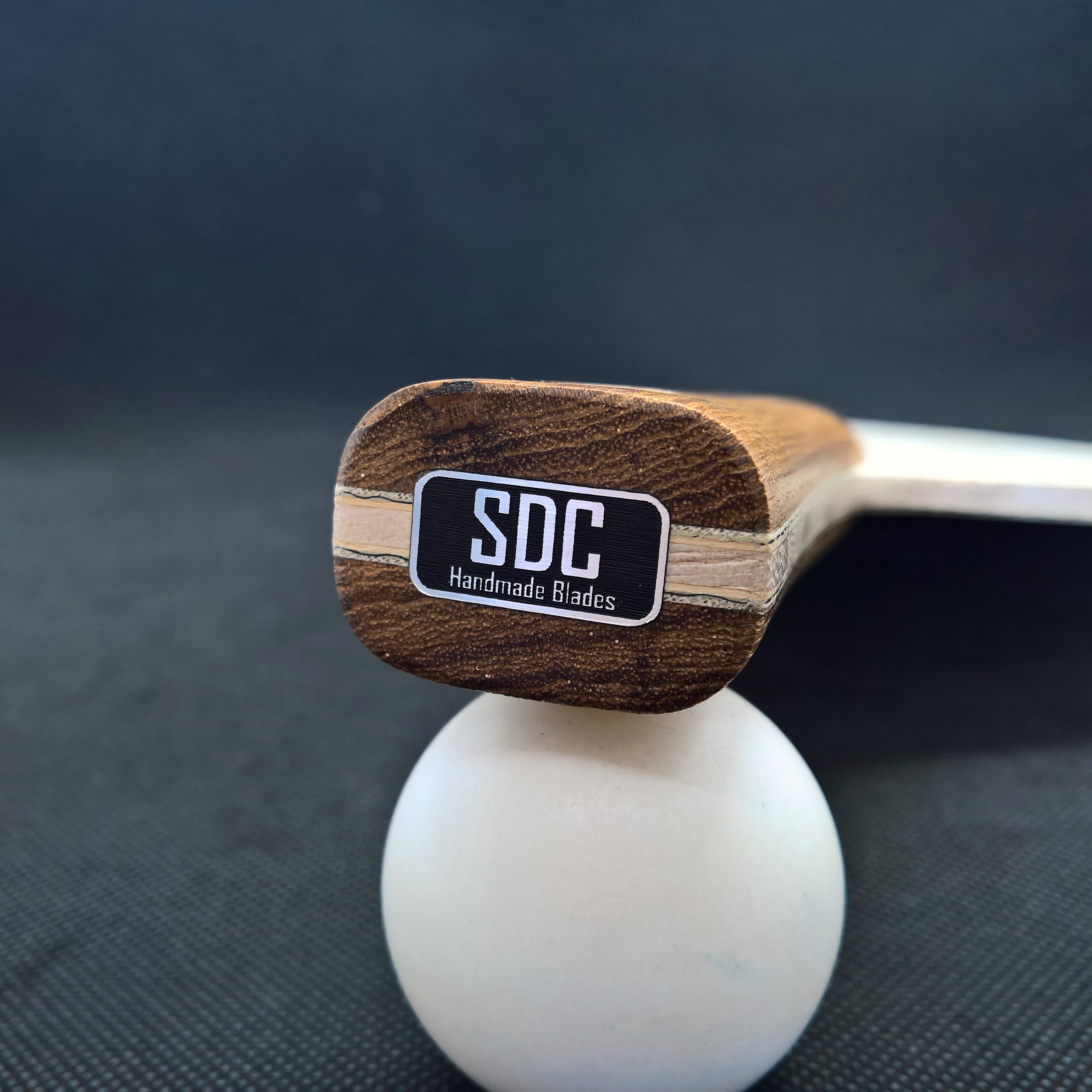
Usually, outer fiber blades are stiff but soft (ish), here I tried to make the opposite, a flexible but hard outer fiber blade. The grain in the core is horizontal, instead of vertical like usual, so the only vertical layer is the Koto outer. I have also used AyC, which is more flexible but harder than AC or AxC. It's an interesting blade I think, it's outer but behaves like inner, like it's having an identity crisis. Relatively slow on passive shots, but the flexibility gives it an extra kick on harder shots, just like an inner blade. However, the biggest difference is how it feels, the transverse core makes vibrations travel in an entirely different way (sideways, instead on vertically as usual), so the feedback in the hand is also very particular. It's kinda hard to describe, but it's almost as the ball feels heavier. The handle is made from Teak wood, and it has a squarish/flat profile.
Available FS.
- Koto / AyC / Ayous / Kiri / Ayous / AyC / Koto
- 87.0g
- 5.5mm
- 161x150mm
- FL (101x23.4-22.2mm)
- 1335Hz
- Balance: 2.6cm (Low)
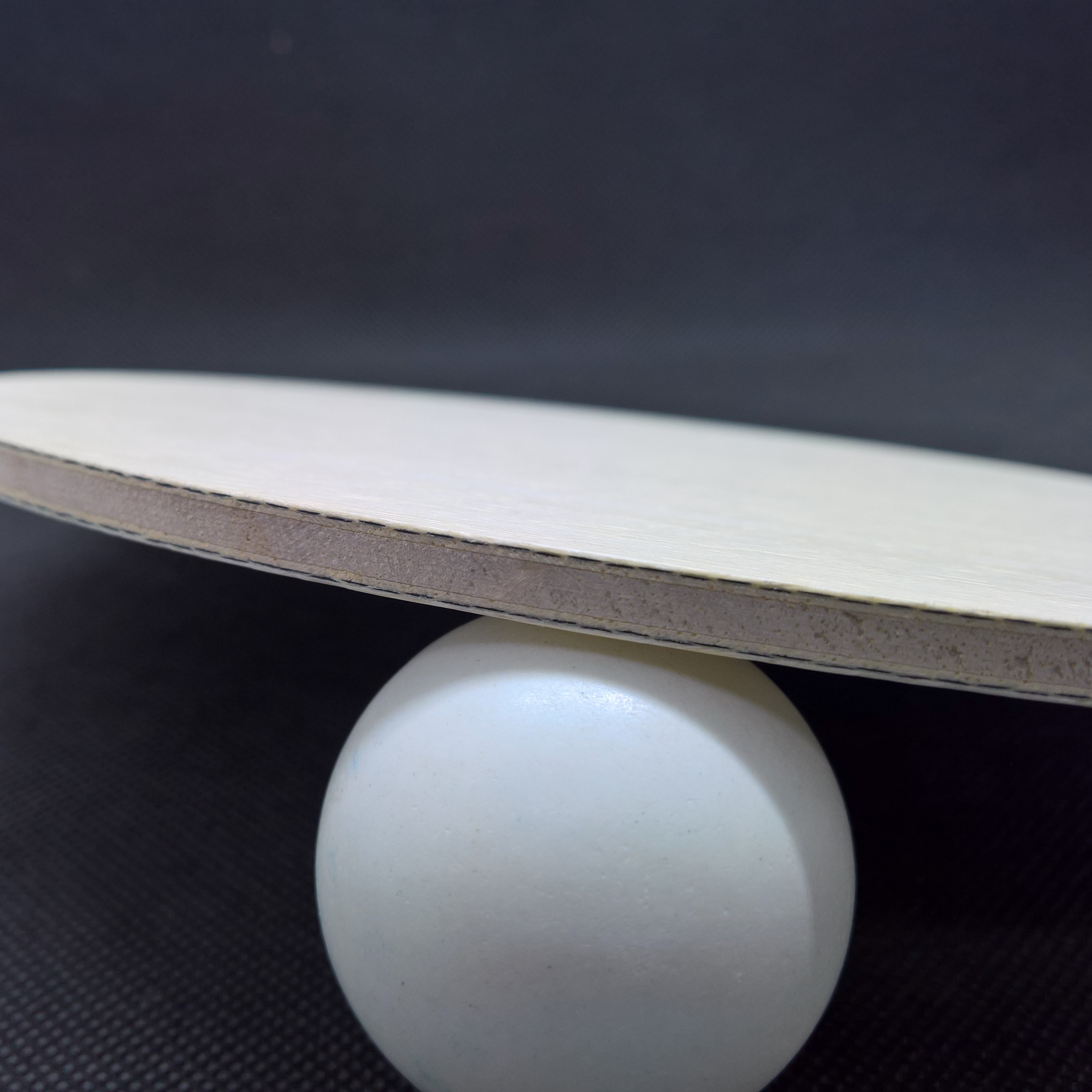
Available FS.
- Koto / AyC / Ayous / Kiri / Ayous / AyC / Koto
- 87.0g
- 5.5mm
- 161x150mm
- FL (101x23.4-22.2mm)
- 1335Hz
- Balance: 2.6cm (Low)
This user has no status.
This user has no status.
This user has no status.
🏆 Top 1% Commenter
Well-Known Member
Well-Known Member
This user has no status.
I'm not sure if I can deal with that uncertainty 😭Maybe 😁

Interesting idea. But intuitively I would have expected that if the core is horizontal then the Ayous layers should be verticalUsually, outer fiber blades are stiff but soft (ish), here I tried to make the opposite, a flexible but hard outer fiber blade. The grain in the core is horizontal, instead of vertical like usual, so the only vertical layer is the Koto outer. I have also used AyC, which is more flexible but harder than AC or AxC. It's an interesting blade I think, it's outer but behaves like inner, like it's having an identity crisis. Relatively slow on passive shots, but the flexibility gives it an extra kick on harder shots, just like an inner blade. However, the biggest difference is how it feels, the transverse core makes vibrations travel in an entirely different way (sideways, instead on vertically as usual), so the feedback in the hand is also very particular. It's kinda hard to describe, but it's almost as the ball feels heavier. The handle is made from Teak wood, and it has a squarish/flat profile.
Available FS.
- Koto / AyC / Ayous / Kiri / Ayous / AyC / Koto
- 87.0g
- 5.5mm
- 161x150mm
- FL (101x23.4-22.2mm)
- 1335Hz
- Balance: 2.6cm (Low)
. Or wouldn't that change much?
This user has no status.
Member
I can always rely on you to answer with great nuance and accuracy. Thanks again.PVC glue is meant to glue PVC, so maybe that's the reason for extra vibration 😅. Just joking, did you mean PVA glue? Also, maybe "measurable" isn't the appropriate word, it's not exactly easy to accurately measure the vibration on the handle, maybe "perceivable" would be better fitting. Human perception is often flawed, and if you are not able to strictly keep the same conditions of the test then the margin for error is even bigger. Sometimes I try my setup on different days and it feels completely different to me, and surely it didn't change overnight on its own, I'm the variable here, along with different conditions. If you did this all on the same blade then other things might have changed as well in the time it took to do it. However, I didn't understand if you made 4 different tests, or 2 with different glues and one type of handle piece on each side...
I answered this on another thread somewhere, but long story short the answer is: it depends. It depends on how the blade is vibrating, some vibrations modes can't be negated by this change, others can. It also depends on the average density of the composition and of the handle material. As Wakkibaty pointed out as well, if you are looking to decrease vibration, then a big difference in density is what you want.
In terms of glue, Hide is very sensitive to moisture so it's generally a bad idea to use it for gluing handles. I never used it for this reason, but it's more flexible than PVA so I would expect more vibration, not less. However I might be totally wrong since I've never tried it.
You can't just assume that the difference you felt in those blades is solely due to the top ply, the blades are just too different in composition to downsize it to a single variable. Two blades of the same model often feel different, let alone two completely different blades. But generally I would assume that no, Limba is not crisper than Koto, even when its heat treated. Unless you have tried Swat Carbon...
And yes, PVA glue. Lol. Maybe someone should try 5000 psi epoxy some time. Lol.
I did not know Hide glue was more flexible than PVA glue. Perhaps its that hide glue create a non-penetrating layer of bond rather than PVA glue's method of soaking into food fibers that makes
Hide glue blades a bit harder (but in a clear way rather than dull and sharp)? A bit like listening to open-back headphones versus speakers in an untreated room.
Have you tried the whole burnt layer wood thingy like the Victas Swat? I was googling the wood hardness changes with heat and did not know certain temperatures (with short exposure) causes wood to harden but after a certain point, they actually get softer. Who knew.
I would love to read a book on all the details of your blade making nuance findings.
Similar threads


- Replies
- 5
- Views
- 2K


- Replies
- 19
- Views
- 3K