SDC Handmade Blades

SDC

This user has no status.

SDC

This user has no status.
🏆 Top 1% Commenter
Well-Known Member
Dec 2011
1,833
3,707
6,155
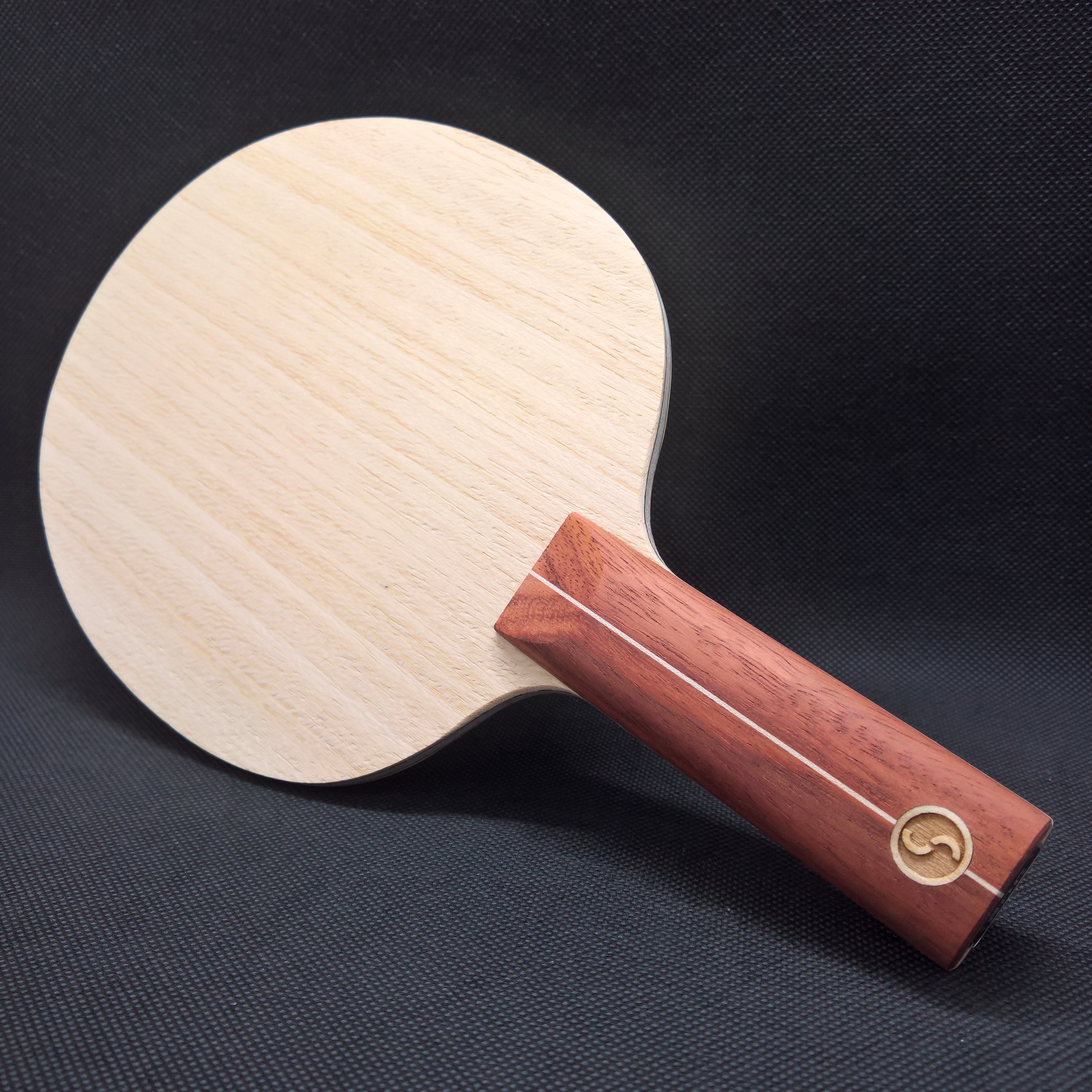
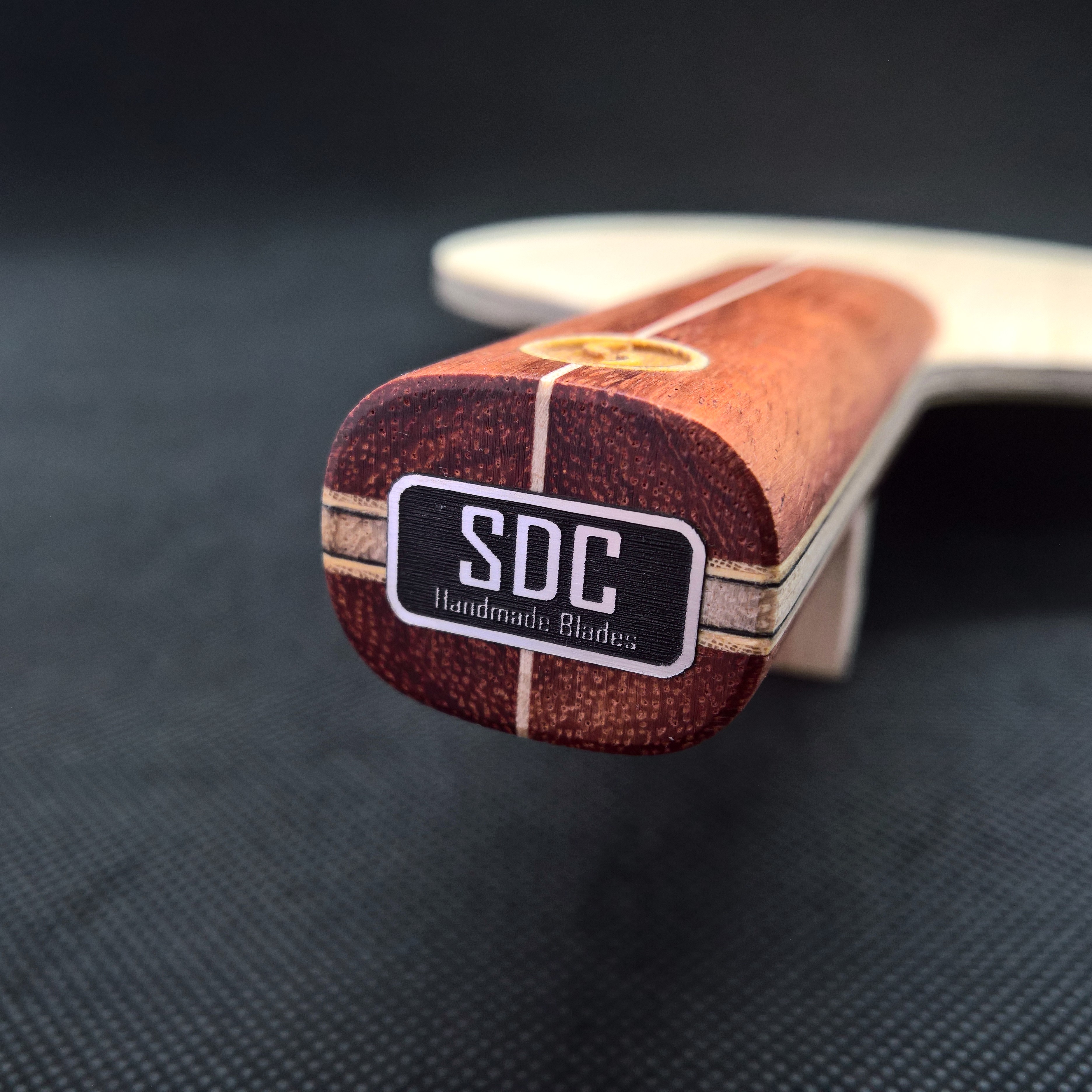
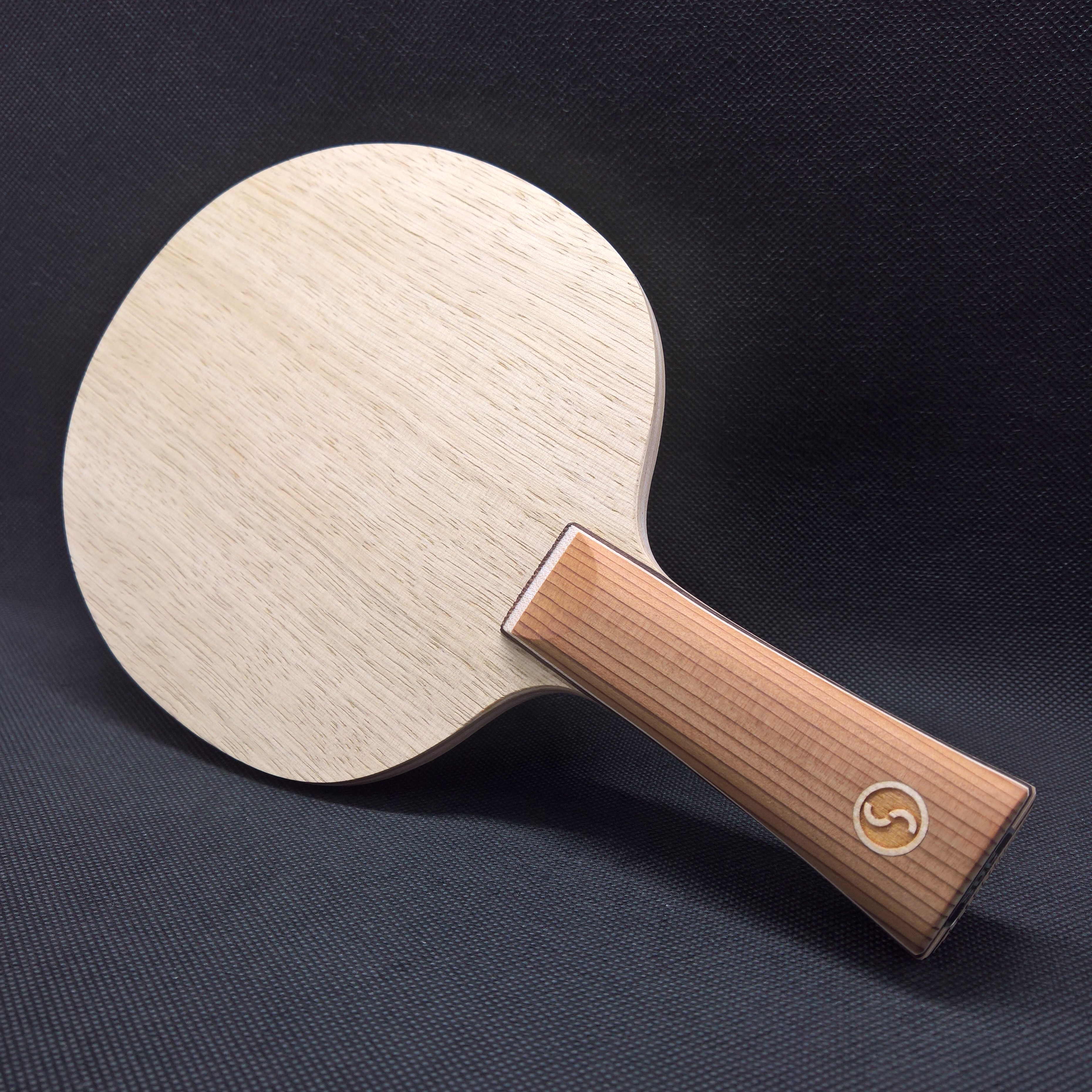
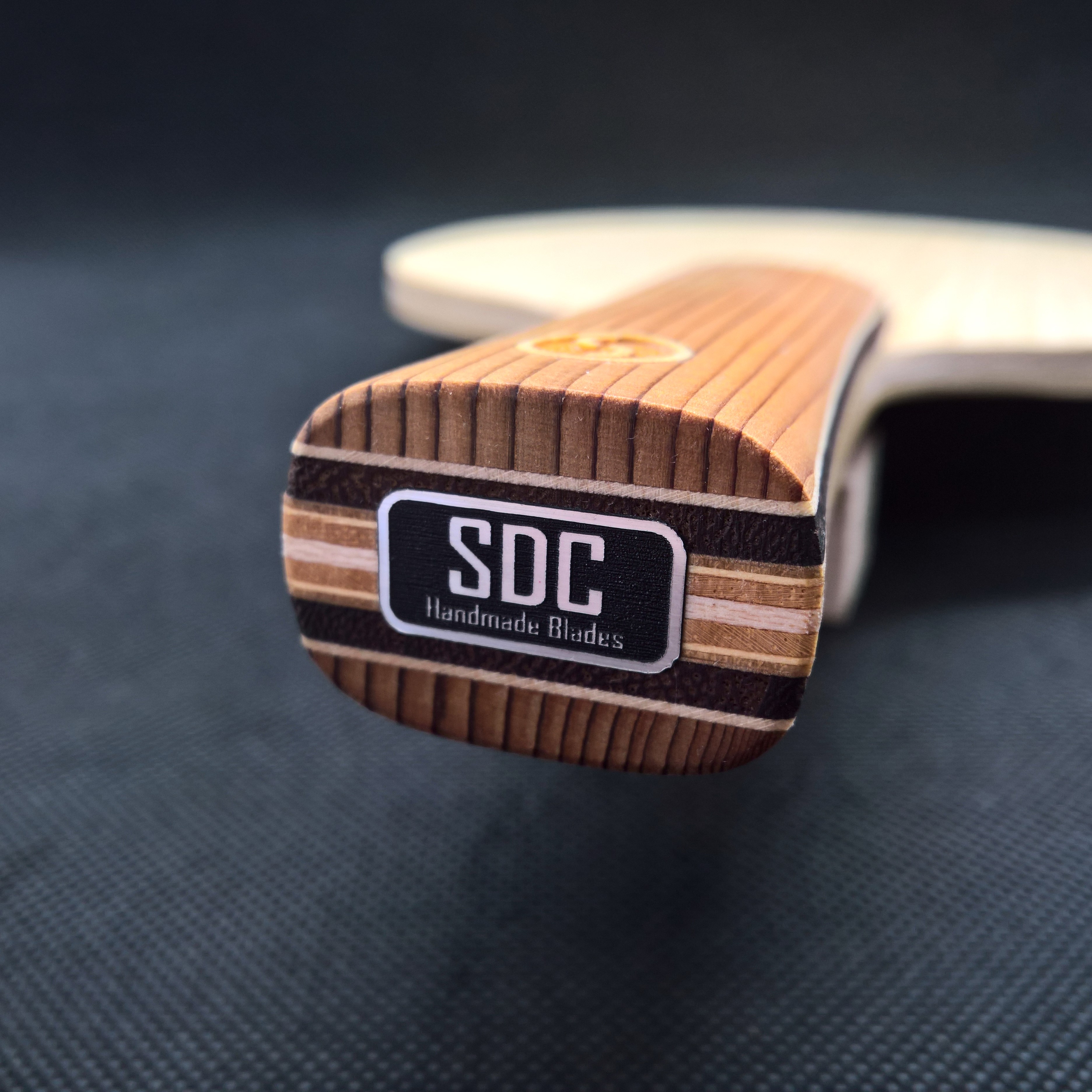
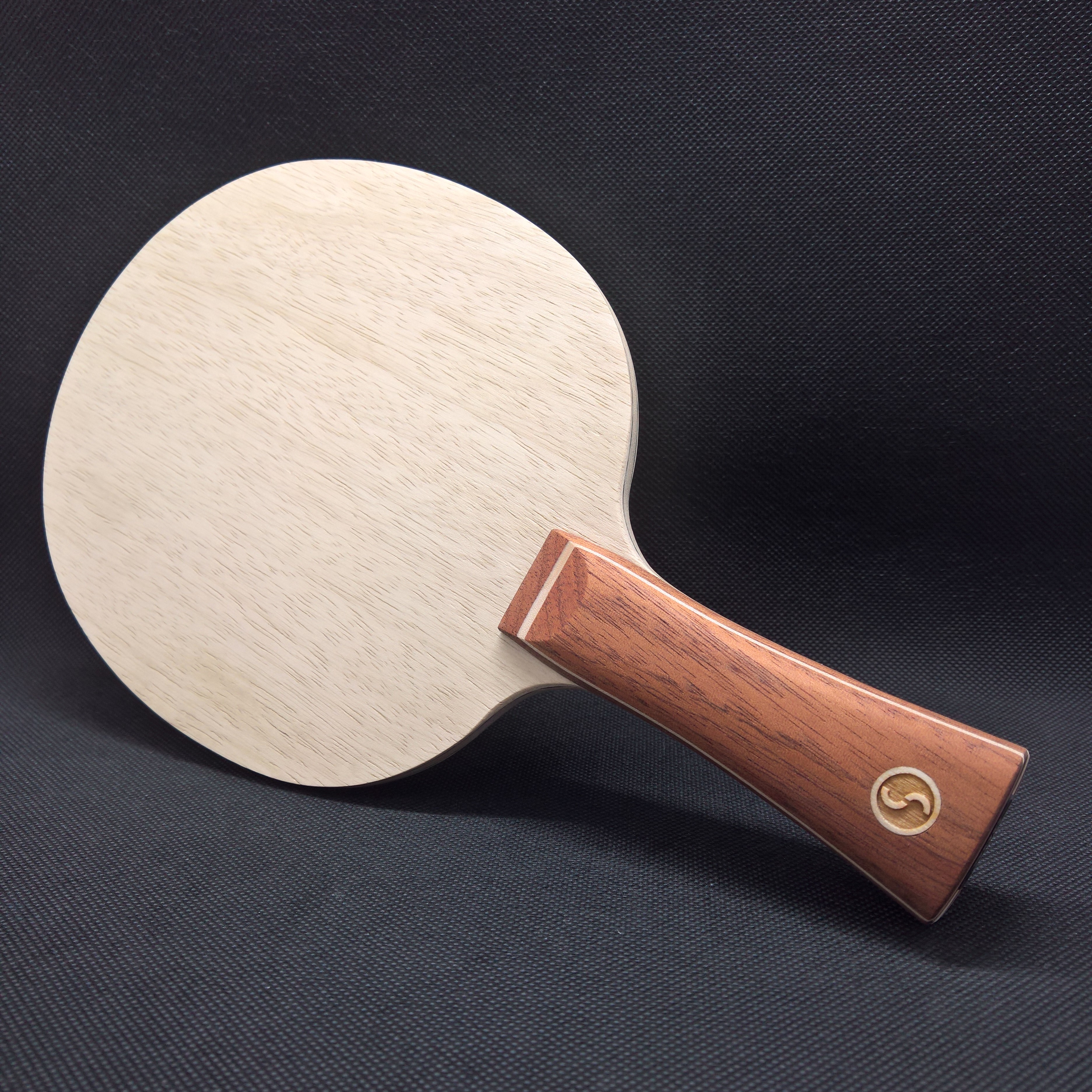
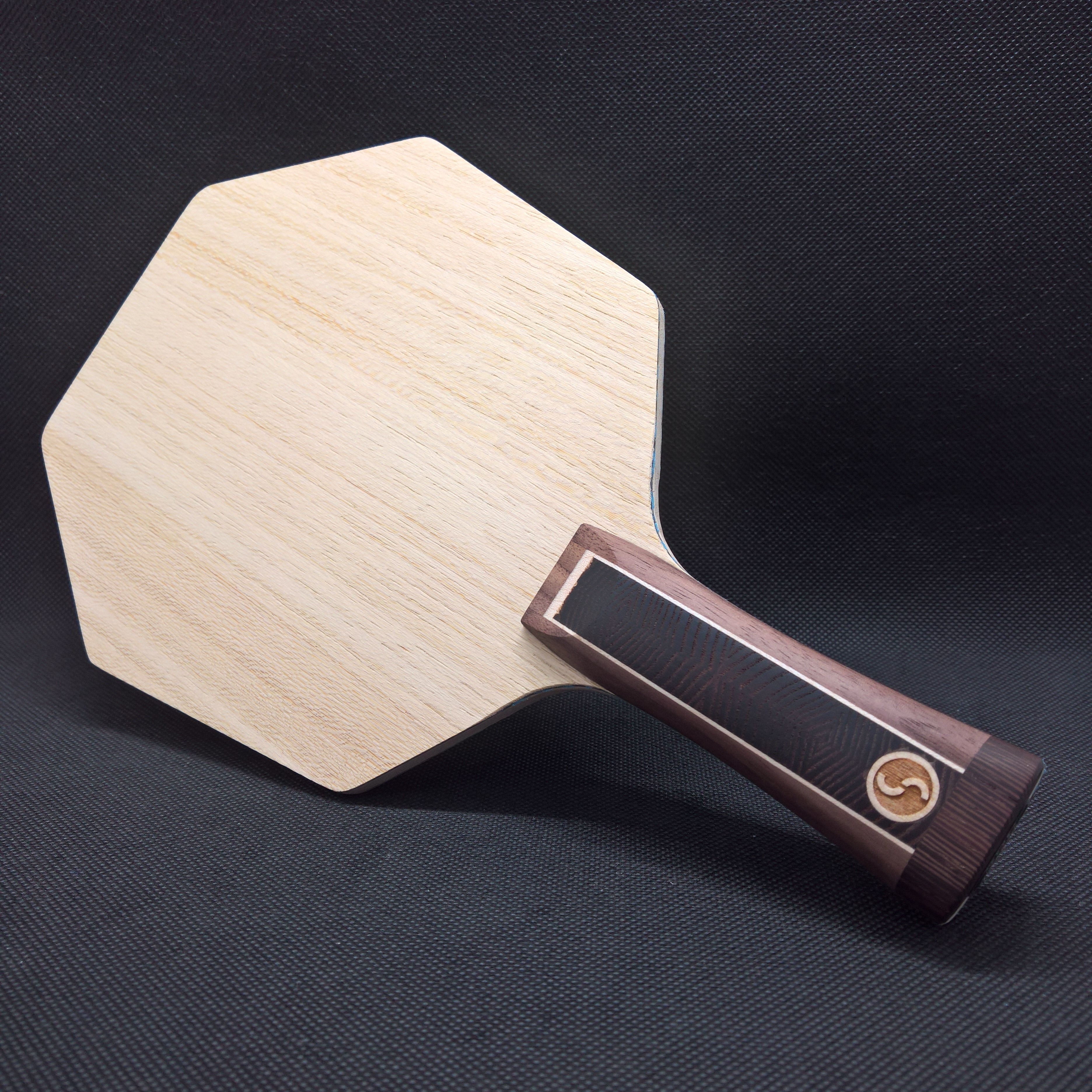
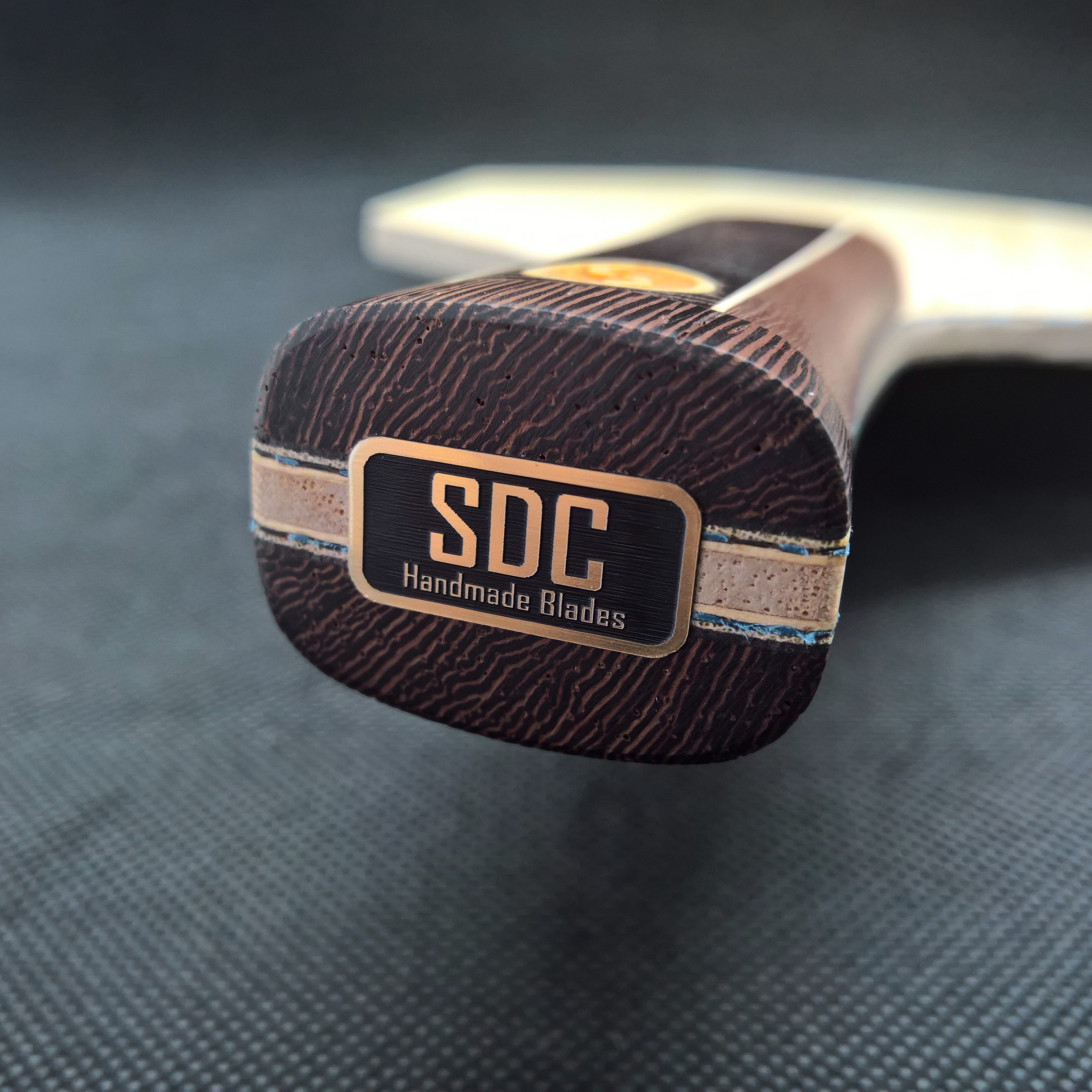
#1443 - Inner 5+2 - ALL+/OFF-

Thin looping blade, like the reinforced version of #1441, if that one is similar to the Violin, this would be similar to the Violin carbon inner.

Available FS.

- Koto / Ayous / Vectran-Carbon / Kiri core
- 87.6g
- 5.5mm
- 149x156mm
- ST (22.7x28.9x100mm)
- Balance: 3.0cm (Med)

1443-1.jpg


1443-2.jpg


1443-3.jpg
 

SDC

This user has no status.

SDC

This user has no status.
🏆 Top 1% Commenter
Well-Known Member
Dec 2011
1,833
3,707
6,155
#1454 - 7 Wood - OFF

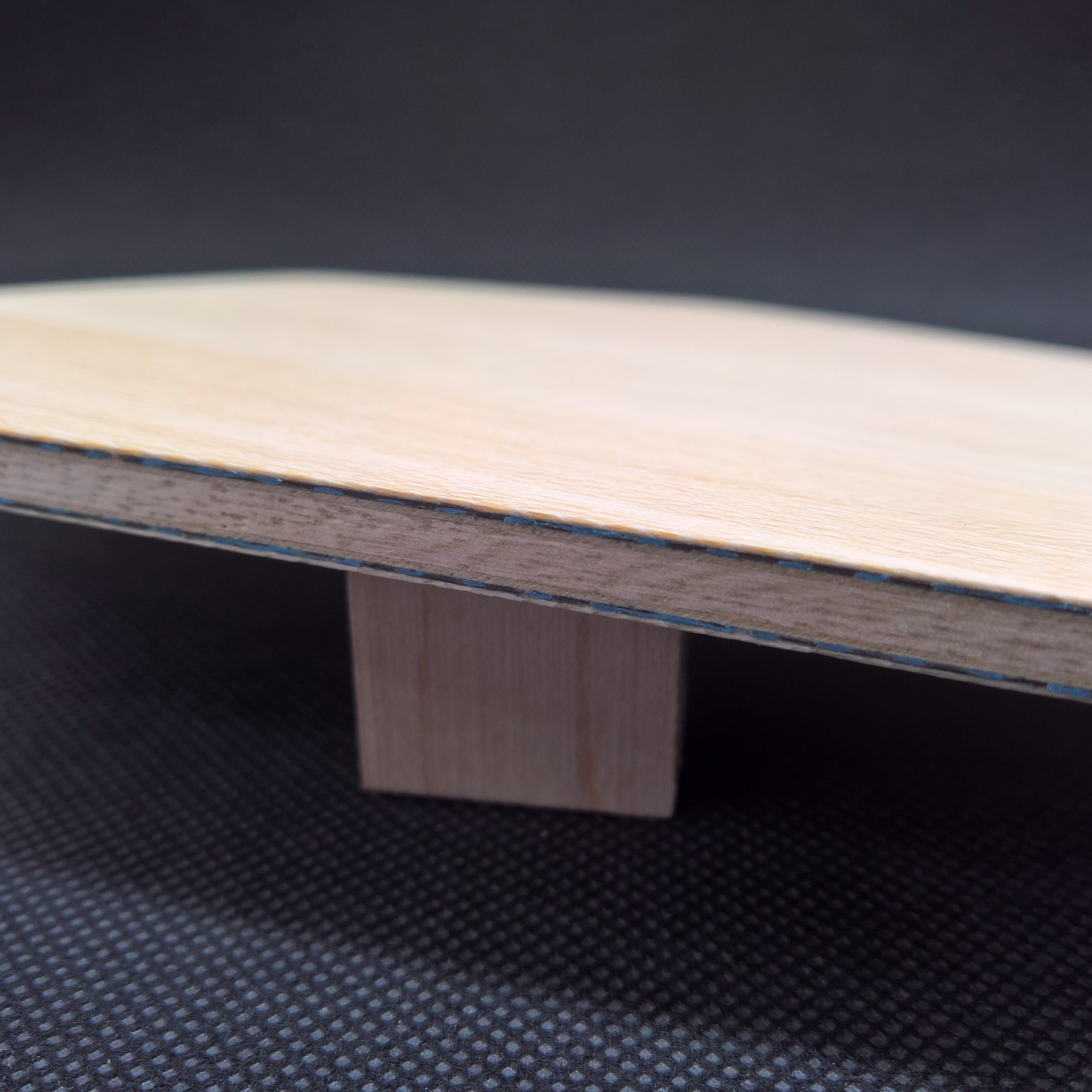
A 7 ply that follows the same principle as #1432 which I posted a few days ago, but thicker and faster. This time I've replaced the "heavy" Ayous core for a much lighter Balsa layer, and used very dense thermo treated Ayous on layers 3 and 5, but other than that, it's a straightforward composition. It's a fast, solid blade with a moderately soft feel, which will probably work very well with SP.

Available FS.

- Limba / Ayous / Ayous / Balsa //
- 87.6g
- 6.9mm
- 150x157mm
- FL (24.5-22.9x100mm)
- Balance: 3.7cm (High)

1454-1.jpg


1454-2.jpg


1454-3.jpg
 

SDC

This user has no status.

SDC

This user has no status.
🏆 Top 1% Commenter
Well-Known Member
Dec 2011
1,833
3,707
6,155
#1464 - Inner G-F - OFF-/OFF

This one is based on the SK Hybrid AC but with a a few twists, the most notable one being the very big handle. It's not a blade I can make often, a Limba/Limba inner fiber blade with a Ayous core, larger head size and a big handle, with "just" 92g and a low balance? This required a very careful layer selection and very precise gluing and lamination as well. This combination of factors is very hard to find in the wild on inner fiber blades, not the weight per se, but combined with such a low balance. Not to speak of the big handle...

Available FS.

- Limba / Limba / Glass-Carbon / Ayous core
- 92.1g
- 6.0mm
- 160x151mm
- FL (26.3-23.6x105mm)
- Balance: 2.7cm

1464-1.jpg


1464-2.jpg


1464-3.jpg
 

SDC

This user has no status.

SDC

This user has no status.
🏆 Top 1% Commenter
Well-Known Member
Dec 2011
1,833
3,707
6,155
#1451 - Outer B-S - OFF-/OFF

Black tag Vis feels different than newer models because of two things: firstly, I'm pretty sure that the big B did things a bit differently back then, it's purely conjecture but there is a significant visual difference to how the composite sits between the wooden layers. Then there's the fact that all used and old blades feel different than a new one. With age, wood oxidizes, there are countless expansion and contraction cycles due to environmental changes (temperature and humidity) and, especially in the case of composite blades, the glue degrades, so they usually feel softer and more flexible. With this blade, I tried to recreate that effect, by changing how I bond the fiber to the wooden layers.

The other significant aspect of this blade is the head shape. I've said it before, I don't use this shape simply for aesthetic reasons, I use it because of its true purpose. Despite all the marketing behind it, the main feature of this shape is to raise the center of gravity of the blade, by redistributing the mass further away from the geometrical center. This means we can have a more head heavy blade without a significant increase in weight. This causes a bit more flexibility too, which in turn lowers the frequency of the blade, but it's exactly why I did it.

All in all, it's one of the softest and most flexible Vis I've made, and in terms of frequency we are in Inner territory here, with a peak frequency of ~1335Hz. However, it's not just flexible, it's elastic too, and you get a bigger hold and release sensation. I would say it's a more Fh and spin oriented version of Vis.

Available FS.

- Koto / Blue-Stuff / Ayous / Kiri core
- 92.0g
- 5.8mm
- Cyber 157x150mm
- FL (25-22.7x100mm)
- Balance: 2.9cm (Low/Med)

1451-1.jpg


1451-2.jpg


1451-3.jpg
 
#1451 - Outer B-S - OFF-/OFF

Black tag Vis feels different than newer models because of two things: firstly, I'm pretty sure that the big B did things a bit differently back then, it's purely conjecture but there is a significant visual difference to how the composite sits between the wooden layers. Then there's the fact that all used and old blades feel different than a new one. With age, wood oxidizes, there are countless expansion and contraction cycles due to environmental changes (temperature and humidity) and, especially in the case of composite blades, the glue degrades, so they usually feel softer and more flexible. With this blade, I tried to recreate that effect, by changing how I bond the fiber to the wooden layers.

The other significant aspect of this blade is the head shape. I've said it before, I don't use this shape simply for aesthetic reasons, I use it because of its true purpose. Despite all the marketing behind it, the main feature of this shape is to raise the center of gravity of the blade, by redistributing the mass further away from the geometrical center. This means we can have a more head heavy blade without a significant increase in weight. This causes a bit more flexibility too, which in turn lowers the frequency of the blade, but it's exactly why I did it.

All in all, it's one of the softest and most flexible Vis I've made, and in terms of frequency we are in Inner territory here, with a peak frequency of ~1335Hz. However, it's not just flexible, it's elastic too, and you get a bigger hold and release sensation. I would say it's a more Fh and spin oriented version of Vis.

Available FS.

- Koto / Blue-Stuff / Ayous / Kiri core
- 92.0g
- 5.8mm
- Cyber 157x150mm
- FL (25-22.7x100mm)
- Balance: 2.9cm (Low/Med)

1451-1.jpg


1451-2.jpg


1451-3.jpg
Nice handle, which wood type did you use for the bottom of the handle?
 
  • Like
Reactions: Julzig
This user has no status.
Member
Apr 2024
25
19
47
#1454 - 7 Wood - OFF

A 7 ply that follows the same principle as #1432 which I posted a few days ago, but thicker and faster. This time I've replaced the "heavy" Ayous core for a much lighter Balsa layer, and used very dense thermo treated Ayous on layers 3 and 5, but other than that, it's a straightforward composition. It's a fast, solid blade with a moderately soft feel, which will probably work very well with SP.

Available FS.

- Limba / Ayous / Ayous / Balsa //
- 87.6g
- 6.9mm
- 150x157mm
- FL (24.5-22.9x100mm)
- Balance: 3.7cm (High)

1454-1.jpg


1454-2.jpg


1454-3.jpg
Nice blades.By the way,what struct of blades you think is good for the modern chopping defend?
 
  • Like
Reactions: Julzig

SDC

This user has no status.

SDC

This user has no status.
🏆 Top 1% Commenter
Well-Known Member
Dec 2011
1,833
3,707
6,155
Nice blades.By the way,what struct of blades you think is good for the modern chopping defend?
Even within that niche, the answer is based on personal style. However, most blades I've been building for that style, have an asymmetric structure Outer/Inner or even Inner/Inner, with a faster Fh side.
 
This user has no status.
Hello all,

Writting here because I had some inspiration when consulting sdctt blades website writting about some renewable material options, like cork wood or composite wood :
I am not sure if what I write will resonnate here or not but anyway here is my question:

1. In the current tennis table 'meta' considering blades and rubbers :
1.1 Players are semi-forced to become EJ (equipment junkie) if they want to somehow create a blade-rubber combination that suits their style or become almost scientist
1.2 this is because of the sociology of the sport and the industry around it
1.3 the industry create blade based on very advanced concept and competition necessity and then is marketed behind a champion name or some weird 'technology name'
1.4 blade and rubbers have become almost black-box for players, i.e it is very hard to rationalize or predict the behavior of a combination of rubber blade without testing it, and also the players have no idea why some champions created blade in some ways.
1.5 Playing with a wrong blade or rubber can in my opinion makes ur game way harder, or at least way different than the style you want to experience.


2. I believe it is wrong for us to project our desire of competition into trees.
2.1 The difference material is also in my opinion a bit hard for the spirit of the young player (5-14 yo), and kinda makes the sport a bit pay to win.
2.2 I also believe that if the sport were super popular it would be weird to justify than we need to use such trees with such layers.

3. For someone who want to experience the sport in a healthy way and still being competitive, but still with a conscious buying experience for his equipment.

question : Is the idea to makes blade in a more eco-friendly way with composite wood or cork wood some kind of mirage or is it realistic ? (like is the cost gain ratio and quality achieved the same ?).

I also believe we have the engeneer knowledge to make piece of wood with wood waste mimic the properties of some wood essence; hoewer i could be totally wrong, I have no industry or artisanal knowledge.
 
  • Haha
Reactions: tokatci
This user has no status.
🏆 Top 1% Commenter
Well-Known Member
Jan 2024
2,418
3,200
7,653
Read 2 reviews
I don't fully agree, but I understand the sentiment.

1. None of this is new development. Rubbers were marketed with immeasurable claims in the 90s, blades had all kinds of "technology" and player names on them. It has always been black box.

But, back in the 90s there were simply far fewer options, and unless you were a specialist player you played with basically the same rubber for everyone. Butterfly Sriver, Donic Vario, Tibhar Vari Spin, Yasaka Mark V depending on brand ties/preference. The top players used those, too, but they drastically altered the performance with speed glue.

One big difference is that brands are offering dozens of variants of the same product, usually with numbers denominating the approximate hardness. If you strip that away and just reduce things to product lines, things become a lot easier. I do agree that the influx of hybrids is making it harder to see what is what.
Still, you can simplify today's rubber lineups pretty much the same way:
We have classic euro (Sriver), tensors (Tenergy), hybrids (NUZN), modern Chinese (H3) and classic Chinese (Globe 999).
So it's a 3 step program:
1. Pick a rubber style.
- Primary reason should be playstyle
- Secondary reason feeling
- Third reason, brand preference (if you want to further simplify the choice, pick a brand first)
2. Pick a rubber difficulty level
- Beginner, you need a lot of tolerance and easy access to rubber mechanics. Go soft, slower and control-oriented.
- Intermediate, best off with medium everything. Go back to soft if you can't get unforced errors under control.
- Advanced, you know better what you need than strangers on a forum. Ask your coach if you don't know. If you don't have a coach or someone else you trust with this, you're not (equipped to be) Advanced, go back to Intermediate.
- Pro, ask your sponsor.
3. Pick a brand (if you haven't already done so in step 1)

The problem here is honestly just incomplete information overload. Hundreds of threads about people picking all kinds of (usually advanced) gear, without much context about:
- what their playing level is
- what playstyle they have
- what coaching resources they have
- if their choice in equipment is actually helpful
There's no good way of telling, from an internet forum (or even from club amateurs these days because they've made choices based on this scrambled information) what kind of equipment will be helpful to you. The black box is, in a way, the internet filled with incomplete ramblings.
In fact, I think most brand catalogs tell a more realistic, honest story about what their equipment is and who it's for. People just don't want to hear it.


Coming to 90s blades, most blades were 5ply or 7ply wood, and most of them had the same wood types. Yes, there was a lot of gimmicky tech, but essentially you could pick anything and pair it with a classic rubber and call it a day.
Now, fibers are commonplace which definitely adds a layer (pun intended) of complexity to the equation. Also, a lot of things have changed because of the ball changes, most prominently resulting in playstyle/speed labels on older models not being applicable to the current game.

So, how do you pick a blade?
1. Brand preference. Biggest filter, gets the most options out of the way. Pick and stick with a brand. Did you already pick a rubber brand? Use the same blade brand. If you haven't, go do that now. Why? It makes things easier. A brand will have a blade and rubber match ready for your level, because they develop stuff with a certain philosophy.
2. Determine what you need based by level:
- Beginner, you need tolerance, feeling, feedback. Since you already picked your brand, you can now get something, without fiber or at the most a bit of fleecy fluff, from their basic/beginner range. You can usually find the range by price point. A beginner blade and beginner rubber from the same brand will match 99% of the time.
- Intermediate, as with Intermediate rubber choice, you want to go for balance. Medium rubbers will still work on almost every blade, including the Beginner blade you're picked. If you want to make sure the rubber/blade combination isn't wrong, a solid 7ply will fit anything you throw at it, even pimples/anti.
- Advanced, see the advanced rubber choice advice. Don't put your fate in the hands of random internet strangers.

Note: I have not once advised fibers, and I won't. I have a combined experience of 15+ years of coached TT, and I still see plenty, if not all, successful younger players (we're talking national levels) using all-wood blades. I have actually helped one of them by letting him try out my Innerforce ALC and while he did make the switch coming from a Korbel, I don't think he's playing better for it. He's lost a lot of feeling and precision in the process.

Now your second point, and I think there's a translation issue there.
- Absolutely agree, we should not be equalising competition to the blade. Playing with a top range blade doesn't make you a better player, and vice versa, playing with a beginner setup doesn't make you a bad player. Most of it is commercialized bullshit, creating "needs" that aren't really there. We want to buy upwards from our current level hoping for some kind of equipment-induced improvement but the only significant improvement will be from learning to use it, frequently, extensively and with the right guidance.
- I would say the sport is more "pay to lose" than "pay to win", given the amount of crap people buy that makes them actually play worse, whether that is by it not being a good fit, or by simply never getting around to mastering a single setup. The more you pay, the worse you play.
- "True" competitive players will not have the mindset to worry about their equipment. They will be way too busy working on things they can improve. It's that kind of player that will make it to the first team.

Your third point, composite wood (like MDF) is technically not allowed. I also think wood is a renewable source as you can just grow new trees. It's the fiber layers (and to a much smaller extent the glue) that make a blade not eco friendly, and you can kind of mitigate that by going for stuff like CNF (cellulose) or simply all-wood blades.

As for using off-cuts, you can make a layer by gluing smaller pieces together. It's not always ideal but it can work and it is done by blade manufacturers.

 
This user has no status.
Active Member
Nov 2023
867
618
1,530
I clearly don't agree with 1.1 "1.1 Players are semi-forced to become EJ (equipment junkie) if they want to somehow create a blade-rubber combination that suits their style or become almost scientist".

In a category of rubber, almost all rubbers are identical. So the first step is to determine if you want :
- Soft rubber
- Middle Soft/Hard Rubber
- Hard Rubber

Then :
- Sticky
- Not Sticky

In 3 tests, you determined what rubber you need. All the rest is pure fun/silliness/mind-games-to-oneself.

For blades, it's different because 2 blades with the same given specifications can behave very differently.

For "1.4 blade and rubbers have become almost black-box for players, i.e it is very hard to rationalize or predict the behavior of a combination of rubber blade without testing it, and also the players have no idea why some champions created blade in some ways.", it is true, but because there is no independent vendor that gives normalized spin/speed numbers.

Tennis is way more popular than table tennis, and there is the same problem with the blades. You have raw specifications, but no independent measures for speed, spin, vibrations,...
 
says Table tennis clown
🏆 Top 1% Commenter
Well-Known Member
Apr 2020
4,742
3,040
11,060
I don't fully agree, but I understand the sentiment.

1. None of this is new development. Rubbers were marketed with immeasurable claims in the 90s, blades had all kinds of "technology" and player names on them. It has always been black box.

But, back in the 90s there were simply far fewer options, and unless you were a specialist player you played with basically the same rubber for everyone. Butterfly Sriver, Donic Vario, Tibhar Vari Spin, Yasaka Mark V depending on brand ties/preference. The top players used those, too, but they drastically altered the performance with speed glue.

One big difference is that brands are offering dozens of variants of the same product, usually with numbers denominating the approximate hardness. If you strip that away and just reduce things to product lines, things become a lot easier. I do agree that the influx of hybrids is making it harder to see what is what.
Still, you can simplify today's rubber lineups pretty much the same way:
We have classic euro (Sriver), tensors (Tenergy), hybrids (NUZN), modern Chinese (H3) and classic Chinese (Globe 999).
So it's a 3 step program:
1. Pick a rubber style.
- Primary reason should be playstyle
- Secondary reason feeling
- Third reason, brand preference (if you want to further simplify the choice, pick a brand first)
2. Pick a rubber difficulty level
- Beginner, you need a lot of tolerance and easy access to rubber mechanics. Go soft, slower and control-oriented.
- Intermediate, best off with medium everything. Go back to soft if you can't get unforced errors under control.
- Advanced, you know better what you need than strangers on a forum. Ask your coach if you don't know. If you don't have a coach or someone else you trust with this, you're not (equipped to be) Advanced, go back to Intermediate.
- Pro, ask your sponsor.
3. Pick a brand (if you haven't already done so in step 1)

The problem here is honestly just incomplete information overload. Hundreds of threads about people picking all kinds of (usually advanced) gear, without much context about:
- what their playing level is
- what playstyle they have
- what coaching resources they have
- if their choice in equipment is actually helpful
There's no good way of telling, from an internet forum (or even from club amateurs these days because they've made choices based on this scrambled information) what kind of equipment will be helpful to you. The black box is, in a way, the internet filled with incomplete ramblings.
In fact, I think most brand catalogs tell a more realistic, honest story about what their equipment is and who it's for. People just don't want to hear it.


Coming to 90s blades, most blades were 5ply or 7ply wood, and most of them had the same wood types. Yes, there was a lot of gimmicky tech, but essentially you could pick anything and pair it with a classic rubber and call it a day.
Now, fibers are commonplace which definitely adds a layer (pun intended) of complexity to the equation. Also, a lot of things have changed because of the ball changes, most prominently resulting in playstyle/speed labels on older models not being applicable to the current game.

So, how do you pick a blade?
1. Brand preference. Biggest filter, gets the most options out of the way. Pick and stick with a brand. Did you already pick a rubber brand? Use the same blade brand. If you haven't, go do that now. Why? It makes things easier. A brand will have a blade and rubber match ready for your level, because they develop stuff with a certain philosophy.
2. Determine what you need based by level:
- Beginner, you need tolerance, feeling, feedback. Since you already picked your brand, you can now get something, without fiber or at the most a bit of fleecy fluff, from their basic/beginner range. You can usually find the range by price point. A beginner blade and beginner rubber from the same brand will match 99% of the time.
- Intermediate, as with Intermediate rubber choice, you want to go for balance. Medium rubbers will still work on almost every blade, including the Beginner blade you're picked. If you want to make sure the rubber/blade combination isn't wrong, a solid 7ply will fit anything you throw at it, even pimples/anti.
- Advanced, see the advanced rubber choice advice. Don't put your fate in the hands of random internet strangers.

Note: I have not once advised fibers, and I won't. I have a combined experience of 15+ years of coached TT, and I still see plenty, if not all, successful younger players (we're talking national levels) using all-wood blades. I have actually helped one of them by letting him try out my Innerforce ALC and while he did make the switch coming from a Korbel, I don't think he's playing better for it. He's lost a lot of feeling and precision in the process.

Now your second point, and I think there's a translation issue there.
- Absolutely agree, we should not be equalising competition to the blade. Playing with a top range blade doesn't make you a better player, and vice versa, playing with a beginner setup doesn't make you a bad player. Most of it is commercialized bullshit, creating "needs" that aren't really there. We want to buy upwards from our current level hoping for some kind of equipment-induced improvement but the only significant improvement will be from learning to use it, frequently, extensively and with the right guidance.
- I would say the sport is more "pay to lose" than "pay to win", given the amount of crap people buy that makes them actually play worse, whether that is by it not being a good fit, or by simply never getting around to mastering a single setup. The more you pay, the worse you play.
- "True" competitive players will not have the mindset to worry about their equipment. They will be way too busy working on things they can improve. It's that kind of player that will make it to the first team.

Your third point, composite wood (like MDF) is technically not allowed. I also think wood is a renewable source as you can just grow new trees. It's the fiber layers (and to a much smaller extent the glue) that make a blade not eco friendly, and you can kind of mitigate that by going for stuff like CNF (cellulose) or simply all-wood blades.

As for using off-cuts, you can make a layer by gluing smaller pieces together. It's not always ideal but it can work and it is done by blade manufacturers.
Very nicely said . 5 stars :)
 
Top