Correct Technique for Arm on Forehand Topspin

says Australian 2xOlympian. Highest Men's World Ranking: 61...
Member
Sep 2024
118
312
549
Hey guys,

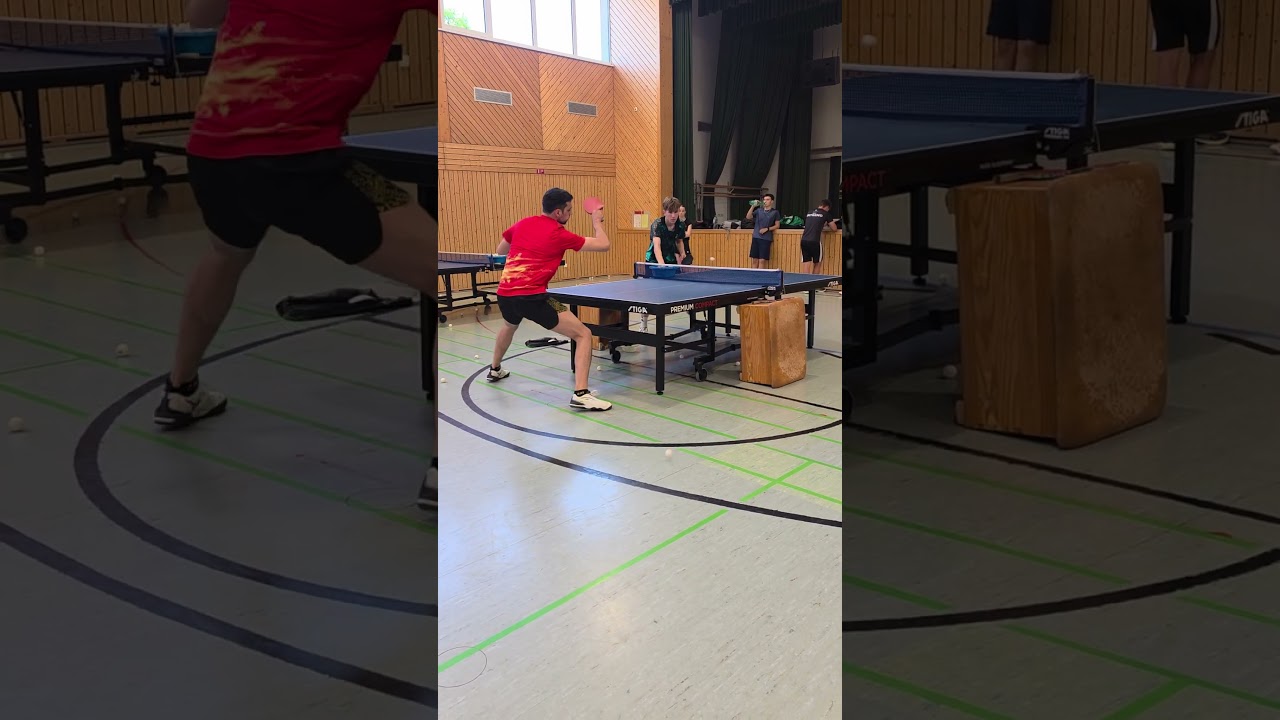
Have noticed this question being asked a lot, so I thought I'd make a post sharing a video of me teaching this.

Whether you are shakehand or penhold, the technique and principles are the exact same. The only difference is the way you hold the racket, thats all.

Penhold, or shakehand, the video below has helped hundreds already get clear on what the forehand topspin should look and feel like, and how to optimally brush the ball. You really need to be able to brush the ball reliably. This sets the foundation of being able to spin the ball in a match when you need to topspin against long services, long heavy pushes, pushes that aren't very heavy, high balls, you name it (there are tonnes of variations in table tennis)


Key note for those who already can do this but struggle against "unorthodox players/doing this in match situations": I felt exactly how a lot of you guys currently feel "confused as to why I would feel so good practicing and playing matches against top players, only to feel horrible the same night or a day later when playing another player at my local club". One minute I'd feel like a pro and then like a lost amateur on the next.

I realised, being able to play a Forehand Topspin like what is below in the video, IS a crucial step to being able to reliably spin a ball (we've gotta understand why you are doing this and learning this). But dealing with those "awkward players" is really about knowing how to use your forehand topspin against those different situations. The video above shows how to play a forehand topspin whenver you get a ball that comes to you pretty low, with good pace but not too fast or slow. When the ball comes different, we also need to adapt the way we forehand topspin. Once I was able to do this (whether I consciously realised it or not), I was able to consistently beat unorthodox players and have no more issues against them. It just felt clear on how I use what skills I have, to win. Hope this gives you guys great insights
 
This user has no status.
🏆 Top 1% Commenter
Well-Known Member
Apr 2023
1,977
1,940
8,461
Looks good! For adult players who want to learn how to loop topspin, my recommendation has always been the same. Start with moving at the elbow, meaning to use the forearm to loop and brush the ball. Once they know how to brush, then add waist rotation. Once they master the forearm and the waist rotation, then add leg movement to push off against the floor.

After that, incorporate shoulder into it for more power.

Finally, the last step is to add the wrist. The wrist should be the last thing to add because adult players, once they start moving their wrists too much (for any shot), they change the bat angle inadvertently and the ball will shoot all over the place. I understand how important wrist is to generate that last bit of power and "snap." But wrist should be added last.

When I grew up, that's how my coach built my forehand loop. I was fine with using the elbow and using the waist. When he asked me to push up with my legs, that took me a couple months to figure out. Then when he asked me to add the shoulder movement, it really messed me up so it took another 6 months to fix it. The final stage to add wrist did not take much time.

For me, some adult players are obese or have chronic back pain. If that's the case, I would focus on elbow first, then waist rotation and finally wrist movement. Shoulder and legs may or may not get involved depending on how bad their pre-existing injuries are.

My coach really did not know how to explain too well. But I get it now. Back then I was confused because I had to basically reinvent the stroke along the way and he was, well, not the best at explaining things.
 
says Making a beautiful shot is most important; winning is...
🏆 Top 1% Commenter
Well-Known Member
Mar 2021
4,848
5,737
12,094
Thanks a lot @Heming Hu ,

The wrist flexion thingy is what has been missing from my Topspin stroke and I get called out 100% of the time by @NextLevel, saying Gozo you are a not spinning the ball enough and what you are doing is 100% pure hitter.

Now I know what is missing.

Oh a personal note or observation, if you allow me, I want to add:

1. Whenever I hit an out right FH winner, it is because I had engaged my core or waist power to accelerate the ball to Mach 2.5.
2. To engage the core properly, one must be in good position and have stable stance.
3. To have a good position and stable stance, one must have active footwork and / or good anticipation ( some call it ball sense ).
4. The above are my two cents worth.
 
says Australian 2xOlympian. Highest Men's World Ranking: 61...
Member
Sep 2024
118
312
549
Thanks a lot @Heming Hu ,

The wrist flexion thingy is what has been missing from my Topspin stroke and I get called out 100% of the time by @NextLevel, saying Gozo you are a not spinning the ball enough and what you are doing is 100% pure hitter.

Now I know what is missing.

Oh a personal note or observation, if you allow me, I want to add:

1. Whenever I hit an out right FH winner, it is because I had engaged my core or waist power to accelerate the ball to Mach 2.5.
2. To engage the core properly, one must be in good position and have stable stance.
3. To have a good position and stable stance, one must have active footwork and / or good anticipation ( some call it ball sense ).
4. The above are my two cents worth.
no worries man
 
This user has no status.
Member
Jan 2023
221
169
582
Looks good! For adult players who want to learn how to loop topspin, my recommendation has always been the same. Start with moving at the elbow, meaning to use the forearm to loop and brush the ball. Once they know how to brush, then add waist rotation. Once they master the forearm and the waist rotation, then add leg movement to push off against the floor.

After that, incorporate shoulder into it for more power.

Finally, the last step is to add the wrist. The wrist should be the last thing to add because adult players, once they start moving their wrists too much (for any shot), they change the bat angle inadvertently and the ball will shoot all over the place. I understand how important wrist is to generate that last bit of power and "snap." But wrist should be added last.

When I grew up, that's how my coach built my forehand loop. I was fine with using the elbow and using the waist. When he asked me to push up with my legs, that took me a couple months to figure out. Then when he asked me to add the shoulder movement, it really messed me up so it took another 6 months to fix it. The final stage to add wrist did not take much time.

For me, some adult players are obese or have chronic back pain. If that's the case, I would focus on elbow first, then waist rotation and finally wrist movement. Shoulder and legs may or may not get involved depending on how bad their pre-existing injuries are.

My coach really did not know how to explain too well. But I get it now. Back then I was confused because I had to basically reinvent the stroke along the way and he was, well, not the best at explaining things.

This is what my coach says as well. Wrist is the last thing you learn. I think its important to develop a technique for a particular person in a particular situation, maybe even depending on chinese or european rubbers. I also think that forearm technique is quite different between tall players and short players, or the athletic ability or lack of ability to go low in the knees for tall players.
 
says I'm still learning Table Tennis.
Member
Nov 2022
432
381
1,339
Read 1 reviews
In WTT games I always see pro players swing the forearm to the side and making semi-ellipse shape instead of 45 degrees straight line to the top. Even ML & WCQ did this many times. So I think there are exceptions. Correct me if I'm wrong.
 
This user has no status.
🏆 Top 1% Commenter
Well-Known Member
Sep 2013
13,139
15,419
36,968
Read 3 reviews
In WTT games I always see pro players swing the forearm to the side and making semi-ellipse shape instead of 45 degrees straight line to the top. Even ML & WCQ did this many times. So I think there are exceptions. Correct me if I'm wrong.
for learning, there is textbook shape.
for pro execution, the "shape" changes all the time.
 
says Leave the righteousness to me.
🏆 Top 1% Commenter
Well-Known Member
Nov 2020
1,611
1,467
6,999
for pro execution, the "shape" changes all the time.

One should ask, what is it that doesn't change.

I'm sorry, but my opinion is, that the majority of "how to do the FH loop", even from real pro coaches, incl. chinesse, is weak, and doesn't show and elucidate the principle, and doesn't let the people to really feel it in themselves.

Look, I know these are strong words, and I really think these these coaches are super good and useful. But it is my opinion.

The principle is actually super simple, and it is absolutely the same, whether we speak about FH loop, or golf swing, or say karate's gjaku tsuki.

It is also easy to feel. Everything else is secondary. Cheers from hobby player ;-)
 
This user has no status.
🏆 Top 1% Commenter
Well-Known Member
Sep 2013
13,139
15,419
36,968
Read 3 reviews
One should ask, what is it that doesn't change.

I'm sorry, but my opinion is, that the majority of "how to do the FH loop", even from real pro coaches, incl. chinesse, is weak, and doesn't show and elucidate the principle, and doesn't let the people to really feel it in themselves.

Look, I know these are strong words, and I really think these these coaches are super good and useful. But it is my opinion.

The principle is actually super simple, and it is absolutely the same, whether we speak about FH loop, or golf swing, or say karate's gjaku tsuki.

It is also easy to feel. Everything else is secondary. Cheers from hobby player ;-)
what doesn't change?
the feeling of the ball during the executing of the shot, especially when totally out of position and still managed to return the ball back with quality.

From action and drawing of the shape, it would likely be totally wrong according to text book. But from the pros, we will all say, great forehand shot.
We look at the difficulty index, the feel/control of the ball, and the execution quality of the ball.

we don't look at the shape. Shape is for hobby players.
Hope that helps
 
This user has no status.
Member
Oct 2023
66
110
399
Read 1 reviews
In WTT games I always see pro players swing the forearm to the side and making semi-ellipse shape instead of 45 degrees straight line to the top. Even ML & WCQ did this many times. So I think there are exceptions. Correct me if I'm wrong.
You're not wrong, but that's a counter loop. When you need to counter loop close to the table or when there's a lot of topspin on the ball, you need to hit and brush the very top of the ball so that's why you end up with that semi-ellipse motion.
 
says Pimples Schmimples
🏆 Top 1% Commenter
Well-Known Member
Sep 2022
2,038
2,057
8,332
I often think that discussing the pro level of this stuff stuff is a fruitless task for amateurs and hobby players.
Comparing to Tennis, Federers ability to hit ridiculous unscripted and unorthodox shots from crazy angles and way out of position in the court is so difficult to understand or explain, even for him! It is a combination of feel and incredible technique. But some of those shots cannot be taught or even practiced on a regular basis because of the unscripted situations you find yourself in.
In short it was Federers insane touch and control that allowed him to develop Technique good enough where improvisation for certain shots became natural to him.
I'd imagine it's the same with table tennis at a certain level where (with the execution of certain shots) you can control just about anything coming at you and hit the table from ridiculous angles at split second timing.
But explaining how you do it might just be impossible!!!
I guess that's the stuff that's fun to talk about and part of why we all love the game, seeing it played to an insane level is inspiring but (for me at least) almost impossible to understand 😳
 
says Leave the righteousness to me.
🏆 Top 1% Commenter
Well-Known Member
Nov 2020
1,611
1,467
6,999
I often think that discussing the pro level of this stuff stuff is a fruitless task for amateurs and hobby players.
Comparing to Tennis, Federers ability to hit ridiculous unscripted and unorthodox shots from crazy angles and way out of position in the court is so difficult to understand or explain, even for him! It is a combination of feel and incredible technique. But some of those shots cannot be taught or even practiced on a regular basis because of the unscripted situations you find yourself in.

That's true, but even in these shots, you could even say, especially in these shots, the thing which I call the principle, is clearly present.

In short it was Federers insane touch and control that allowed him to develop Technique good enough where improvisation for certain shots became natural to him.
I'd imagine it's the same with table tennis at a certain level where (with the execution of certain shots) you can control just about anything coming at you and hit the table from ridiculous angles at split second timing.
But explaining how you do it might just be impossible!!!
I guess that's the stuff that's fun to talk about and part of why we all love the game, seeing it played to an insane level is inspiring but (for me at least) almost impossible to understand 😳

I agree with that too, but the point imho, is not really to explain how he did that particular extreme shot, but rather to explain the basics, which let him develop it, and didn't stand in the way.

My example: when I was young and my karate teacher explained to me, how the speed and power is generated in that technique I mentioned above, not only I could clearly feel in my body, I also knew with 100% certainty in my brain, that this is why it works, almost like some natural law, like F = ma.

When I see some tutorials, it seems the people are left to figure it out, in spite of not being given the clarity how and why it MUST work.

Please, don't consider what I write disrespectful. It is not. It is my input. Cheers.
 
This user has no status.
🏆 Top 1% Commenter
Well-Known Member
Oct 2010
2,859
2,797
10,527
In WTT games I always see pro players swing the forearm to the side and making semi-ellipse shape instead of 45 degrees straight line to the top. Even ML & WCQ did this many times. So I think there are exceptions. Correct me if I'm wrong.
It is just the basic structure. A loop structure must be highly flexible in order to adapt to the enormous variation of incoming balls. For starters one must have the flexibility to lift the heaviest backspin or to press down / neutralise the heavy incoming topspin and what tricks are there to achieve that. There are a lot of other variables like sidespin, placement, etc.. (for eg how to adjust for shorter balls or for longer balls? Balls to the left, middle, right?)
 
says Pimples Schmimples
🏆 Top 1% Commenter
Well-Known Member
Sep 2022
2,038
2,057
8,332
That's true, but even in these shots, you could even say, especially in these shots, the thing which I call the principle, is clearly present.


I agree with that too, but the point imho, is not really to explain how he did that particular extreme shot, but rather to explain the basics, which let him develop it, and didn't stand in the way.

My example: when I was young and my karate teacher explained to me, how the speed and power is generated in that technique I mentioned above, not only I could clearly feel in my body, I also knew with 100% certainty in my brain, that this is why it works, almost like some natural law, like F = ma.

When I see some tutorials, it seems the people are left to figure it out, in spite of not being given the clarity how and why it MUST work.

Please, don't consider what I write disrespectful. It is not. It is my input. Cheers.
Not disrespectful at all.

As I said, I don't understand much of how pros can do what they do but it's fun talking about it.
I have a few examples too, where something explained doesn't really make sense until you experience it.
The most impactful one for me actually happened on a motorcycle, where braking and the ability to skid the tyres when leaned over like MotoGP riders has been explained to me so I theoretically understand how it's done but I've never done it and ain't ever going to practise it cos I don't own a track and don't want to crash my motorbike!
Until it happened one day in an emergency braking situation where purely out of instinct I reacted to avoid a collision and ended up doing just that, skidding around a corner at a 50° angle to the road without losing control or traction! It felt surreal and was exhilarating and terrifying at the same time. I've never done it since but it's just an example of when it happens you feel it and you know! You're looking for a feeling in something and when you find it you try to control it.

I haven't had many Eureka moments like that in TT unfortunately. I wish I could feel the ball on the rubber better to allow me to calibrate needed adjustments but it seldom happens so it's just rote learning and mechanical adjustments for me mostly.
 
says Leave the righteousness to me.
🏆 Top 1% Commenter
Well-Known Member
Nov 2020
1,611
1,467
6,999
As I said, I don't understand much of how pros can do what they do but it's fun talking about it.
I have a few examples too, where something explained doesn't really make sense until you experience it.
The most impactful one for me actually happened on a motorcycle, where braking and the ability to skid the tyres when leaned over like MotoGP riders has been explained to me so I theoretically understand how it's done but I've never done it and ain't ever going to practise it cos I don't own a track and don't want to crash my motorbike!
Until it happened one day in an emergency braking situation where purely out of instinct I reacted to avoid a collision and ended up doing just that, skidding around a corner at a 50° angle to the road without losing control or traction! It felt surreal and was exhilarating and terrifying at the same time. I've never done it since but it's just an example of when it happens you feel it and you know! You're looking for a feeling in something and when you find it you try to control it.

That's a beautiful example. Half aware, half instinct ;-) I had a bike but never did something like this ;-)

I haven't had many Eureka moments like that in TT unfortunately. I wish I could feel the ball on the rubber better to allow me to calibrate needed adjustments but it seldom happens so it's just rote learning and mechanical adjustments for me mostly.

I think as long as you have fun, all is OK. Sometimes I do see people kind of frustrated, that they'd like to play better or improve more. I hope you are not frustrated. I'd say for me feeling the body is more important than feeling the ball, which of course is important too. But compare to feeling the body it is secondary and also somewhat coming automatically with time, let's say if I compare to myself 5 years ago. So I don't care about it that much, but rather, let the improvement happen in time. On the other hand, when I play a shot where the body is not correctly in, like say not low enough, or not space enough, or too tight or something, that concerns me more. Cheers.
 
  • Like
Reactions: NetProphet
This user has no status.
🏆 Top 1% Commenter
Well-Known Member
Sep 2013
13,139
15,419
36,968
Read 3 reviews
I often think that discussing the pro level of this stuff stuff is a fruitless task for amateurs and hobby players.
Comparing to Tennis, Federers ability to hit ridiculous unscripted and unorthodox shots from crazy angles and way out of position in the court is so difficult to understand or explain, even for him! It is a combination of feel and incredible technique. But some of those shots cannot be taught or even practiced on a regular basis because of the unscripted situations you find yourself in.
In short it was Federers insane touch and control that allowed him to develop Technique good enough where improvisation for certain shots became natural to him.
I'd imagine it's the same with table tennis at a certain level where (with the execution of certain shots) you can control just about anything coming at you and hit the table from ridiculous angles at split second timing.
But explaining how you do it might just be impossible!!!
I guess that's the stuff that's fun to talk about and part of why we all love the game, seeing it played to an insane level is inspiring but (for me at least) almost impossible to understand 😳
your understanding is completely correct.
the moment becomes 2nd nature and the concept is what is in there, not the shape or look.
for ones who understand it, would enjoy the art.
but it may not be the correct shape for beginners to learn (referring to)
ridiculous unscripted and unorthodox shots from crazy angles and way out of position
 
This user has no status.
🏆 Top 1% Commenter
Well-Known Member
Moderator
Oct 2014
19,970
26,529
70,870
Read 17 reviews
This is what my coach says as well. Wrist is the last thing you learn. I think its important to develop a technique for a particular person in a particular situation, maybe even depending on chinese or european rubbers. I also think that forearm technique is quite different between tall players and short players, or the athletic ability or lack of ability to go low in the knees for tall players.
Good coaches disagree on subtle things all the time, and it is okay to disagree on the subtle things in the context of the development of a specific player.
 
  • Like
Reactions: Tony's Table Tennis
Top