Merry Christmas dear TTD friends! So much interesting stuff being written here.
I have a question, about the ball shaped stroke or thick contact.
Does that mean you should start the stroke with a more opened racket face and then close it while brushing the ball to lessen the chance to hit an edge?
I always thought that changing the angle of the stroke mid stroke is a big no go as it gives you different outcomes depending on where in the stroke you hit the ball.
Yeah, that is what they tell people who don't get it. The thing is that some people try to hit the ball and then jerk their wrist to add spin or something like that. It is bad *default* technique and has issues in terms that it reduces the overall swing speed so it should not be your default stroke. However, all top players do something like it as an emergency stroke sometimes if the ball is the right kind of ball. But you can't be a top player if that is your default technique as the power and consistency is not enough.
But as you get more experienced,
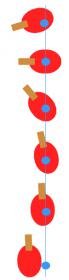
you realize that all strokes form a path. I am describing the path of the stroke when I say things like hit the ball and cover, or hit the ball and go up, or hit the ball and fade up or hit the ball and fade over. I find in my experience that the racket angle determines the contact point for controlling the spin, the path determines what spin you are adding to the ball, and the thickness of the contact determines how much pace vs spin you will generate. But the three are all connected so my seperation may not make complete sense. The path sometimes captures everything as the path sometimes sets the racket angle and the path *can* affect the thickness of the contact.
But in any case, what you should not be changing too radically is the swing path. If the ball is slow and you have time to approach it with a slower start, you can change it, but when it is fast, it is just about impossible to change, and in general anyways, you should have already read the ball early and set your swing path in general based on the incoming ball so you can get maximum acceleration into the ball. There is no point dropping your racket when you know that your opponent is not a chopper and you have just looped the ball, your racket should be high and ready to make contact somewhere on top of the ball or close to it on the side since the next ball will be topspin depending on block or countertopspin 95% of the time (the crazy chop blocker not withstanding). So you don't want to lift the ball off the bounce, you can't come from well beneath and behind, your ball will have to come round close to the ball height and likely over the side to use spin avoidance. So you usually play down to up to counteract backspin, back to front (or more usually, left to right or right to left) to counteract topspin or topspin and sidespin. The swing is the same, the path and contact point and thickness will change to accommodate the incoming spin.
The thing is that when you hit the back of the ball (and I probably tried to explain this to you a year and a half ago), the ball is going to be pushed forward by your impact so your path has to be set to spin but it is hard to spin if your path is set to hit the ball on its face as you are absorbing all the incoming spin. It is why most loops off the bounce are hooks or fades if you watch what happens to the ball after the shot, they knock the ball of its axis and add their own spin instead of fighting the spin on the ball. Even loops in rallies are similar. Let's hear a pro describe it.
https://www.youtube.com/watch?v=ozVAt4LT90o (he explains that for a spinny ball, you almost need to push the ball down to depress heavy topspin - someone would argue that he is still coming round the side and over but that is another story - the swing is one example of a path).
https://www.youtube.com/watch?v=9kZRmomeckg (he explains how to avoid the spin to keep the rally going with sidespin - this is the most relevant one to what I wrote about - but it doesn't have to be sidespin per se, it is more about the contact point - an observant person will note that the hook stroke is not that different a stroke from part 1. He also explains that sidespin lets you take the ball later in some cases).
https://www.youtube.com/watch?v=9kZRmomeckg (he gives a mental approach for when the ball is less spinny. But note that his swing is not that different and in every case, he is using a hooking swing to counterloop the ball off the bounce with minor changes to the swing trajectory based in how he reads the incoming ball).
So the thing is that many people when they first hear spin, they think of brushing. No, spin is not about brushing, spin is about good rubber and the *PATH* of the swing. It is when you need to make the ball spin a lot over a short distance that you brush more, but if the ball is coming in fast with heavy spin and you are off the table and you need to make the ball travel, you may not be able to brush as much. The most important thing is to set the swing path and chose a good contact point so that you get the result you are looking for. But if you hit the ball where the spin is most, your angle has to be perfect and you will be fighting the incoming spin and pace - this is why some people can only loop from 10 feet off the table as they need the ball to lose some of its power so they can play their lifting stroke. This is madness - if I had to play this way, I would have quit table tennis a long time ago.
What I do, as old as I am, is try to read the ball and figure out how it is spinning and to play my stroke on a point on the ball where the spin is not too heavy so I can get the effect I am looking for. This is why people are able to take the ball off the bounce. The trick is to take the ball as early as possible and borrow the incoming pace and spin and come round the side and loop it with sidespin and use the incoming topspin to play your own spin. It's a physics problem that the brain solves with practice if you let it.
IF you look at your loop carefully and you swing the full path with salute at the forehead, you will see that it comes round the side and over the ball. IT is also often a curved stroke though some people can increase or reduce the curve. So the angle is change slightly throughout the stroke. You just don't try to hit the ball and change it immediately after hitting the ball. And in fact setting the angle throughout the stroke is silly and will usually hit the ball long unless you are lucky. What you need to do is follow the shape of the ball with your strokes in general, and this will tend to produce the effect you are looking for, how much of the shape you follow depends on spin, speed, incoming ball etc. But you will see that if you do this, it is easier to exposed the racket to the ball for safety and hit the side a bit on most strokes to fight incoming spin, this makes your stroke safer and lets you add your own spin and power if you are using inverted. Give it a try and let me know how it goes. Trying to brush too much often means you miss the ball, it is a bad habit I try to fix in my own game and in some of my students, but old habits die hard. But the more you hit the ball with good rubber and turning stroke, the more your spin will be. Don't try to avoid the ball, hit the ball with turning stroke. Then reduce the thickness of contact to get more brush spin when you are certain of your contact, trying to avoid the ball from the start will lead to too much missing.
So yes, try to use as much racket face as possible to turn the ball. It takes some practice and adjustment, but watch pros like Mizutani or Maze if you want to see the technique. I posted a lot of backhand videos but technique for forehand is similar, you can watch my matches or that of most of my opponents to get it.