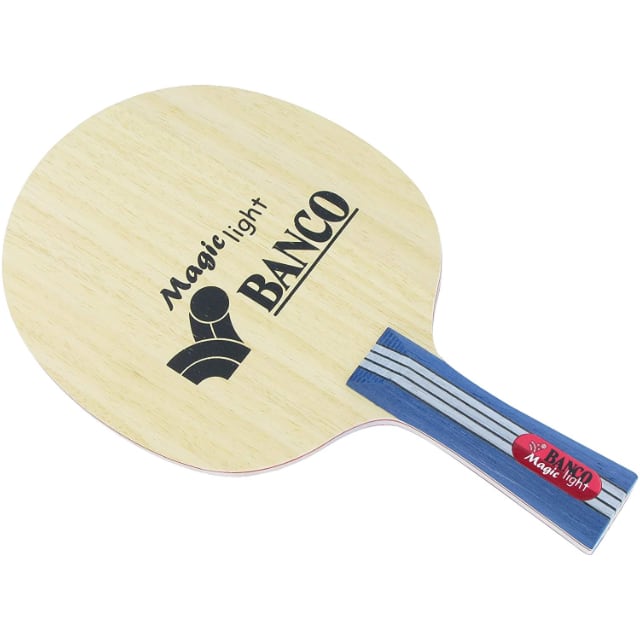
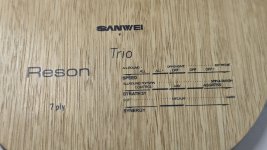
Re: OP -- Really great question, thanks for asking it.
You've already heard most of the reasons for the price difference from other posters -- I e.: wood quality, glue use, brand equity & positioning, intended target market, and country of manufacture. All these factors directly go into the final RRP of a blade.
To that list you can also add the following factors (amongst many others):
MATERIAL COST FLUCTUATIONS:
Wood can (and usually does) vary in cost a lot over time, depending on supply and demand. Sometimes you can accommodate cost variations through to species substitution (eg: Spruce and Douglas fir are virtually completely interchangeable in a blade in terms of performance and playing feel, but Spruce however is much rarer nowadays, and is much more expensive). Other times however, if it's a genuinely irreplaceable wood for the design of the blade, then a manufacturer has no option but to charge more whenever the prices goes up (...and up, and UP! 🙄). Granted this is not such a big deal with cheap control centric beginner blades, but the principle still applies).
CHANGING FIXED COSTS:
Running my blade-making business has been an absolute bastard these last few months, due to our landlord being a shit over our rent and operating conditions. It's made things particularly problematic for us on a number of fronts. We're not free to raise our prices at six or seven times the cost of inflation at the drop if a hat (even if the rent we're expected to pay does go up that much, that quickly 🙄🙄🙄😡😡😡). It plays merry hell with every part of our operations frankly and we're fighting hard to avoid that spilling over into the final purchase price. But if rents keep increasing locally the way they have been of late, sooner or later that dam is going to burst.
MANUFACTURING METHODS & BLADE DESIGN TRENDS
There's lots of different ways to add control to a blade, just as there's a lot of different ways to *define* control (I mean what does 'high control' really mean objectively anyway, right?)
All the blades you mention have good control, but they also achieve that control a number of different ways, with a number of different trade-offs occuring along the way.
For example, some woods like basswood actively absorb impact forces (compared to something like Hinoki, which both reflects it and adds its own elastic potential as well). If you add a thick layer of basswood to your blade, then bang! -- you get an instant jump in control. Problem is, it also kills the top speed and playing feel at the same time. A lot of very cheap beginner blades use nothing but basswood for the control it gives, but they will also feel like complete crap to a more experienced player, so that approach to adding control doesn't work so well in every case. Basswood is also pretty cheap to buy, as it's really not used for much due to its softness and lack of overall strength, so for a cheaper-end blade, adding at least some basswood into the mix is often the go-to method for adding control.
You can also get good control by changing the overall makeup of your core and medial layers, by lowering the average density of the woods you use in these layers. Once again this will slow the blade down, just not as much as adding a shock absorber like basswood. Trade off being, you often also lose top end speed that way. With a beginner blade it's not a big deal, but again, an advanced player would find it annoying. You also risk having bad layering this way, and your blade can start to develop a bit of a hollow playing feeling to it (which like I said, can be very annoying in the hands of a better player).
There's other, better ways than these to add extra control, such as softening the outer layer a bit, as this adds both control and dwell without impacting top speed as much, but the flip side of that being it can also affects the rubber choices that feel best with that blade. Harder sponge rubbers are all the rage nowadays, and they tend to prefer having a harder base underneath them (which is partially why you're seeing a lot more koto and hard composite fabrics used in a blade's outer layers nowadays, and slightly less all-wood / limba outers / inner carbon blades). Problem being, even Limba and koto are getting more expensive nowadays, so you're back to balancing your material costs again. (This is not such a problem for us, as we don't use either of these woods very much at all, but again -- it illustrates the principle).
CHANGES TO SHIPPING / DISTRIBUTION COSTS / RETAIL MARGINS / TAXATION ETC...
Things like the above also impact the final blade price obviously, but they haven't been mentioned yet, so I thought I'd raise them. You'd be staggered how much a single container ship grounded across a canal can affect your costs (erratic, deluded, tariffs obsessed national leaders being in power don't really help much either... not that I'm pointing fingers at anybody, as there's more than one of those in the world too😂😂)
Apologies for the length of this post, but your question is so rarely raised, (and is so pertinent), I thought I'd address it in a little more detail, and from a blade maker's perspective.
Hope this helps. 🙂