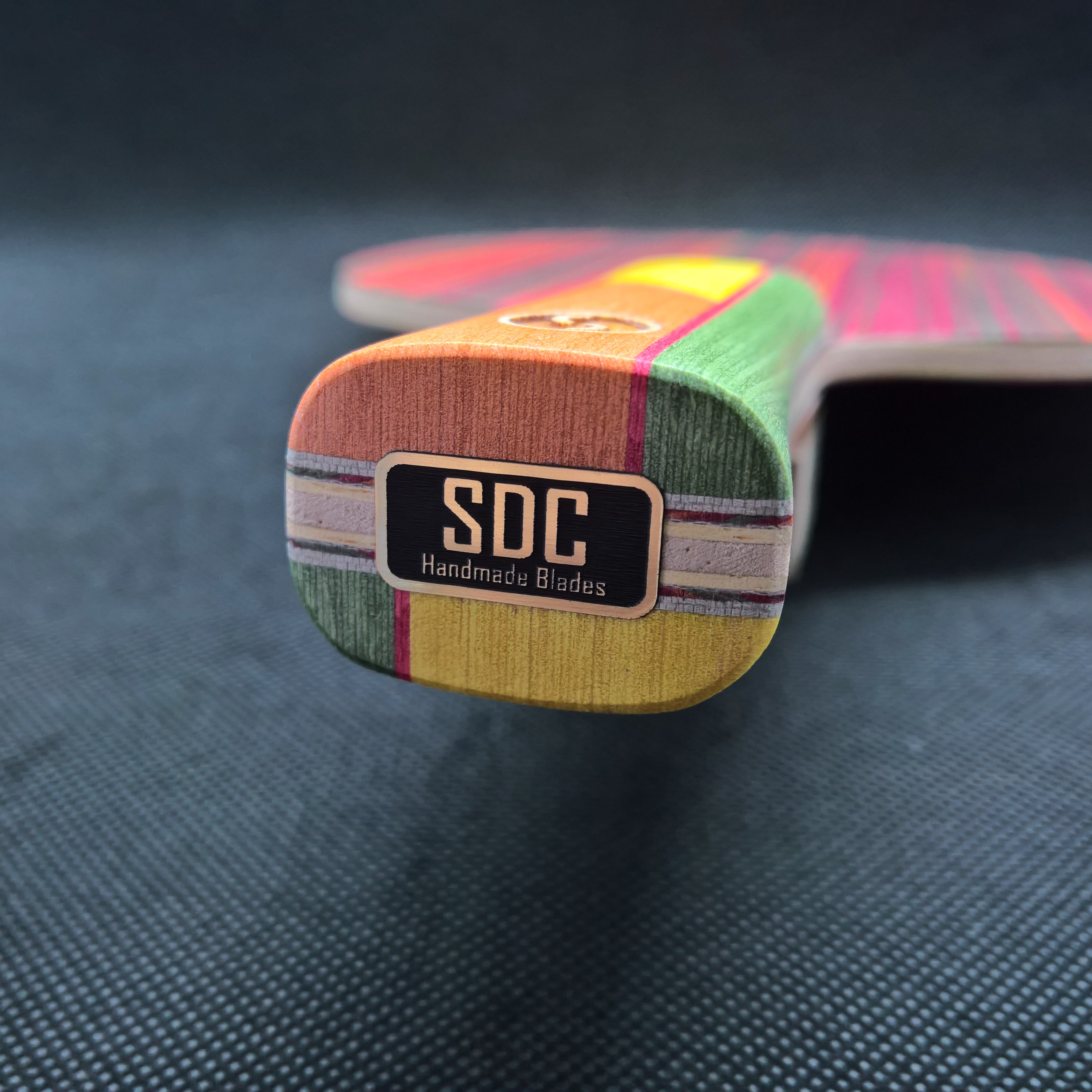
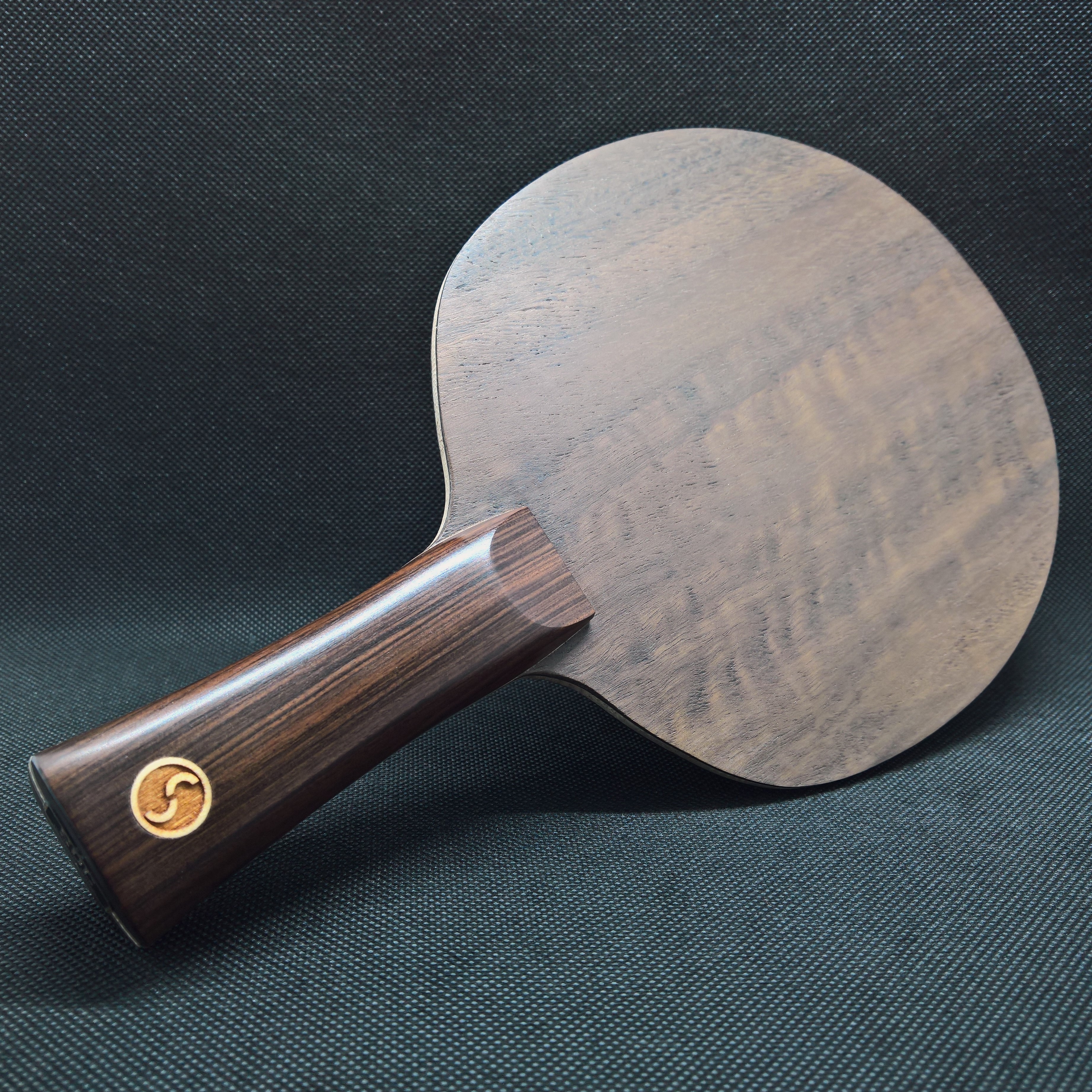
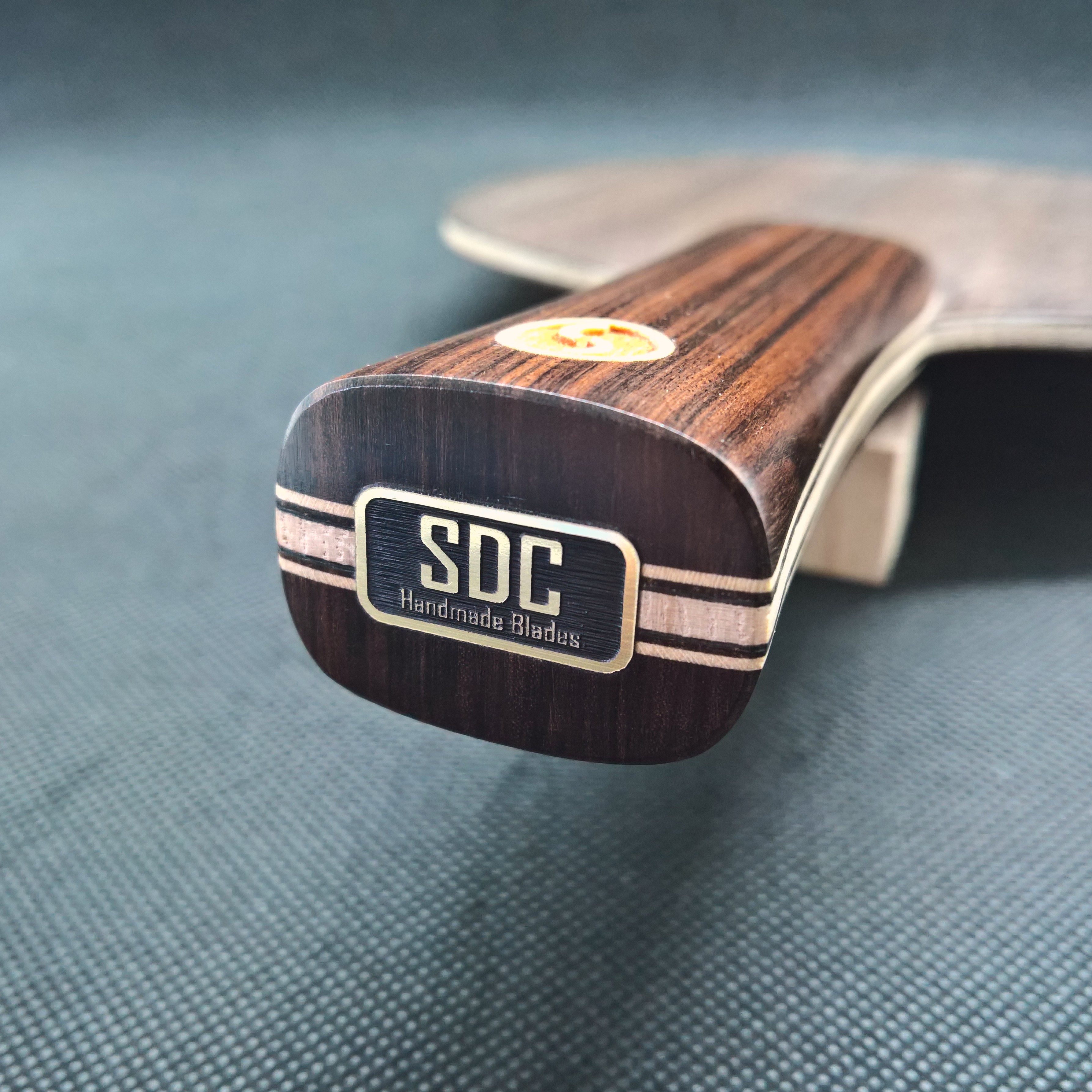
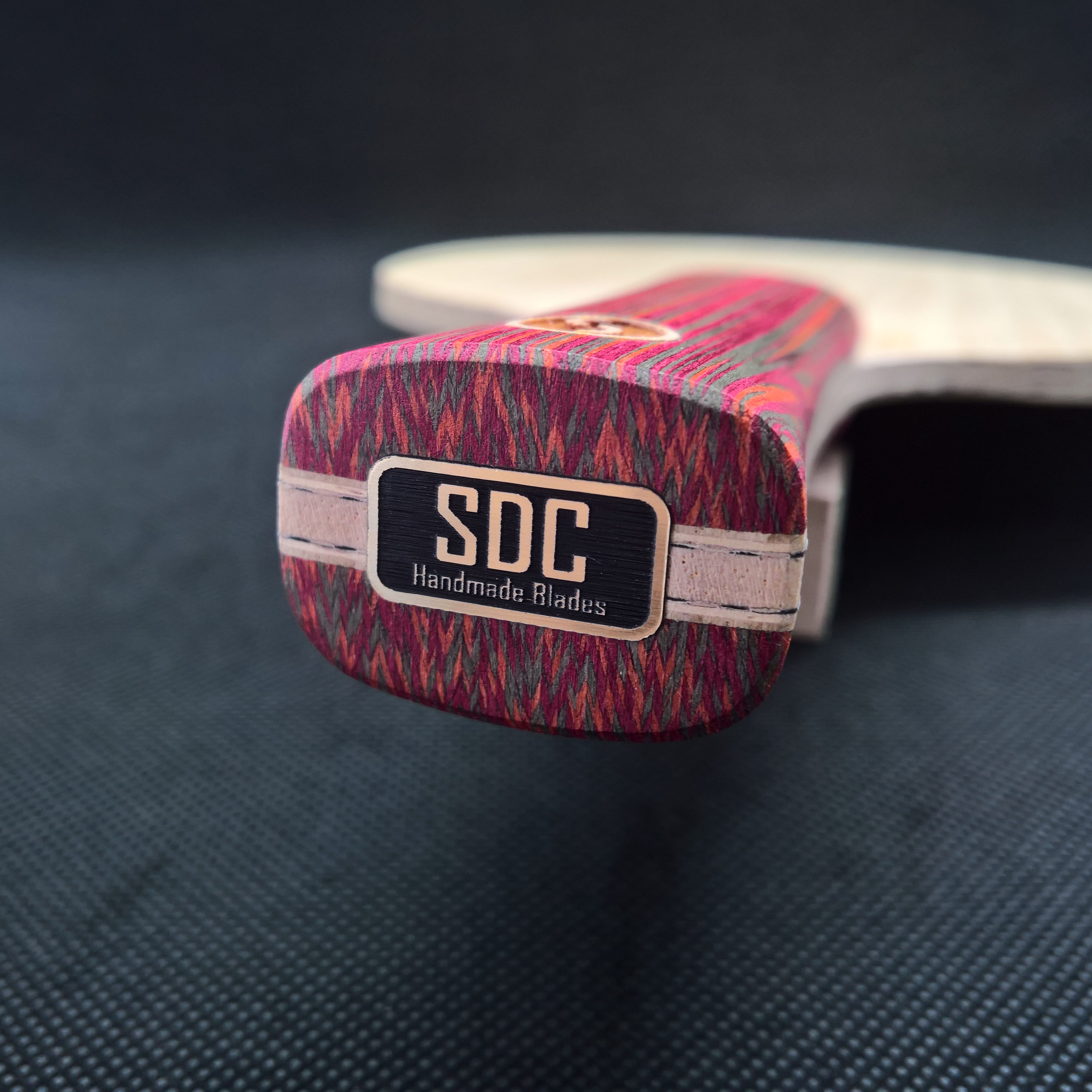
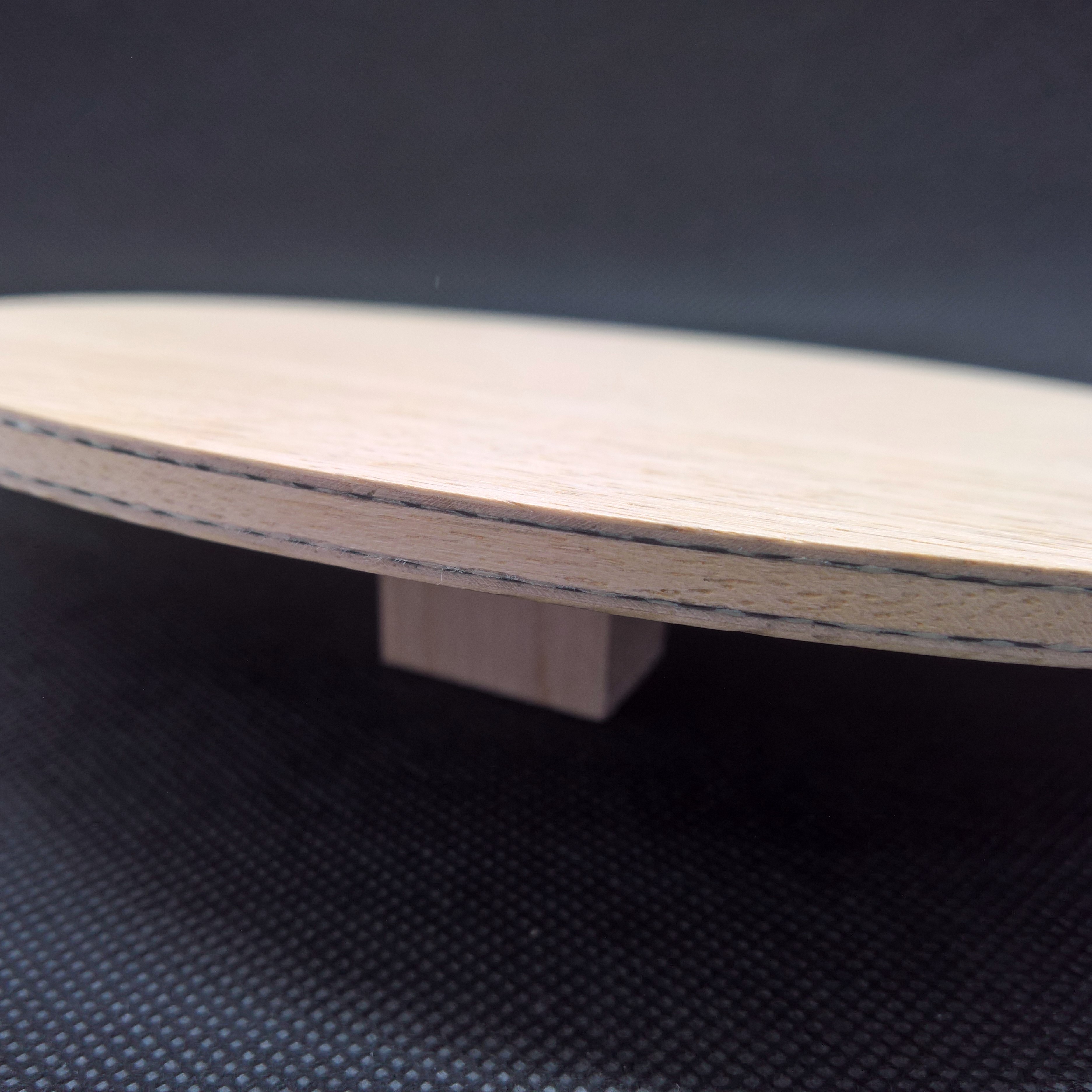
SDC Handmade Blades

This user has no status.
Hey everybody,
coming here with a stupid question, sorry. My Donic Defplay Senso V3 is made up of very similar plies as the Yasaka Extra Offensive, at least concerning hardness, specific weight and order of the five plies. I know the Defplay is usually thinner and lighter but I got a very heavy Defplay at 89g and it is about the same thickness as the YEO, too. Still, the YEO was (I don't have it anymore) stiff and hard as a rock and rocket fast compared to the Defplay, way more than can bei explained by the difference in headsize. It can't be only the glueing, slight differences in Anigre/Walnut, Okoume/Spruce and maybe slight differences in ply thickness... or, can it?
 

SDC

This user has no status.

SDC

This user has no status.
🏆 Top 1% Commenter
Well-Known Member
Dec 2011
1,789
3,532
5,922
Hey everybody,
coming here with a stupid question, sorry. My Donic Defplay Senso V3 is made up of very similar plies as the Yasaka Extra Offensive, at least concerning hardness, specific weight and order of the five plies. I know the Defplay is usually thinner and lighter but I got a very heavy Defplay at 89g and it is about the same thickness as the YEO, too. Still, the YEO was (I don't have it anymore) stiff and hard as a rock and rocket fast compared to the Defplay, way more than can bei explained by the difference in headsize. It can't be only the glueing, slight differences in Anigre/Walnut, Okoume/Spruce and maybe slight differences in ply thickness... or, can it?

The problem is that your premise is flawed, they are nothing alike. Walnut is harder than Anigre, Pine is harder than Okoume. The deflpaly is thinner so the YEO (probably) has a thicker core which bumps up the stiffness. Defplay with a larger headsize which dissipates more energy...
 
  • Like
Reactions: Gerd
This user has no status.
The problem is that your premise is flawed, they are nothing alike. Walnut is harder than Anigre, Pine is harder than Okoume. The deflpaly is thinner so the YEO (probably) has a thicker core which bumps up the stiffness. Defplay with a larger headsize which dissipates more energy...
Thanks a lot! I was sure it was spruce but you are right, Scandinavian Pine. The rest makes a lot of sense, too, thank you! Only, is Anigre so way off from Walnut? Looking at the table in your Website, it appears close; just as Spruce/Okoume would, or not? Just thinking, as Walnut and Spruce are less endangered and look nicer in my eyes.
 
Last edited:

SDC

This user has no status.

SDC

This user has no status.
🏆 Top 1% Commenter
Well-Known Member
Dec 2011
1,789
3,532
5,922
Thanks a lot! I was sure it was spruce but you are right, Scandinavian Pine. The rest makes a lot of sense, too, thank you! Only, is Anigre so way off from Walnut? Looking at the table in your Website, it appears close; just as Spruce/Okoume would, or not? Just thinking, as Walnut and Spruce are less endangered and look nicer in my eyes.
Pine can be quite hard and used on the medial it can give that "pingy" feeling to a blade, that's the biggest difference. Walnut varies a lot, not sure what kind they are using because, judging by the photos sometimes it looks like Black Walnut. If that's the case then yes, it's only slightly harder than Anigre, but in other photos it also looks like Queensland Walnut and that one is a lot harder.
 

SDC

This user has no status.

SDC

This user has no status.
🏆 Top 1% Commenter
Well-Known Member
Dec 2011
1,789
3,532
5,922
#1229 - Outer GF - ALL+/OFF-

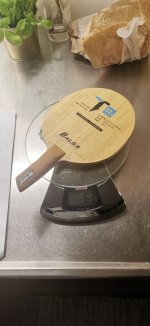
The "Balsa looping blade", that mythical creature that eludes many many players, and even blade builders such as myself. It's kinda like chasing a rainbow! Which was, sort of, the inspiration for this very subtle and inconspicuous blade. Balsa blades have a bad reputation of being very stiff, so not very appropriate for looping. However, the problem lies with the fact that usually those blades have very thick cores, and many times also paired with a hard composite. Balsa is very light, so manufacturers use this to make very thick and stiff blades. I went in the other direction with this one, and used a thin Balsa core, so in the end in doesn't feel like a typical Balsa blade at all. Granted, it's not a very powerful blade, that light core doesn't support hard strokes, but it's a blade that focus more on spin generation. The outer Maple Fineline is relatively hard, that's what's giving us the speed, and supported by the thick Ayous medial which gives some stability. The Glass-fiber is really only there to provide some vibration dampening and enlarge the sweetspot.

Available FS.

- Fineline / Glass-fiber / Ayous / Balsa core
- 89.7g
- 5.9mm
- 159x153mm
- FL (100x25-22.9mm)
- Balance: 2.8cm (Low)

1229-1.jpg


1229-2.jpg


1229-3.jpg
 

SDC

This user has no status.

SDC

This user has no status.
🏆 Top 1% Commenter
Well-Known Member
Dec 2011
1,789
3,532
5,922
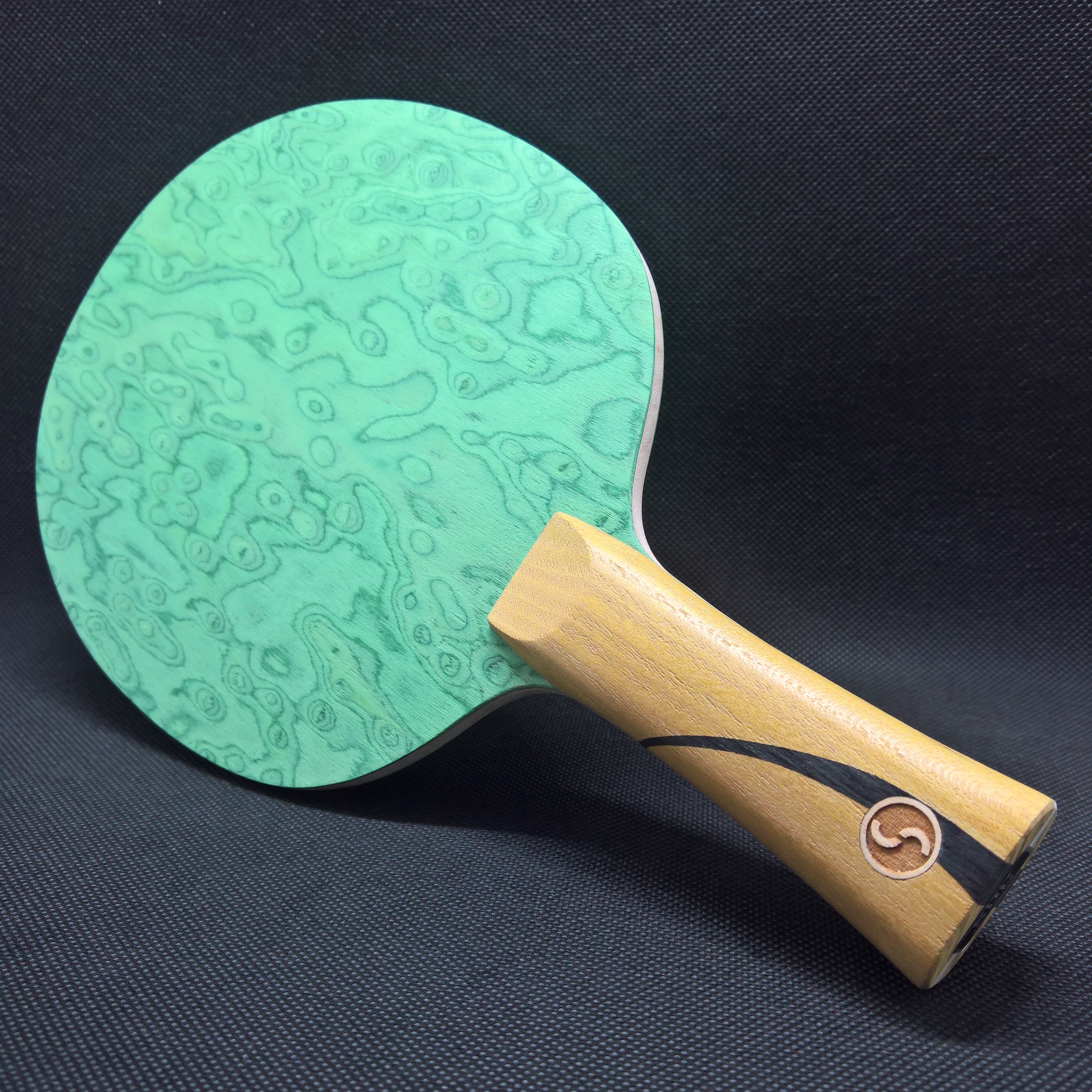
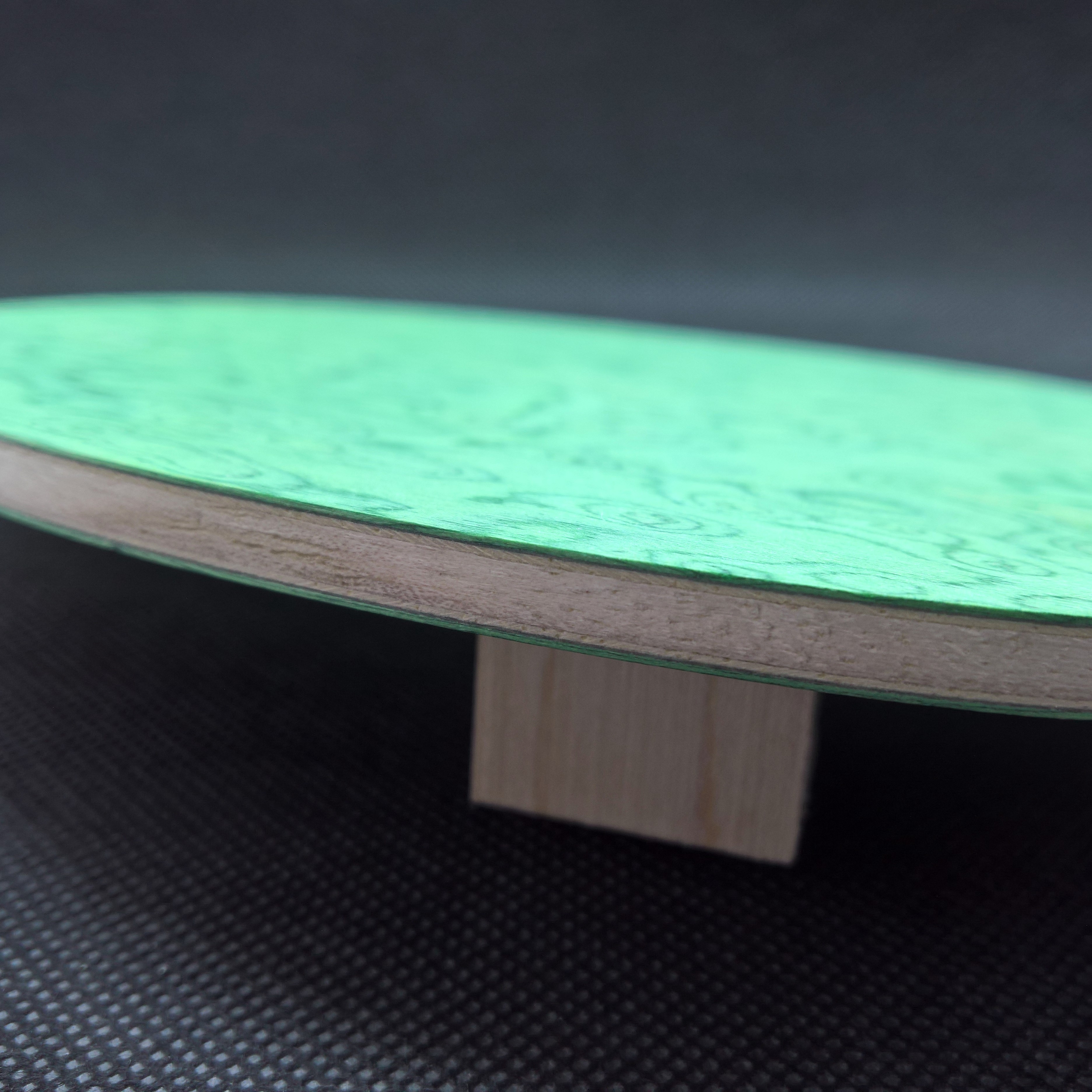
#1230 - Outer Basalt - OFF-

Sometimes I don't have a game-plan or no clear idea of what I want to do. In this case, I knew I wanted to use this funky new Maple Fineline veneer I got, I wanted to use Basalt as well since I hadn't in a while, so I built a composition around that. For the handles I used the mirrored "leftovers" from another build and voilà! Many good blades are born this way, and I think this is the case. It feels crisp but soft, if that makes sense, and it's very well balanced.

Available FS.

- Fineline / Basalt / Ayous / Kiri core
- 88.6g
- 6.0mm
- 157x150mm
- FL (101x25.3-23.1mm)
- Balance: 2.4cm (Low)

1230-1.jpg


1230-2.jpg


1230-3.jpg
 
This user has no status.
🏆 Top 1% Commenter
Well-Known Member
Jan 2024
2,207
2,885
6,904
Read 2 reviews
I don't quite understand "Fineline". First I thought it was a particular wood but that was a bit silly. Then I got the impression it's basically a lot of layers of veneer, but if that's the case, why is this maple fineline showing wood patterns? Then when I look close up, it also doesn't look like strips, but like a continuous veneer?
 

SDC

This user has no status.

SDC

This user has no status.
🏆 Top 1% Commenter
Well-Known Member
Dec 2011
1,789
3,532
5,922
I don't quite understand "Fineline". First I thought it was a particular wood but that was a bit silly. Then I got the impression it's basically a lot of layers of veneer, but if that's the case, why is this maple fineline showing wood patterns? Then when I look close up, it also doesn't look like strips, but like a continuous veneer?
Fineline is another term for reconstituted wood. It consists of pre-dyed thin veneers that are glued together and then cut in the perpendicular direction. Most commercial handles nowadays use Fineline, the usual pattern is vertical and what some people call grain, is just the glue lines between the actual wood. Nowadays it's also possible to come up with very interesting patterns, and in this case for example, they are trying to mimic the pattern on Birdseye Maple. Fineline can be made with a lot of species of wood, but they are usually light, light colored and inexpensive. In this case the base wood was Maple, so they are using Maple to mimic Maple, which is kind of ironic.
 
  • Like
Reactions: Tyce

SDC

This user has no status.

SDC

This user has no status.
🏆 Top 1% Commenter
Well-Known Member
Dec 2011
1,789
3,532
5,922
#1243 - Outer "CAGD" - OFF-/OFF

What the hell is "CAGD"?! If I was a big company, or frankly just better at marketing, I would try to capitalize on this an say something like: The world's first 4 fiber blade! The cutting edge combination of 4 different fibers - Carbon, Aramid, Glass and Diolen, creates this new and innovative material. It will make your all your loops magically land on the table, it will make your blocks steady and deadly, it will even make your farts smell better (somehow...)!

The truth is that I've had this fabric for a while now, and I never used it because I thought it would be redundant. Well, I was pleasantly surprised with the result. What attracted me to this fabric was the particular weave pattern; vertically we have Carbon, Aramid and Glass, so only 1/3 threads is carbon. This is interesting because it won't give us a major increase in stiffness. Horizontally we have Diolen (which is black), Aramid and Glass, so only soft fibers. This is important to get the feel and dwell. The downside? It's heavy, heavier than anything else I normally use. I was a bit ambitious and used Limba on the medial for this one, which made the composition even heavier.

It's not a blade for everyone, with its 95g and medium balance, but damn it feels good... I think the word that characterizes it the best is "Dynamic". Sometimes outer blades feel dead and muted, this one has this snappiness that is hard to describe, and plenty of gears.

Regarding the name of the composite layer, I didn't think of anything better so I will accept suggestions 😅.

Available FS.

- Limba / "CAGD" / Limba / Kiri core
- 94.9g
- 5.8mm
- 157x150mm
- FL (101x24.8-23.1mm)
- Balance: 3.1cm (Med)

1243-1.jpg


1243-2.jpg


1243-3.jpg
 
This user has no status.
🏆 Top 1% Commenter
Well-Known Member
Jan 2024
2,207
2,885
6,904
Read 2 reviews
I have a blademaker's question:

I used to have a Donic 7-ply (Waldner Impuls 6.5 but it's quite obscure and hard to find any solid information on it) that had a peculiar construction:

Surface ply was Beech, which is already not very commonly used but felt quite alright.
Underneath were two "medial" layers with the grains placed at 45 degrees and 135 degrees
Finished with a thin core, about the same thickness as the "medials" and the grain in the same direction as the top layer.

I've not seen this type of construction, with the medials at an angle rather than directly across. Have you tried something like it? And what could be the benefits?

This particular blade also had a wide, short head, something like 160 wide 145 high iirc. I remember it having a bit of a weird sweet spot but don't know how valid that is since it broke on me and I think it was broken inside well before finally snapping completely.

I still have a couple of pictures from when it was broken so you can clearly see the angled plies.
PXL_20240426_075450854.jpg
PXL_20240426_075445109.jpg
PXL_20240426_080308633.jpg
PXL_20240426_075543175.jpg
 
  • Wow
Reactions: FrenchFrog33

SDC

This user has no status.

SDC

This user has no status.
🏆 Top 1% Commenter
Well-Known Member
Dec 2011
1,789
3,532
5,922
I have a blademaker's question:

I used to have a Donic 7-ply (Waldner Impuls 6.5 but it's quite obscure and hard to find any solid information on it) that had a peculiar construction:

Surface ply was Beech, which is already not very commonly used but felt quite alright.
Underneath were two "medial" layers with the grains placed at 45 degrees and 135 degrees
Finished with a thin core, about the same thickness as the "medials" and the grain in the same direction as the top layer.

I've not seen this type of construction, with the medials at an angle rather than directly across. Have you tried something like it? And what could be the benefits?

This particular blade also had a wide, short head, something like 160 wide 145 high iirc. I remember it having a bit of a weird sweet spot but don't know how valid that is since it broke on me and I think it was broken inside well before finally snapping completely.

I still have a couple of pictures from when it was broken so you can clearly see the angled plies. View attachment 36398View attachment 36399View attachment 36400View attachment 36401
I haven't because I see no benefit in doing it. Putting wood layers at an angle means you will never be able to achieve full symmetry, which can lead to warping or weak spots. With fibers it's different, because they have important mechanical properties along the two major directions. Still, it works best when the fabric is symmetrical with itself.
 
  • Like
Reactions: Tyce
This user has no status.
🏆 Top 1% Commenter
Well-Known Member
Jan 2024
2,207
2,885
6,904
Read 2 reviews
I haven't because I see no benefit in doing it. Putting wood layers at an angle means you will never be able to achieve full symmetry, which can lead to warping or weak spots. With fibers it's different, because they have important mechanical properties along the two major directions. Still, it works best when the fabric is symmetrical with itself.
Guess it was a short lived product for a reason :geek:
 
  • Haha
Reactions: SDC

SDC

This user has no status.

SDC

This user has no status.
🏆 Top 1% Commenter
Well-Known Member
Dec 2011
1,789
3,532
5,922
#1244 - 3+4 - OFF-/OFF

Backstory for this one: Normally when I build a blade I start by the composition, then I make the handle. This time I had the handle pieces, we tried using this gorgeous Indian Rosewood for another customer's blade, but unfortunately they came out extremely heavy, so we had to go in another direction. I had these behemoths of handle pieces, so I knew that the composition had to be light, I also wanted to use Smoked Eucalyptus to match the handle. I went with a thin 3+2 strategy in mind, but actually the composite layer on this one is composed of two fabrics, 160 g/m2 carbon + 200 g/m2 carbon, so two layers in one, for a total of 360 g/m2 and 0.35mm. Technically, this makes the blade illegal because it has 16.7% of composite reinforcement, while the maximum allowed is 15%. I guess I should have made it a bit thicker, but I don't think anyone will be bothered by that 😅. Playing wise, because it's so thin, it doesn't have an extreme metallic feeling like you would think from a blade with so much carbon. It's still a crisp and compact feeling, but some vibrations still pass trough to give sensory information. While the composition did came out light, the handle is still extremely heavy so the total weight is a bit frightening, but it also has a very low balance so it feels very nimble to maneuver.

Available FS.

- Smoked Eucalyptus / S-C + C / Kiri core
- 97.5g
- 4.2mm
- 155x150mm
- FL (100x25.1-23.2mm)
- Balance: 1.4cm (Very Low)

1244-1.jpg


1244-2.jpg


1244-3.jpg
 

SDC

This user has no status.

SDC

This user has no status.
🏆 Top 1% Commenter
Well-Known Member
Dec 2011
1,789
3,532
5,922
#1250 - Inner AC - OFF

Typical inner construction but with a medium thickness core. Not as thick as HL5x, but not as thin as a HL5 for example. It's a stiff blade (~1400Hz), medium soft feeling, but with a strong kick.

Available FS.

- Limba / Ayous / A-C / Ayous core
- 89.0g
- 6.1mm
- 157x150mm
- FL (100x25.0-22.6mm)
- Balance: 3.0cm (Med)

1250-1.jpg


1250-2.jpg


1250-3.jpg
 
  • Like
Reactions: latej and tzifos

SDC

This user has no status.

SDC

This user has no status.
🏆 Top 1% Commenter
Well-Known Member
Dec 2011
1,789
3,532
5,922
Excellent work!

Are there any defensive (chopping) blades for modern defenders? ?
Thank you.

I've posted a few lately, but they were already sold. I'm going to post a Def blade in a few days, but it's more of a classic chopping blade, not really aimed at modern defenders.
 
  • Like
Reactions: tzifos
Top