The Inverse — A reversed frypan🍳 backhand

says rejoicing in rbpon 🆚 robipon
Member
Sep 2024
379
236
1,274
Read 2 reviews
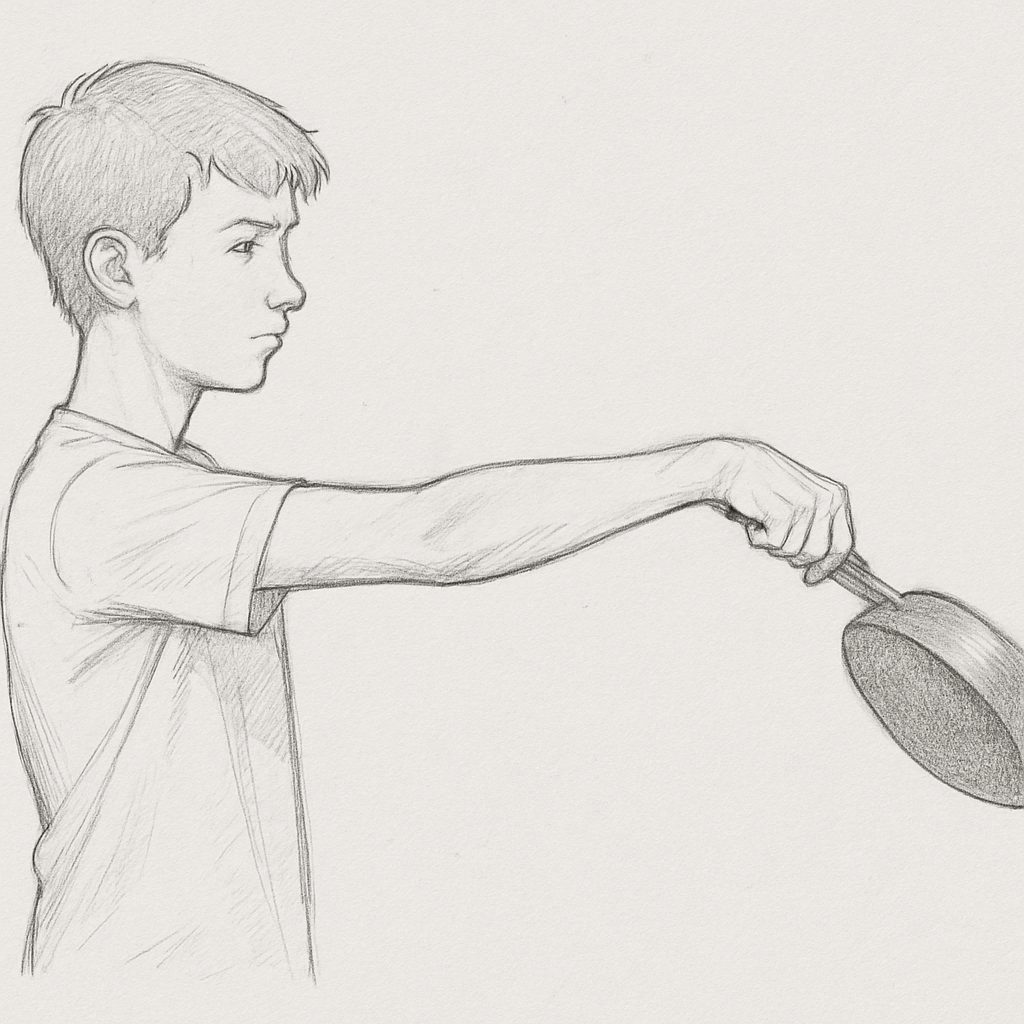
The Inverse — A reversed frying pan🍳 as an unconventional (additional) backhand

xwhf3fta.png


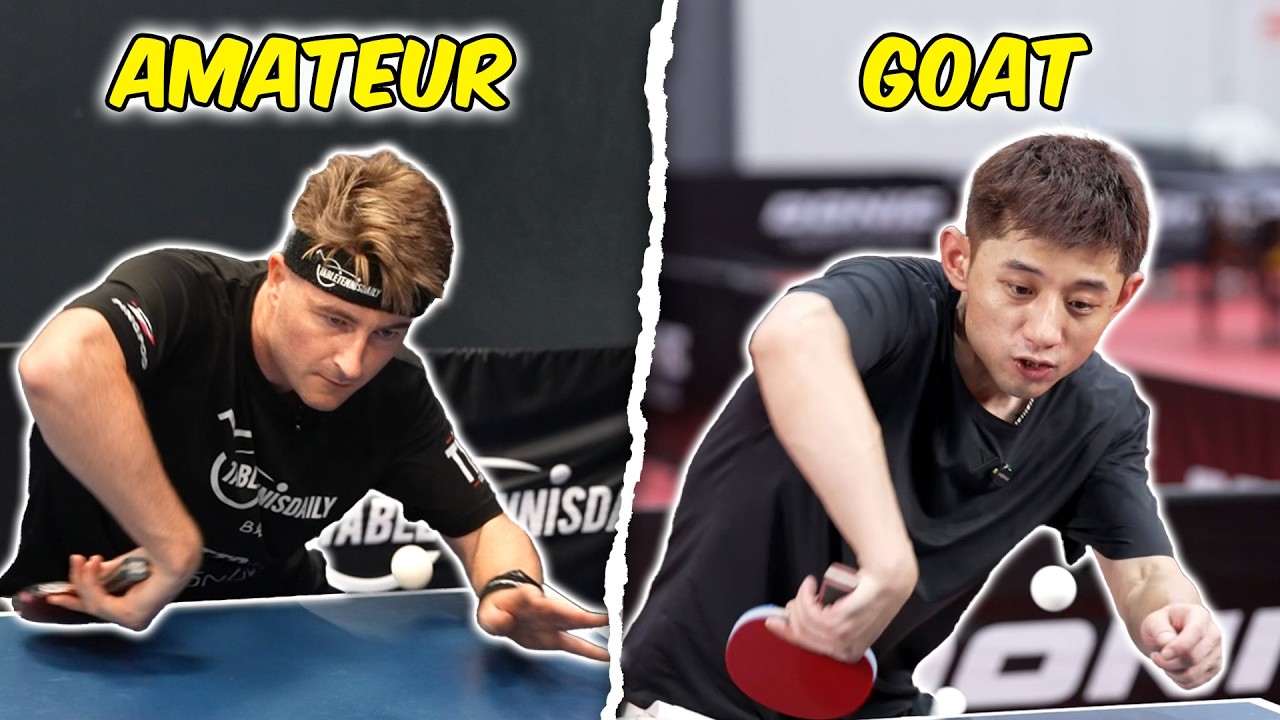
Erdas example. The video creator himself titled his opponent's backhand "the unconventional backhand", and after watching the full video, you'll know who is who: the bald player (Erdas, the so-called "BH expert") is the one with the unconventional backhand, which i find fun and highly effective. It's also not so uncommon in club and league play, if you look closely at certain players' BH techniques. Erdas demonstrates the basic form of the shot:

Here another video with Erdas, absolutely exemplary his execution of it:

Shaw example. Here is another example:love: of someone playing backhands based on this general "inverted" technique. The boy relies heavily on it for all kinds of situations:

Koch example. In this video, the man with the glasses plays an Inverse whenever he can. His looks rather tame, with little power or spin:

Degros example. The following player (black GEWO shirt, from 01:07 on) plays a superior quality bh, borderlining the inverted technique and switching between a regular, hard bh-loop and his Inverse:

On the German forum with a detailed critical discussion, there is one decent player who advocates the use of such a backhand as an alternative. 'Unorthodox', 'alternative', 'unconventional' are all fitting adjectives, agreed. Do you ever play your backhand like this, or have you seen anyone else play it like this? It's a versatile shot, since subtle variations of it can be employed in every rally of a match! 🥳

This way of stroking can be varied to allow the player to:
  • receive a serve ("an inverse receive", as seen in the Erdas)
  • pseudo-open up through a no-spin loop ("an inverse lupfer")
  • open up through looping ("an inverse loop" = a looped inverse, as seen in the Shaw)
  • counter (= flat hard drive) ("an inverse drive", as seen in the Erdas)
  • punch ("an inverse punch", as seen in #5)
  • block ("an inverse block", as seen in the Erdas)
  • pseudo-smash, as powerful as a punch but with a wider arm swing ("an inverse smash", as seen in the Koch)
As the racket head is pointing downwards in its starting position (i.e. held reversely), and it is a backhand shot (Spanish: el revés), and it is unorthodox/alternative/unconventional, the proposed artificial name for the shot be "The Revalt" (from el revés alternativo). However, a more imaginative catchier name would be "The Reversed (frying) Pan🍳" or simply "The Inverse⤵️":

A: (playing subtle variations 🥘)​
B: "hey buddy what funny kind of backhand is dat??"​
A: "that was my inverse! you ...erh... likey?"​
B: "?? 🤷‍♂️"​
A: "it's my alternative backhand, a reversed frying pan shot if you will. u got one too, no?"​
B: "no, but I'm intrigued. gonna buy me one soon, thx!"​

Anyway, this basic (if not textbook) stroke is an imho funtastique addition to the repertoire. And the most important addition to my repertoire. Super fun🤩 to practice with a returnboard, or a robot (against topspin, backspin, or no-spin), and eventually employ in matches.

What do you think? :unsure:
 
Last edited:
This user has no status.
Member
Aug 2022
225
339
580
Looks like a player who has used LP/anti and switched back to inverted. It's effective for his game. If he could wait until the last second and do a chiquita, it would really throw off his opponent.

He's halfway there to a Anders Lind/Simon Gauzy raise the elbow backhand sideswipe.
 
  • Like
Reactions: plunder
This user has no status.
🏆 Top 1% Commenter
Well-Known Member
Oct 2010
2,931
2,899
10,818
It's basically the Truls Moregardh fake (ie no spin) BH opening "loop", except applied everywhere lol. The guy could make it even better if he used more body and less arm.

I also use this extensively against LP/anti players, they cant do anything against it because it is floaty with no spin, there is nothing much to reverse and I can do this all day long until they give me a juicy opportunity.

If you mix it up with a real spinny opening loop the opponent will go crazy trying to adjust to your variations.
 
says rejoicing in rbpon 🆚 robipon
Member
Sep 2024
379
236
1,274
Read 2 reviews
He's halfway there to a Anders Lind/Simon Gauzy raise the elbow backhand sideswipe.
Agreed, a strawberry flick🍓 is very much related to the Inverse, especially if the strawberry is pronouncedly flicked and hadn't so much emphasis on sidespinning the ball. "Inverse" would be the general term, and certain strawberry flick executions (Anders Lind's bh slice would be a bit far-fetched imho) could be regarded as a special case.

strawberry flick =~ basically an inverse with special characteristics: executed over/near the table, at the fh side of the table, producing sidespin or no-spin, aimed at punchiness at advanced level.

This strawberry video shows essential shoulder/arm/wrist movements which are typical of most inverse shots:

Does the following qualify as a flicked strawberry? He calls it The Paintdealer lol. Anyway, it would qualify as an Inverse:

Since "Inverse" is a general term, for the inverse it doesn't matter when/where in space you hit the ball with your downwards-pointing racket, i.e. at the right side, left side, or in front, of your body. You just position your vertical forearm (or vertical racket) regardless. Personally, i prefer to execute all inverse shots in front of my body; i doht feel comfortable executing any strawberries, so in my mind i keep my Inverse variations separate from the explicit strawberry.
 
Last edited:
says rejoicing in rbpon 🆚 robipon
Member
Sep 2024
379
236
1,274
Read 2 reviews
Here is another
Koch example. In this video, the man with the glasses plays an Inverse whenever he can. His looks rather tame, with little power or spin:
Here is just another vid with Koch. With his bh, he either does a spinny harmless push, not putting his opponent under pressure, or an inverse block. Upon cerves to his bh, he sometimes answers with an inverse receive, nice:


In this match, he didn't get a chance to unleash his inverse smash. And i wonder if he possesses a (clear) inverse drive, and a (clear) inverse loop (or is fully aware of an inverse lupfer). Prolly he isn't really aware at all that all these variants exist — he simply knows from experience that most (actually all!) shots to his bh can be answered by holding his racket inverted (=playing an inverse) —, because one variant blends into the other. But to the writer, it's a very helpful concept to differentiate (at least in mind) between the variants, while they're all basically the same stroke/shot/technique: an inverse.

When technique-practicing a shot, it helps to have clarity in mind. Especially since one variant does blend into the other!

Koch could/should be more active or aggressive with his inverse: maybe by positioning himself half a step back and then, insteading of playing all those safe tame inverse blocks, playing a (clear) inverse drive, i.e. hitting the ball harder. And instead of playing bh pushes, throwing in an inverse lupfer (=no-spin) or an inverse loop (=spinny); either is harmless tbh but it's an okay method to open up the rally because it reduces the risk of playing an air shot (with a standard bh loop).
 
says rejoicing in rbpon 🆚 robipon
Member

Sep 2024
379
236
1,274
Read 2 reviews
Yes and yes.

"someone who is tall".
This technique is naturally favored by/favors tall players (or massive/big players, or with straight legs). And the execution of the stroke becomes/looks a bit awkward, if one stands very low, with bent spread legs, true. And also true, i wouldn't necessarily recommend the technique to veery short players. While i would recommend it to all other players, this thread is only to raise the readers/surfers' awareness about the existence of the shot, since no textbook no youtuber no trainer no etc ever discusses let alone teaches this principal technique, even though one can see soo many (amateur) player employ it ((and the technique often looks weird/inelegant, see Koch)). Nobody had taught them, they learned it by themselves, naturally. I am the one who recognized all that and then tried to copy it from them, practicing systematically its variants.

The inverse drive is, imho, actually the easiest way to finally have/possess/own a hard backhand shot, for those (beginners/amateurs/...) who possess a satisfactory bh loop but always struggled to counter hard from their bh wing ("hard" = one can hear the high-pitched sound off of the rubber/sponge sheet!). So, if a player cannot produce a hard bh shot or cannot counter hard on his bh wing, he should learn the inverse drive first ... because it is easier to learn than a hard standard/regular/conventional bh drive. The inverse drive is suitable for players of all sizes, shorter players simply need to raise their elbow higher than their shoulder.

Sometimes there is no clear advantage of using an inverse instead of its standard bh alternative (e.g. the inverse block vs a standard bh block), but sometimes the advantages are real and subtle, while at other times the advantages are clear (e.g. when playing against material players).

gpt knows quite something about The Inverse! (y)

"difficult to hit a spinning ball".
It is not difficult to produce a spinny ball (e.g. a topspinny drive, or a topspinny loop) with this stroke. The inverse loop is exactly aimed at producing more topspin amount than the incoming heavy underspin. A short upward flick motion at the time of rubber contact converts an inverse drive ("Ball satt treffen") to an inverse loop ("Ball ziehen").
It is difficult to apply an inverse block to an incoming slow spinny loop which lands shortish or which comes in at a high arc. Because then it becomes really awkward trying to close the inverted racked on the ball, yes YES! ((And that's the only instance where the inverse is the wrong choice of stroke, gotcha!)) — It is still fun 😆 trying to inverse-block such balls anyway haha.

While the Inverse is indeed a wide-spread stroke in table tennis (just open your eyes and witness around you, in gyms, clubs, tournaments, youtube clips), the technique does look off, i.e. non-textbook, non-standard, and hence we will never see it being taught by a certified trainer or in a textbook. But there's where i am saying: Do learn it in addition to your regular bh strokes!, because there is no harm in expanding one's stroke repertoire. And the inverse is not a niche stroke or a trick shot. To me, it's a basic stroke. And with its versatility it could replace all bh strokes (except for the bh push).
 
Top