



says
ok, I will go back and make sure you have access.
Be...
🏆 Top 1% Commenter
Well-Known Member
Well-Known Member


Hi!
Racket control is a 2 step validation process:
1. The umpre and the assistant umpre inspect the racket for visible defects and shininess. Then they send it to instrumental control. Players must hand over their racket 60-30 min before their match, or right after their match.
2. The instrumental control is carried out by an "expert". They only measure thickness and VOC (volatile organic component) contamination in the racket. If they smell something, they can do nothing, because there is no measurement available to prove that at this time.
(Such process exists, but cannot be applied without taking a sample from the right part of the racket.)
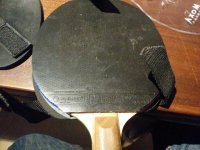
The procedure looks like this exactly:
I only have these info, because one of my friend is a racket controller. Once (1-2 years ago) he mentioned to a still world top 10 player, that his racket smelled funny. The player asked: "Does your nose have a licence?". The controller can do nothing, because it is only cheating if you can prove that with a validated measurement the rubber was modified.
Additional info:
Umpres and inspectors are not permitted to remove the edgetape from the racket, they have to ask the player to do so. The player can refuse.
If the rubber surface looks a bit different, the player can claim, that he uses custom made rubbers as many other players. It is known that players are given slightly modified rubbers from their sponsor factory, that suits them more.
Given that new rubbers like MX-P smell like booster from the factory, it is good that they have to use an instrument. I think ITTF should eliminate this stupid booster rule anyway (except for thickness, which they can readily measure). Bear in mind that ITTF only regulates topsheets, not sponge.