
What serve(s) would you rather not receive?

says ok, I will go back and make sure you have access. Be...
🏆 Top 1% Commenter
Well-Known Member
Nov 2010
3,550
5,928
10,356
Read 8 reviews
Agreed. The thing is, the spin on the serve doesn't need to be vastly different than it appears to be to get the receiver to mess up. It just has to be somewhat different than it appears to be. If you try to go for super heavy serves, like a ghost serve, it will probably be really obvious to the receiver about one quarter way through your motion that it is coming. The key is to be able to have some spin variation and placement/timing/trajectory variation from the exact same motion. But the only way to do that is to develop really good touch, ability to control things with just your fingers and wrists. That's why I really recommend my chopstick and string tool.
 
says ok, I will go back and make sure you have access. Be...
🏆 Top 1% Commenter
Well-Known Member
Nov 2010
3,550
5,928
10,356
Read 8 reviews
If you don't like when somebody flick at you, you do need a heavy backspin serve. Otherwise oneday you will play someone with a good flick, and it can be very frustrating if your opponent can attack your "safe" serve over and over.

Heavy spin is one way, it and it is definitely useful, but it is not the only way to stop that. Low is sometimes more important than heavy. I have learned to keep serves low enough that professional players cannot systematically flick them at me. (Of course these players are much better than I am, and they can drop the return equally low and short and then attack the next ball into a corner or into my body).
 
  • Like
Reactions: ttmonster
This user has no status.
🏆 Top 1% Commenter
Well-Known Member
Moderator
Oct 2014
19,979
26,543
70,909
Read 17 reviews
Yes, I have been targeting a small box on the table similar to the video and if I can get the ball to stay on/ stop on the table when attempting short chop serves then I feel that one is a success and try to duplicate the feel I had when I hit it.

This was Brett's first video on serves and is still one of my favorite. Takes you through the whole process of building a serve.


Combine it with this contact point video here:

 
This user has no status.
🏆 Top 1% Commenter
Well-Known Member
Moderator
Oct 2014
19,979
26,543
70,909
Read 17 reviews
Agreed. The thing is, the spin on the serve doesn't need to be vastly different than it appears to be to get the receiver to mess up. It just has to be somewhat different than it appears to be. If you try to go for super heavy serves, like a ghost serve, it will probably be really obvious to the receiver about one quarter way through your motion that it is coming. The key is to be able to have some spin variation and placement/timing/trajectory variation from the exact same motion. But the only way to do that is to develop really good touch, ability to control things with just your fingers and wrists. That's why I really recommend my chopstick and string tool.

You really mean a cheaper version of this:

 
  • Like
Reactions: UpSideDownCarl
This user has no status.
🏆 Top 1% Commenter
Well-Known Member
Moderator
Oct 2014
19,979
26,543
70,909
Read 17 reviews
Heavy spin is one way, it and it is definitely useful, but it is not the only way to stop that. Low is sometimes more important than heavy. I have learned to keep serves low enough that professional players cannot systematically flick them at me. (Of course these players are much better than I am, and they can drop the return equally low and short and then attack the next ball into a corner or into my body).

Low is far more important than heavy. I have found that the worst thing you can do is give a higher level player a line of sight angle into your side of the table. You just coughed up the point.
 
I'm coming back to table tennis after a long absence and having a good serve is something that helps to keep me in the games where I would not usually hold myself because my time is still a bit messed up.

There is not a single magic serve that will work so the first thing you have to have in mind is not how you will serve, but how you wish to receive the ball back. Two players will not send the ball back to you the same way against the same serve, so you have to find out what servers will work against such player in a way you will get back a ball that will favor your game.

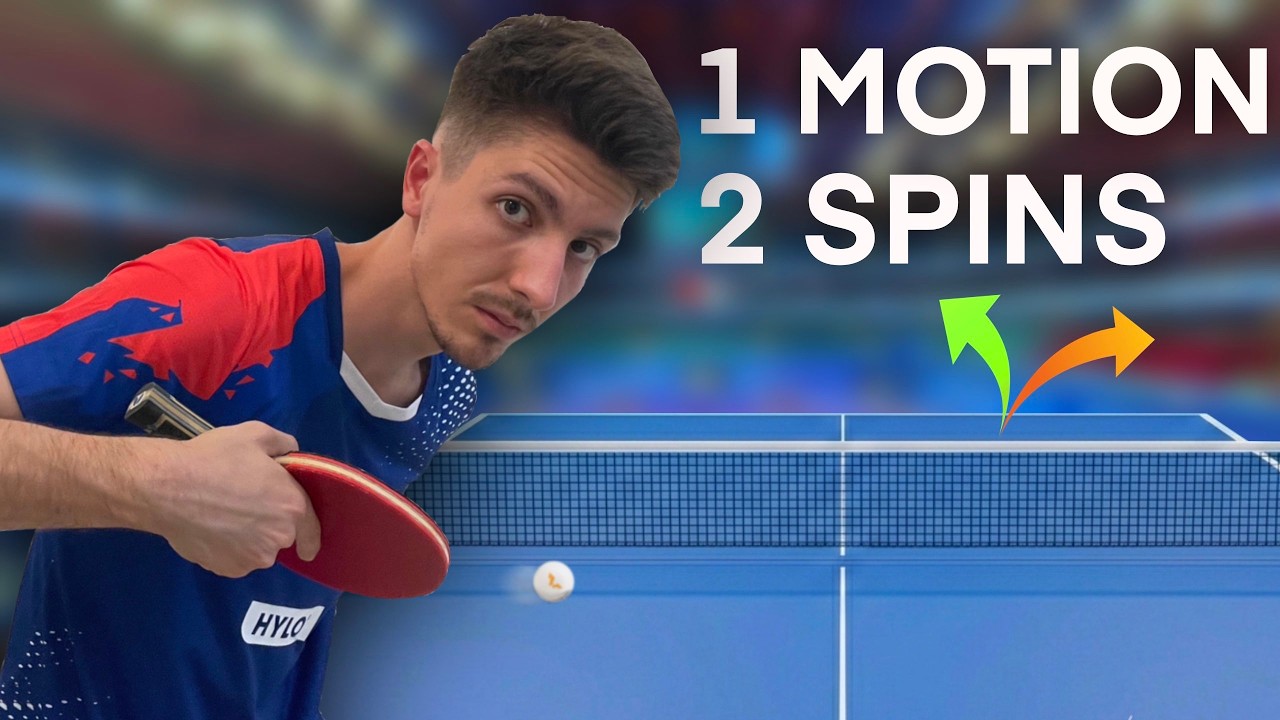
As told previously, it helps a lot if you can develop about two or three serves where your motion is the same, but your contact with the ball is not. Being able to put sidespin with topspin, backspin or sending a dead ball with the same motion will earn you some free points against lesser competition and some playable balls against better players than yourself.

One more thing, keeping the ball low is a must not an option. You can serve it deep, short, with lots of spin or without any spin and speed, but always keep it low.
 
Last edited:
  • Like
Reactions: NextLevel
says 2023 Certified Organ Donor
🏆 Top 1% Commenter
Well-Known Member
Sep 2011
13,493
14,299
32,463
Read 27 reviews
Ghost serve is about worthless at 1700-1800+ level. However, it is a great way to practice developing the impact to make it heavy when you want it.Control of impact and timing of the mechanics and part of the swing are key things to grow. All the variations and depths and lowness grow from there.
 
  • Like
Reactions: ttmonster
This user has no status.
Active Member
Jan 2016
570
999
1,871
I'm coming back to table tennis after a long absence and having a good serve is something that helps to keep me in the games where I would not usually hold myself because my time is still a bit messed up.

There is not a single magic serve that will work so the first thing you have to have in mind is not how you will serve, but how you wish to receive the ball back. Two players will not send the ball back to you the same way against the same serve, so you have to find out what servers will work against such player in a way you will get back a ball that will favor your game.

As told previously, it helps a lot if you can develop about two or three serves where your motion is the same, but your contact with the ball is not. Being able to put sidespin with topspin, backspin or sending a dead ball with the same motion will earn you some free points against lesser competition and some playable balls against better players than yourself.

One more thing, keeping the ball low is a must not an option. You can serve it deep, short, with lots of spin or without any spin and speed, but always keep it low.

If we go back to the thread's topic,

LOW and short is definitely on my hate list.

If the serve's bounce is lower than the net, it doesn't matter what spin it is, it is ridiculously hard to attack hard. This combined with side spin/topspin is something I'd rather not want to deal with.

Pushing gets tough too, since it is easy to push into the net. I normally push the serves off the bounce, using the ball's energy to lift itself over the net.
However, if the ball is too low in the first place, I'd have to adjust to a different angle to compensate. It might not be crazy difficult, but it is way more annoying than most other serves.

It gets even worse when there are different variations of the same motion for service, as mentioned.

In the end, it's something I'd rather not receive.
 
  • Like
Reactions: ttmonster
Top