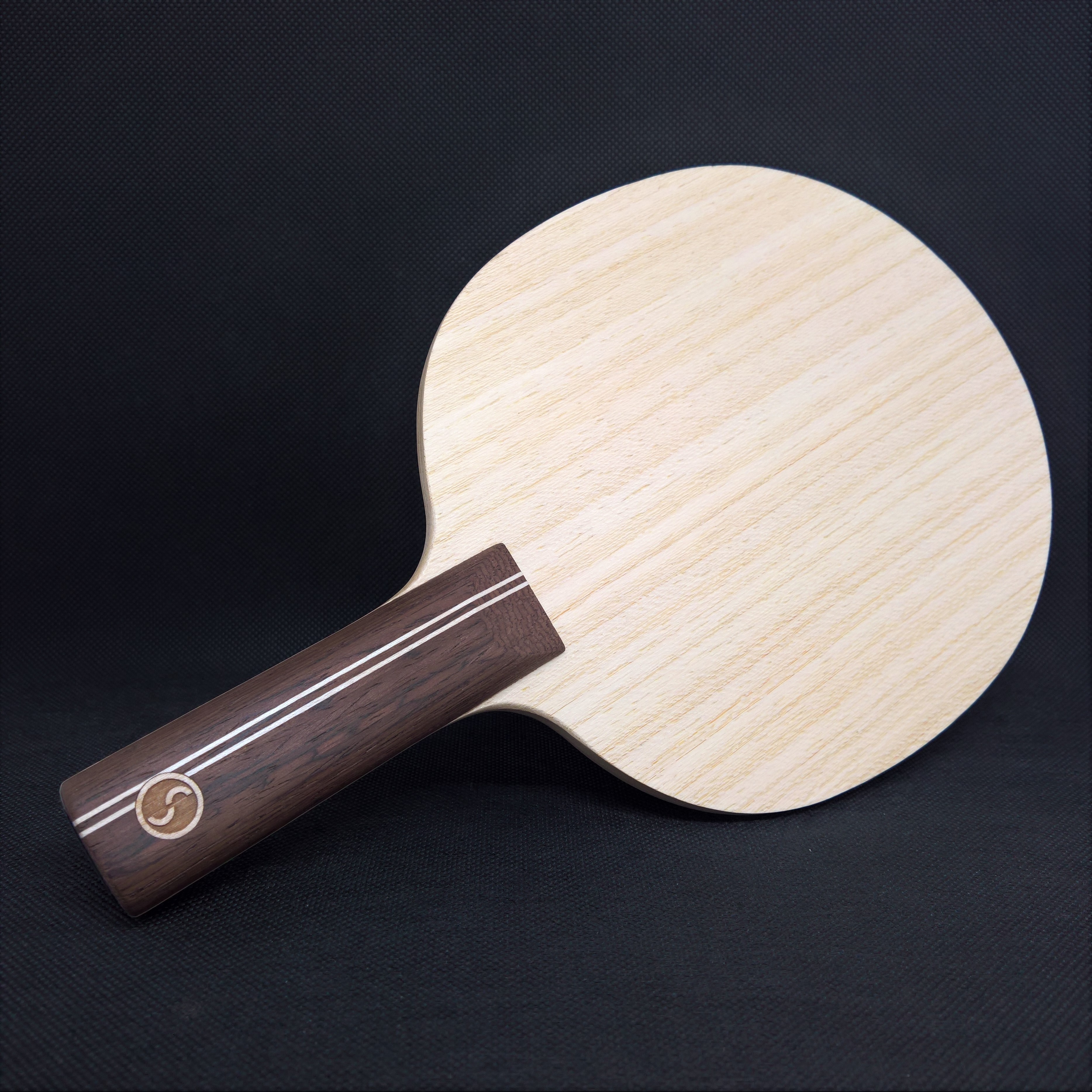
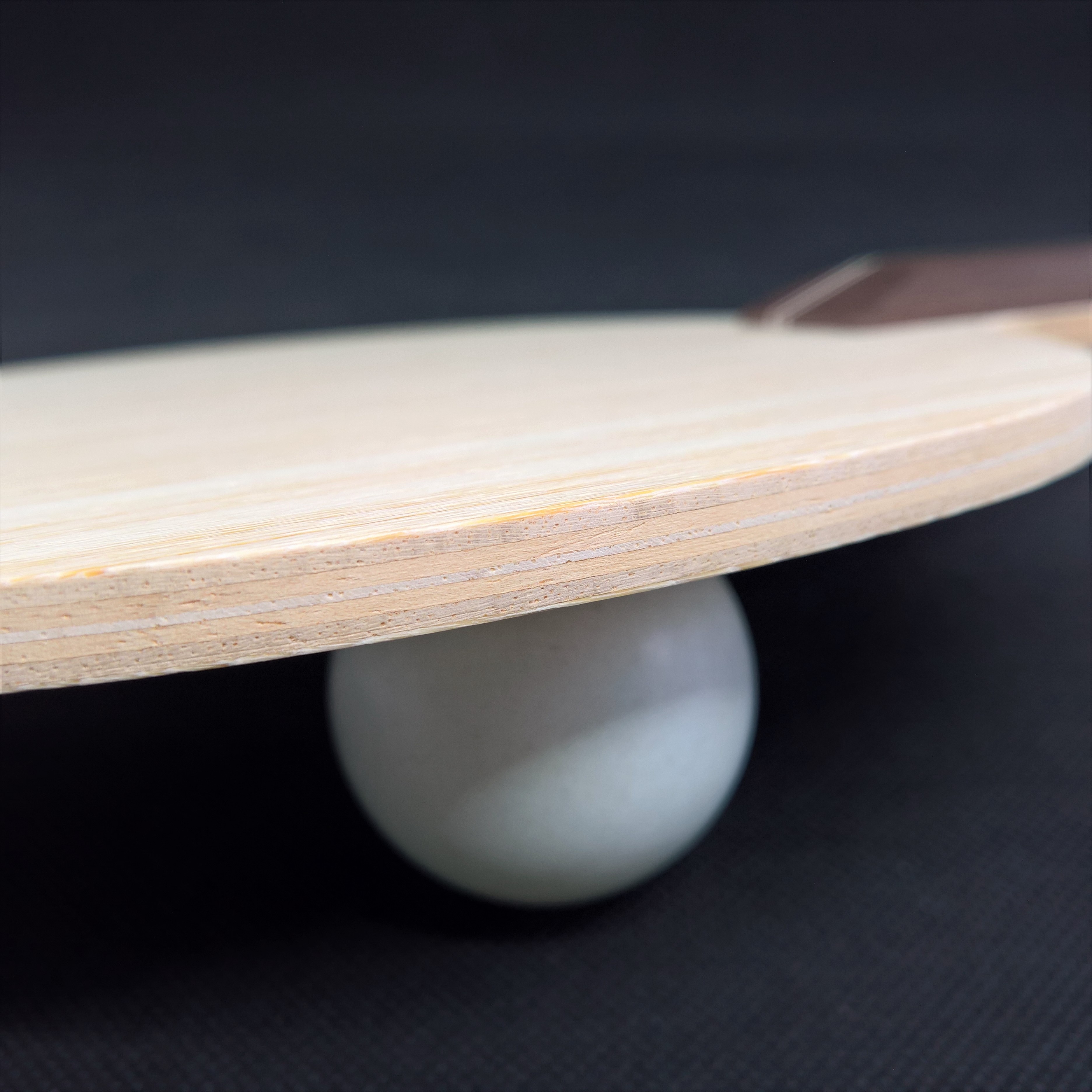
I was wondering: do you think making an "ultra-inner" blade by placing composite layers very deep and right next to the thin core, like adding ALC to the Stiga Clipper (so limba-ayous-ayous-ALC-ayous-ALC-ayous-ayous-limba with the same clipper veneer thicknesses (or maybe even a bit thinner core?)) would make any sense? Or maybe you have done such blade already?
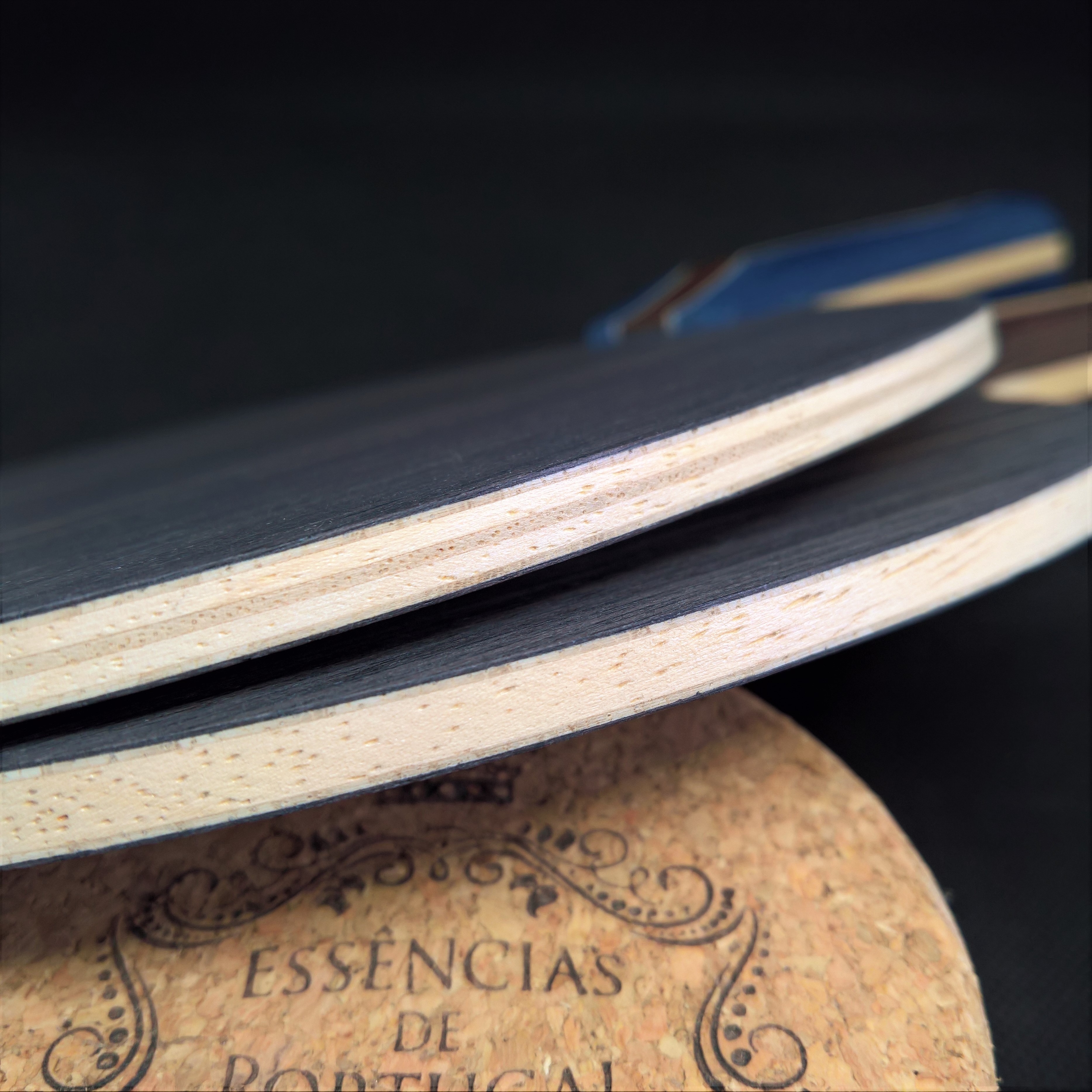
That can be done, although it would be hard to do it in a Clipper composition. Clipper is already a heavy composition, adding two ALC layers would make it almost unplayable. One blade that comes to mind that is close to that is the Donic Waldner Senso Ultra Carbon, but it uses soft carbon which is much lighter. The thing is, from an Engineering point of view that's a really inefficient way of using fibers. These fibers have much better mechanical properties than wood when compared to their own weight, but to fully exploit those properties, namely the increase in stiffness, you have to create some distance between them. By creating that distance you can increase stiffness without a big increase in weight, which is something not possible with wood, unless you go really thick. However, you must balance that with some softness, otherwise the blade can get too hard too quickly.
But...
A table tennis blade isn't designed only with mechanical properties in mind, in fact we are mainly concerned with how the blade will feel. These fibers also offer vibration dampening properties and stability (sweetspot) that wood doesn't, so where we place them is important to fine tune the feeling we want to achieve from a blade. Using fibers in the way you described would mostly aid with these aspects. I don't recall ever making a blade like that, but I made blades with a composite "core".