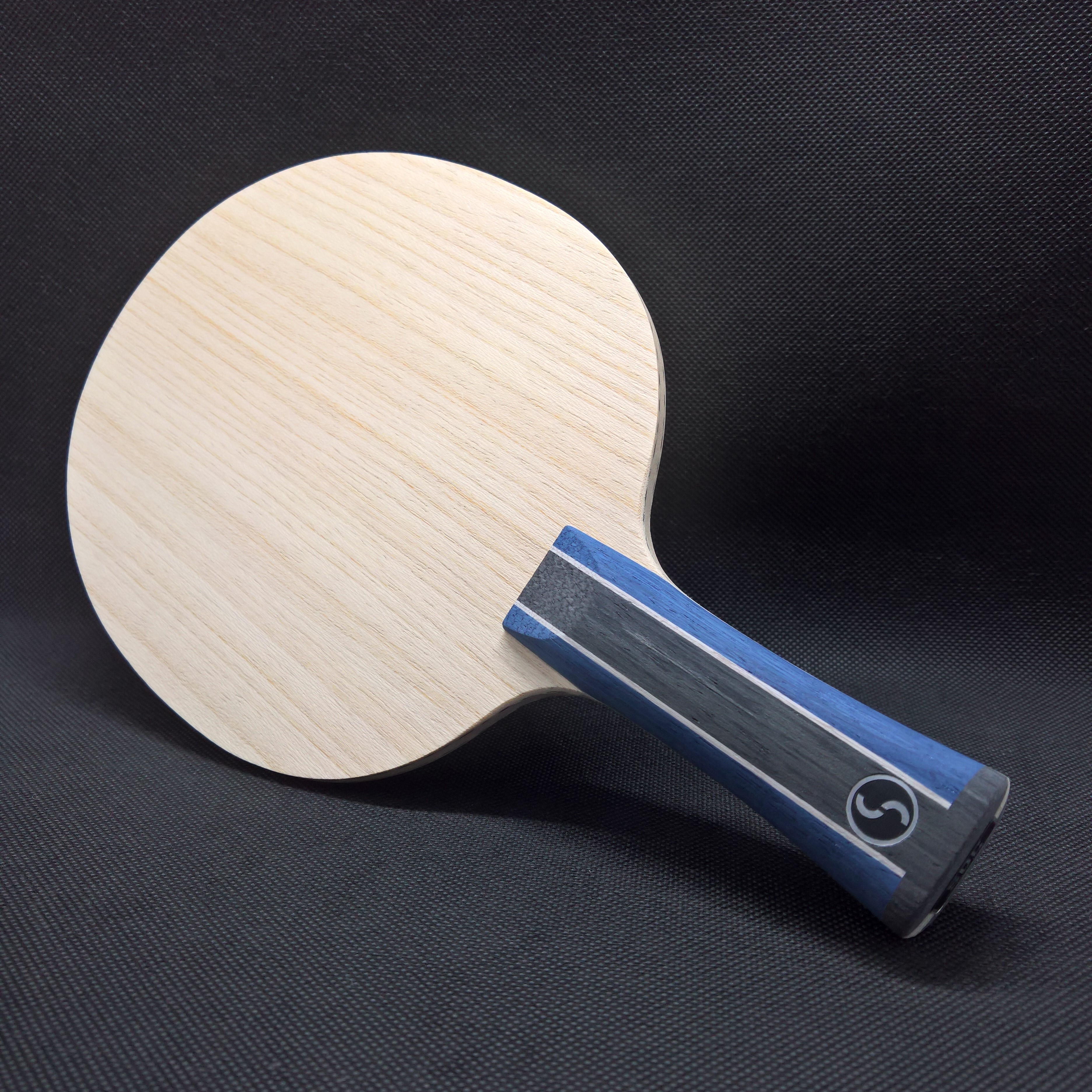
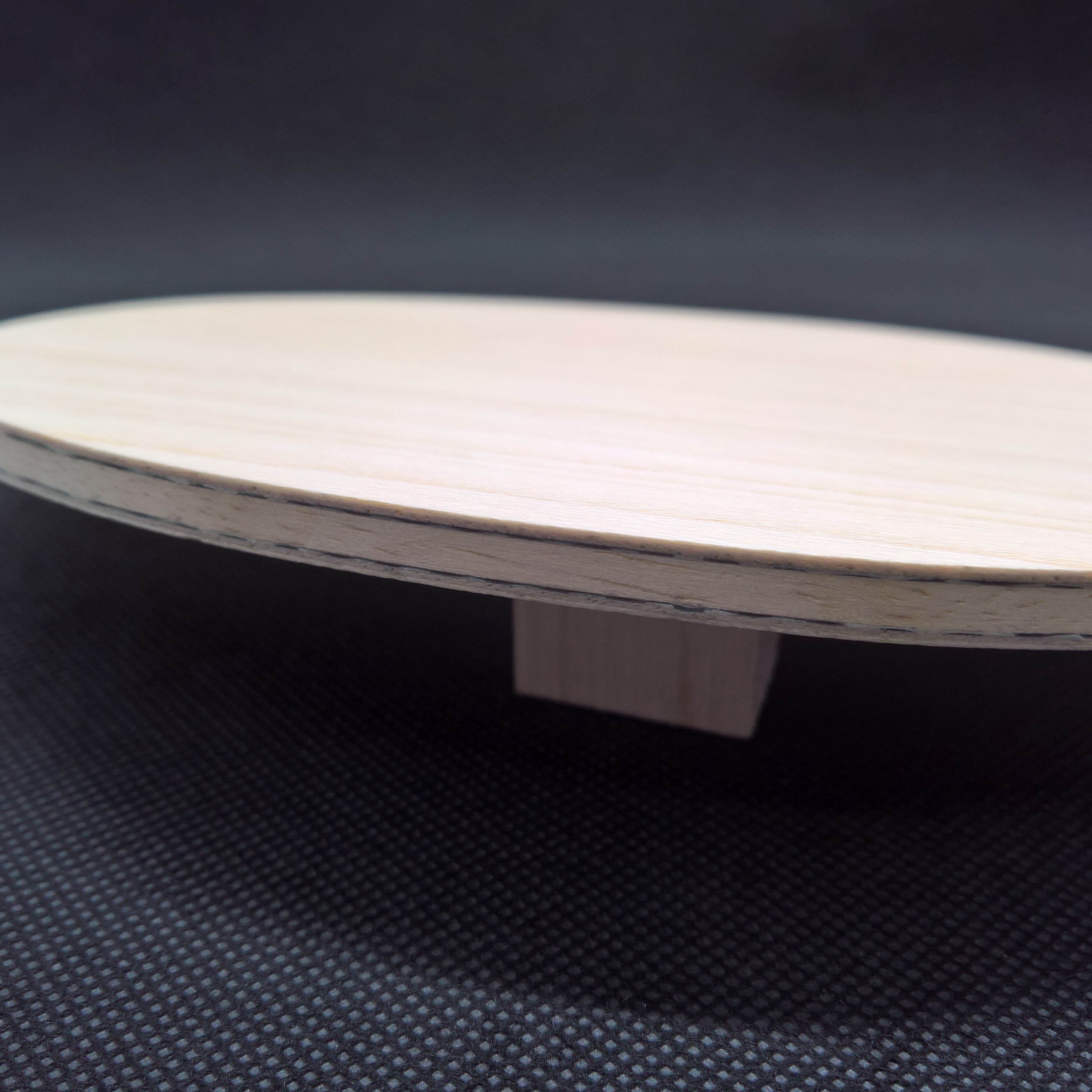
SDC Handmade Blades

What does this mean? The blade bends more easily, ......., and because there are virtually no vibrations, you do not relate the same way to it,

In the article you used these two contradictory statements in one paragraph. Vibration is essentially a rapid bending in both directions. Therefore, the blade cannot be flexible and have low vibrations at the same time. It can either be not very flexible and have low vibrations, or vice versa.
Thank you for the explanation.
I would also like to know if using a central carbon layer will help increase the stiffness of the blade.
 
  • Like
Reactions: latej

SDC

This user has no status.

SDC

This user has no status.
🏆 Top 1% Commenter
Well-Known Member
Dec 2011
1,789
3,532
5,922
In the article you used these two contradictory statements in one paragraph. Vibration is essentially a rapid bending in both directions. Therefore, the blade cannot be flexible and have low vibrations at the same time. It can either be not very flexible and have low vibrations, or vice versa.
You are correct that I contradicted myself, nice catch, I was too lazy to explain the whole thing correctly. However, your statement is also not fully correct, a blade can absolutely be flexible and have low vibrations because there are many types of vibrations.

In this case, by lowering the longitudinal rigidity of the blade, we've increased its ability to bend in that same direction, thus having a lower fundamental mode of vibration (bending mode).

1st mode.gif


This mode cannot be felt directly by the hand, the bending point is above the tip of the handle. However, we have also increased the lateral stiffness, thus increasing the lateral and torsional stability, which causes all the other vibrations modes that depend on these to factors to increase as well, namely the 6th mode (membrane mode).

6th mode.gif


This is one of the vibration modes primary felt by the hand, and it's the one we can measure on our phones. That's why the frequency reading is still high. We cannot measure the 1st mode without specialized equipment, if we could, we would see that is lower than usual for an outer fiber blade. It's precisely this 1st/6th mode relation that makes this blade feel different than usual.

I would also like to know if using a central carbon layer will help increase the stiffness of the blade.
A central carbon layer has minimal impact on the stiffness of a blade because it's positioned on the neutral axis (considering that the structure is symmetrical).

Chat gpt can help here: "The neutral axis is an imaginary line within a beam's cross-section where longitudinal stresses and strains are zero during bending. It divides the beam's cross-section into a compression zone on one side and a tension zone on the other. The position of the neutral axis depends on the beam's geometry, material properties, and the direction of the applied loads, and it often coincides with the centroidal axis for symmetrical sections under pure bending."

If you want to maximize stiffness, you need to increase the distance to the neutral axis. That's why outer fiber blades are usually stiffer than inner fiber blades, the distance to the neutral axis is higher.

 
This user has no status.
Active Member
Mar 2014
512
330
1,098
Read 3 reviews
You are correct that I contradicted myself, nice catch, I was too lazy to explain the whole thing correctly. However, your statement is also not fully correct, a blade can absolutely be flexible and have low vibrations because there are many types of vibrations.

In this case, by lowering the longitudinal rigidity of the blade, we've increased its ability to bend in that same direction, thus having a lower fundamental mode of vibration (bending mode).

View attachment 37957

This mode cannot be felt directly by the hand, the bending point is above the tip of the handle. However, we have also increased the lateral stiffness, thus increasing the lateral and torsional stability, which causes all the other vibrations modes that depend on these to factors to increase as well, namely the 6th mode (membrane mode).

View attachment 37958

This is one of the vibration modes primary felt by the hand, and it's the one we can measure on our phones. That's why the frequency reading is still high. We cannot measure the 1st mode without specialized equipment, if we could, we would see that is lower than usual for an outer fiber blade. It's precisely this 1st/6th mode relation that makes this blade feel different than usual.


A central carbon layer has minimal impact on the stiffness of a blade because it's positioned on the neutral axis (considering that the structure is symmetrical).

Chat gpt can help here: "The neutral axis is an imaginary line within a beam's cross-section where longitudinal stresses and strains are zero during bending. It divides the beam's cross-section into a compression zone on one side and a tension zone on the other. The position of the neutral axis depends on the beam's geometry, material properties, and the direction of the applied loads, and it often coincides with the centroidal axis for symmetrical sections under pure bending."

If you want to maximize stiffness, you need to increase the distance to the neutral axis. That's why outer fiber blades are usually stiffer than inner fiber blades, the distance to the neutral axis is higher.

Really interesting!

What would the difference be in feel and playing characteristics between a 151x159 blade and a 152x158 blade?
?
 

SDC

This user has no status.

SDC

This user has no status.
🏆 Top 1% Commenter
Well-Known Member
Dec 2011
1,789
3,532
5,922
Really interesting!

What would the difference be in feel and playing characteristics between a 151x159 blade and a 152x158 blade?
?
None. Or should I say, too small to be perceived. That's a 1mm difference on top of the blade and 0.5mm on each side, sometimes even normal manufacturing gives you this sort of difference. For example, many Butterfly blades (especially older models), are stated as 150x157mm in the catalog, but in reality theiy are a fraction smaller.

 

SDC

This user has no status.

SDC

This user has no status.
🏆 Top 1% Commenter
Well-Known Member
Dec 2011
1,789
3,532
5,922
#1256 - Inner AC - OFF

A loyal customer asked me to replicate a King Acb. This was my first time building one and I never actually tried it (it's impossible for me to try all blades in existence 😅). Being a DHS blade, I built it like I would a W968, but with different structure of course. I will bring to light the discussion with the other blade maker again, because this time he said something and was absolutely right, the importance of the gluing of the fiber. In this regard we are in accordance, I always stated the importance of the lamination process and how two blades, despite having the same structure, can play/feel so different, if we just change the lamination process. How the fiber is laminated is almost as important as the fiber itself, and every brand, or even models within a brand, have their own "recipes", as was proven in this case.

Turns out, there is such a thing as "too fast". This specific lamination process made the blade more flexible and with a W968 like kick on harder shots, that is not present on the original model, making it harder to control on the higher gear. Some people just don't like this sort of feature and prefer predictability from the blade, but if you like the crisper feeling of Koto and want something that goes from tamed at the table to all out beast far from it, then this one is for you.

- Koto / Ayous / A-C / Ayous core
- 87.0g
- 5.9mm
- 159x150mm
- FL (100x25.0-22.6mm)
- Balance: 3.1cm (Med)

1256-1.jpg


1256-2.jpg


1256-3.jpg
 
Hello, I would like to discuss one more thing. Which of the following synthetic materials in a five-layer construction will create the greatest stiffness?

Glass-fiber, Diolen-fiber, Diolen-carbon, Aramid-fiber, Spectra, Innegra-carbon

Which of these materials also results in the lowest increase in speed?
 
Last edited:

SDC

This user has no status.

SDC

This user has no status.
🏆 Top 1% Commenter
Well-Known Member
Dec 2011
1,789
3,532
5,922
Hello, I would like to discuss one more thing. Which of the following synthetic materials in a five-layer construction will create the greatest stiffness?

Glass-fiber, Diolen-fiber, Diolen-carbon, Aramid-fiber, Spectra, Innegra-carbon

Which of these materials also results in the lowest increase in speed?
If all of them have the same density, and lamination conditions are the same, it will come down to the weave pattern, so I will speak about what I use. Diolen-Carbon would be the stiffest, followed by IC, and plain Diolen would probably be the slowest.

I will add the titanium mesh under surface of Dr Neubauer Gladiator. Stiff, slow and light without balsa or kiri. Some magical glue to fill the gaps and hold the mesh, probably is playng significant role.
The Gladiator has a edge band, so I cannot see the composition, but for the catalog weight they state I truly doubt it doesn't have Balsa. I also truly doubt it's a titanium mesh, these titanium or aluminium fabrics used in TT blades, are normally just coated glass-fiber.
 
  • Like
Reactions: tzifos
This user has no status.
Member
Jun 2025
196
203
583
If all of them have the same density, and lamination conditions are the same, it will come down to the weave pattern, so I will speak about what I use. Diolen-Carbon would be the stiffest, followed by IC, and plain Diolen would probably be the slowest.


The Gladiator has a edge band, so I cannot see the composition, but for the catalog weight they state I truly doubt it doesn't have Balsa. I also truly doubt it's a titanium mesh, these titanium or aluminium fabrics used in TT blades, are normally just coated glass-fiber.
I have the blade and investigate the composition by removing the bottom wood cover. The mesh is dense and shines like titanium. It can be titanium alloy, but is some metal for sure. Here I share pictures:

 
  • Like
Reactions: Egon
This user has no status.
Active Member
Nov 2017
568
855
1,956
I have the blade and investigate the composition by removing the bottom wood cover. The mesh is dense and shines like titanium. It can be titanium alloy, but is some metal for sure. Here I share pictures:

One would probably have to "dismantle" the blade and remove the top ply in order to determine what it actually is. Could just as well be some "metal" spray or liquid coating. In fact, the whole blade looks kinda exotic, starting with the Yaya top ply and the odd wings. That being said, I really do wish that Sergio would use Yaya wood.
 

SDC

This user has no status.

SDC

This user has no status.
🏆 Top 1% Commenter
Well-Known Member
Dec 2011
1,789
3,532
5,922
I have the blade and investigate the composition by removing the bottom wood cover. The mesh is dense and shines like titanium. It can be titanium alloy, but is some metal for sure. Here I share pictures:

OK, you are right, the core is Ayous at least, but at that weight, something fishy is going on. The laws of physics still apply, and I know those handles weigh next to nothing but still, with an Ayous core, Lati top ply (or white wenge) which is pretty heavy as well, it's already a heavy composition, not even considering the composite layer. The medial may be, and probably is (hard to know without seeing the end grain) , Balsa or something light, but I'm still on the fence about the Titanium. Titanium mesh exists, and titanium is pretty light as far as metals go, but it's still heavy to be used in a blade, it's heavier than carbon for example. Then we have the workability aspect, unless they have figured out another way, the titanium or other metals would eat trough their tools in no time.

One would probably have to "dismantle" the blade and remove the top ply in order to determine what it actually is. Could just as well be some "metal" spray or liquid coating. In fact, the whole blade looks kinda exotic, starting with the Yaya top ply and the odd wings. That being said, I really do wish that Sergio would use Yaya wood.
I never used on the composition but I can get it. I have used it on handles. Lati is terrible to work with because it's very brittle, it splinters a lot.
 
Last edited:
This user has no status.
Active Member
Nov 2017
568
855
1,956
...
I never used on the composition but I can get it. I have used it on handles. Lati is terrible to work with because it's very brittle, it splinters a lot.
May I ask a few questions?
Say, a customer wants a replica of the Nexy Arche, which has one outer ply of Yaya/Lati; would you actually buy some Lati (in bulk) just for one ply, for one customer?
Also, the Arche has a heat treated core of Kiri. If the said customer asks you to put a ply of Kiri in the oven for a while, just to get as near as possible to the feel of the Arche, would you do it (FYI: The customer would of course pay for the damaged/unusable ply, if it doesn't work out...)?
And last, but not least: Do you plan to update your list of fibers on your website? It hasn't been updated for a while, it seems. Some time ago you mentioned that you have received new fiber-material.
 
If all of them have the same density, and lamination conditions are the same, it will come down to the weave pattern, so I will speak about what I use. Diolen-Carbon would be the stiffest, followed by IC, and plain Diolen would probably be the slowest.
And where would you please rank Aramid without carbon and Spectra? In terms of stiffness and speed.
 
This user has no status.
Member
Jun 2025
196
203
583
OK, you are right, the core is Ayous at least, but at that weight, something fishy is going on. The laws of physics still apply, and I know those handles weigh next to nothing but still, with an Ayous core, Lati top ply (or white wenge) which is pretty heavy as well, it's already a heavy composition, not even considering the composite layer. The medial may be, and probably is (hard to know without seeing the end grain) , Balsa or something light, but I'm still on the fence about the Titanium. Titanium mesh exists, and titanium is pretty light as far as metals go, but it's still heavy to be used in a blade, it's heavier than carbon for example. Then we have the workability aspect, unless they have figured out another way, the titanium or other metals would eat trough their tools in no time.


I never used on the composition but I can get it. I have used it on handles. Lati is terrible to work with because it's very brittle, it splinters a lot.
Science needs sacrifice — I uncovered a small section of the upper part of the blade and the composition is similar as in the handle. Titanium mesh, hard and difficult to dent, ayous wood in the core and probably for inner layers.

I will make a very rough estimation of the questionable low weight of Gladiotor. Yinhe J1 is 1ply pure ayous blade 10mm thick at 100g. Let's assume handle cover plates are 8g and the overall surface is similar. The combined thickness of Gladiator's inner and core layers is 4mm. So, 100g - 8g = 92g at 10mm thickness, or 36.8g at 4mm. The total Gladiator's weight is 73.6g, minus the handle cover plates = 65.6g, minus ayous inner layers and core = 28.8g. Now the question is whether 28.8g is enough for 2 layers of hard wood at 0.5/0.6mm, 2 layers of titanium mesh 0.1/0.2mm and 4 layers of glue? Think yes.
 

Attachments

  • Screenshot_20250916_222908_Gmail.jpg
    Screenshot_20250916_222908_Gmail.jpg
    310 KB · Views: 99
Last edited:
  • Like
Reactions: Egon

SDC

This user has no status.

SDC

This user has no status.
🏆 Top 1% Commenter
Well-Known Member
Dec 2011
1,789
3,532
5,922
May I ask a few questions?
Say, a customer wants a replica of the Nexy Arche, which has one outer ply of Yaya/Lati; would you actually buy some Lati (in bulk) just for one ply, for one customer?
Also, the Arche has a heat treated core of Kiri. If the said customer asks you to put a ply of Kiri in the oven for a while, just to get as near as possible to the feel of the Arche, would you do it (FYI: The customer would of course pay for the damaged/unusable ply, if it doesn't work out...)?
And last, but not least: Do you plan to update your list of fibers on your website? It hasn't been updated for a while, it seems. Some time ago you mentioned that you have received new fiber-material.
Some woods I don't use a lot, so I don't keep them in stock, but if a customer asks for it and I'm able to get it, I will. I will not buy in bulk (unless some good opportunity appears), so it might take some time if I have to order from a specific supplier and I have to gather more stuff to make the order financially effective.

I never experimented much with heat treated wood, not because of the "dangers", but simply because I'm not very curious about it. Heat treated wood has more dimensional stability (which is not even a great problem with Kiri to begin with), and a lower moisture content (which is not specifically a good thing). Sure, it might feel a little different, not saying it doesn't, but it also loses strength in the process and I saw plenty of broken blades with head treated cores. Still, I did not give it a fair chance to be honest...

I plan to do many things! 😅 The problem is having the time to do them...
 

SDC

This user has no status.

SDC

This user has no status.
🏆 Top 1% Commenter
Well-Known Member
Dec 2011
1,789
3,532
5,922
And where would you please rank Aramid without carbon and Spectra? In terms of stiffness and speed.
Are you asking about the fibers in a general way or about the ones I use? Either way, it's not an easy answer because the difference sometimes are just nuances. I work with more than one density of glass, aramid and spectra, but Spectra is a lot lighter than Aramid so for the same density fabric for example, is fairly thicker as well. This means that, even if the fiber is not stiffer, it indirectly adds more stiffness to the blade because it creates more thickness.
 
  • Like
Reactions: Tony's Table Tennis

SDC

This user has no status.

SDC

This user has no status.
🏆 Top 1% Commenter
Well-Known Member
Dec 2011
1,789
3,532
5,922
Science needs sacrifice — I uncovered a small section of the upper part of the blade and the composition is similar as in the handle. Titanium mesh, hard and difficult to dent, ayous wood in the core and probably for inner layers.

I will make a very rough estimation of the questionable low weight of Gladiotor. Yinhe J1 is 1ply pure ayous blade 10mm thick at 100g. Let's assume handle cover plates are 8g and the overall surface is similar. The combined thickness of Gladiator's inner and core layers is 4mm. So, 100g - 8g = 92g at 10mm thickness, or 36.8g at 4mm. The total Gladiator's weight is 73.6g, minus the handle cover plates = 65.6g, minus ayous inner layers and core = 28.8g. Now the question is whether 28.8g is enough for 2 layers of hard wood at 0.5/0.6mm, 2 layers of titanium mesh 0.1/0.2mm and 4 layers of glue? Think yes.
It's not.

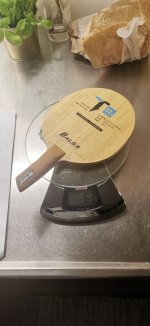
I have a spreadsheet to estimate the weight of a blade, based on the average values of wood density. For example, for a composition with Ayous core and medial, assuming carbon instead of whatever they put in there, and a standard head size, we have an estimated weight of 72g.

1.jpg


This is almost the full weight of the blade, not even considering the handles.

Now that I look at the photos more closely, my initial guess might have been wrong. The core has the same grain structure as the handle, and the handle is definitely Balsa, so the core must be Balsa too. Probably high density Balsa, but still a lot lighter than Ayous, that's the only way this makes sense.
 
  • Like
Reactions: belllfador
This user has no status.
Member
Jun 2025
196
203
583
Thanks for clarification and shared info.

I never touch high density balsa, but I have a blade with balsa core and a blade with kiri - both of them are mushy and easy to dent when applying some pressure with a tool. The wood in Gladiator is harder and more yellowish. I don't know the range of properties for the mentioned woods and will trust the experience of @hipnotic. Every wood is growing differently, every part of the tree is a bit different. I am just scared of mushy woods :D
 
  • Like
Reactions: SDC
This user has no status.
🏆 Top 1% Commenter
Well-Known Member
Mar 2023
1,090
1,060
7,515
Thanks for clarification and shared info.

I never touch high density balsa, but I have a blade with balsa core and a blade with kiri - both of them are mushy and easy to dent when applying some pressure with a tool. The wood in Gladiator is harder and more yellowish. I don't know the range of properties for the mentioned woods and will trust the experience of @hipnotic. Every wood is growing differently, every part of the tree is a bit different. I am just scared of mushy woods :D
Young paulownia wood is much lighter than older wood. It's similar in weight to balsa, but doesn't dent as easily as balsa.
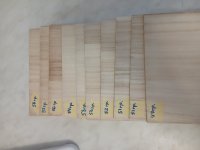
Here's an example of kiri blade core blanks of the same size and thickness. The weight varies dramatically from 47 to 58 grams per blank!
Perhaps the manufacturer used young ayus wood with low density or young kiri, although from the photo it looks more like ayus.
 

Attachments

  • 20250823_193802.jpg
    20250823_193802.jpg
    2.2 MB · Views: 92
Top