
SDC Handmade Blades

This user has no status.
Member
Jun 2025
196
203
583
This is where a simulation would be very useful, because you could solve for some material properties by changing parameters to correlate the model to empirical measurements. Even amateurs could develop some okay understanding that way without spending millions on testing.

The real problem is creating test situations, I suppose. I would guess it's very difficult to produce repeatable inputs without some super complicated rig unless you're doing things which aren't dimensional enough. Just because you correlated the bounce path doesn't mean it's at all similar when angled, or when the bat face accelerates, and so on.
How long will it take to "tune" such simulation to be accurate enough? We have anisotropic properties (different in X Y Z). As not a mechanical engineer, I will mention only hardness, elasticity and damping. And these properties are probably non-linear in the range of deformation. But let's add carbon type, glue type and heat treatment. Also, wood has huge tolerance in properties, we need to cover that. Someone will say that "simulation of the blade without rubbers will not be accurate." So let's add rubbers... This simulation sounds like a very expensive task. Who will do it?
 
  • Like
Reactions: Wakkibatty
says what [IMG]
says what [IMG]
🏆 Top 1% Commenter
Well-Known Member
Feb 2016
2,470
1,520
5,098
Read 2 reviews
How long will it take to "tune" such simulation to be accurate enough? We have anisotropic properties (different in X Y Z). As not a mechanical engineer, I will mention only hardness, elasticity and damping. And these properties are probably non-linear in the range of deformation. But let's add carbon type, glue type and heat treatment. Also, wood has huge tolerance in properties, we need to cover that. Someone will say that "simulation of the blade without rubbers will not be accurate." So let's add rubbers... This simulation sounds like a very expensive task. Who will do it?
I feel like it'd be "easy" compared to simulating some other things, but making testing rigs is difficult, and it won't be free. There's almost no framework for it, so you'd need to do a lot of the work yourself. Probably also we will find out what we already know. :)

I think correlation would be fairly easy once a rig is made, though. It's mostly a mechanical problem and you can represent a lot of it empirically and just skip the material stuff apart from maybe a spreadsheet to tune some empirical coefficients based on identified material properties. I've done as much in much more difficult mechanisms and the worst error I've ran into is about 30%. This is with viscoelastic springs that have thermal sensitivity. Maybe I'm naive, but I feel like wood alone would be simpler.

The rubber topsheet behavior would probably take multiple times the amount of time and money it'd take to solve the behavior of the blade and sponge. The mechanical properties will be relatively easy, but in reality I suspect there is a lot of flash heating and the temperature of the topsheet contact patch layer and probably also the surrounding carcass layer matters a lot.

Fundamentally all it'd do is change the effective mu and maybe the force normal, but figuring out the relationship seems difficult. It's probably easiest to actually just program a physical model for the heating behavior and use it to correlate measured ball trajectories, bat head forces and thermal imaging measurements of the contact patch temperature.

Some day I may try to just do this for fun, but I wouldn't expect it in the next decade to be honest.

 
I didn't hesitate and bought it to try it out..I liked it at first glance after looking at the photos and reading the description/characteristics. Size, weight, description - this is my style.

Special thanks to the seller for helping to resolve the purchase issues so promptly. I can't wait to have it in my collection.

You can write a review of how your blade plays?
 

SDC

This user has no status.

SDC

This user has no status.
🏆 Top 1% Commenter
Well-Known Member
Dec 2011
1,789
3,532
5,922
Again, what a beauty!
Do you have any tips/recommended methods for maintaining the white on a handle such as this ^
Unless you seal it, there isn't much you can do to be honest. You can try to remove some grime with a pencil eraser from time to time, but that's about it.

ok, this time I need to ask few questions, although still waiting for that inner Dyneema...
unless someone already bought it then:

1. How much g would the vis/w968 lose if it was slightly shaved to 158-159x151 ? (so still lightly oversized but not that much).
2. How much would the balance change ? (And how does it compare to vis and w968 ?)
Yeah, it's gone, but I will reply anyway.

It wouldn't lose much mass, maybe about 1g. It's not even 1mm all around, it's just the top of the head, so the impact is really small. It affects the balance a little, since it's the furthest point from the CG, but it's such a little weight that it wouldn't do much. Maybe it would decrease to about 2.9cm. Usually the W968 is more head heavy, with a balance higher than 3.2cm, but I had to keep the mass of the composition in check, because I intended to make a heavier handle. Vis usually has a balance of 2.7cm, or lower, depending on the overall mass, so the balance of this blade was between the two as well.
 

SDC

This user has no status.

SDC

This user has no status.
🏆 Top 1% Commenter
Well-Known Member
Dec 2011
1,789
3,532
5,922
The original Revoldia has a total thickness of 5.7mm, you used a larger thickness of 5.9mm. For what reason? How do you think that affected the properties of the blade? And how do you think that using Dyneema and not CNF affected the properties of the blade?
I did not set out to make a copy of the Revoldia, I just wanted to use this new fabric I got my hands on, and I wanted to do it in a composition I knew well, Koto outer. It just turned out to be similar to that particular blade.
 
  • Like
Reactions: sebi

SDC

This user has no status.

SDC

This user has no status.
🏆 Top 1% Commenter
Well-Known Member
Dec 2011
1,789
3,532
5,922
Instead of only the natural frequency, wouldn't it be useful to also produce deflection stiffness amounts at the handle middle and tip? With the handle fixed and the head being deflected in shear. That will probably give a more true idea of the spring properties of the blade.
Nobody (almost nobody) is measuring the natural frequency, we measure the 6th mode (membrane mode, or out-of-plane deformation), it's the only one we can measure directly with a microphone. This mode depends on the longitudinal stiffness of the blade, but also the transversal stiffness, and that's what people don't understand. Effectively, it's more an indicator of the sweetspot and feel of a blade, than speed. Even then, it's only useful if used appropriately, when the compositions are similar. You can manipulate this mode just by changing the density of the medial layer, so a blade can have a higher frequency without being stiffer, but it will feel harder.

To measure the natural frequency (1st mode, pure bending) you need a setup like the one you mentioned, and specialized equipment. That mode directly correlates to the stiffness of the blade, and it would be a much better indicator. Frankly I don't do it because, because as @Wakkibatty already pointed out, there are just too many challenges for something that isn't really worth it. I also don't have the time, I prefer to use it to actually build blades. However, someone is in fact doing this, TT gear lab. That's how he gets his performance indices, by measuring the vibration modes (1st and 6th) and comparing them to a reference blade. He transforms the readings into indices because it's a language that the public can understand much better. However, the method has a basic "flaw", the first blade he measured was a All around classic, and all the blades he measured after, are compared to that one specimen. If he happened to measure another specimen, for example a heavier one, or even a different model, all the indices up to now would be different. For this method to be truly reliable, he would have to measure multiple blades of the same model, but that's simply not doable (for him, manufactures could do it easily for their models). Anyway, it's still very nice work, even with the limitations that it has.

I did some FEA in the beginning, there's a thread about it somewhere. It works of course, and it help me to learn a lot about the behavior of blades, but it a broad sense. Doing it for every particular blade is not feasible, calibrating the models is hard enough, you have immense variability within each species, let alone when you are using many species of wood like me. And we are just talking about wood, put fibers into the equation and it gets 10x harder with the different weave patterns, density, resin type, lamination method, clamping pressure...
 

SDC

This user has no status.

SDC

This user has no status.
🏆 Top 1% Commenter
Well-Known Member
Dec 2011
1,789
3,532
5,922
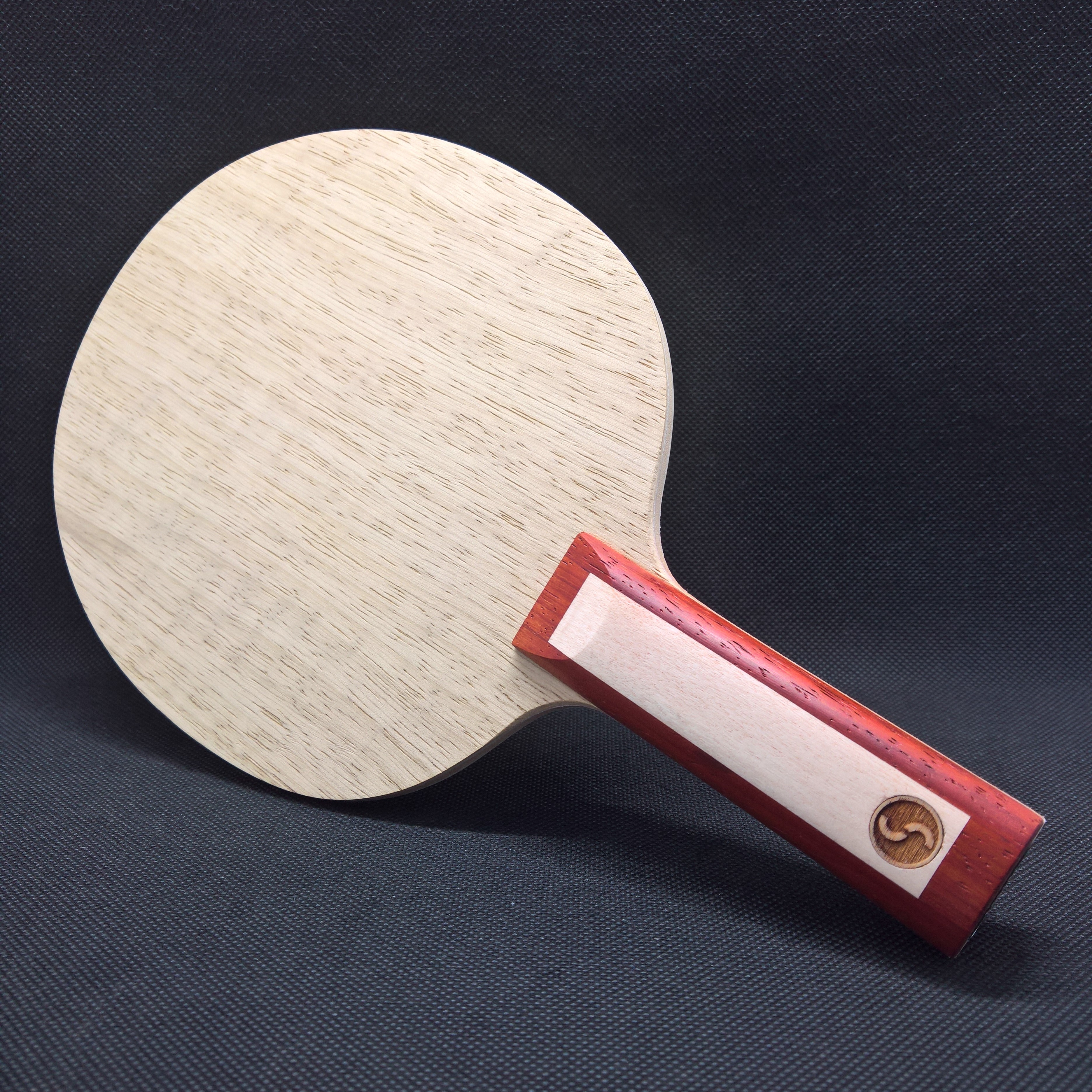
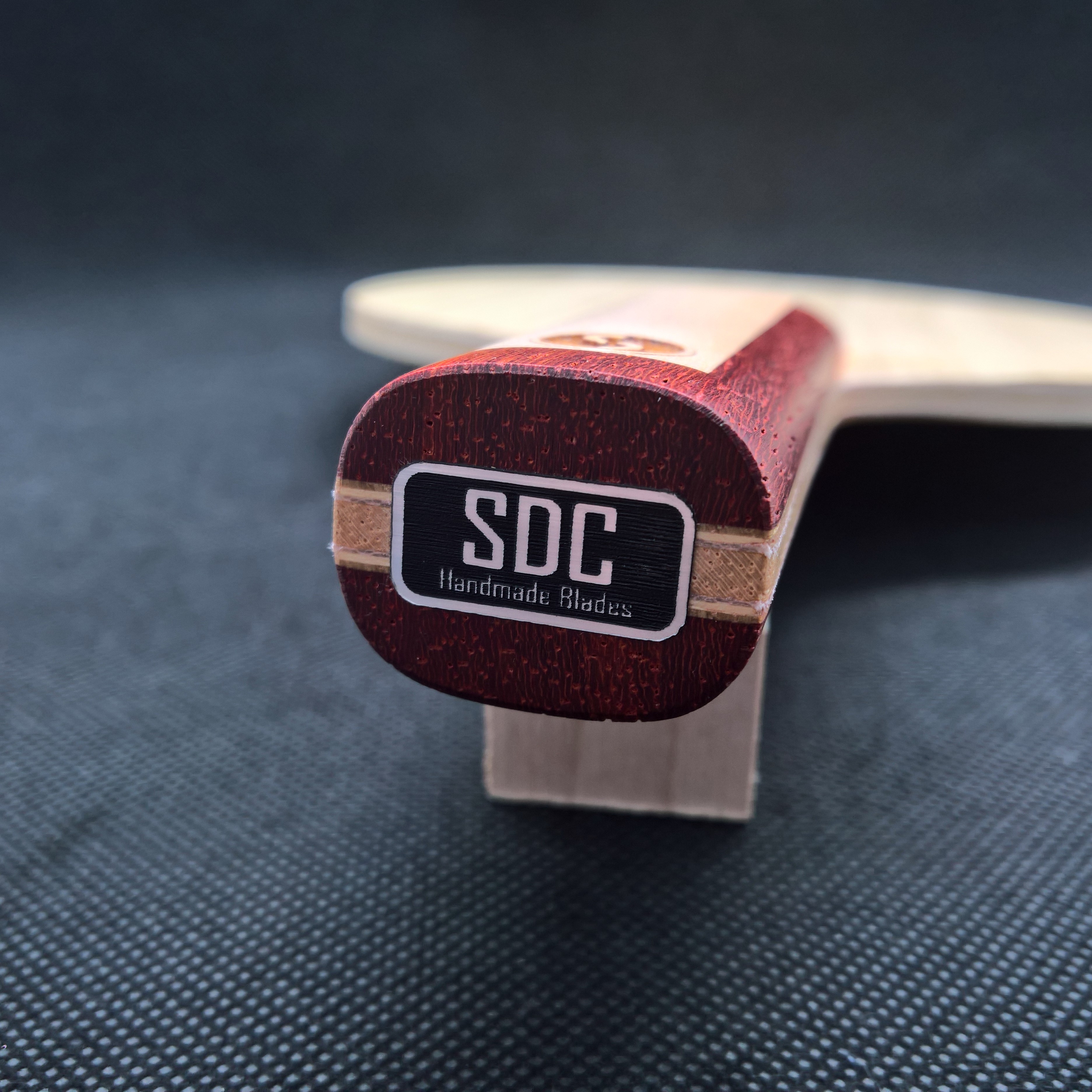
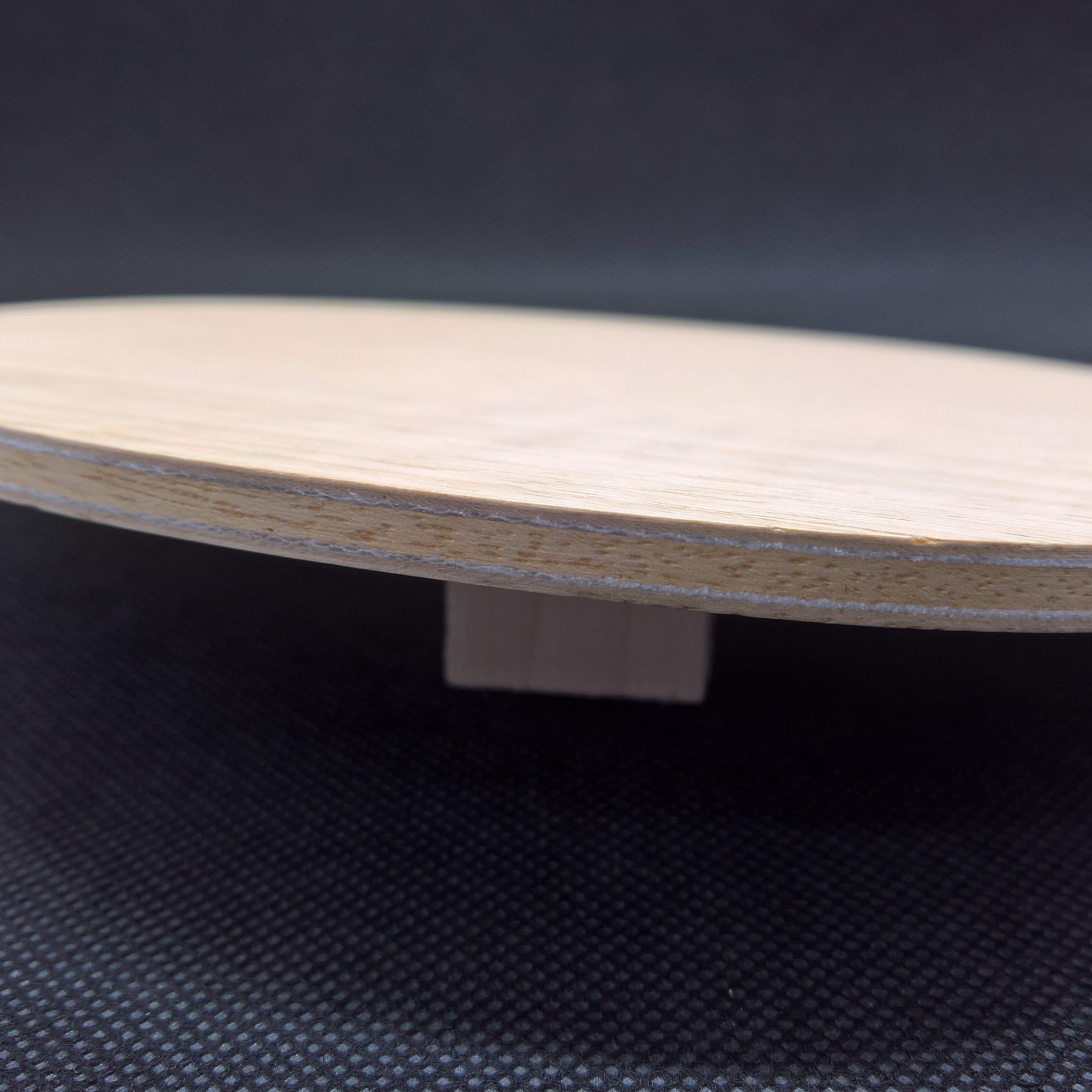
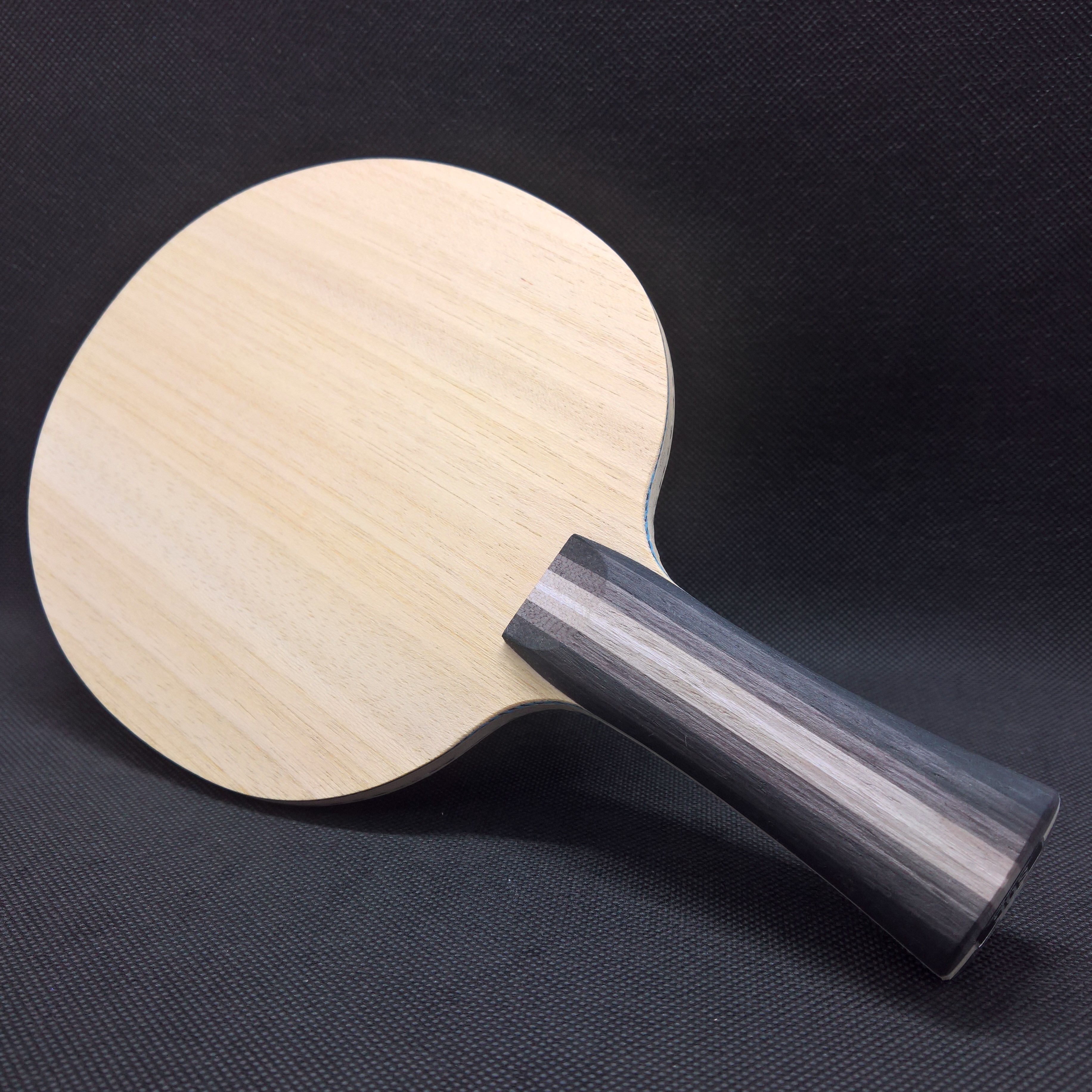
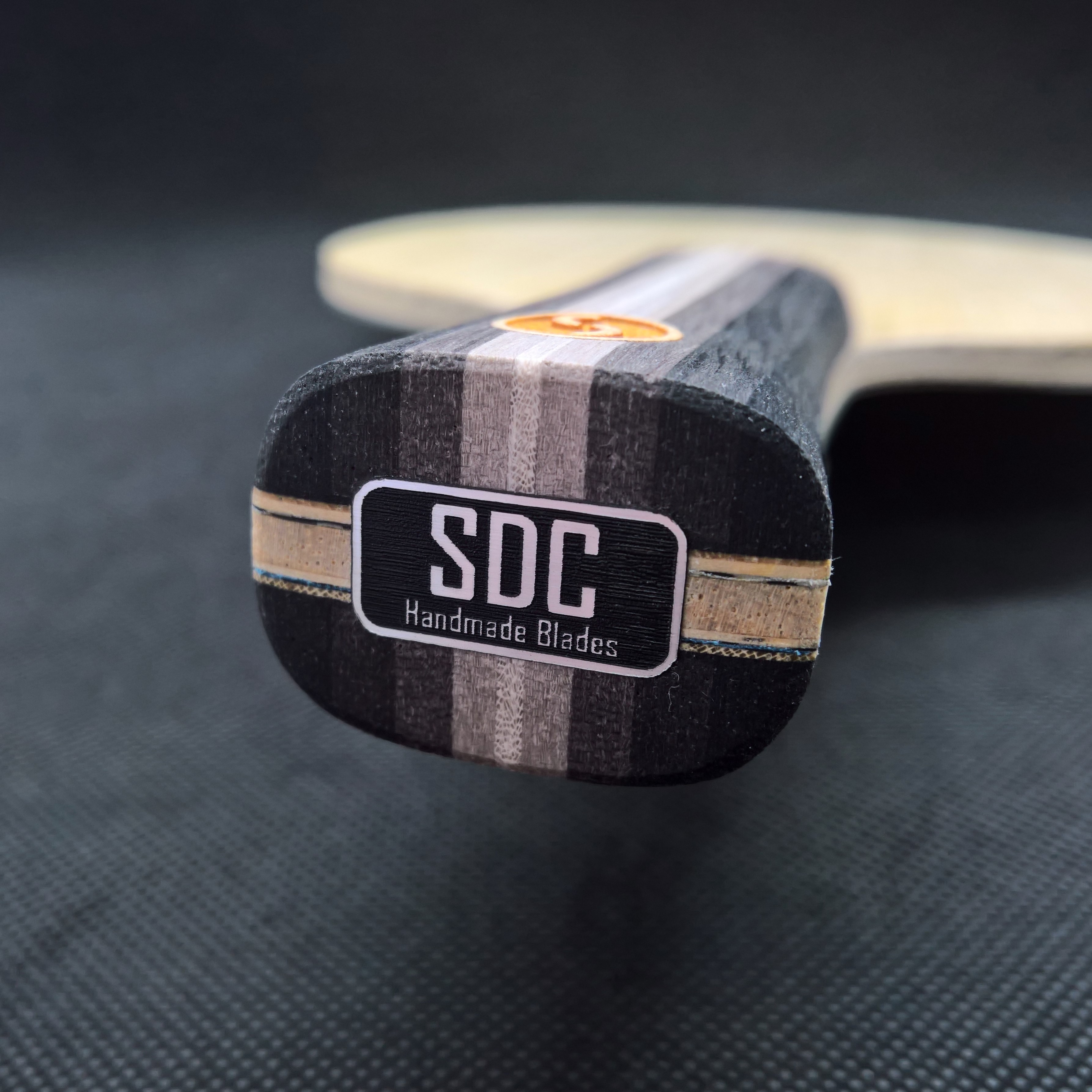
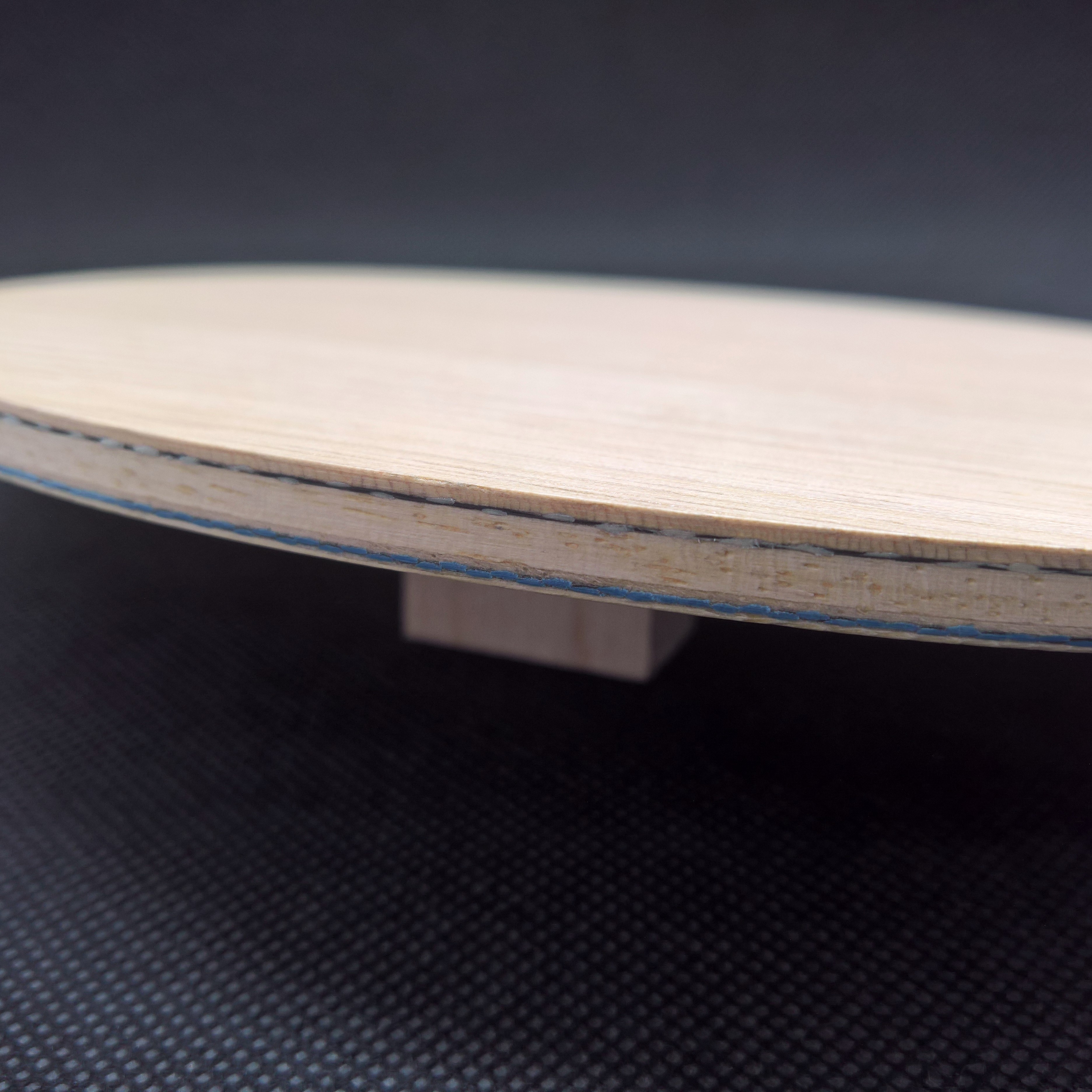
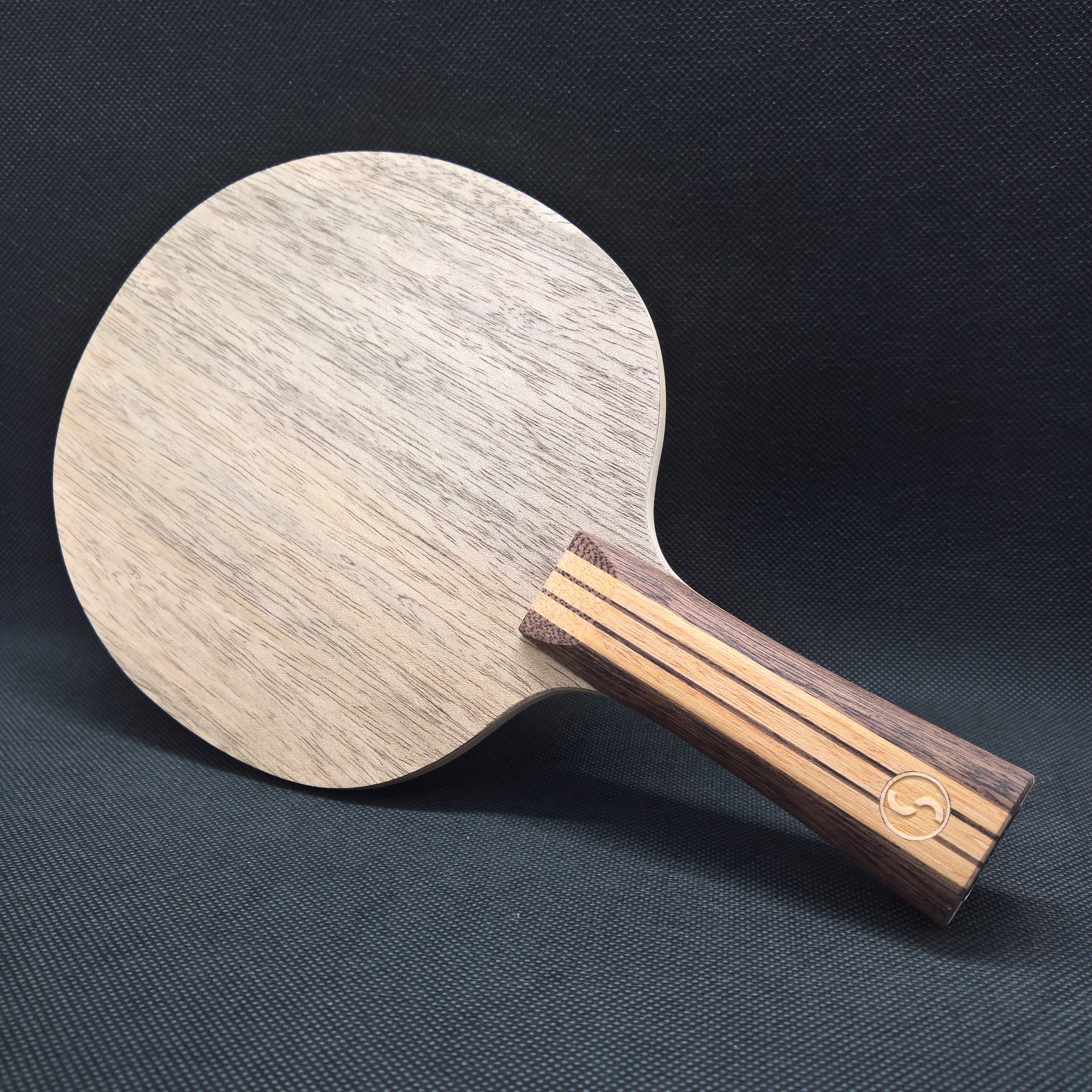
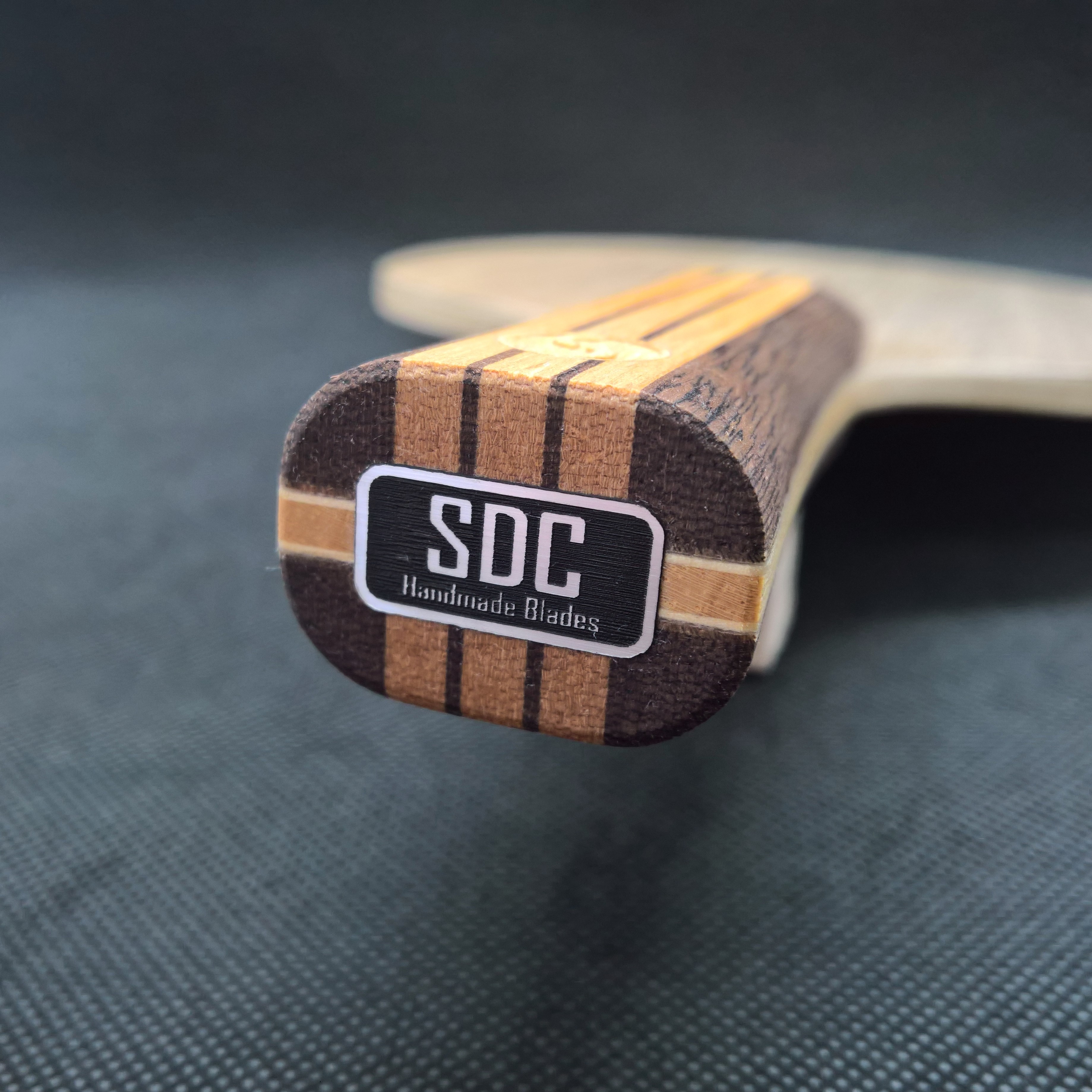
#1394 - Inner Dyneema - ALL+

Of course I also had to make an inner version with the Dyneema fiber. The basic character of the fabric still stands out, it really mutes the vibrations, but in this structure, the speed increase is barely noticeable. It reminded me of the old and discontinued innerforce layer AL, and again I did something similar with the handle design but with natural wood, a combination of Basswood and Padouk. Speewise the blade is somewhere in the upper All+ realm, but with much less unpleasant vibrations than all wood blades in this category. It's also very uncatapulty, so it should pair really well with medium soft or soft rubbers.

Available FS.

- Limba / Ayous / Dyneema / Ayous core
- 86.7g
- 6.0mm
- 157x150mm
- ST (101x23.0x28.7mm)
- Balance: 3.2cm (Med)

1394-1.jpg


1394-2.jpg


1394-3.jpg
 
says what [IMG]
says what [IMG]
🏆 Top 1% Commenter
Well-Known Member
Feb 2016
2,470
1,520
5,098
Read 2 reviews
Nobody (almost nobody) is measuring the natural frequency, we measure the 6th mode (membrane mode, or out-of-plane deformation), it's the only one we can measure directly with a microphone. This mode depends on the longitudinal stiffness of the blade, but also the transversal stiffness, and that's what people don't understand. Effectively, it's more an indicator of the sweetspot and feel of a blade, than speed. Even then, it's only useful if used appropriately, when the compositions are similar. You can manipulate this mode just by changing the density of the medial layer, so a blade can have a higher frequency without being stiffer, but it will feel harder.

To measure the natural frequency (1st mode, pure bending) you need a setup like the one you mentioned, and specialized equipment. That mode directly correlates to the stiffness of the blade, and it would be a much better indicator. Frankly I don't do it because, because as @Wakkibatty already pointed out, there are just too many challenges for something that isn't really worth it. I also don't have the time, I prefer to use it to actually build blades. However, someone is in fact doing this, TT gear lab. That's how he gets his performance indices, by measuring the vibration modes (1st and 6th) and comparing them to a reference blade. He transforms the readings into indices because it's a language that the public can understand much better. However, the method has a basic "flaw", the first blade he measured was a All around classic, and all the blades he measured after, are compared to that one specimen. If he happened to measure another specimen, for example a heavier one, or even a different model, all the indices up to now would be different. For this method to be truly reliable, he would have to measure multiple blades of the same model, but that's simply not doable (for him, manufactures could do it easily for their models). Anyway, it's still very nice work, even with the limitations that it has.

I did some FEA in the beginning, there's a thread about it somewhere. It works of course, and it help me to learn a lot about the behavior of blades, but it a broad sense. Doing it for every particular blade is not feasible, calibrating the models is hard enough, you have immense variability within each species, let alone when you are using many species of wood like me. And we are just talking about wood, put fibers into the equation and it gets 10x harder with the different weave patterns, density, resin type, lamination method, clamping pressure...
Finding out differences like this is one of my motivations for doing simulations, particularly on the hobby side for things that aren't "useful professionally". There's a lot of myths you can dispel and the community usually becomes a little more educated from it.

Like you said it's easy to miscalibrate models if you're not careful with a reference point so it's not completely straightforward nonetheless, I once made a decent correlation to a too narrow dataset and my solver to extrapolate it to other inputs ended up having immense error due to that, even if the correlation was good at face value. I'd like to say it was better than pure guessing, but it was still highly misleading.

I can understand why you wouldn't want to use it to complicate your life as a manufacturer, though. Definitely doesn't make things simpler.
 
  • Like
Reactions: SDC
I did not set out to make a copy of the Revoldia, I just wanted to use this new fabric I got my hands on, and I wanted to do it in a composition I knew well, Koto outer. It just turned out to be similar to that particular blade.


How do you think that using Dyneema and not CNF affected the properties of the blade?
 

SDC

This user has no status.

SDC

This user has no status.
🏆 Top 1% Commenter
Well-Known Member
Dec 2011
1,789
3,532
5,922
#1400 - Inner/Outer - OFF

This is the supercharged version of #1395. Very similar structure, but the composite layers were upgraded to their "super" variants, which basically means that they are denser. In the case of the Super Blue-Stuff, it does also change the weaving pattern, which gives more stiffness, but a slightly softer touch. At first I was going to keep the 160x151mm oversized head of #1395, but it was a paradox. One of the goals of these denser fibers is to give more stiffness to the blade, which goes against the role of a bigger head, which is to give more flexibility, so in the end I decided to shape it to the standard 157x150mm. Increasing the stiffness increases the base speed of the blade (reaction or repulsion), but decreases the kick (or catapult), so this is a less FH oriented version, but with more balanced sides and maybe more versatile too.

Available FS.

- Limba / Cypress / S-AC / Ayous / Ayous / S-BS / Koto
- 89.2g
- 5.95mm
- 157x150mm
- FL (102x24.9-23.0mm)
- Balance: 3.2cm (Med)

1400-1.jpg


1400-2.jpg


1400-3.jpg


1400-4.jpg
 
CNF is a bit more spongy/springier

CNF is a bit more spongy/springier


Thank you, and what about the speed of the woods with these synthetic materials used?
Which synthetic material used will be the slowest in the wood structure?
 

SDC

This user has no status.

SDC

This user has no status.
🏆 Top 1% Commenter
Well-Known Member
Dec 2011
1,789
3,532
5,922
#1403 - Outer GF - ALL+/OFF-

As I've said many times, wood density varies a lot, even within the same species. How a wood feels and impacts the blade, has more to do with its particular density, rather than the species. In other words, a blade doesn't feel hard just because it has a Koto outer ply. Etimoe is normally hard and heavy, even more than Koto, but the particular batch I have is fairly lighter. In fact, so much lighter that it almost feels like Limba. If you wanted something between Limba and Koto, this would be a good choice, and it's always nice using something a bit different from the norm. In terms of construction, the composition feels like a tamed TB Spark, due to the use of Glass-fiber instead of Arylate. The Spark isn't a very fast blade to begin with, and this one is a touch slower, but it makes up for it with spin capability and feel. The handle shape is similar to Acoustic's, but a touch chunkier, between the normal and the L-size one.

Available FS.

- Etimoe / Glass-fiber / Limba / Ayous core
- 89.7g
- 5.4mm
- 157x150mm
- FL (100x22.9mm)
- Balance: 3.4cm (Med)

1403-1.jpg


1403-2.jpg


1403-3.jpg
 
How do you think that using Dyneema and not CNF affected the properties of the blade?
What about the speed of the blade with these synthetic materials used?
Which synthetic material used will be the slowest in the blade structure?
 
This user has no status.
Wow. From the surface angle it almost looks like a rough version of limba. Nice touch on the handle, too.
I'm eyeing the queue number, it's creeping closer to my ticket 😁
Hi - top layer is definitely not spruce. Spruce like pine have so-called two year rings and if cut along the grain of the blade as the top here is should be clearly observed. Also at the edge in this case bottom of the handle but also part of the side of the blade.
 
This user has no status.
🏆 Top 1% Commenter
Well-Known Member
Jan 2024
2,207
2,885
6,904
Read 2 reviews
Hi - top layer is definitely not spruce. Spruce like pine have so-called two year rings and if cut along the grain of the blade as the top here is should be clearly observed. Also at the edge in this case bottom of the handle but also part of the side of the blade.
No it's Etimoe as mentioned ;)
 
  • Like
Reactions: SDC and S2000

SDC

This user has no status.

SDC

This user has no status.
🏆 Top 1% Commenter
Well-Known Member
Dec 2011
1,789
3,532
5,922
What about the speed of the blade with these synthetic materials used?
Which synthetic material used will be the slowest in the blade structure?
You just repeated the questions but ok... I'll just answer to what I think you meant.

In terms of speed the blade felt close to the Revoldia I tried, maybe a touch slower, but Revoldia felt spongier as I mentioned.

Haven't I replied to your second question before? Or at least a very similar one. My slowest composite, on it's own, is probably 80 g/m2 Glass-fiber. It's very thin and light, it basically does nothing for the blade in terms of speed, it just tames vibrations. However, very rarely players want just the slowest blade, they are looking for something specific, and in most cases I use my Super Diolen-Carbon to produce the "slow" side on these blades. It's not only the composite that matters, the lamination process is just as important.
 

SDC

This user has no status.

SDC

This user has no status.
🏆 Top 1% Commenter
Well-Known Member
Dec 2011
1,789
3,532
5,922
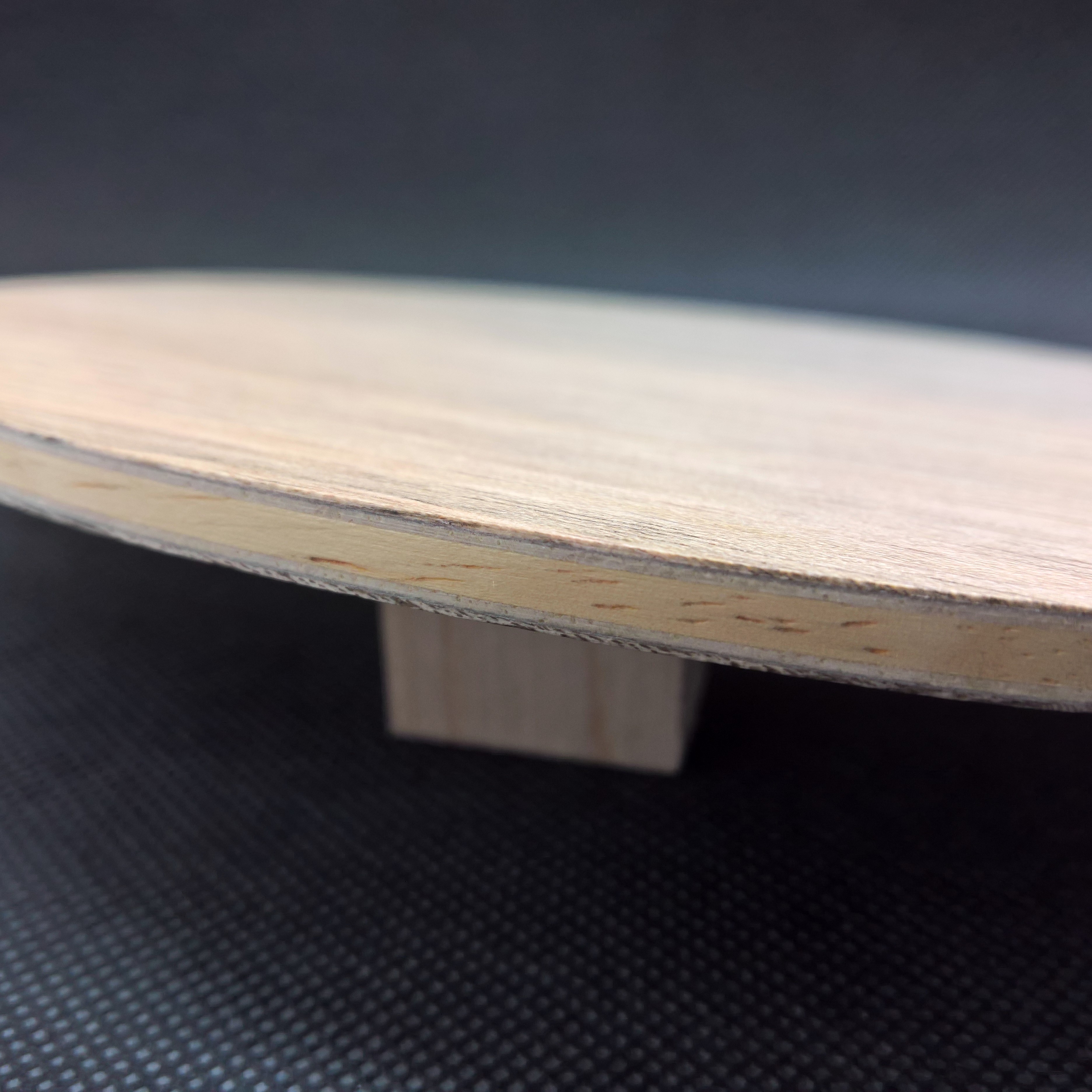
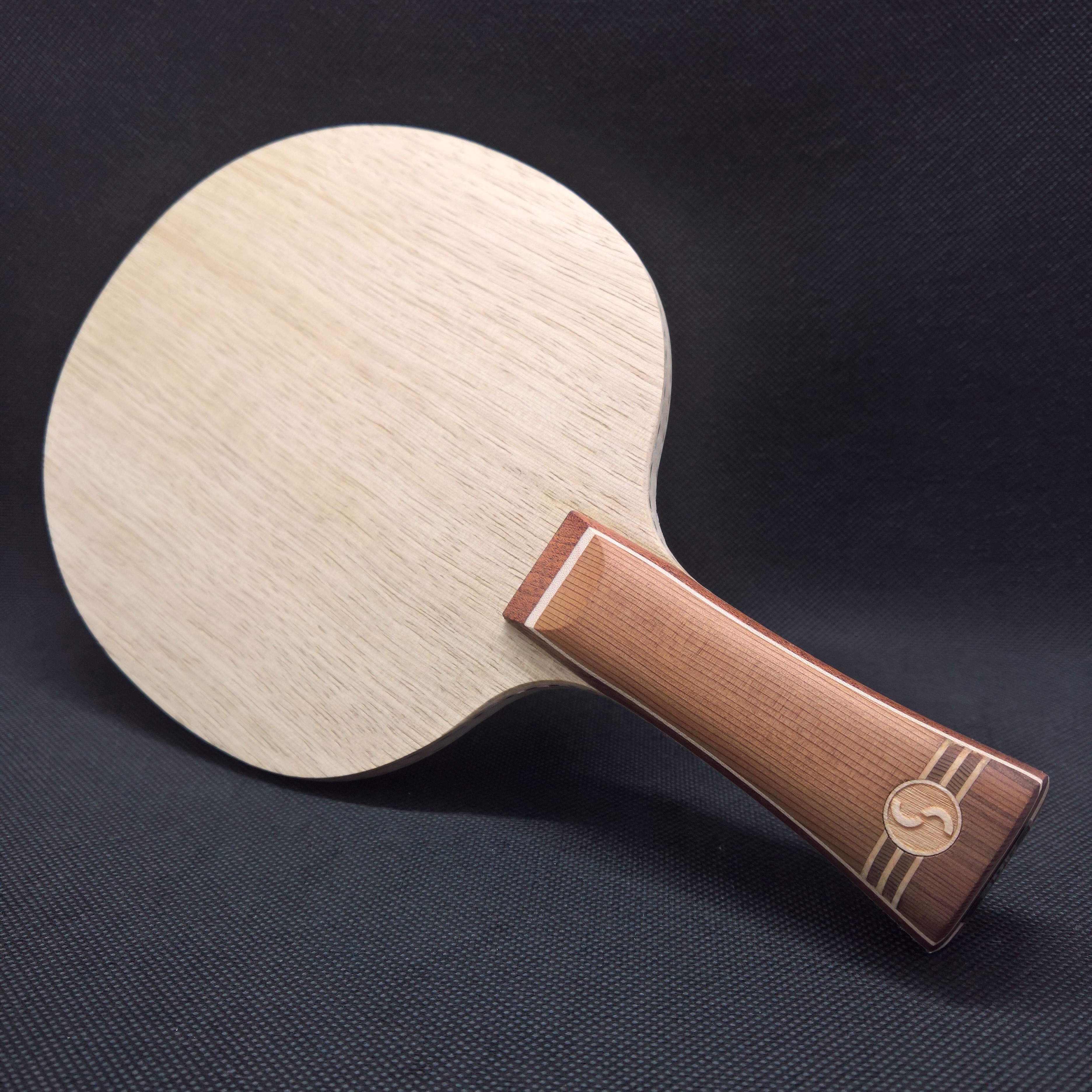
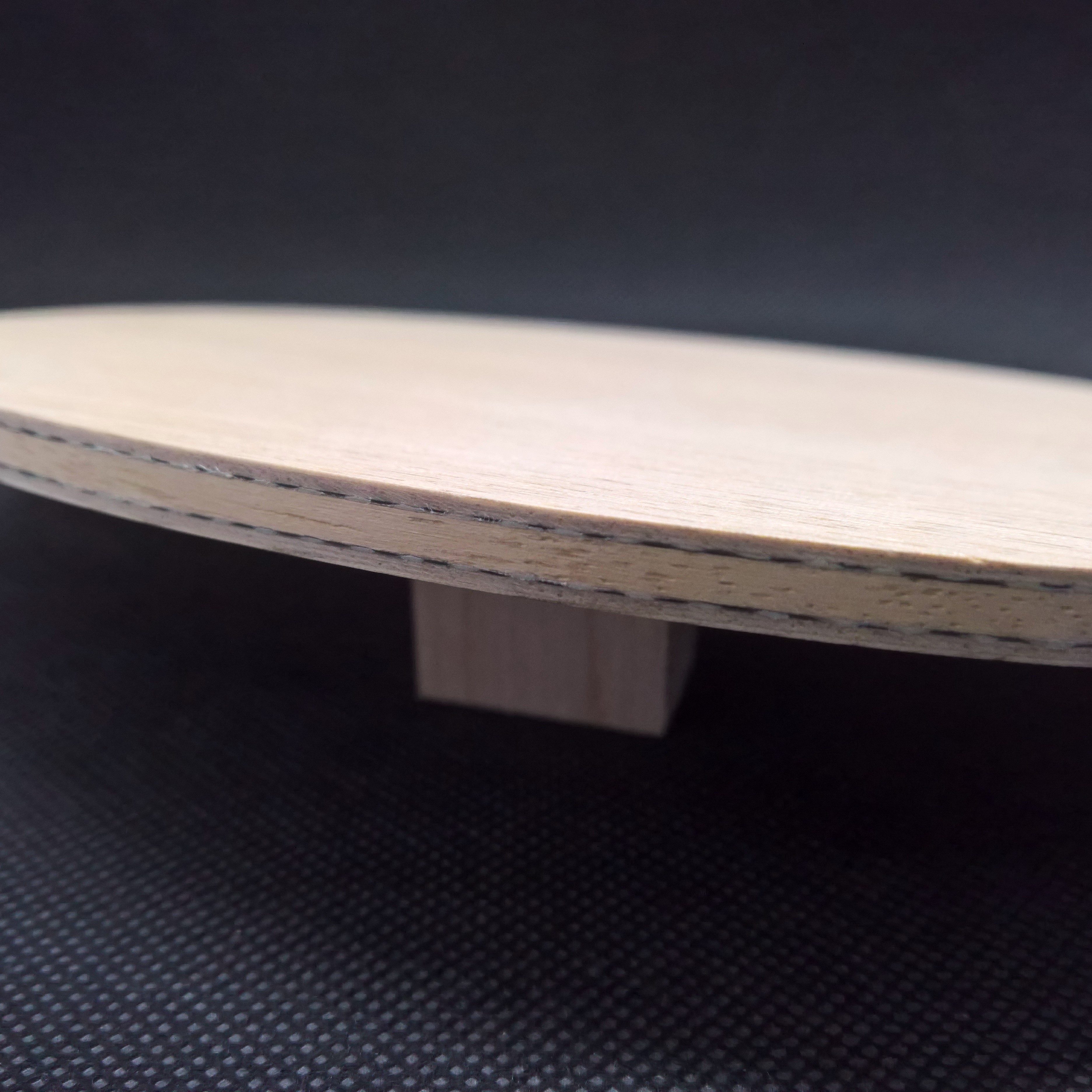
#1406 - Inner 7+2 - OFF-/OFF

This one was supposed to go to another customer but sometimes I get ahead of myself, so here it is... It's based on my personal blade, which in turn is based on a W968 structure (can I still call it that?). The difference is that it is a 7+2 blade, instead of a 5+2. Why? Well, I like to have a soft feeling on my blades, and a nice kick as well. In order to achieve that, the medial ply should be soft, as that is the most important layer when it comes to feeling, and the core must be dense. The problem is that it's not always easy to find the correct density for the medial layer, so I had to do a workaround. The medial on this structure is fairly thick (~0.8mm), and all my thicker Ayous veneers were denser than I wanted, but I did have some thinner veneers with the correct density, which was what I used. Even with an extra layer of glue, the medial ended up lighter than with a single layer. Do you know about the 9 ply Clippers? I think that Stiga must have faced the same issue in the past 😅.

Anyway, is this detrimental to the performance of the blade? Not at all, in this scenario is actually beneficial because it gives the extra softness I was looking for, and also a bit more flexibility too, and then I can used a nice and dense core without making the whole thing too heavy. I can speak confidently about this one because I know it well. What I like about it the most is the feeling it has, it's soft but not mushy, you know exactly where the ball hit because the feedback is clear and precise. It feels very controlled over the table, but it also has very decent speed away from it (gears?). It's stable enough for blocking but it excels at counter hits, which is basically how I play. Slow and spinny open ups, and 5th ball attacks or counters.

Available FS.

- Limba / Ayous / Ayous / A-C / Ayous core
- 88.1g
- 6.1mm
- 160x150mm
- FL (100x24.8-23.0mm)
- Balance: 3.3cm (Med)

1406-1.jpg


1406-2.jpg


1406-3.jpg
 
Top